Robert Doisneau

Given moments

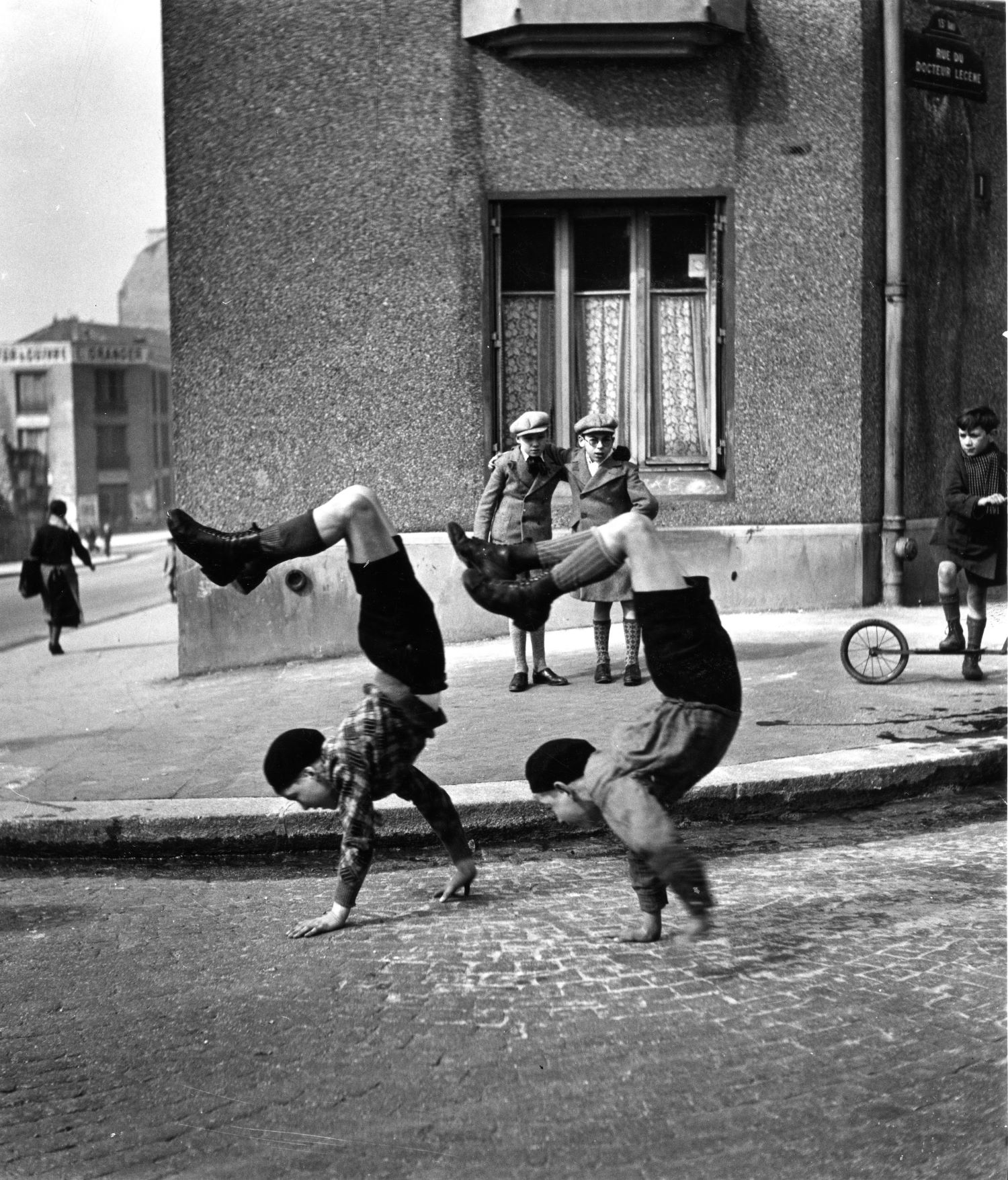
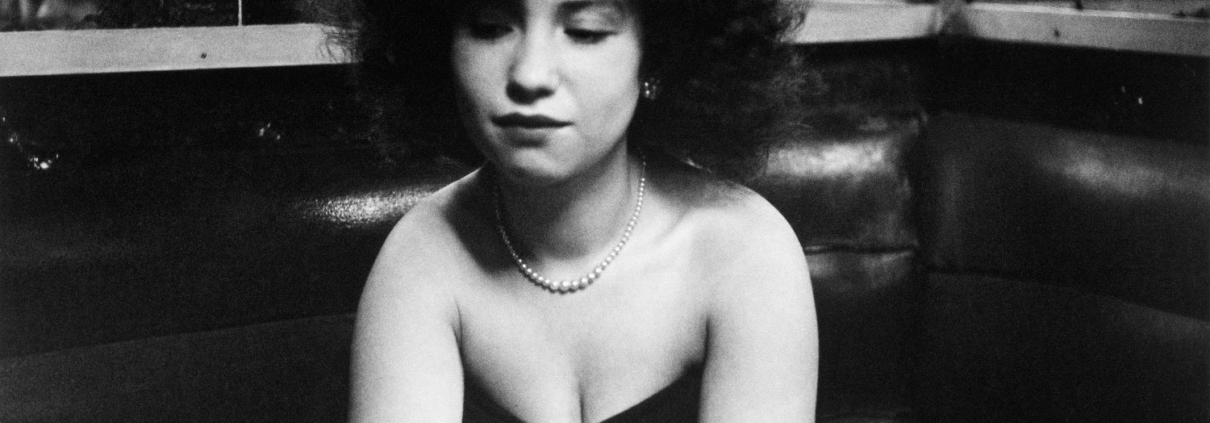
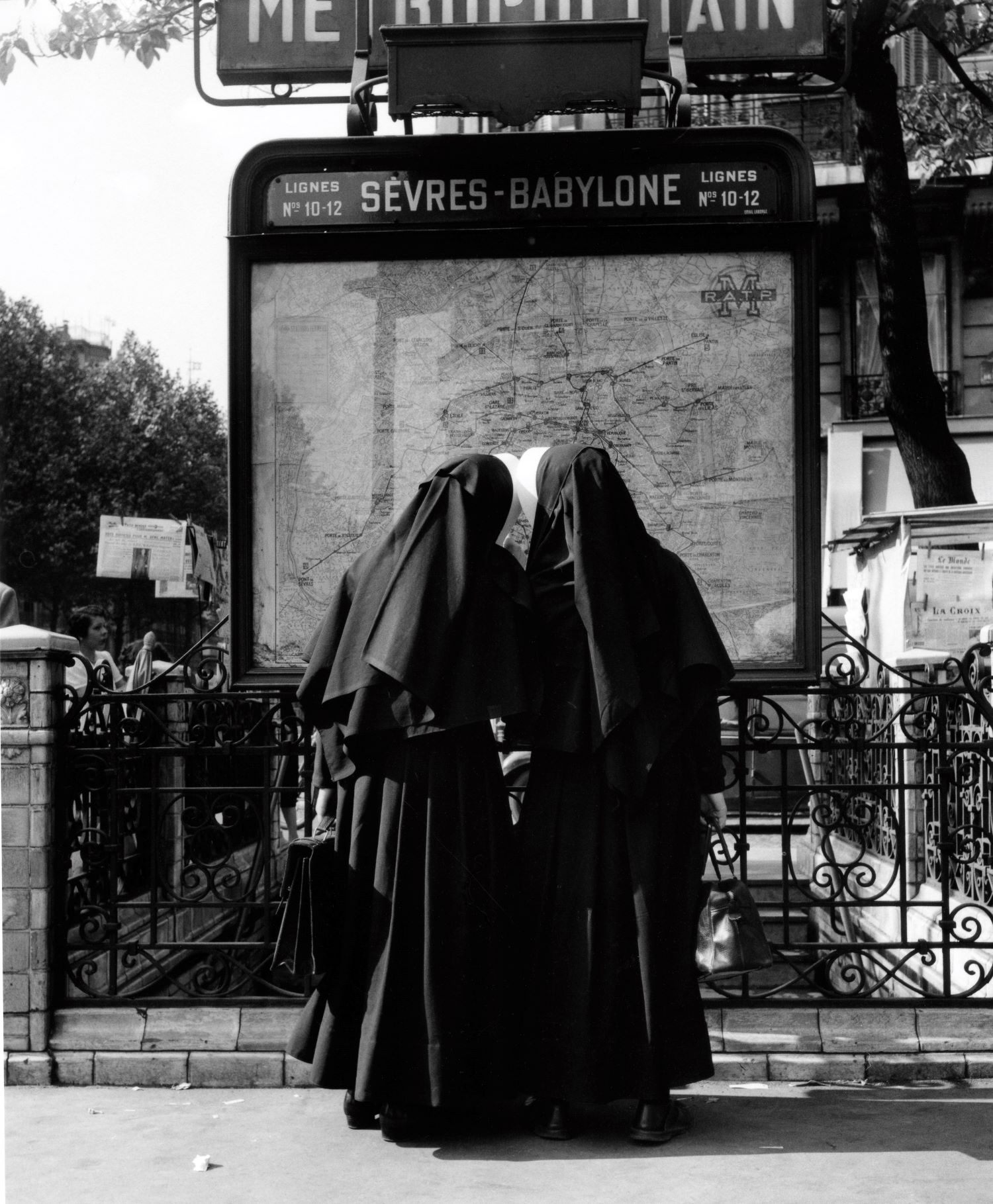
A leader in humanist photography, Robert Doisneau is probably the most famous French photographer in the world: according to his daughter Francine, the Atelier Robert Doisneau and its collection of 450,000 negatives have contributed to 158 exhibitions since his death in 1994. This impressive figure reflects almost universal appreciation, but almost implies that everything has been seen and said about the author of the essential Kiss at the Hôtel de Ville. However, this new exhibition, after two years of preparation and with the help of his two daughters, Francine Deroudille and Annette Doisneau, aims to convey something beyond images: “a way of looking at others.”
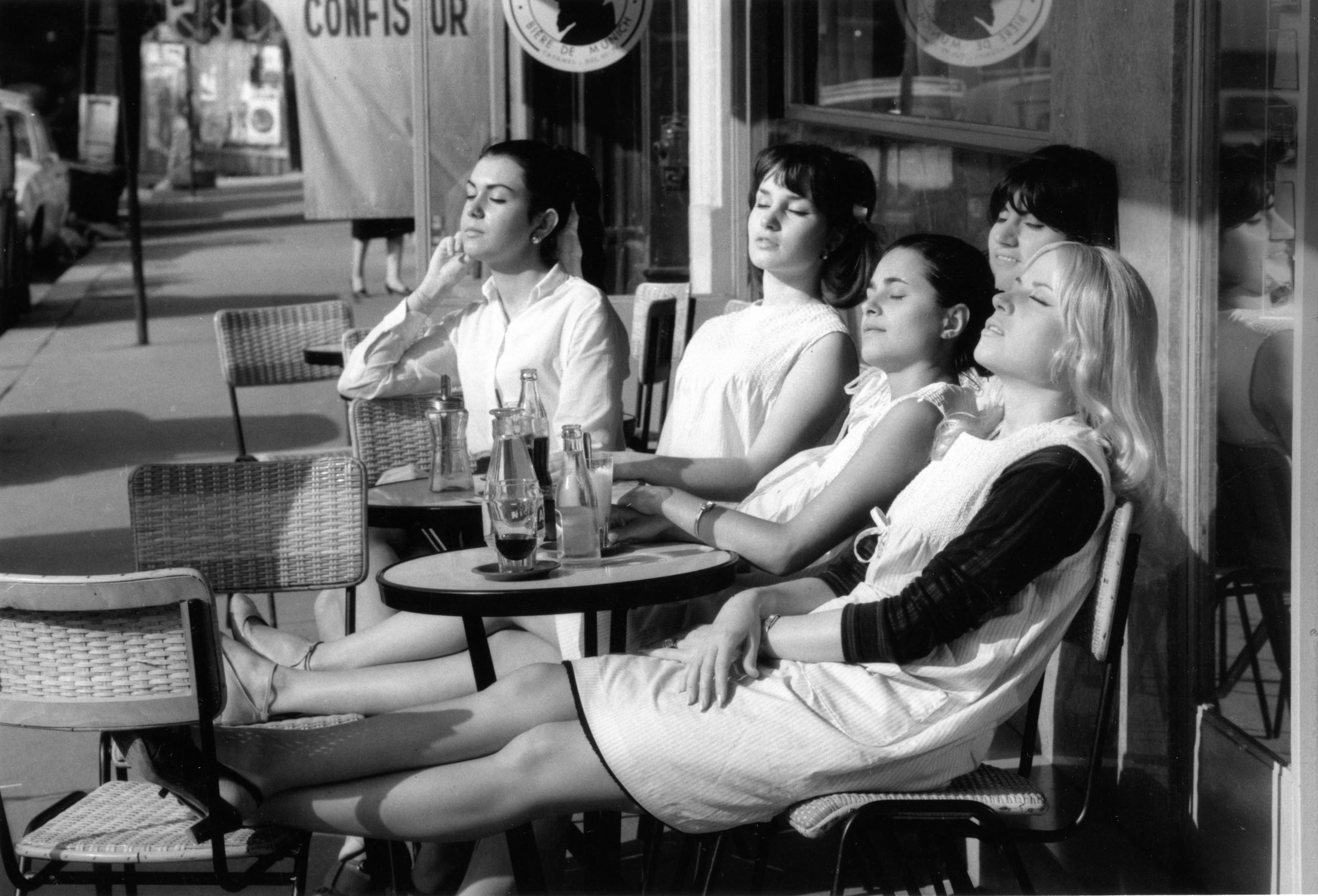
The exhibition curators have thus opted for a thematic route that shows the different aspects of Robert Doisneau’s work while maintaining a common thread: “poetic realism,” a notion that is quickly understood upon seeing the approximately 400 prints in the exhibition. The term also refers to a cinematographic movement born in the 1930s – just like humanist photography – which is not without recalling that these photos, always impressive in their mastery of composition, have a certain capacity to tell stories. We (re)discover his closeness to writers, including his friend Jacques Prévert, with whom he shared a taste for surrealism (the Fontaine des Quatre-Saisons, the cabaret run by the Prévert brothers in the 1950s, was also located on the ground floor of the current Maillol Museum).
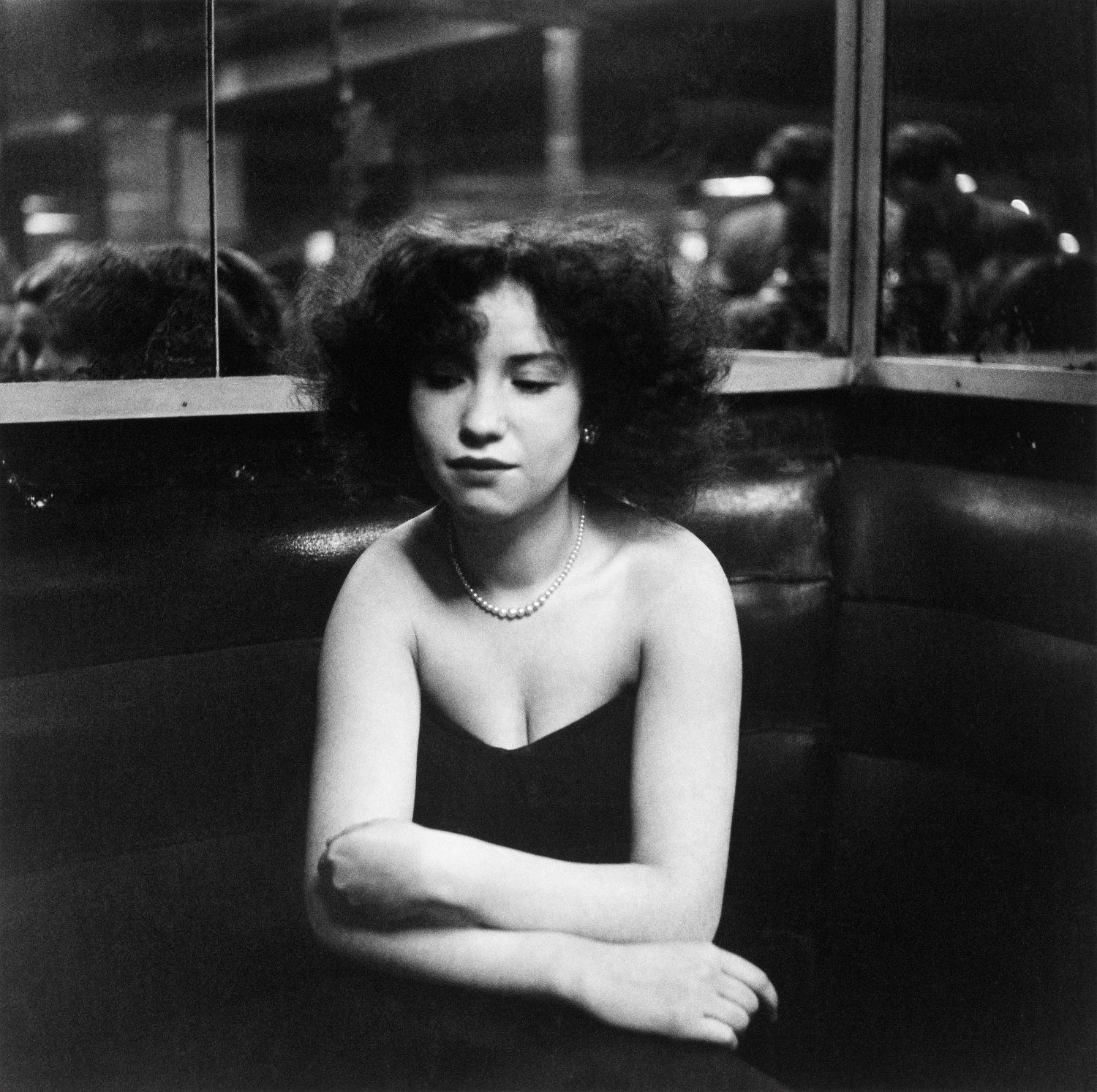
A stroll through the complex work of an artist so often simplified, who here rediscovers his poetic and profoundly human dimension. His amused view of childhood. His Parisian suburbs that turn from black and white to color. A visit in complete complicity to the studios of painters and sculptors; his exploration of post-war fashion and luxury during the Vogue years. So many themes that draw a social observation of an unforgiving world with which he always felt solidarity.
April 17 to October 12, 2025

MUSEE MAILLOL

59-61 rue de Grenelle 75007 Paris

Along the Gold Thread

c

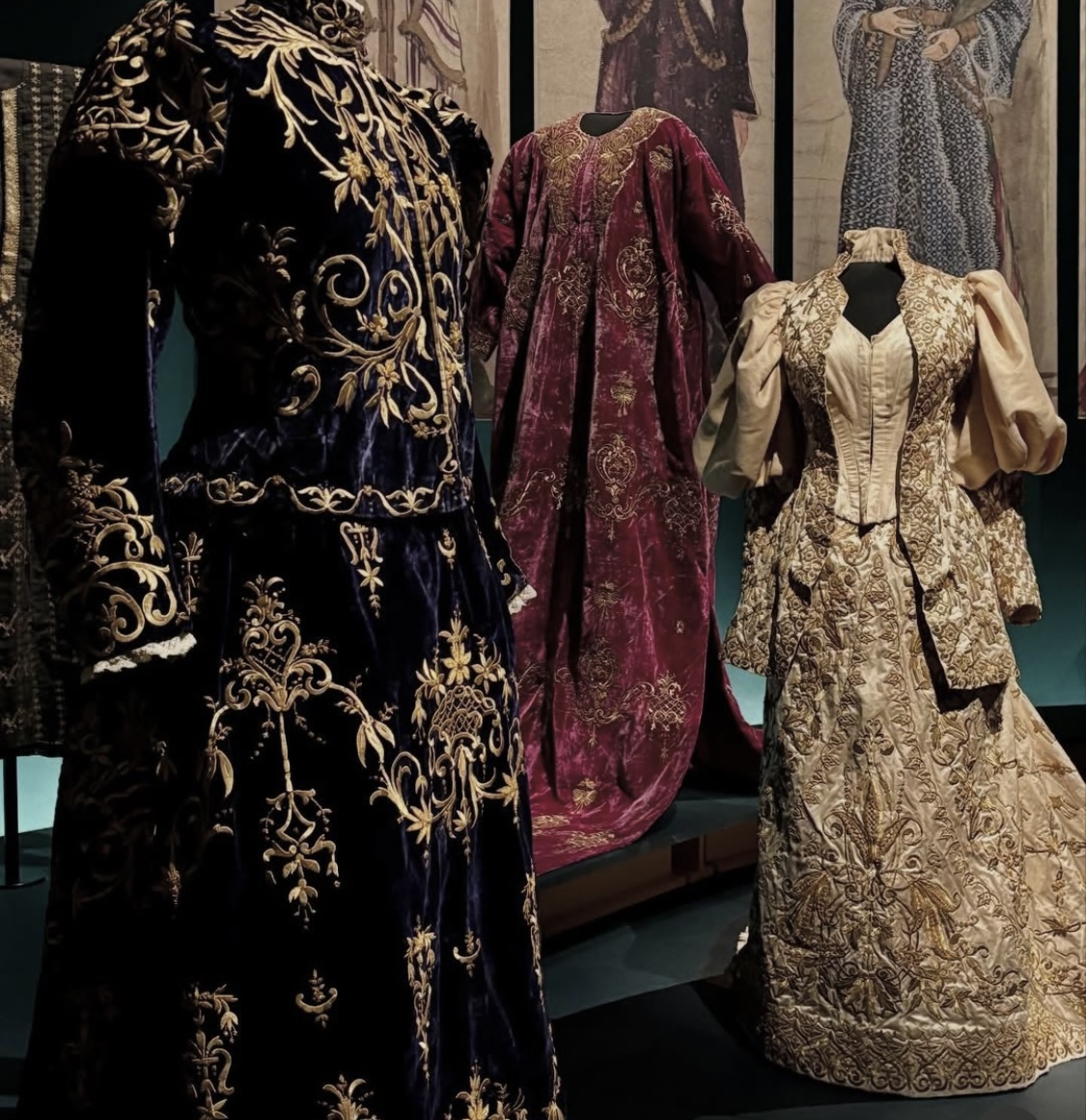
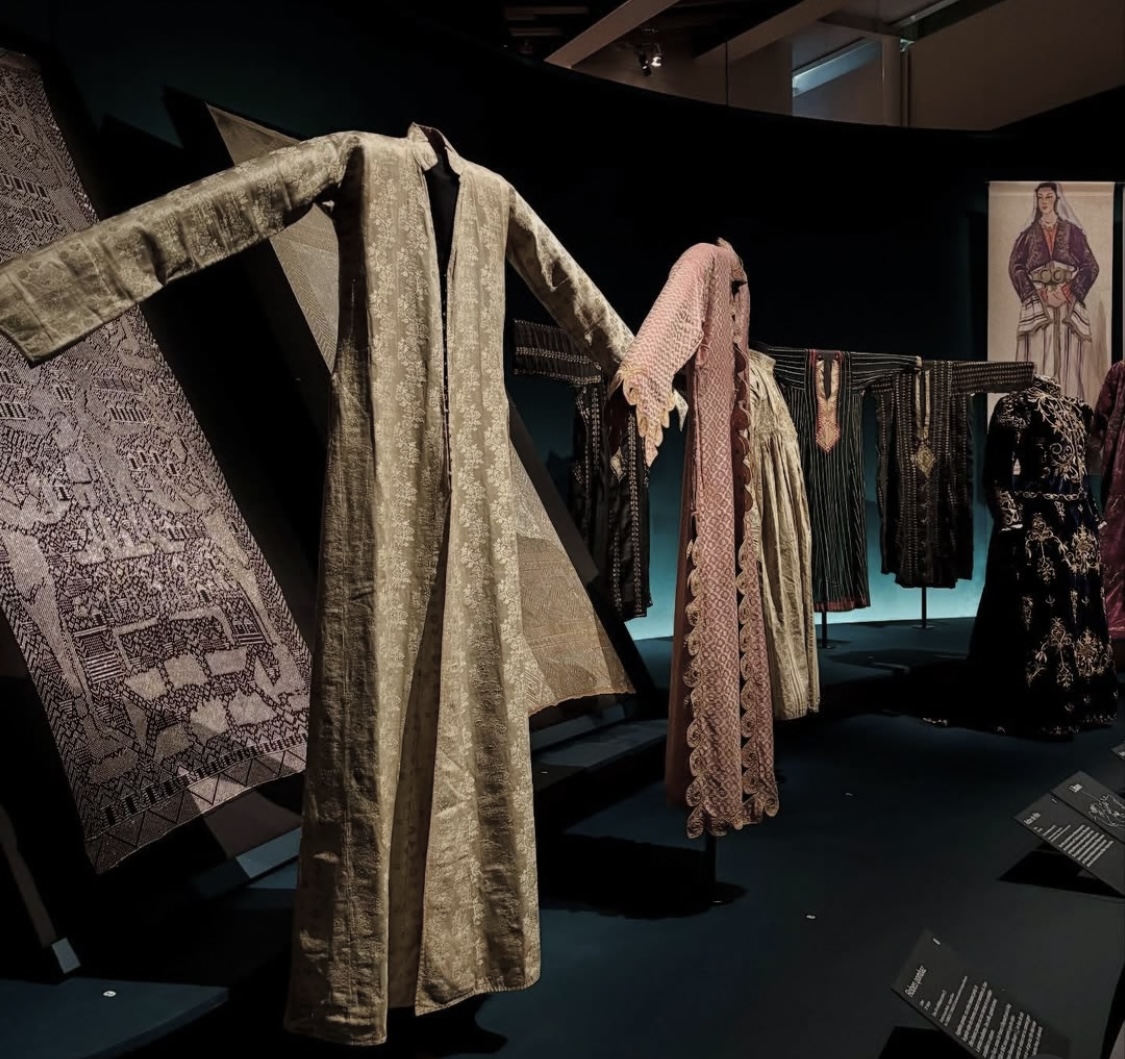
From the Maghreb to Japan, a fabulous journey through time and space, to discover the mysterious and fascinating origin of gold and its marriage with textile arts.

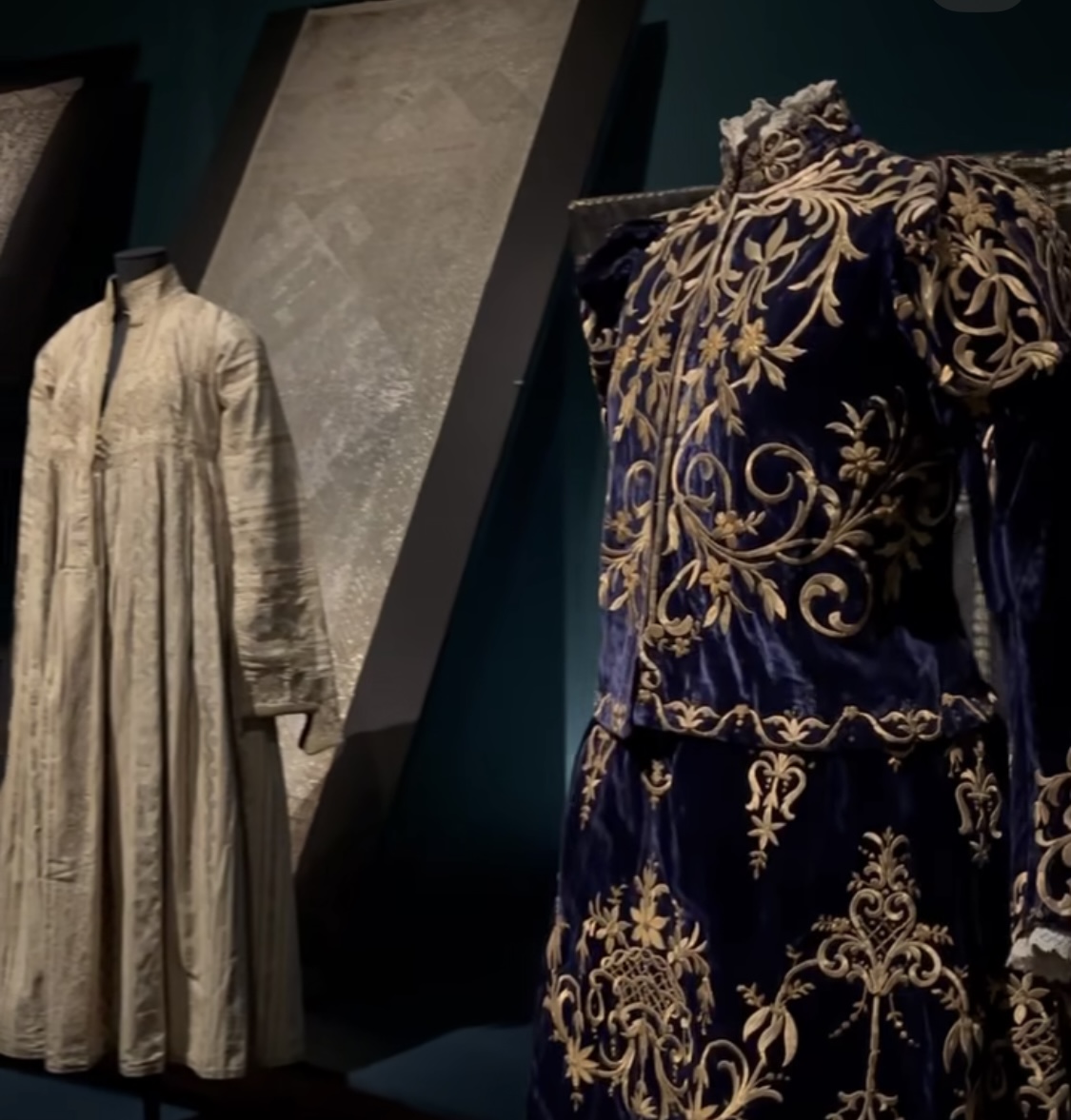
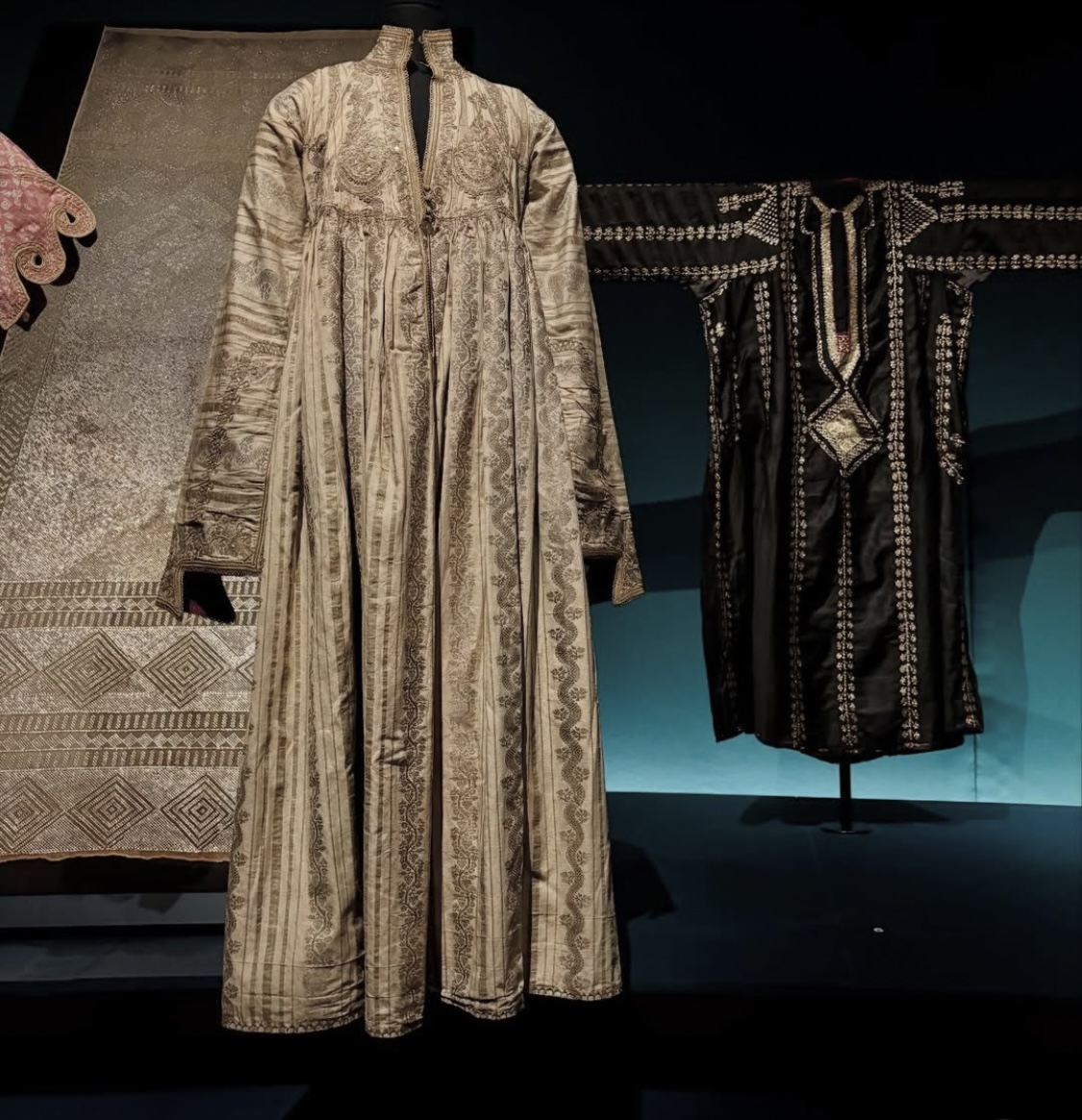
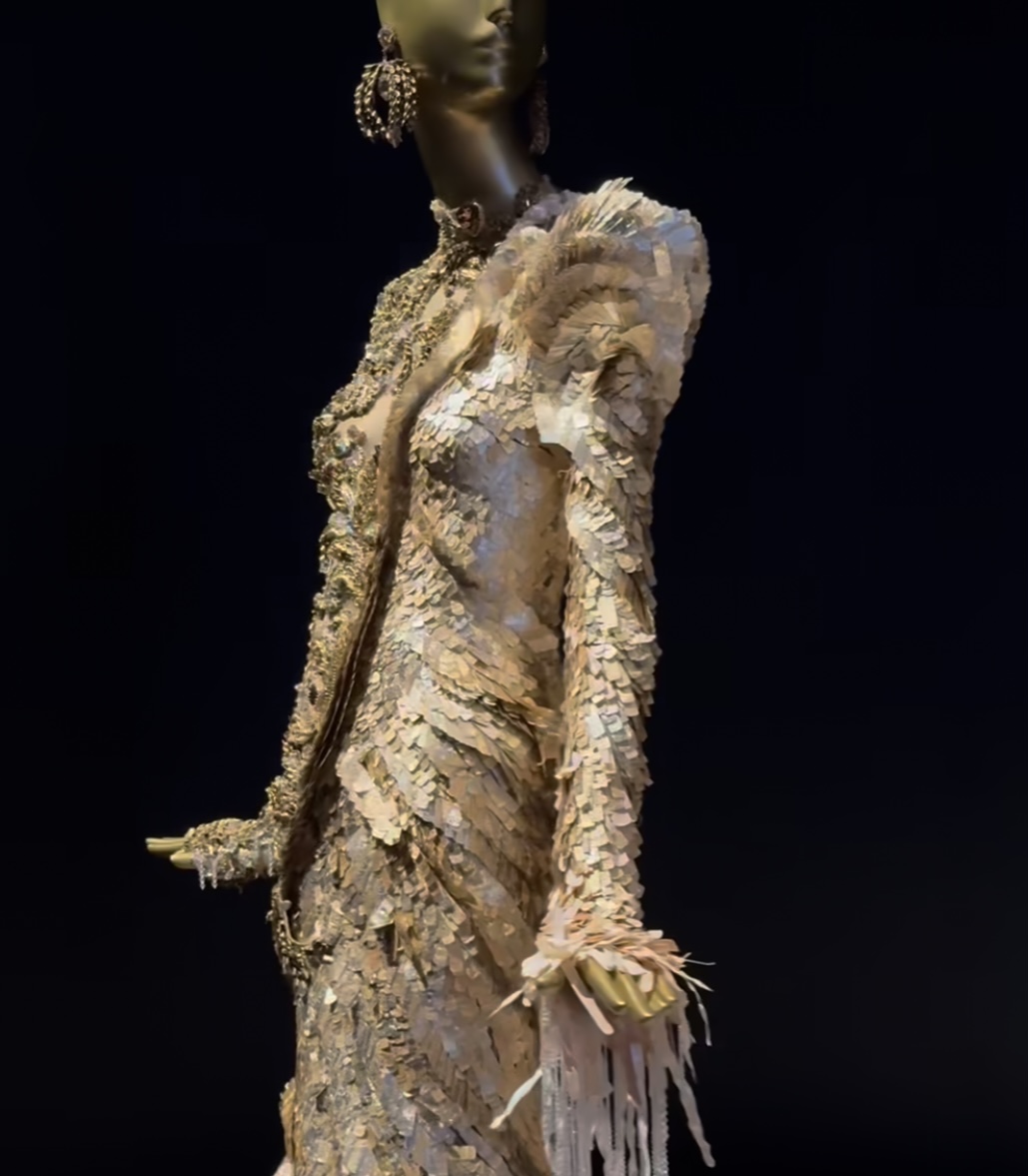
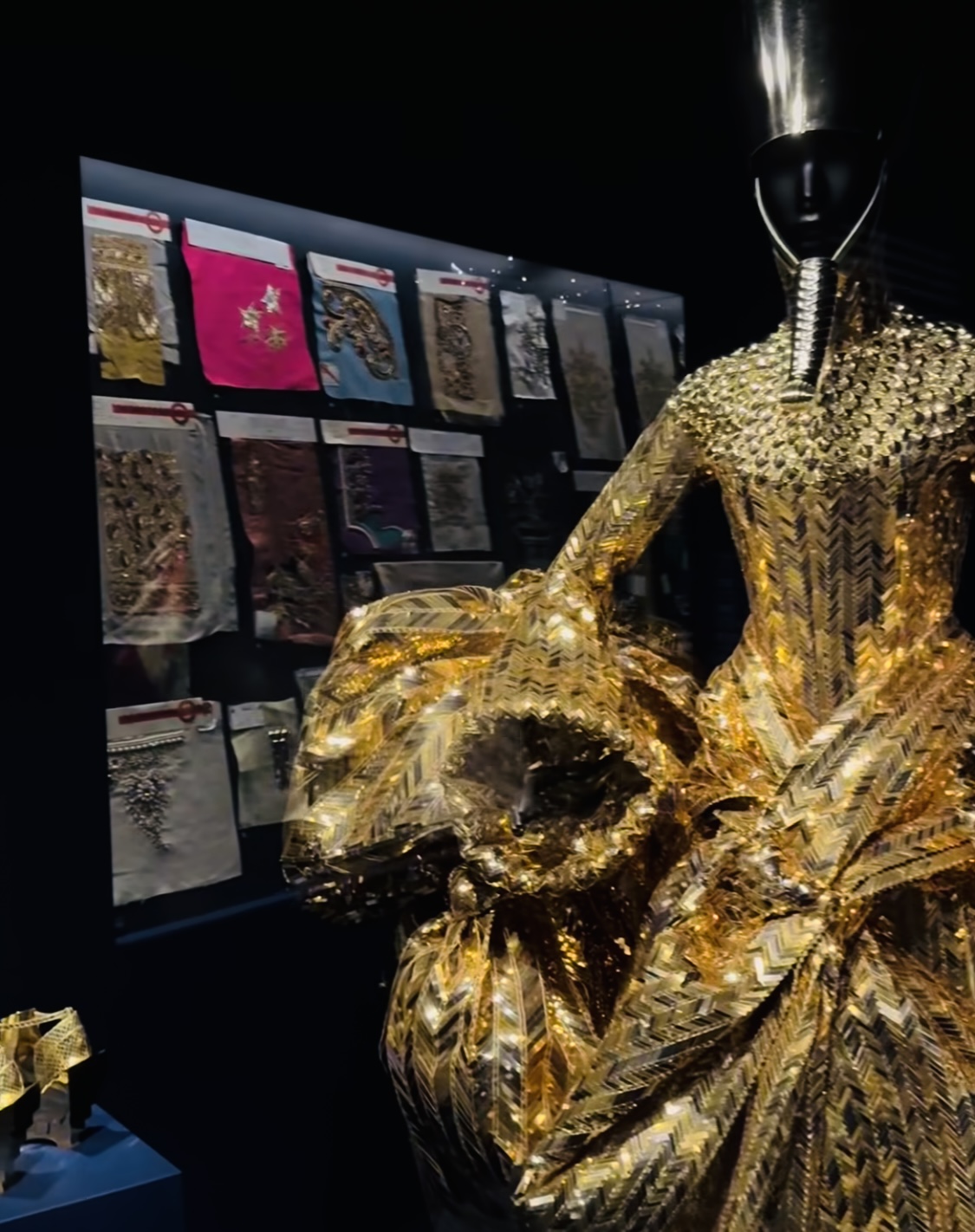
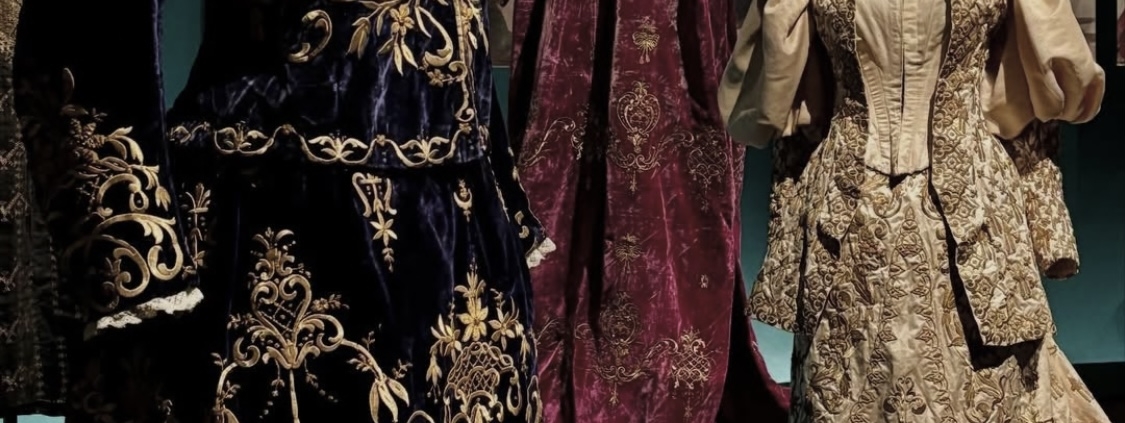
The most precious and noble metal in the world, an object of desire, a symbol of wealth and splendor, a sign of elegance and refinement… Discovered nearly 7,000 years ago, gold has never ceased to fascinate men. The material par excellence of all know-how, experiments and traditions, it has been used since Antiquity for the creation of jewelry, adornments and weapons. From the fifth millennium BC, it embellished the first luxury fabrics dedicated to men of power. Over the following centuries, skilled weavers and artisans—Roman, Byzantine, Chinese, Persian and then Muslim—deployed the most ingenious techniques to create true artistic fabrics where silk or linen fibers intertwine with gold blades and threads.

From the first ornaments sewn onto the clothing of the deceased to the flamboyant dresses of contemporary Chinese artist Guo Pei that punctuate the entire exhibition, from the gold-woven silks of the Indian and Indonesian worlds to the shimmering kimonos of the Edo era, the exhibition unfolds the thousand-year-old history of gold in textile arts. In a dialogue combining scientific discovery and artistic perspective, it reveals the dazzling beauty, diversity, technicality, and richness of costumes from a vast region stretching from the Maghreb to Japan, via the Middle East, India, and China.

February 11 – July 6, 2025

MUSEE du QUAI BRANLY – JACQUES CHIRAC

37 quai branly 75007 Paris

Luca Arruda

No matter the landscape

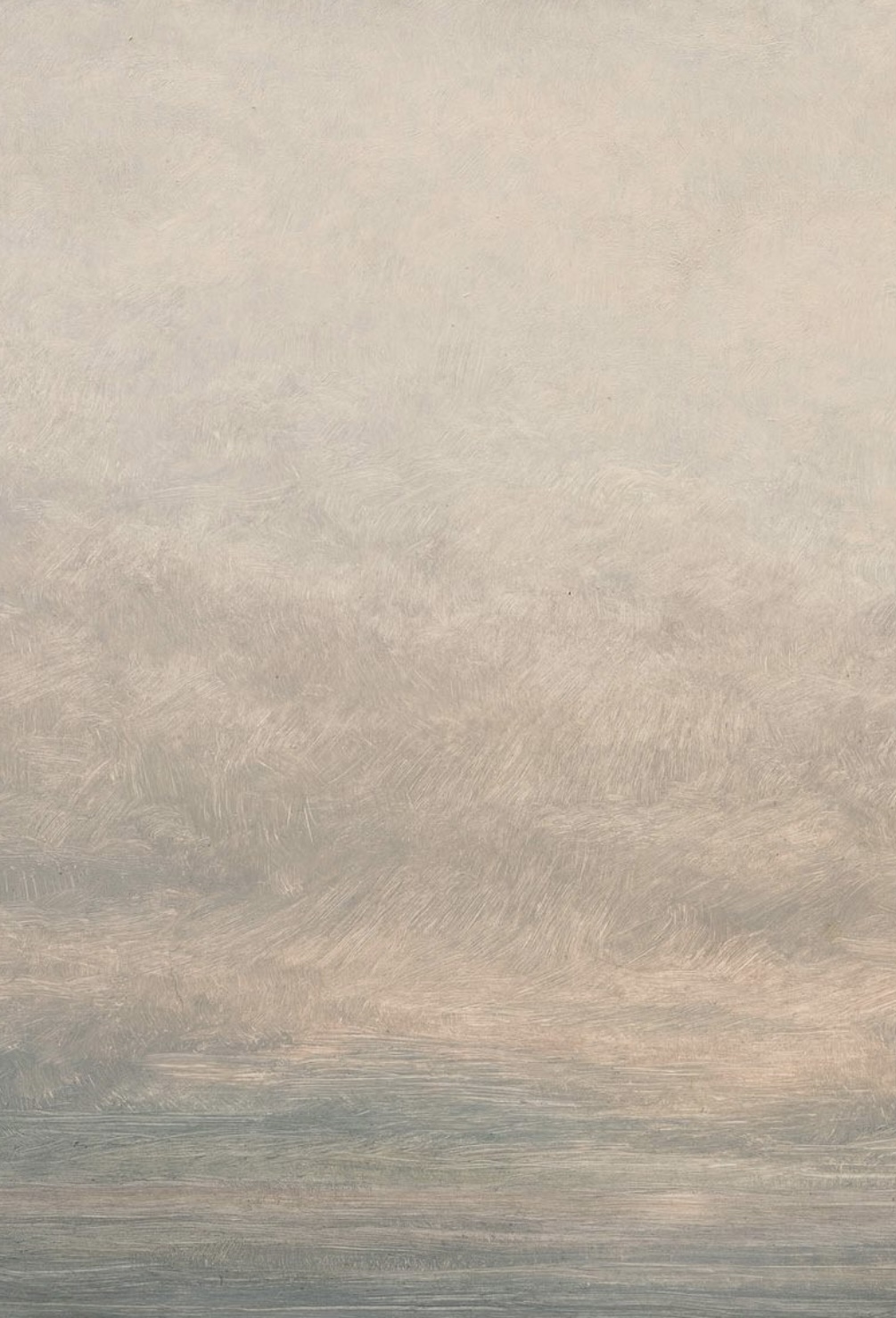
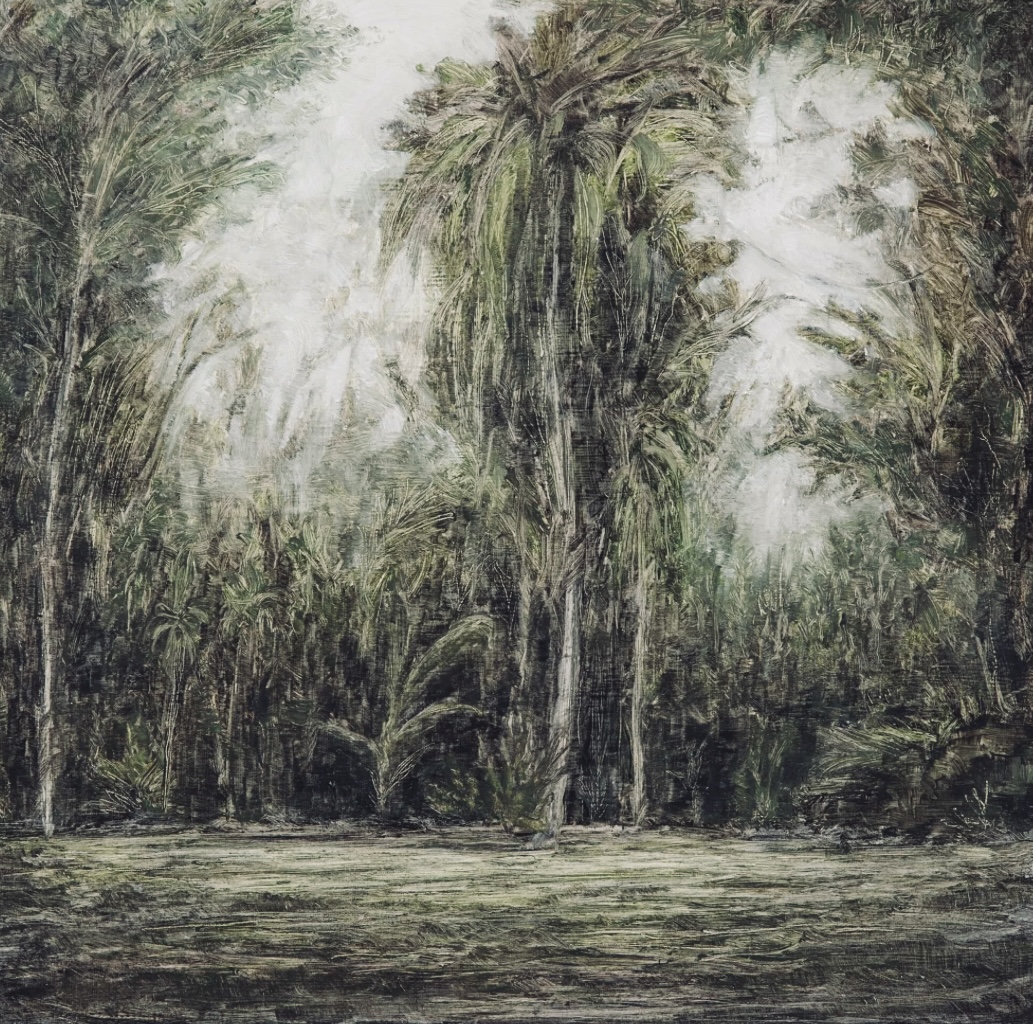
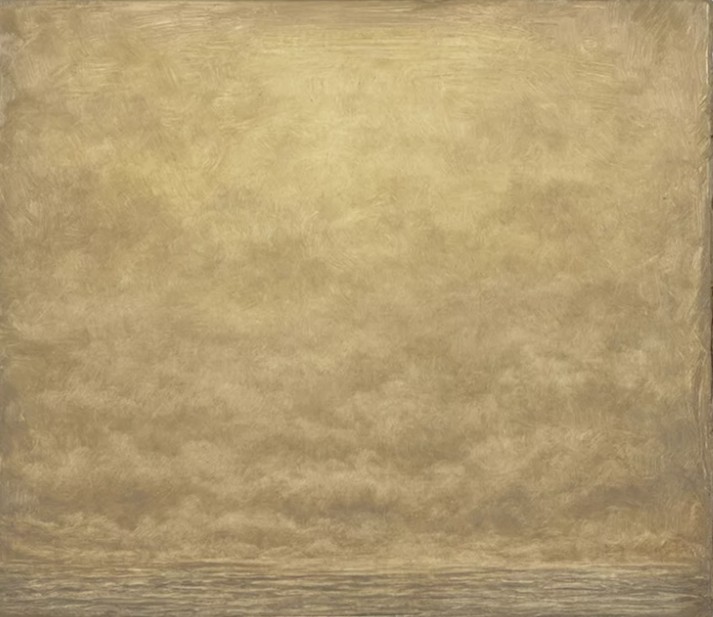
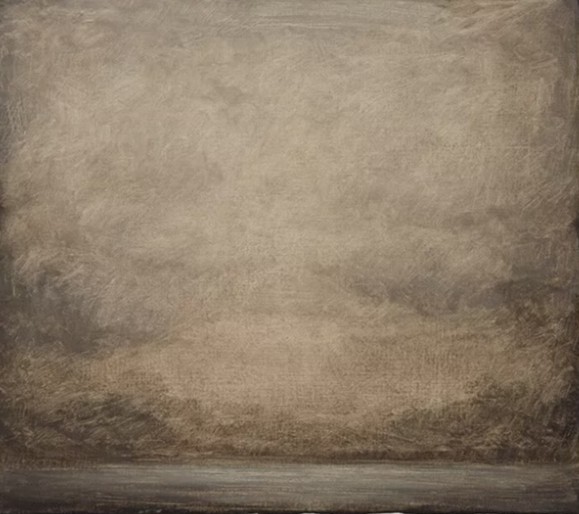
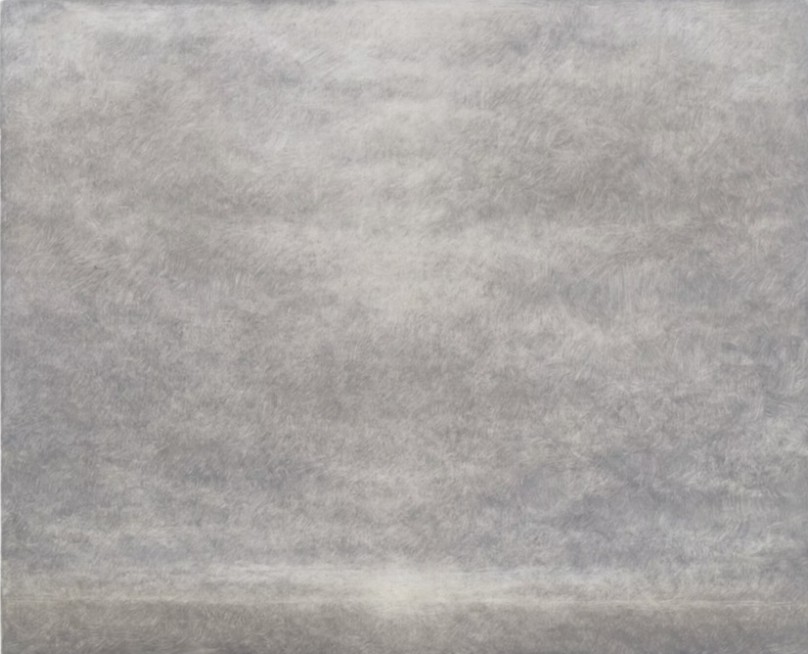
This is the first monographic exhibition in a French museum devoted to this emblematic artist of the contemporary Brazilian scene. A true prodigy of the pictorial gesture, he develops his work around light and consistently depicts landscapes, following a rigorous approach that leads him from figuration to abstraction.

For over fifteen years, the artist has been producing a serial body of work consisting of small-format paintings, called Deserto-Modelo, a term borrowed from the Brazilian poet João Cabral de Melo Neto. These “desert models” – that is, imaginary landscapes, interior visions painted from memory in the studio – are never created on location or from photographs, but are always mnemonic reconstructions, close to abstraction. In the manner of the Impressionists, however, the question of light and the sensitive projection of a form of introspection are particularly perceptible.

As the artist describes it: “Light is at the center of my work, it is movement. It is light that guides my painting, that creates intensity and ends up creating spaces that are neither abstract nor figurative.” Although small, Lucas Arruda’s paintings are charged with great dramatic tension, so that each brushstroke is decisive, paradoxically monumental on the scale of the canvas.

The inspiration for this invitation to Lucas Arruda comes from this simple and spontaneous sensation, widely shared by observers of his paintings: they are familiar to us, in painting or in mind. These panoramic motifs – horizon lines, edged with dense jungles or cloudy skies – border on universality, so difficult is it to identify the places or periods represented. However, Lucas Arruda’s paintings do not entirely adhere to the pictorial tradition of landscape, otherwise richly represented in the collections of the Musée d’Orsay, within which our minds immediately connect them.

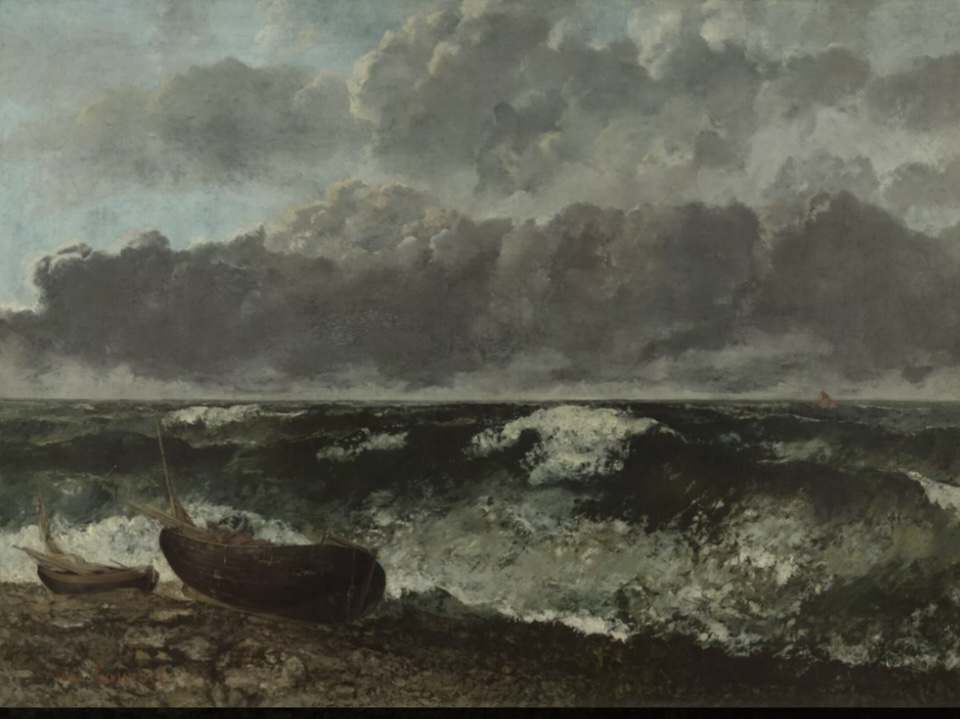
This long lineage, which includes the pictorial work of Jean-Baptiste Camille Corot and the Barbizon school, the stormy seascapes of Gustave Courbet, the ponds of Eugène Boudin, without forgetting of course the impressionists Claude Monet and Paul Cézanne, is made up of works created from observations of reality, whereas Lucas Arruda’s production is entirely imagined. In this perspective, the repetition of the motif in series, which the representation of light will fundamentally vary, becomes the cornerstone of a more intuitive rapprochement between Lucas Arruda and Claude Monet.

The exhibition itinerary follows the progression of this reflection, mobilizing around thirty impressionist paintings from the collections of the Musée d’Orsay, alongside around thirty paintings by Lucas Arruda, in the impressionist gallery (5th floor).

April 8 – July 20, 2025

MUSEE D’ORSAY

Esplanade Valéry Giscard d’Estaing 75007 Paris

Tous Léger !

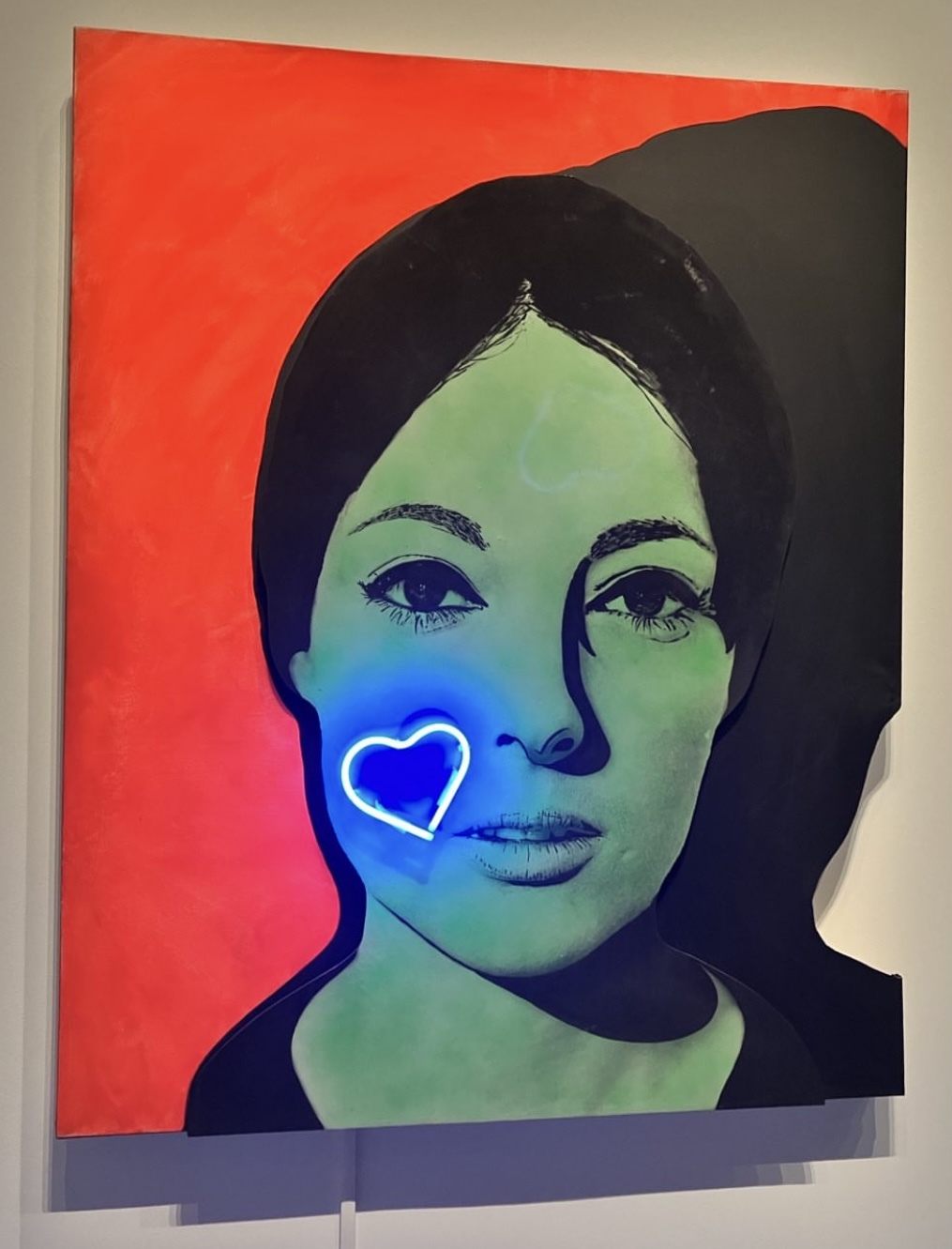
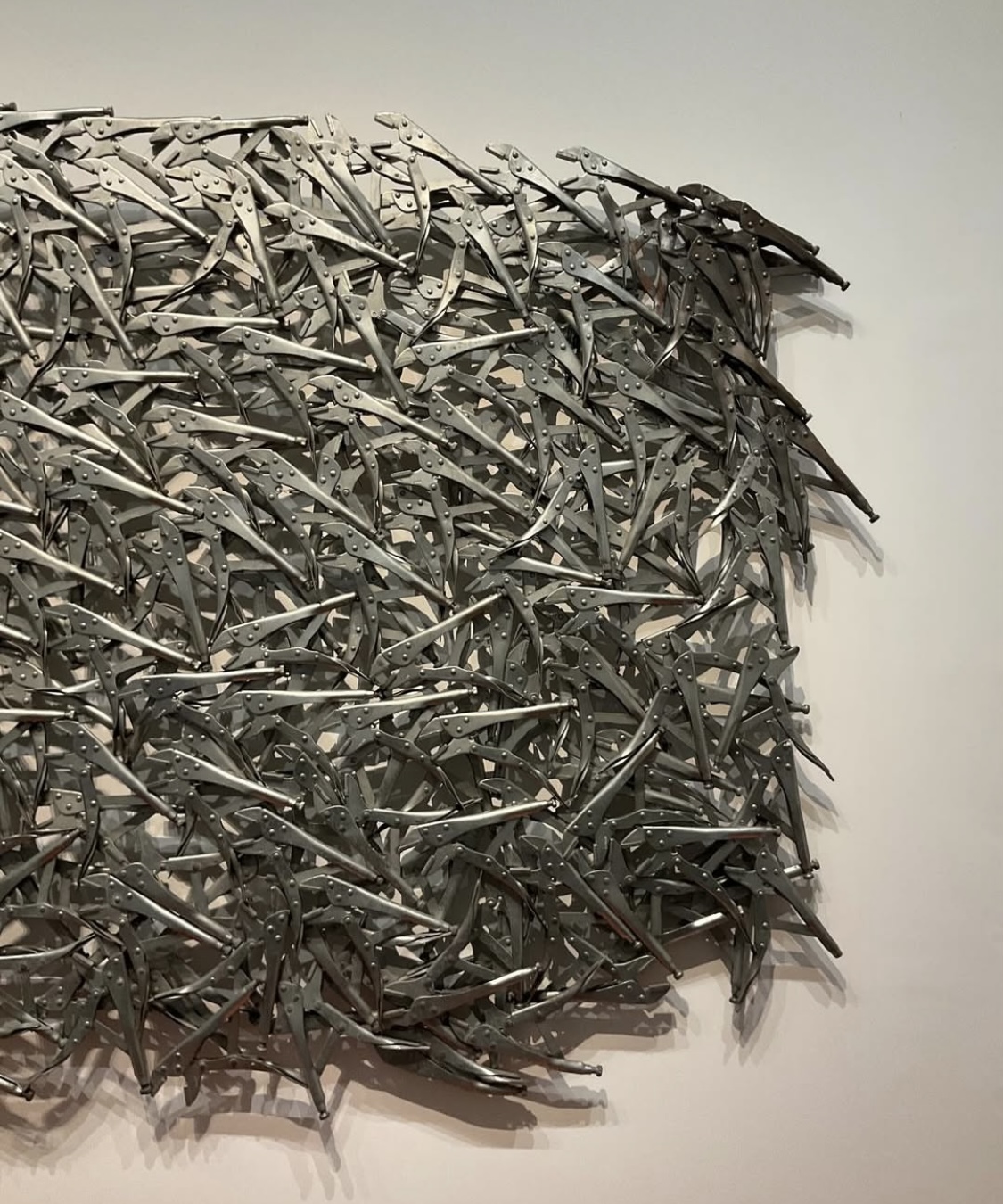
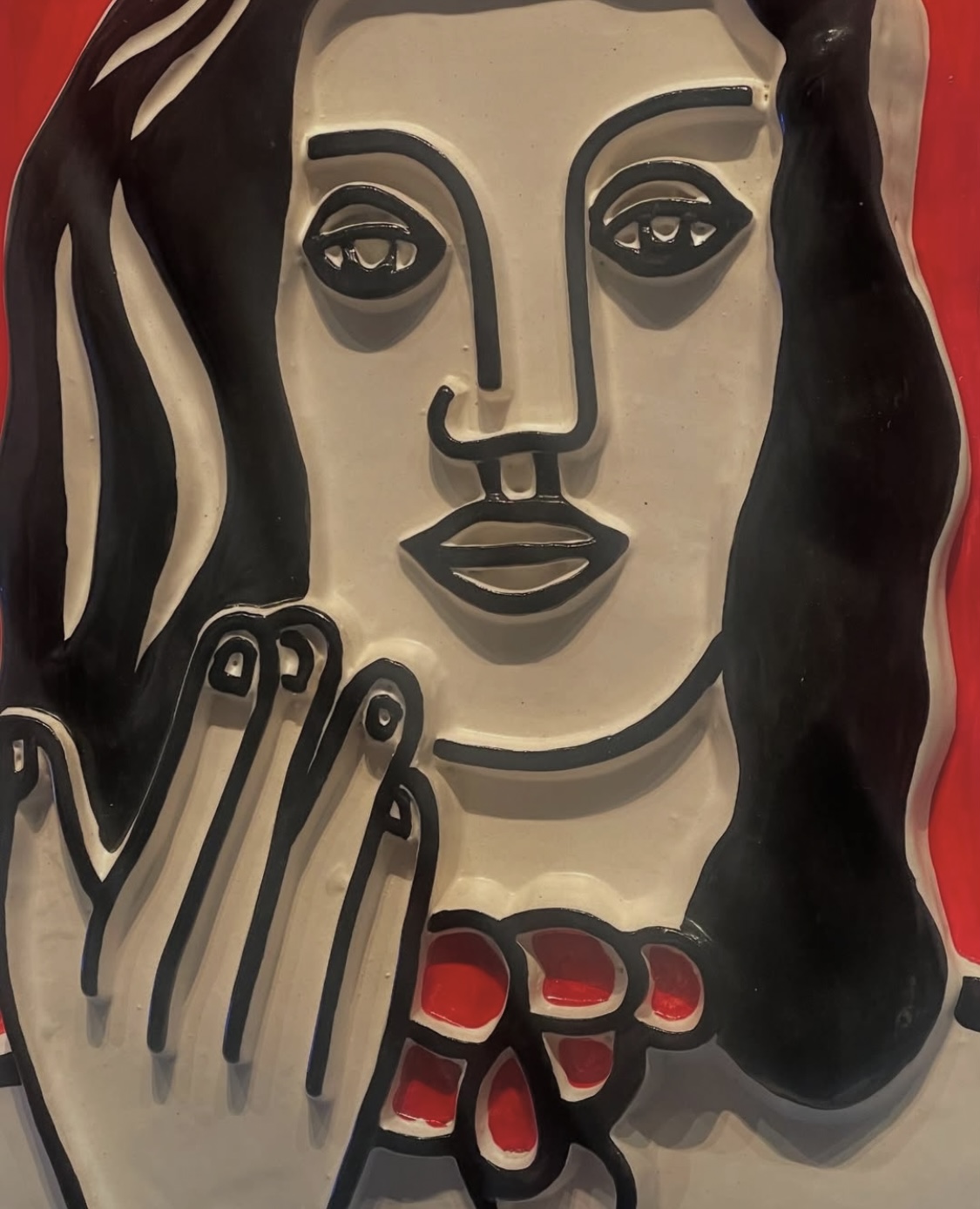
Thanks to an unprecedented partnership between two major dSEE DU collections on the Côte d’Azur, the works of Niki de Saint Phalle, Arman, Yves Klein, Raymond Hains, Martial Raysse and César come together with the plastic innovations of Fernand Léger, one of the pioneers of the avant-garde in the 20th century.

Alongside these leading representatives of New Realism, works by artists such as Roy Lichtenstein and, later, Keith Haring, illustrate the early artistic exchanges between European and American artists.

The exhibition, featuring nearly 100 works, explores various thematic themes in a playful and creative manner: the repurposing of objects, the representation of the body and leisure, and the place of art in public spaces.

Through powerful artistic gestures, artists elevate elements captured in their most banal reality to the rank of works of art. They merge art and life and reveal to the viewer the poetic beauty of our daily lives.

March 19 – July 20, 2025

MUSEE du LUXEMBOURG

19 rue de Vaugirard 75006 Paris

Intimacy

From the Chamber to social networks

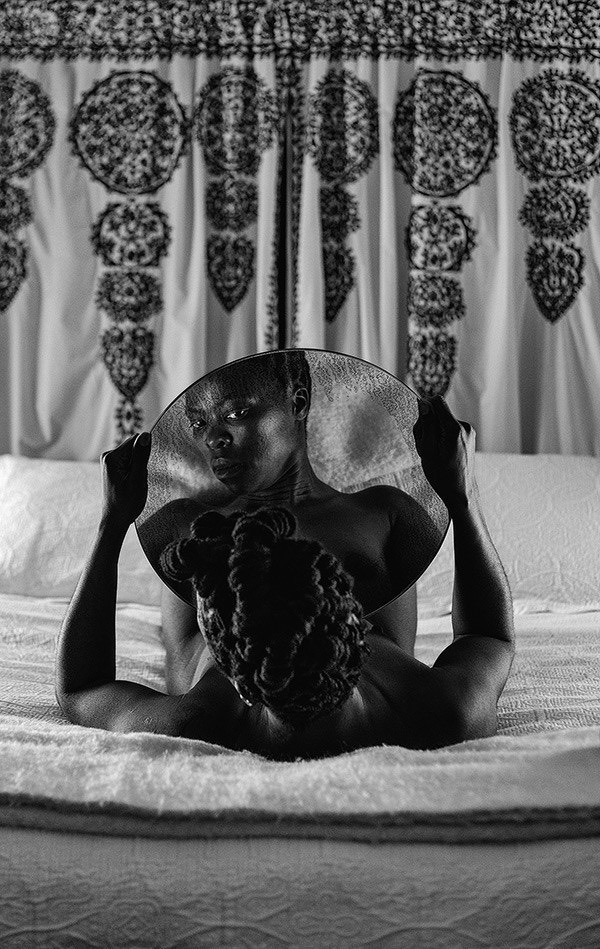
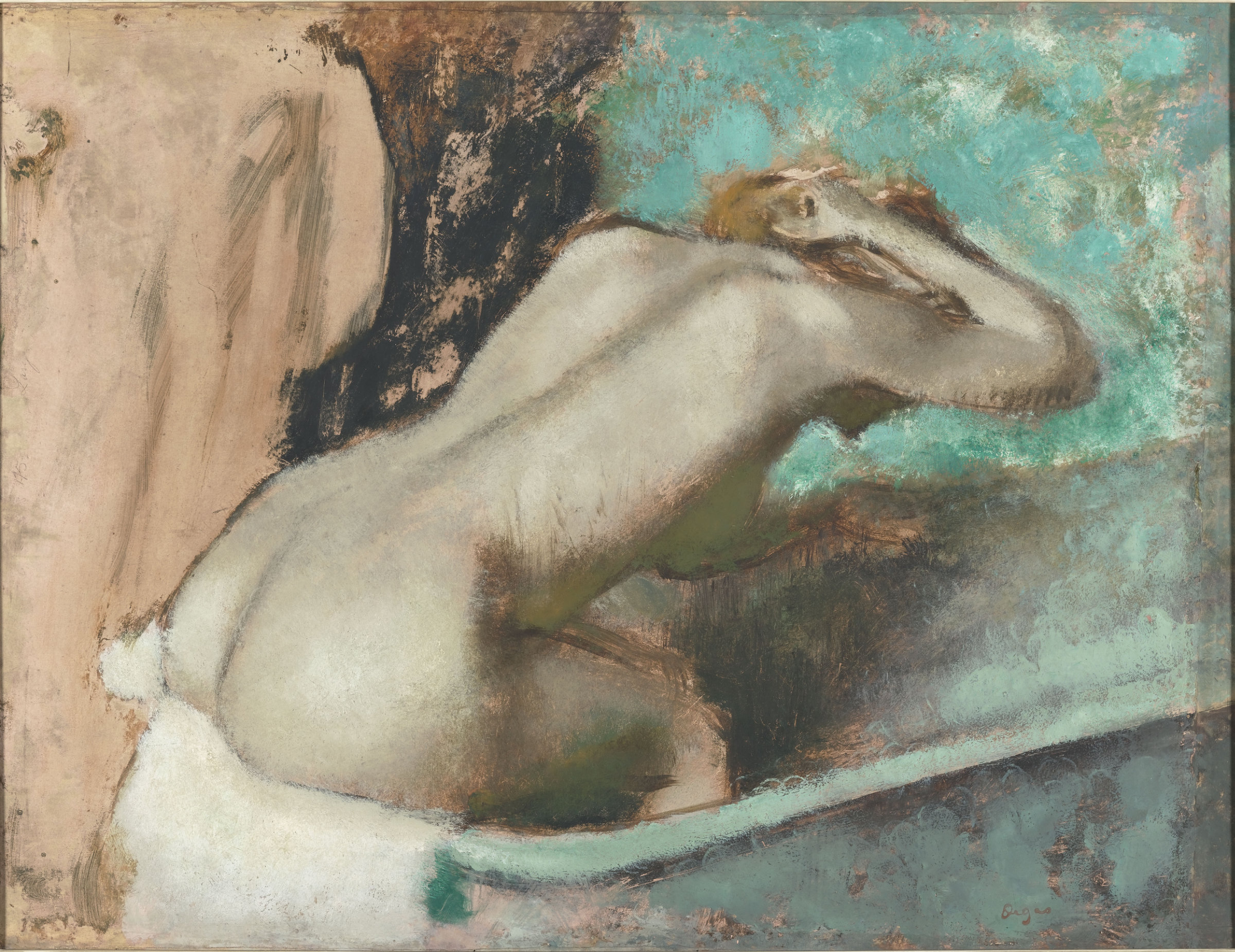
A fascinating journey into the heart of our secret gardens through a history of intimacy from the 18th century to the present day! 470 works, paintings and photographs, as well as decorative, everyday and design art objects, reveal how intimacy has evolved. From the bedroom seen by Henri Cartier-Bresson or Nan Goldin, from wrought iron beds of the 19th century to the Bouroullec Brothers’ box bed, from the commode to the women’s urinal, from objects from the dry toilet to the bathroom, from aristocratic beauty to mass consumption, from licentious books to sex toys, from the Walkman to social networks and influence, including surveillance and protection tools, the exhibition shows how intimacy has become established and then profoundly changed. The boundaries between private and public have become more blurred and porous, giving rise to many debates.

In the 19th century, with the emergence of a bourgeois class, professional and family life separated: women were then mistresses of the domestic and the intimate. Painters, mainly male, such as Edouard Vuillard, who opened the path, often represented them in their interiors. It was only gradually, thanks to feminist revolutions, that the “mystified woman” shown in Betty Friedan’s book dissociated herself from the enclosed space.

The exhibition continues in the nave with a spectacular scenography centered on twenty-five masterpieces of 20th-century design around the theme of the nest and shared intimacy. Design from the 1950s to today, through seats, sofas and beds, illustrates a constant dialectic between a desire for isolation and a chosen promiscuity. Pieces such as Eero Saarinen’s Womb Chair bear witness to the protective withdrawal of the 1950s and 1960s, while creations by Superstudio, Archizoom and Memphis reflect the desire for gathering typical of the 1960s and 1970s.
.

The tour continues at the back of the nave and in the galleries of the rue de Rivoli, addressing six themes that explore the most contemporary changes, from sexuality to social networks, including content creation and surveillance techniques. It also questions the issue of intimacy in times of precariousness and ends in a room dedicated to the most precious of intimacy, this conversation with oneself that the personal diary offers. Finally, a work by Thomas Hirschhorn, quoting the philosopher Simone Weil, invites us to reflect on the possibilities of social networks and to consider a new humanism.

October 15, 2024 – March 30, 2025

MAD

107 rue de Rivoli 75001 Paris

Olga de Amaral

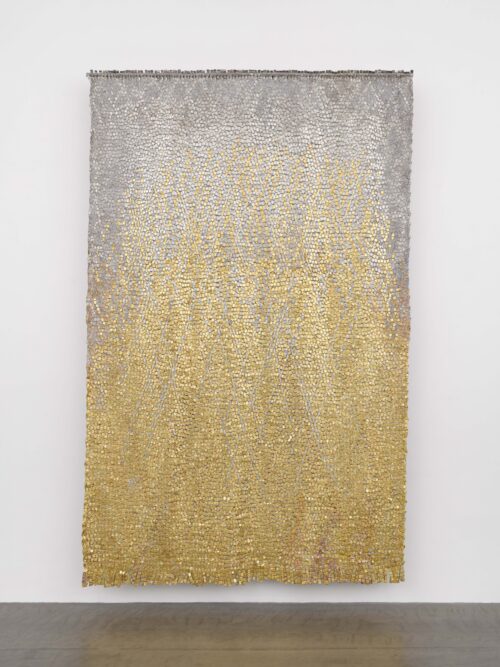
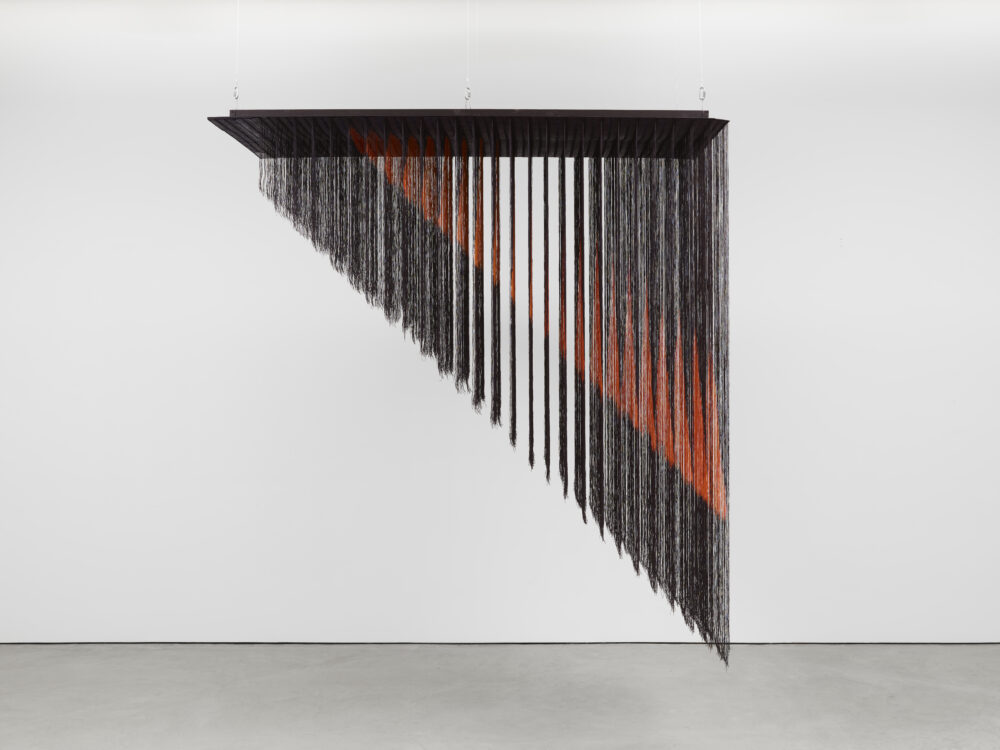
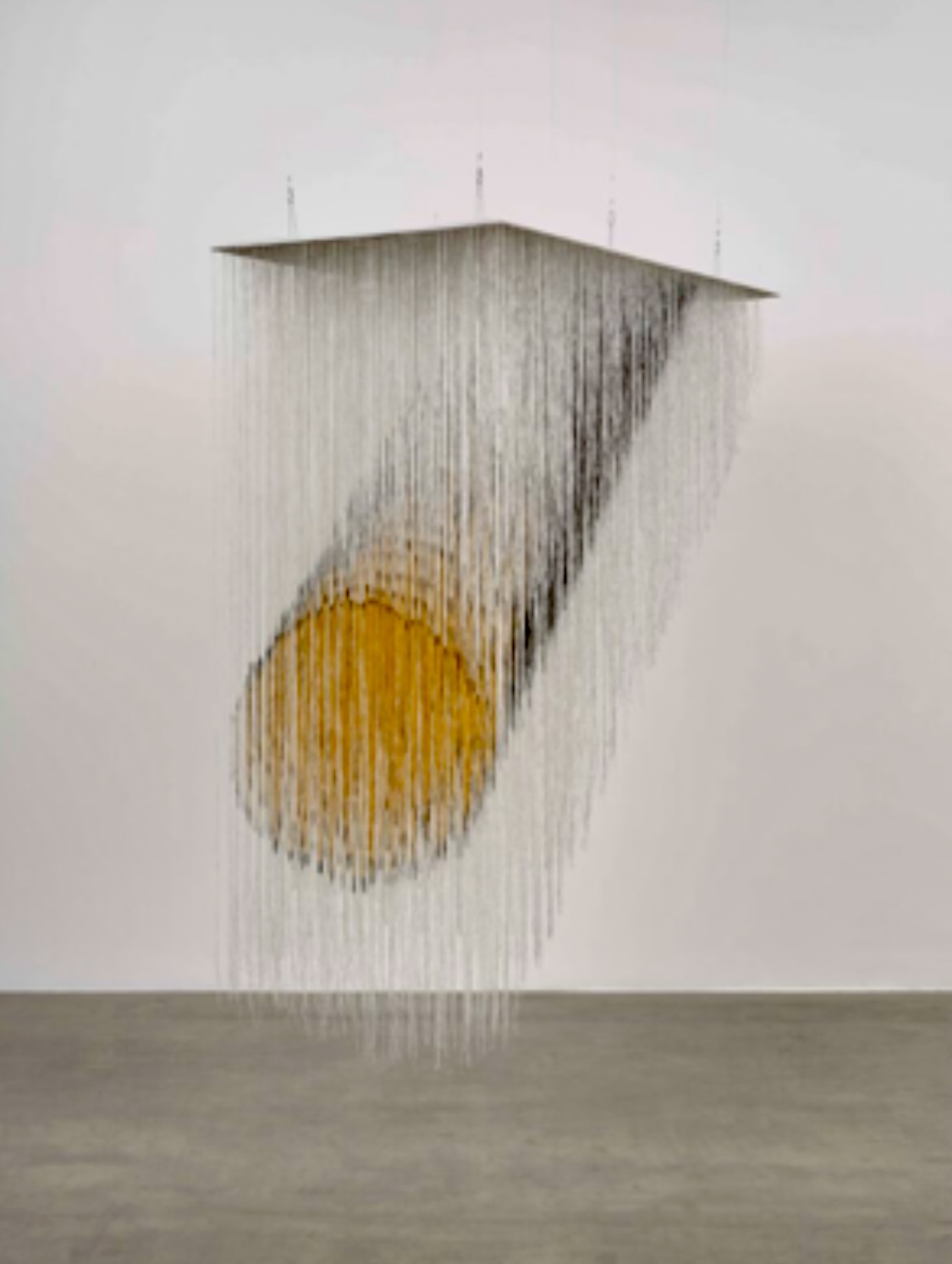
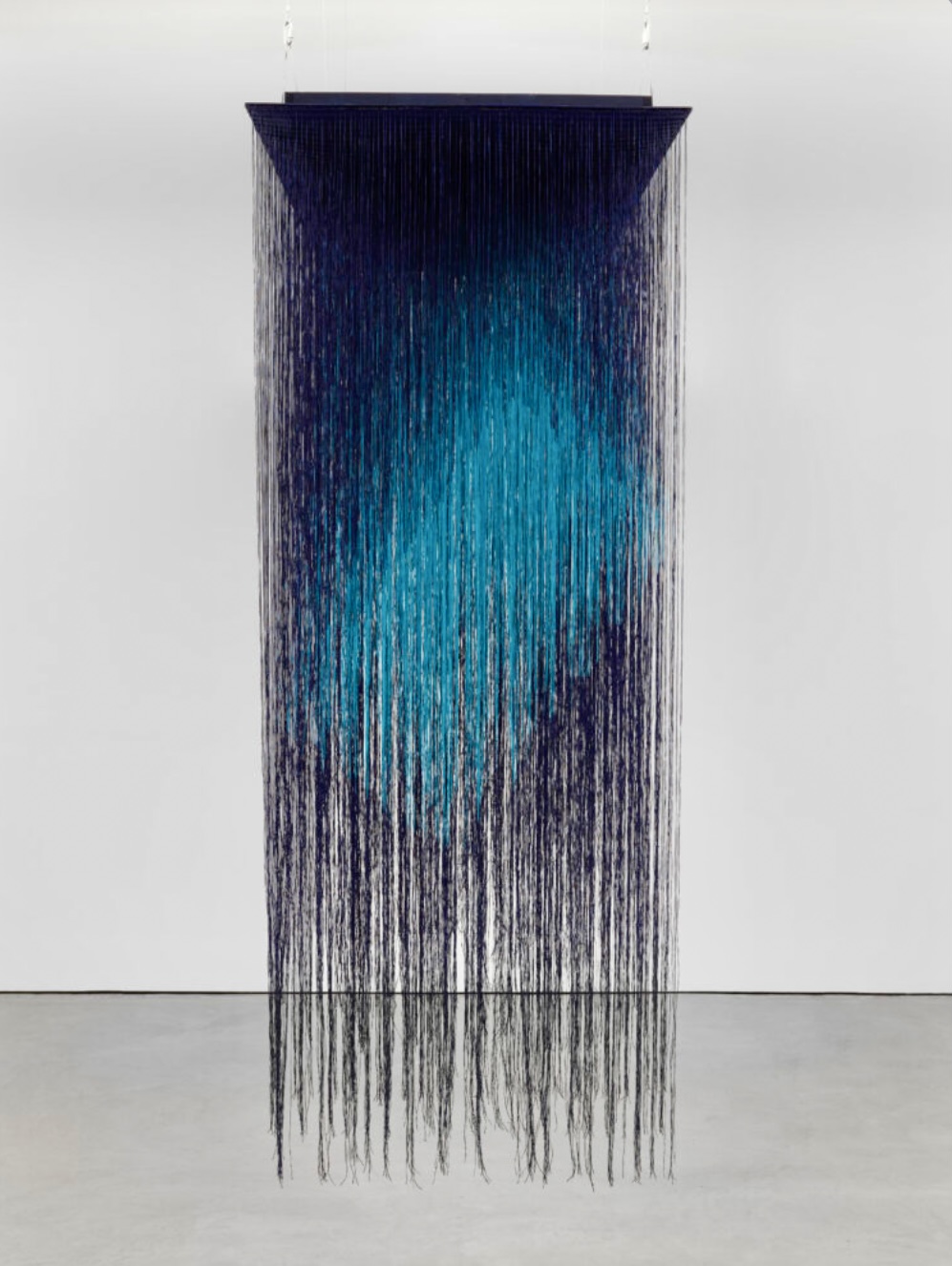
The first major retrospective in Europe of Olga de Amaral, a key figure in the Colombian art scene and Fiber Art. The exhibition brings together nearly 80 works created between the 1960s and today, many of which have never been presented outside of Colombia. In addition to the vibrant gold leaf creations that made the artist famous, the exhibition reveals her very first textile research and experiments as well as her monumental pieces. Since the 1960s, Olga de Amaral has pushed the boundaries of the textile medium by multiplying experiments on materials (linen, cotton, horsehair, gesso, gold leaf or palladium) and techniques: she weaves, knots, braids, intertwines threads to create immense three-dimensional works. Unclassifiable, her art borrows as much from modernist principles, which she discovered at the Cranbrook Academy of Arts in the United States, as from the vernacular traditions of her country and from pre-Columbian art. After presenting six works from the Brumas series as part of the Géométries Sud exhibition in 2018, the Fondation Cartier retraces Olga de Amaral’s entire career and celebrates the woman who marked a true revolution in textile art.

With this exhibition, the Fondation Cartier is revealing the audacity of this textile art, long relegated to the background because it was perceived above all as a decorative art practiced mainly by women. Firmly linked to the dynamics of post-World War II abstract art, Olga de Amaral’s ambitious creations move away from the conventional framework of traditional tapestry. This retrospective shows in particular her essential contribution to the artistic avant-garde of the 1960s, 1970s and 1980s. During her year at the Cranbrook Academy (1954-1955) in the United States, the artist developed a deep interest in colour and conducted radical experiments with material, composition and geometry. Upon her return to Colombia in 1955, she combined this learning with her knowledge of her country’s ancient textiles and developed a spontaneous and expansive style inspired by the history and landscapes of her native land: the high plateaus of the Andes, the valleys and the vast tropical plains inspired her works with their shapes and tones. Two large series presented in the exhibition particularly express this interest: Estelas (Stars) and Brumas (Mist).

It was in the 1970s that Olga de Amaral discovered, through her friend the ceramicist Lucie Rie, the Japanese technique of kintsugi, which consists of repairing an object by highlighting its fault lines with gold powder. This metal quickly became one of her favorite materials, allowing her to transform textiles into an iridescent surface that diffracts and reflects light. In 2013, Olga de Amaral initiated a new series entitled Brumas, three-dimensional, slightly moving aerial weavings that reveal simple geometric patterns painted directly on the cotton threads. This time, it is a cloud, a fine rain of pure color that the artist invites us to cross.

October 12, 2024 – March 16, 2025

FONDATION CARTIER

261 boulevard Raspail 75014 Paris

Birth and Renaissance of Italian drawing

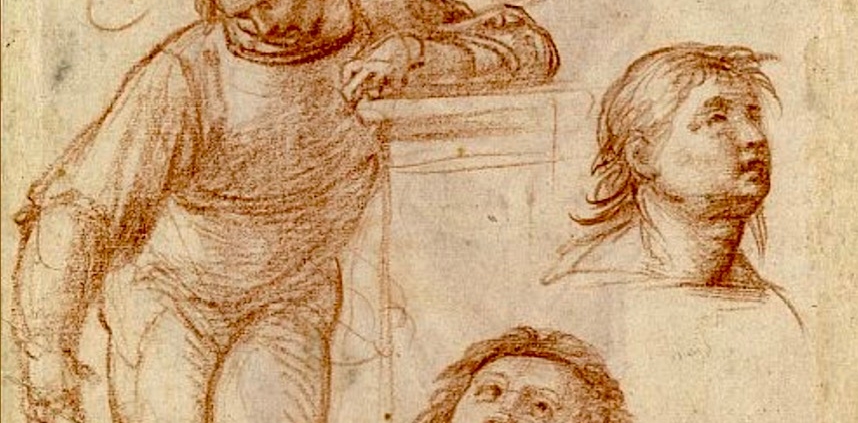
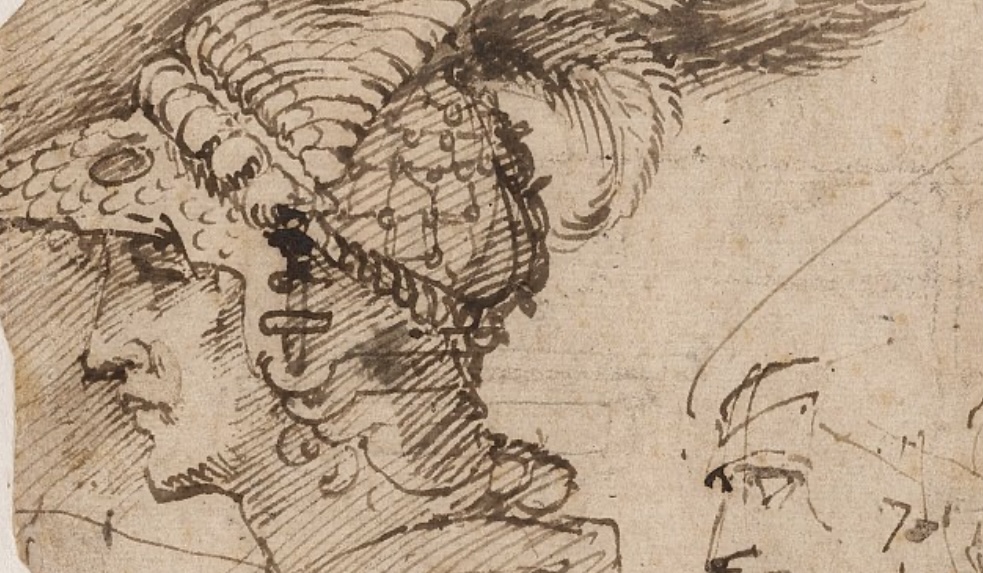
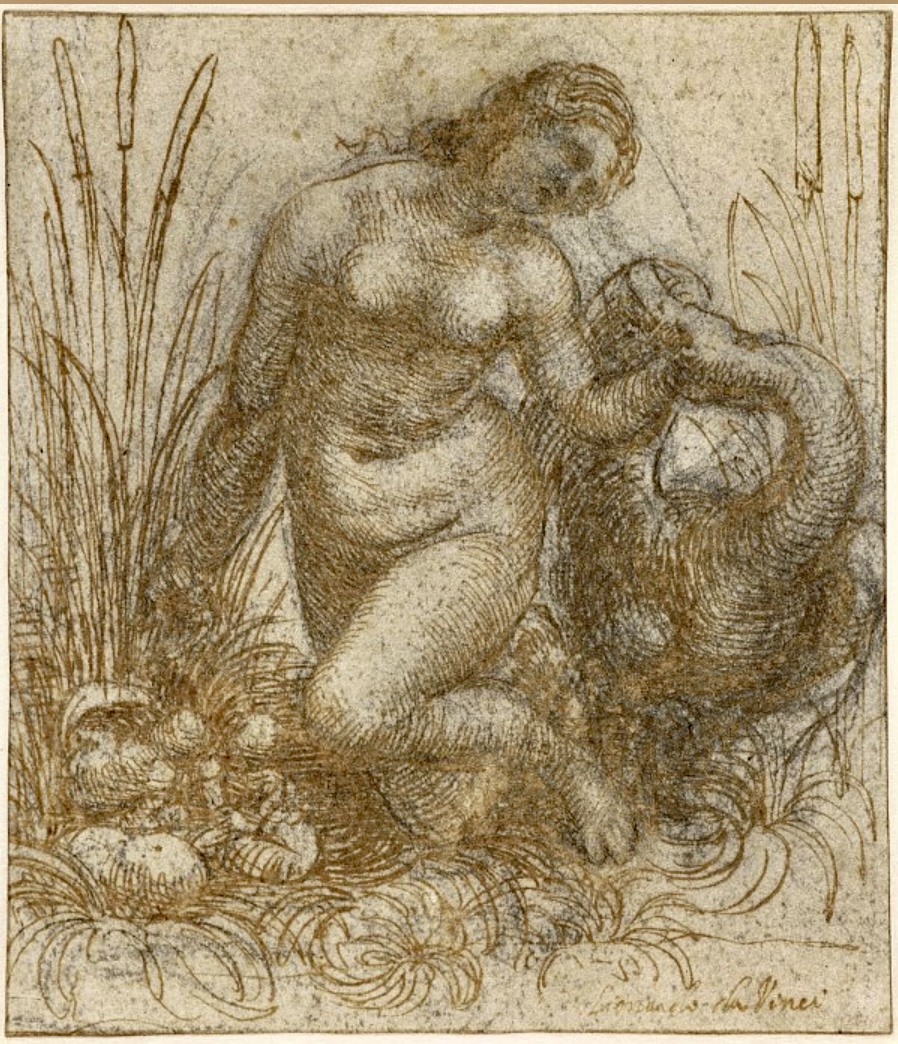
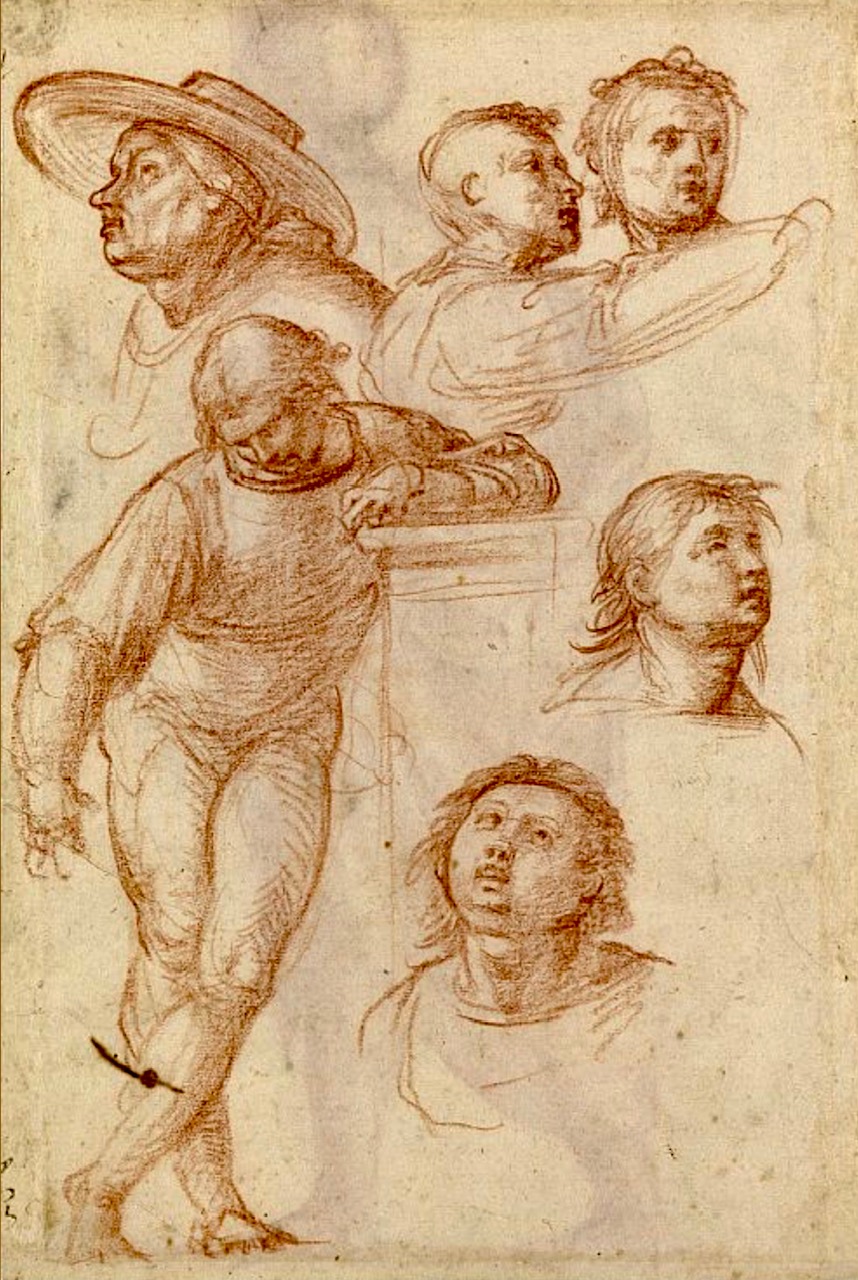
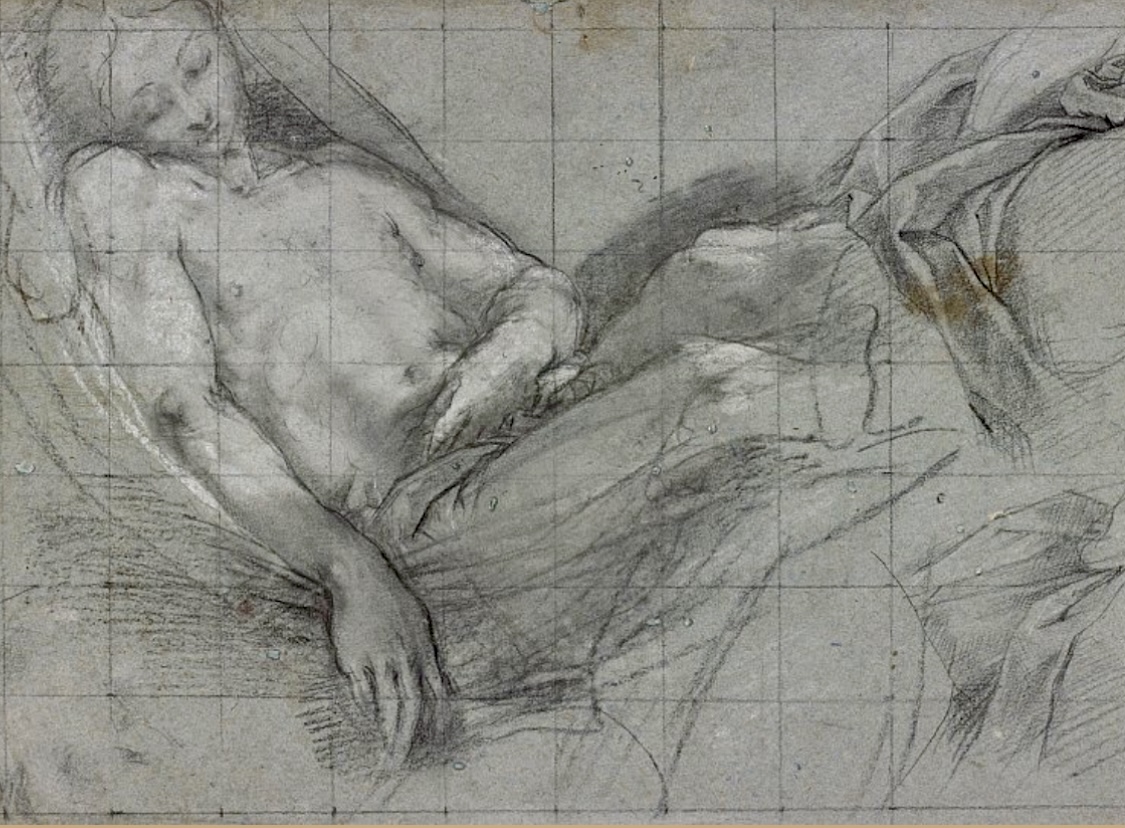
An exhibition that offers to discover the major designers who led the artistic developments of the Italian Renaissance. Pisanello, Leonardo da Vinci, Raphael, Michelangelo, Veronese, Correggio… Thanks to research work carried out at the Museum Boijmans Van Beuningen, in collaboration with international experts and the Fondation Custodia, discoveries have been made about these sheets and some have been reattributed to leading artists such as Pontormo, Federico Zuccari, Aurelio Lomi, or Pellegrino Tibaldi.

The drawings of the precursors of the Italian Renaissance, at the beginning of the 15th century, now rare, are one of the highlights of the collection of the Museum Boijmans Van Beuningen. Several studies by Pisanello, Parri Spinelli, or Benozzo Gozzoli introduce the exhibition. From then on, we can see the pre-eminence of Florence and Venice. As the main centres of artistic creation at that time, these schools also dominate the Rotterdam collection. The latter is also world-renowned for its exceptional collection of drawings by Fra Bartolomeo: thirteen sheets out of the 400 that the institution holds are presented in Paris, as the heart of Florentine production. Venice is not to be outdone, and the exhibition brings together its greatest representatives: Vittore Carpaccio, Gentile Bellini, Veronese, Tintoretto and their workshops, as well as that of the Bassano.

Drawings by the three great masters of the Renaissance – Leonardo da Vinci, Raphael and Michelangelo – form the highlight of the exhibition and lead to the works of artists from Rome (Giulio Romano, Sebastiano del Piombo), Emilian (Parmesan, Correggio) and other schools, who assimilated and appropriated the influence of these artists. As an opening, the exhibition ends with the generation of draftsmen active at the end of the 16th century and at the turn of the 1600s, actors of the bella maniera, heralds of the Baroque and Classicism. Among them, the Baroche, the Zuccari, the Cavalier d’Arpin, the Carracci…

October 12, 2024 – January 12, 2025

FONDATION CUSTODIA

121 rue de Lille 75007 Paris

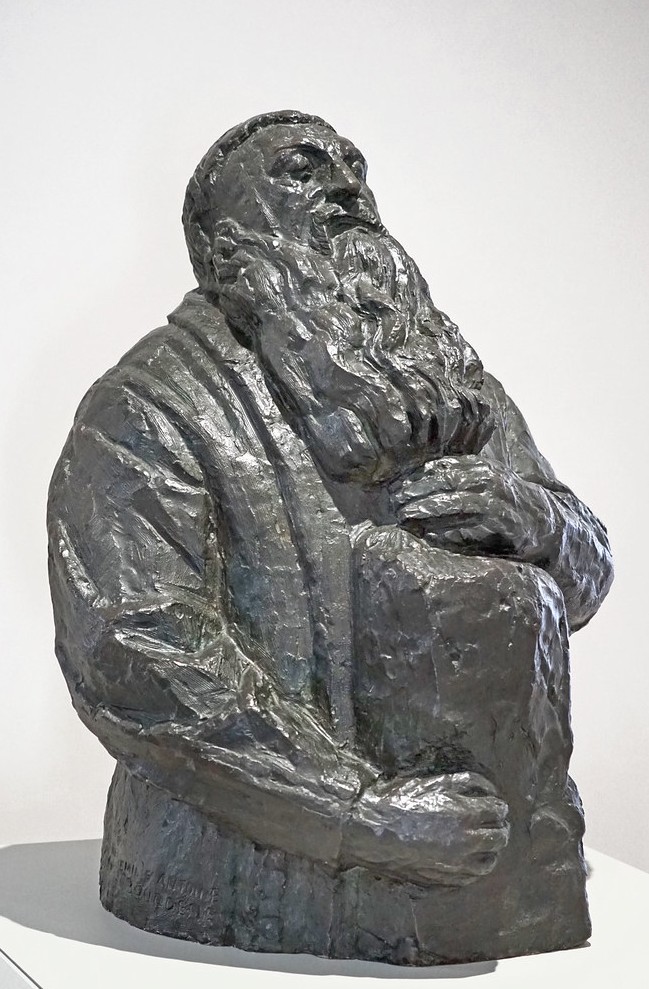
Rodin / Bourdelle

Body to Body

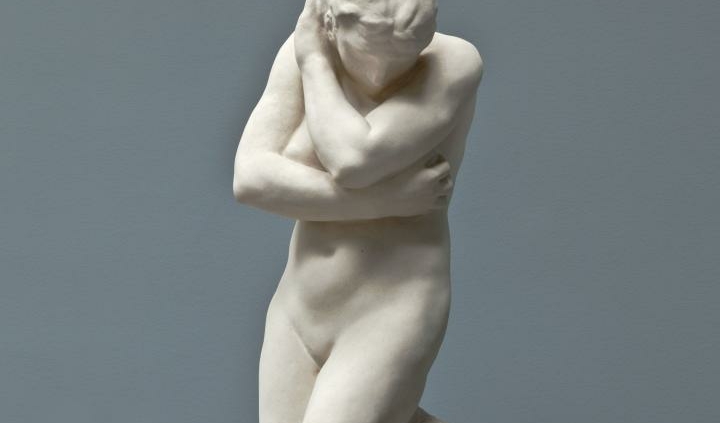
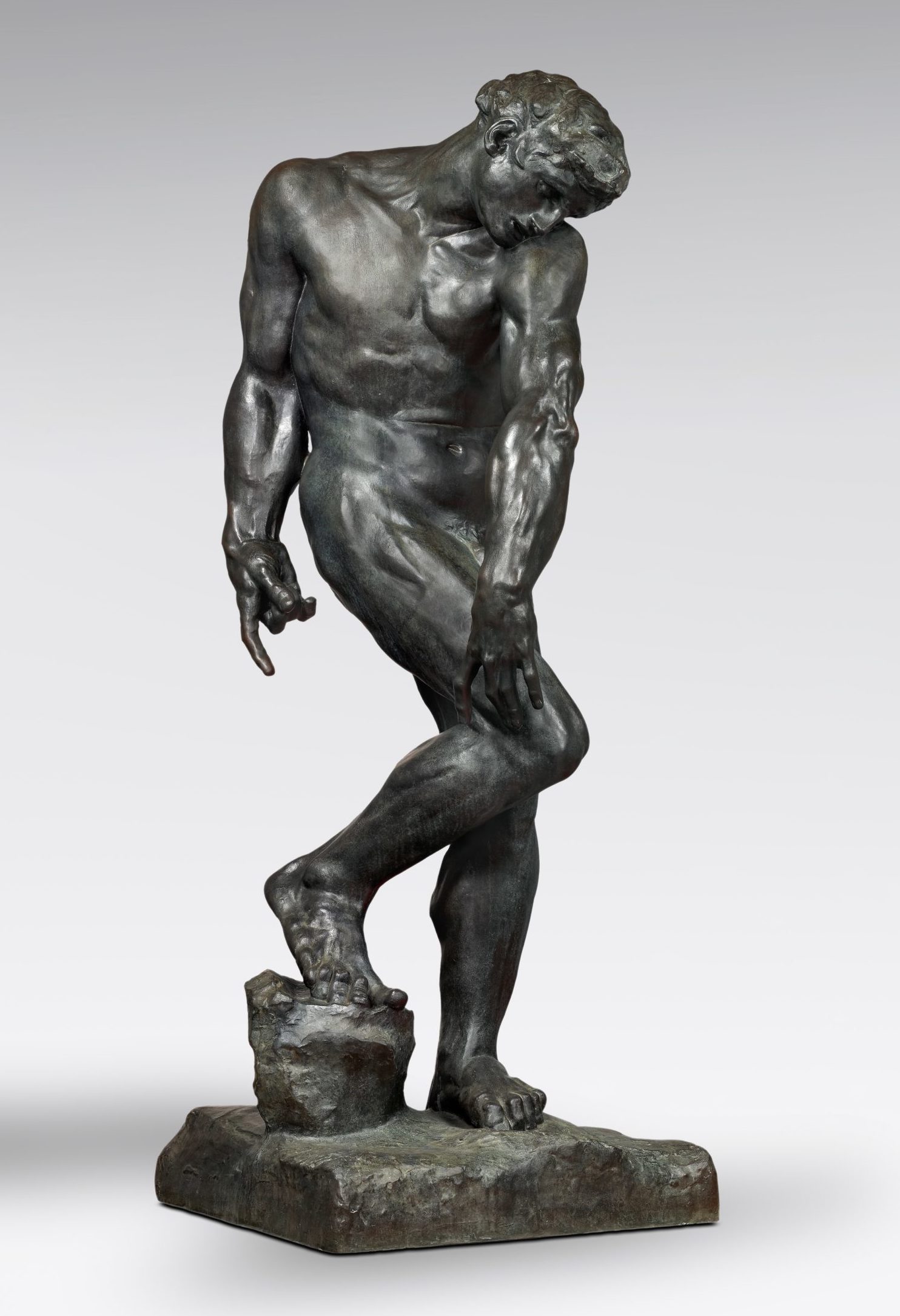
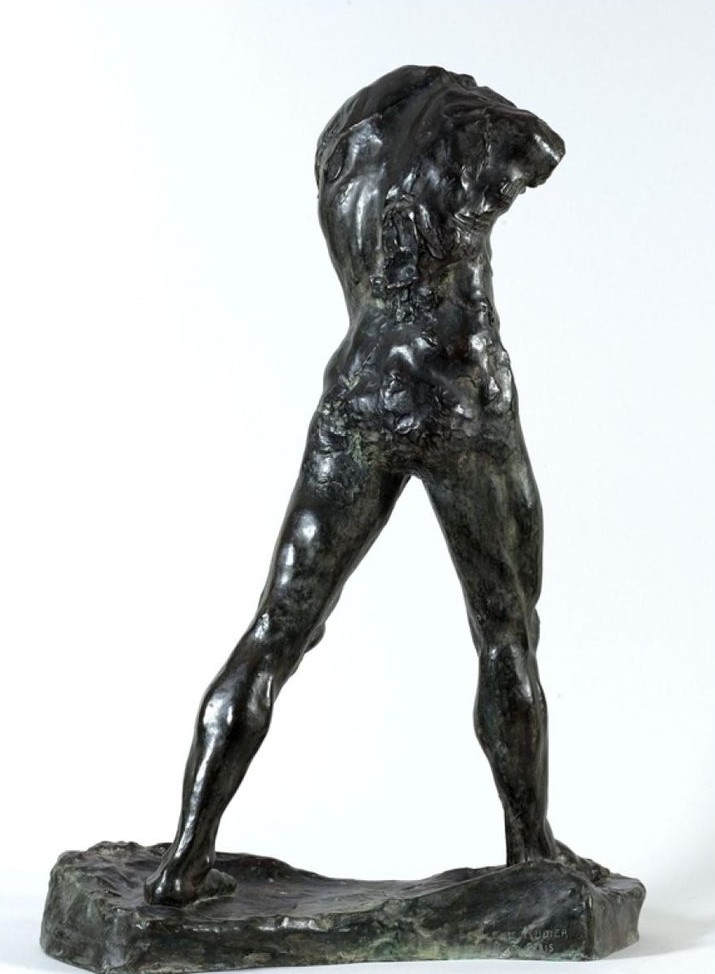
Antoine Bourdelle (1861-1929) admired Auguste Rodin (1840-1917), twenty years his senior. He worked for fifteen years as a practitioner, responsible for carving marbles for Rodin. The master saw in this heir, willingly unruly, a “scout of the future”. Through more than 160 works, including 96 sculptures, 38 drawings, 3 paintings and 26 photographs, the confrontation reveals, with an unprecedented ambition and scope, the fraternities and reciprocities as well as the divergences and antagonisms of two creators, of two plastic universes, bearers of the major challenges of modernity.
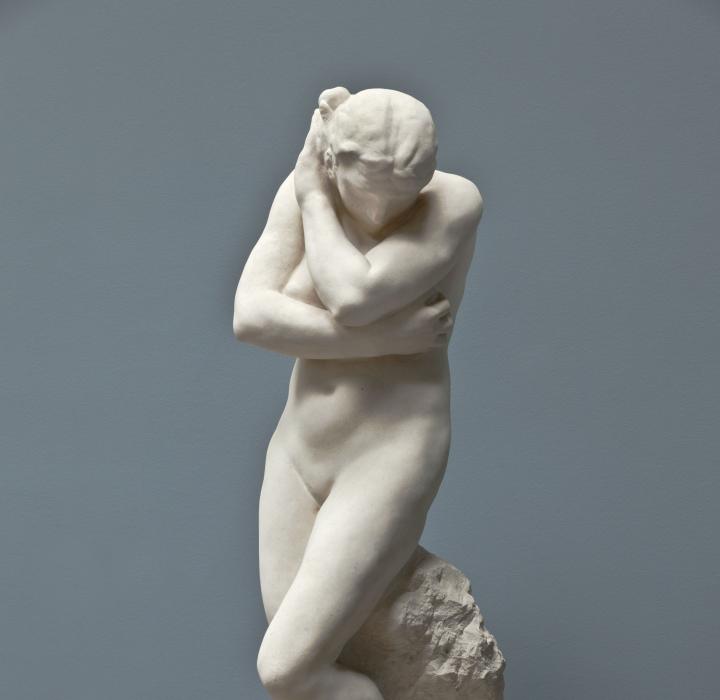
Nephew of a stonemason and son of a cabinetmaker, Antoine Bourdelle learned how to work with the material at a very early age. Auguste Rodin became acquainted with his younger brother’s work at the Salon of the National Society of Fine Arts in 1892. Besieged with orders, Rodin then employed around ten practitioners, and solicited Bourdelle.

Between 1893 and 1907, Bourdelle carved around ten marbles for Rodin in his studios (now the Bourdelle Museum), assisted by his own practitioners and students. Eager to be more than just an executor, he offered to assist him with the founders. For his part, Rodin supported the young sculptor, particularly for the Monument aux combattant de Montauban, marked by Rodinian expressiveness. In 1902, the first tensions appeared: Bourdelle took too long to carve Eve and proposed a composition for the bust of Rose Beuret that Rodin rejected. However, their collaboration lasted a few more years. In March 1908, Bourdelle was finally able to write: “I have a lot of work at the moment. I no longer need to work for Rodin. I sell a lot.”

October 2, 2024 – February 2, 2025

MUSEE BOURDELLE


18 rue Antoine-Bourdelle 75015 Paris

Sonia Delaunay

The Simultaneous

Continuing its commitment to highlighting Sonia Delaunay after an exhibition in the spring of 2021 at the gallery, as well as a notable presentation at Art Basel in June 2023, Galerie Zlotowski presents Sonia Delaunay, la Simultanee, the third highlight dedicated to the pioneer of abstraction, who devoted 70 years of her life to her creations.

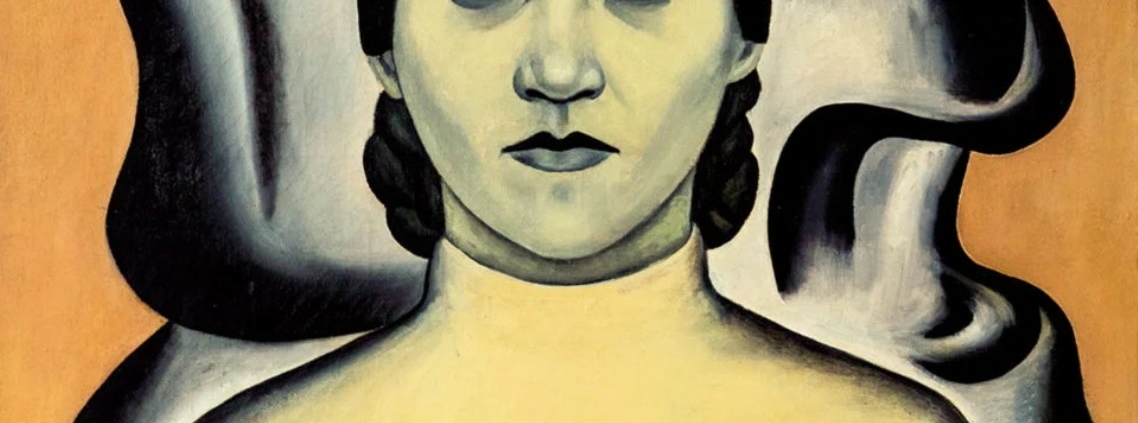
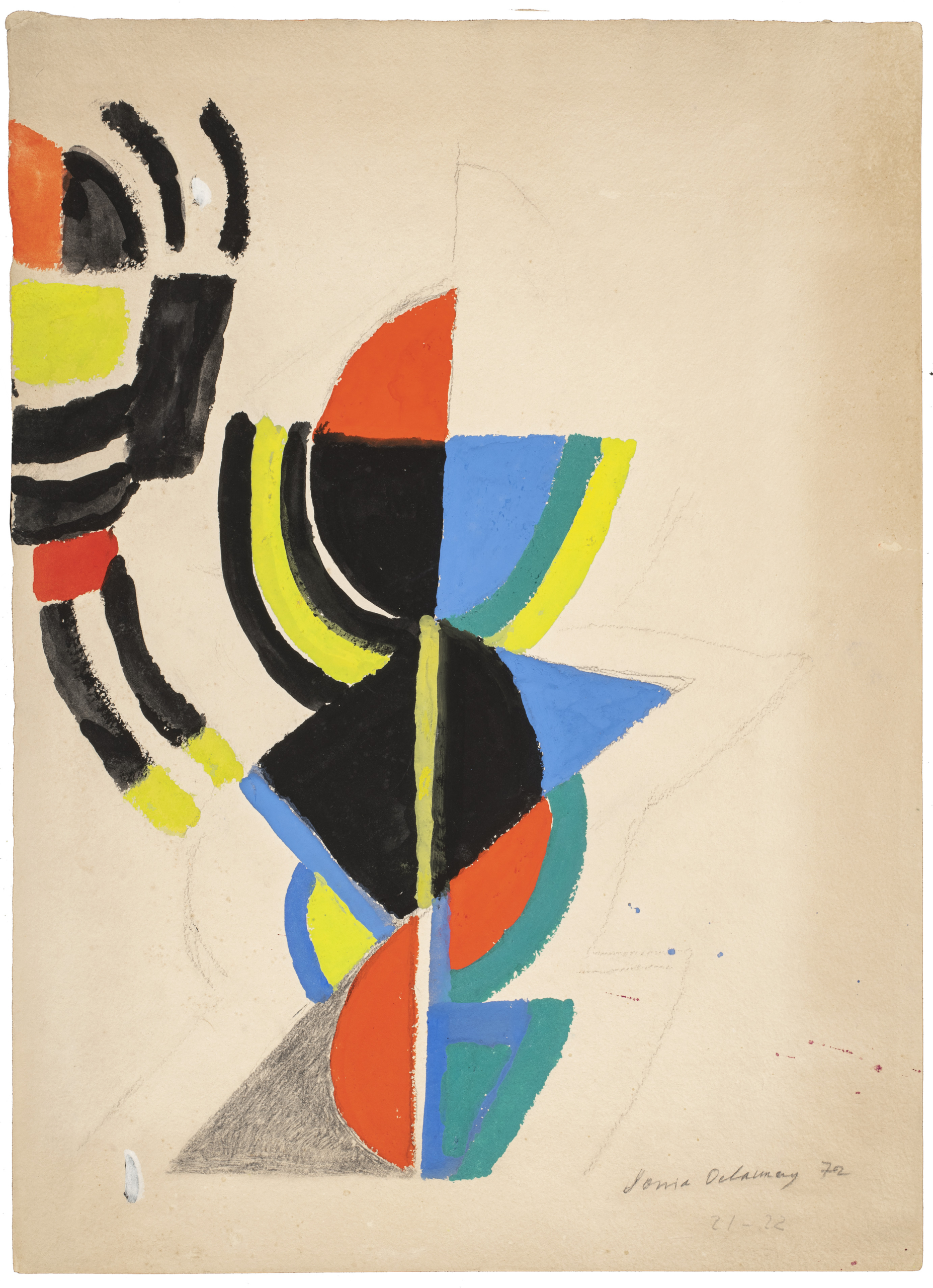
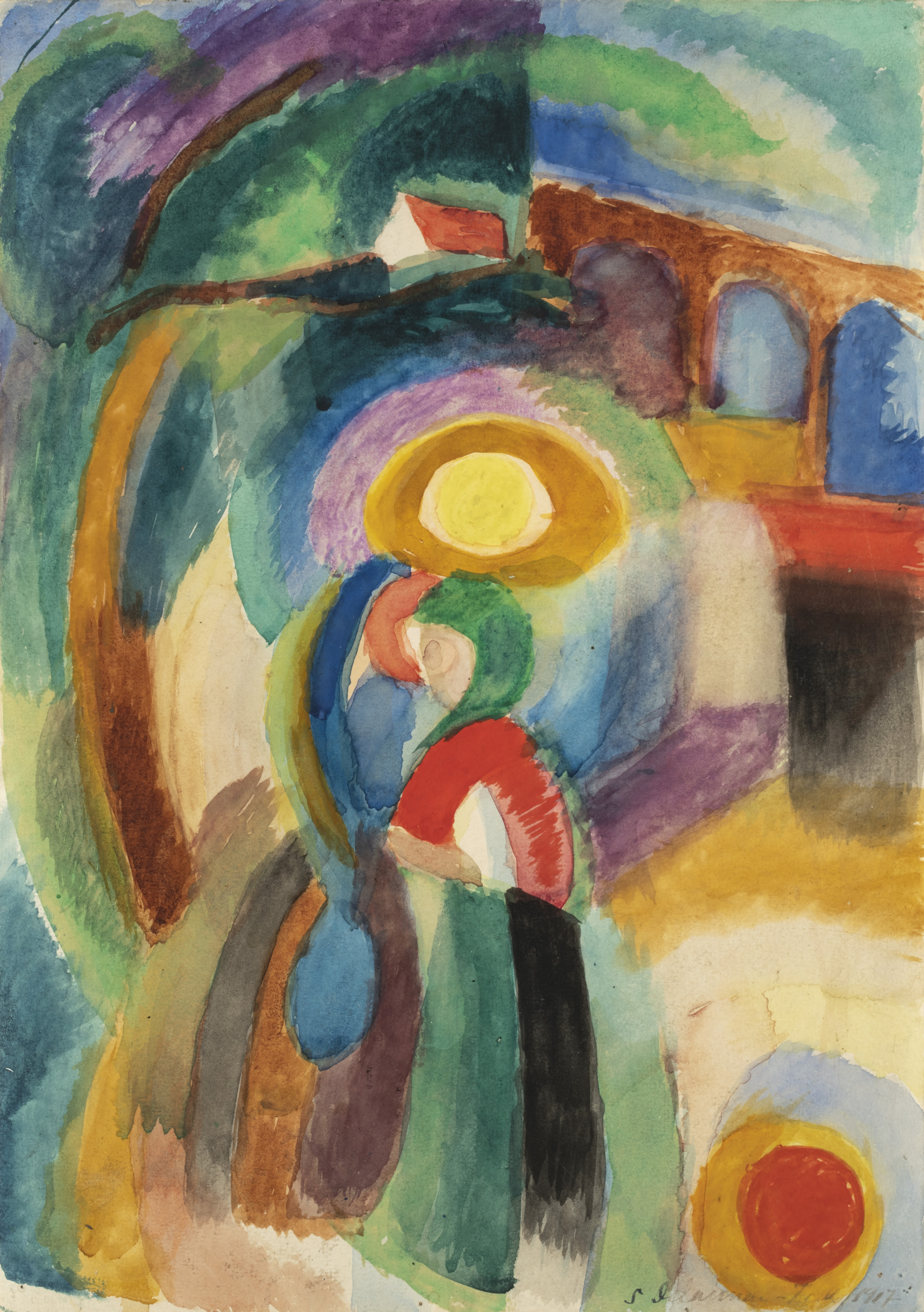
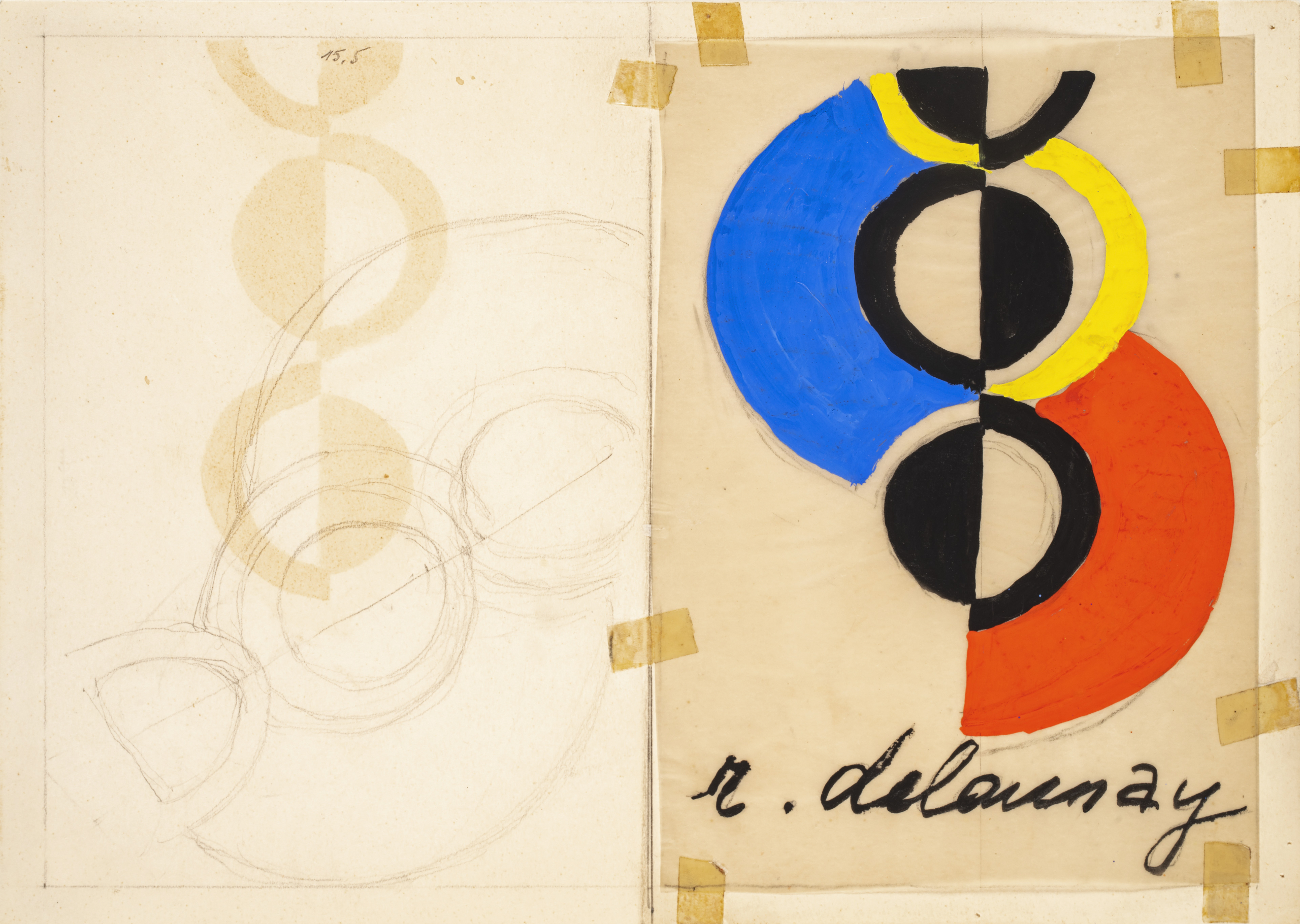
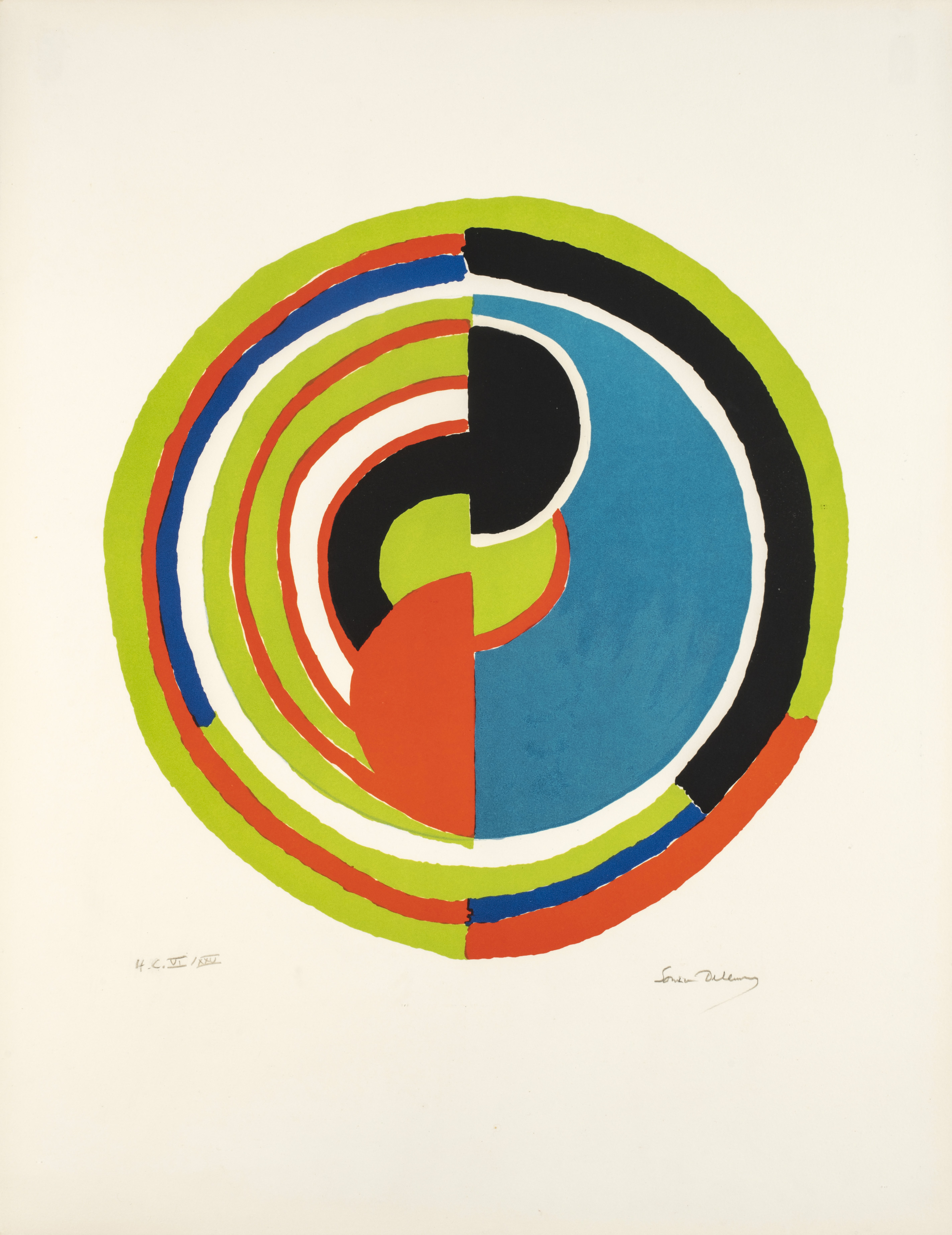
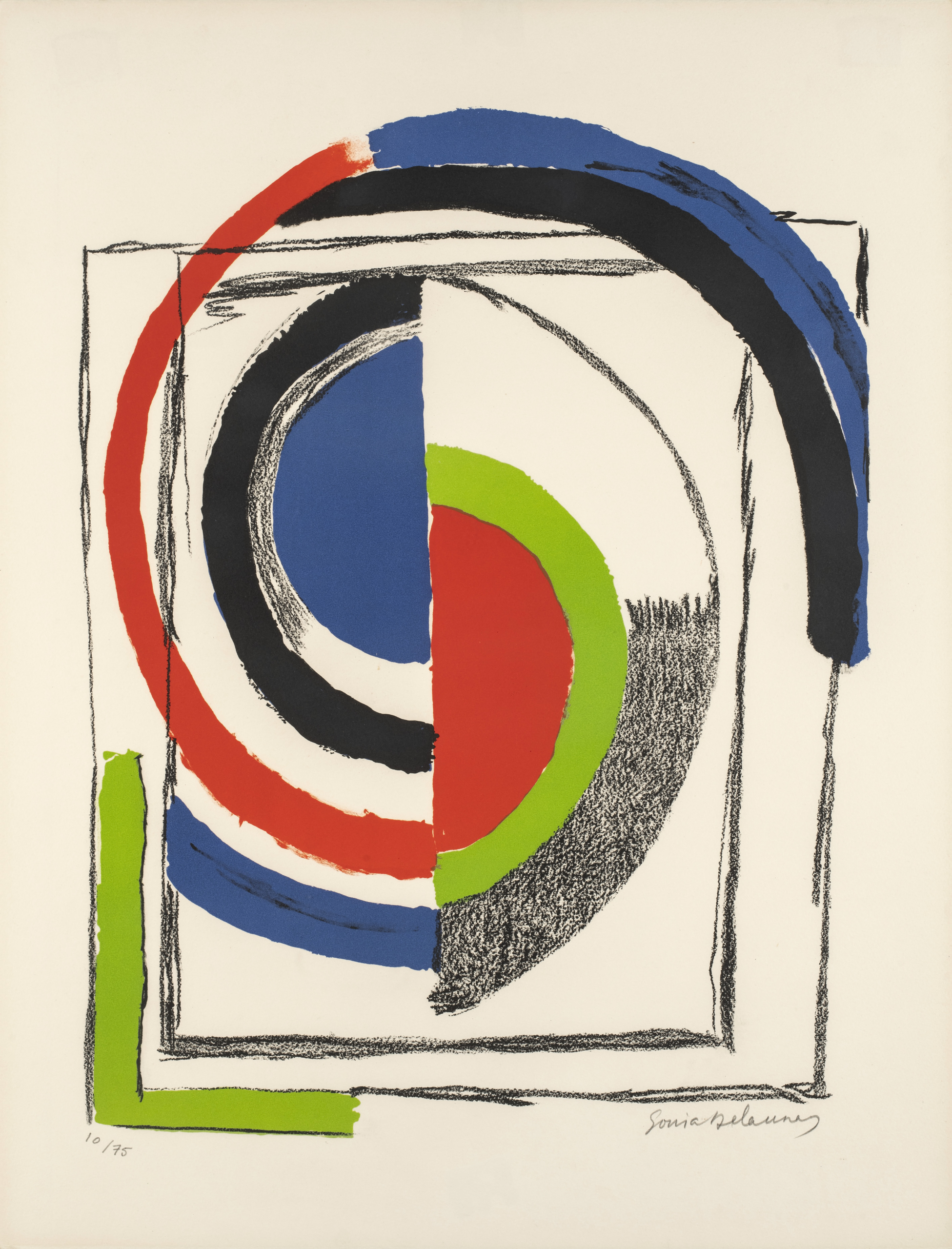
Abstract artist, fashion designer, design designer, graphic designer, successful entrepreneur, godmother of abstraction, explorer of mediums, Sonia Delaunay had, almost simultaneously, all these facets. This frenzy can be explained by a conception of art that goes beyond the traditional framework of drawing and canvas to conquer life itself. Sonia Delaunay has constantly abolished the boundaries between visual art and decorative art, while remaining faithful to the principles of “simultanism”, a conception of abstraction focused on the interaction of colours, which she developed with her husband Robert in the 1910s. The exhibition presents emblematic works of this colourful abstraction, recognisable among all, with works on paper and paintings on canvas (from 1907 to 1979, the year of the artist’s death). But Sonia Delaunay, la Simultanee ventures further, by showing pieces emblematic of this appetite for innovation and exploration, which makes the artist’s career so original: fashion drawings of course, but also book covers, tapestry projects, graphic design essays, lithographs and, even more unexpected, mosaics and playing card designs!

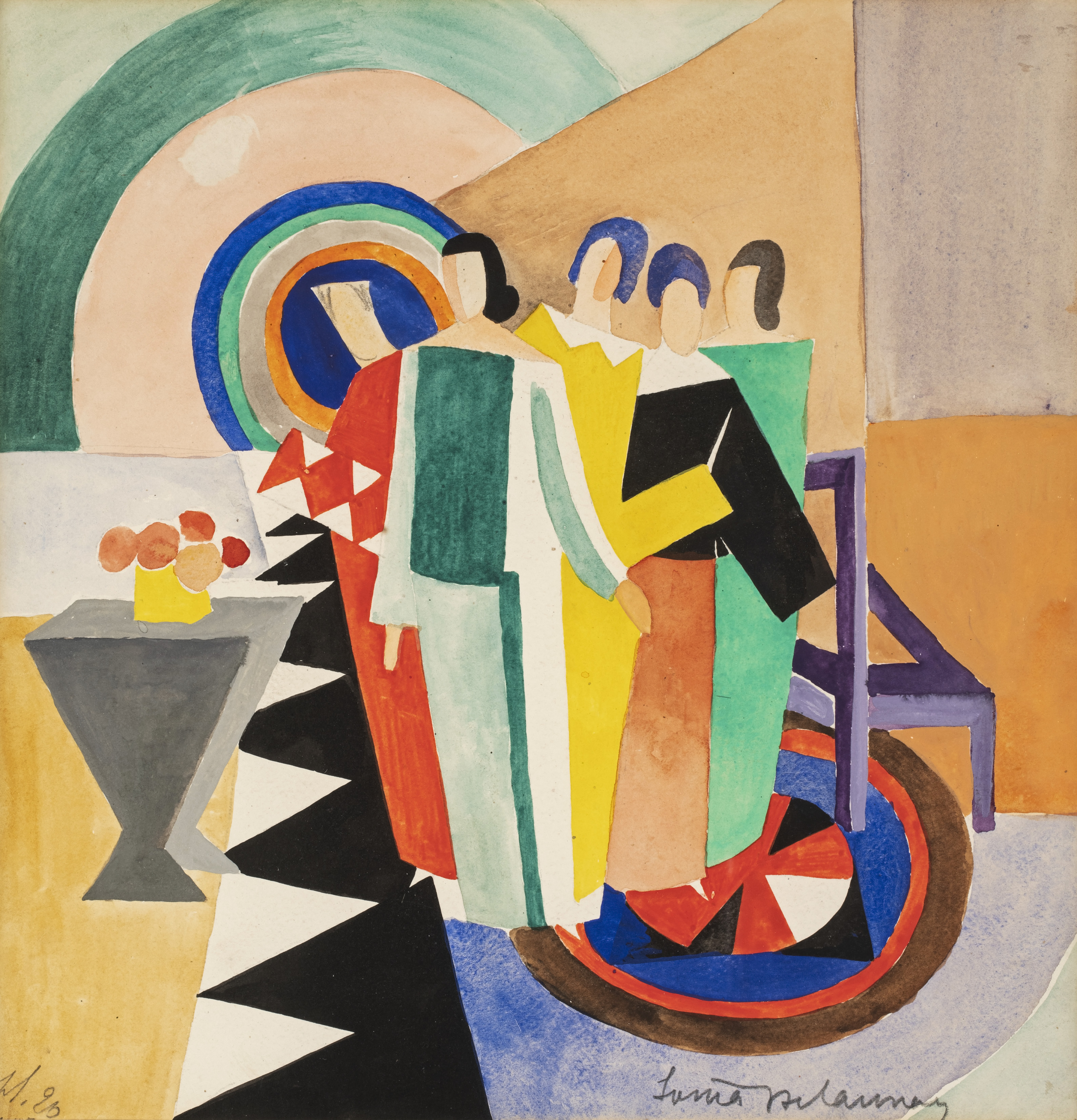
The first section of the exhibition focuses on the unparalleled collaboration that united Sonia and Robert Delaunay, who married in 1910. It shows the works of the Spanish and Portuguese stays (1914-1918), a blessed period for Sonia despite the tragic context of the war, made of meetings with local artists and intense work, inspired by the light of the Iberian Peninsula. The “simultaneism” of the 1910s does not reject figuration but extracts geometric shapes from bodies, faces or objects that organize color combinations. Beyond this ideal of creating as a duo, Robert and Sonia never ceased to support each other. While Sonia launched into the marketing of clothing in Paris in the early 1920s, Robert Delaunay executed a series of portraits of ladies dressed in Sonia Delaunay’s creations, as many tributes to his wife’s inventiveness in terms of fashion. Conversely, after Robert’s premature death in 1941, Sonia led a fierce fight to ensure that her husband found his rightful place as a pioneer in the history of abstraction that was then being written, organizing exhibitions, making donations to institutions and publishing numerous works.

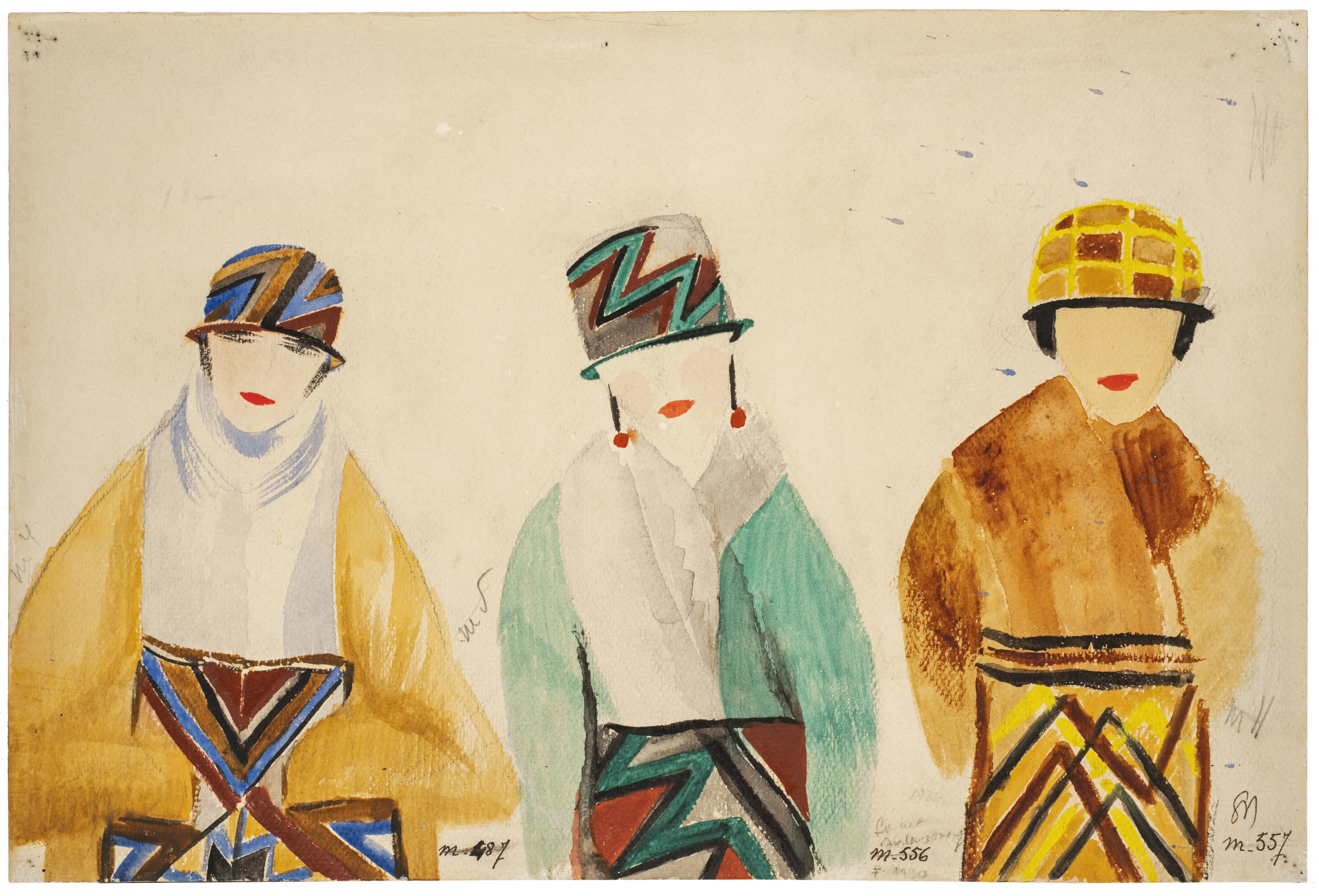
The second part of the exhibition is devoted to drawings related to the fashion that dominated Sonia Delaunay’s work in the 1920s. It is titled after the poem by Blaise Cendrars, a dear friend of Sonia, On the dress she has a body (1913), the inversion of the body and the dress underlining the revolutionary character of the Delaunay style. This vision of a redefinition of fashion is confirmed by Guillaume Apollinaire’s comment, “You have to go see in Bullier, on Thursdays and Sundays, Mr. and Mrs. Robert Delaunay, painters, who are in the process of reforming the costume there.” It was certainly material reasons that pushed Sonia Delaunay to move from avant-garde and experimental clothing to the Haute Couture entrepreneurship that would impress even Gloria Swanson, the star of Cecil B. de Mille’s films at MGM. As she lost her income from her uncle’s properties with the Russian revolution of 1917, Sonia Delaunay became, in spite of herself, an entrepreneur by creating the Casa Sonia store in Madrid (1918) and then the Maison Sonia in Paris (1925). She would not stop designing textile patterns until late in her career, notably for the Dutch house Metz & Co. The Delaunays were strategists in order to assert their place in their time and demonstrate that they were stakeholders in the changes underway. Robert theorizes: “We see a simultaneous rising fashion wave that corresponds to a desire. Fabrics, advertisements, furniture are undeniably evolving towards living color.”
Sonia’s gouaches show that fashion, invested by “simultaneism”, is the coherent extension of an artistic conception connected to life. This frequentation of “less noble” arts will nevertheless cost Sonia Delaunay her place in the history of art for a time. However, more recent exhibitions have challenged this hierarchical and dated vision. A turnaround is palpable in the retrospective Les Couleurs de l’Abstraction at the Musée d’art Moderne de la Ville de Paris (2014) and at the Tate Gallery (2015), confirmed more recently with Sonia Delaunay at the Louisiana Museum in Copenhagen (2022) and Living Art at the Bard Graduate Center in New York (2024). All these exhibitions celebrate the audacious crossings of boundaries that characterize Sonia Delaunay’s career. Thanks to them, we realize that Sonia Delaunay has succeeded in creating a living and vibrant art that operates a convincing synthesis of simultaneist arts.

The third part of the exhibition focuses on Sonia Delaunay’s pictorial production in the post-war period. She is a rare case in the history of women artists in the 20th century who achieved success and recognition during her lifetime, albeit at an advanced stage in her career. Gradually, the “woman of Robert Delaunay” established herself, placing herself at the heart of the post-war avant-garde movements. In the 1960s and 1970s, major museum exhibitions highlighted her work: she was the first woman to exhibit during her lifetime at the Musée du Louvre in 1964. And three years later, in 1967-68, a major retrospective was devoted to her at the Musée d’Art Moderne. Within the exhibition, the work that embodies this renaissance is the large gouache Rythme couleur from 1961, shown in an exhibition at the innovative Galerie Denise René.

This piece is the original version of a stencil produced for this same exhibition. If its abstraction is geometric and always organized by color, the forms are free, rhythmic, never totally clear. Far from the exactitude of the contours typical of concrete art, for which the pictorial gesture must disappear and subjectivity dissolve, the very application of the flat areas of color is palpable, as if the artist were asserting her presence. This is a characteristic that applies to all of Sonia Delaunay’s work: her presence in the work. The trace of the hand that applies the color is obvious and color modifications are sometimes visible. The series of color rhythms from the 1970s presented here are therefore emblematic of this freedom, which results in a radical synthesis of forms, as if Sonia Delaunay were going to the limits of the possibilities of “simultaneity.” But this programmatic character of an abstraction pushed to its limits is combined with an assumed imperfection, which always recalls the “profession” of the artist and his hand in full action.

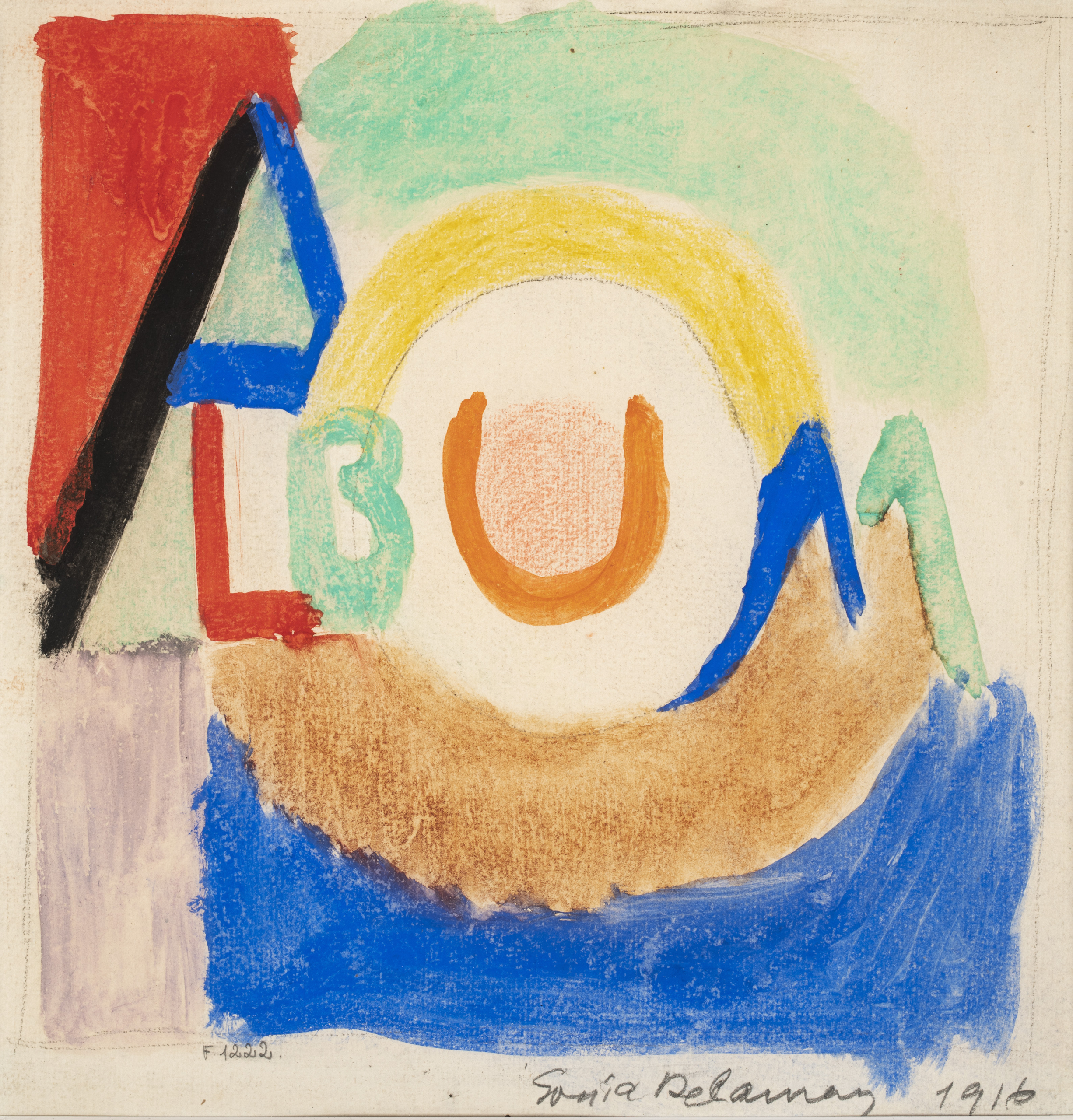
The last part of the exhibition is devoted to works that do not fall within the field of drawing or painting strictly speaking. These are playful and surprising projects, in which Sonia Delaunay ventured throughout her long career. The diversity of Sonia Delaunay’s production is astonishing. Publishing, poetry illustration, graphic design and advertising would fascinate her, to the point, for the latter field, of carrying out projects not requested by the company for which she was “advertising”. The significant production of projects linked to publications would begin very early, with the catalog cover projects of 1916, then that for the famous Album n°1 (1916) and the magazine Ararat (1917).

Sonia’s inclination towards more accessible and visible media also responds to her desire to collaborate with her allies and friends. Illustration or fashion allow her to connect with poets she admires and loves deeply, such as Blaise Cendrars or Tristan Tzara. And to attach herself to them, what could be simpler than illustrating or dressing them? This need for proximity, for cooperation with chosen beings, by affinities and affection, is the common thread of all the “off-limits” initiatives that Sonia Delaunay undertakes, as her feelings guide her production.

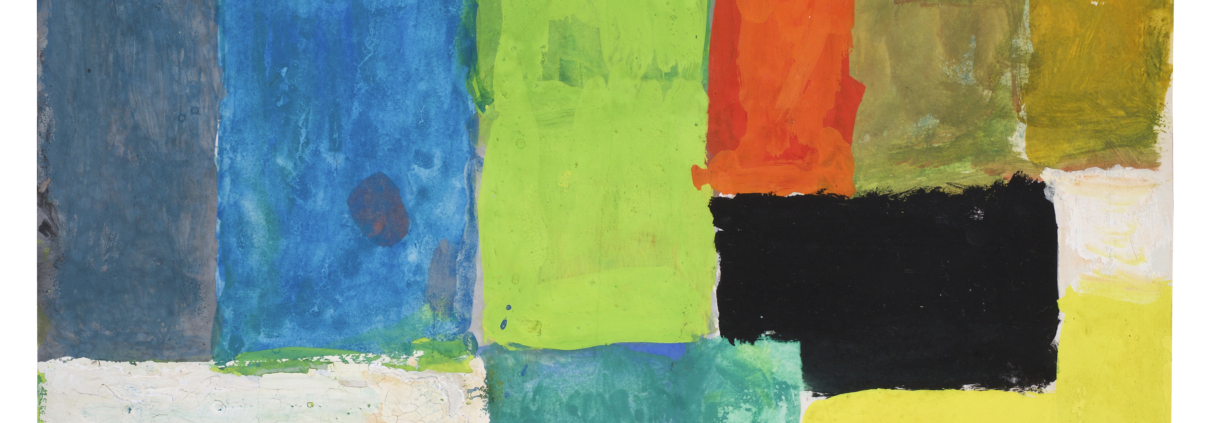
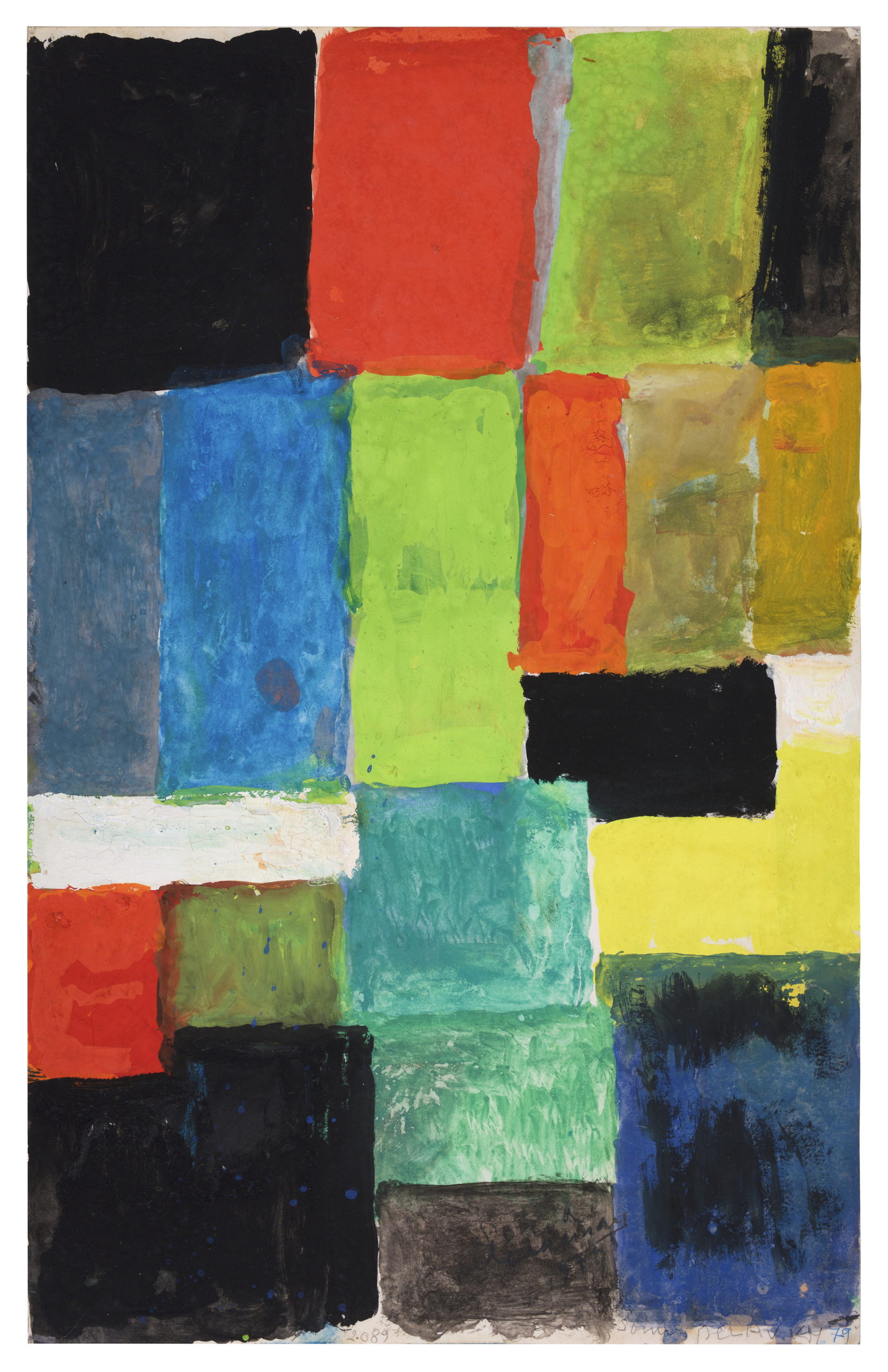
Sonia remained active until her last breath in December 1979. Her last gouaches are striking. She had never been so fully present in them. We can see the trembling of the old lady’s hand in the outline of the squares of this checkerboard, from the collection of Jacques Damasse, executed in 1979. The black seems to want to invade the other colours which, for once, seem on the point of being absent…

October 3 – November 15, 2024

Galerie Zlotowski

20 rue de Seine 75006 Paris

Galerie Roger-Viollet

6 rue de Seine 75006 Paris

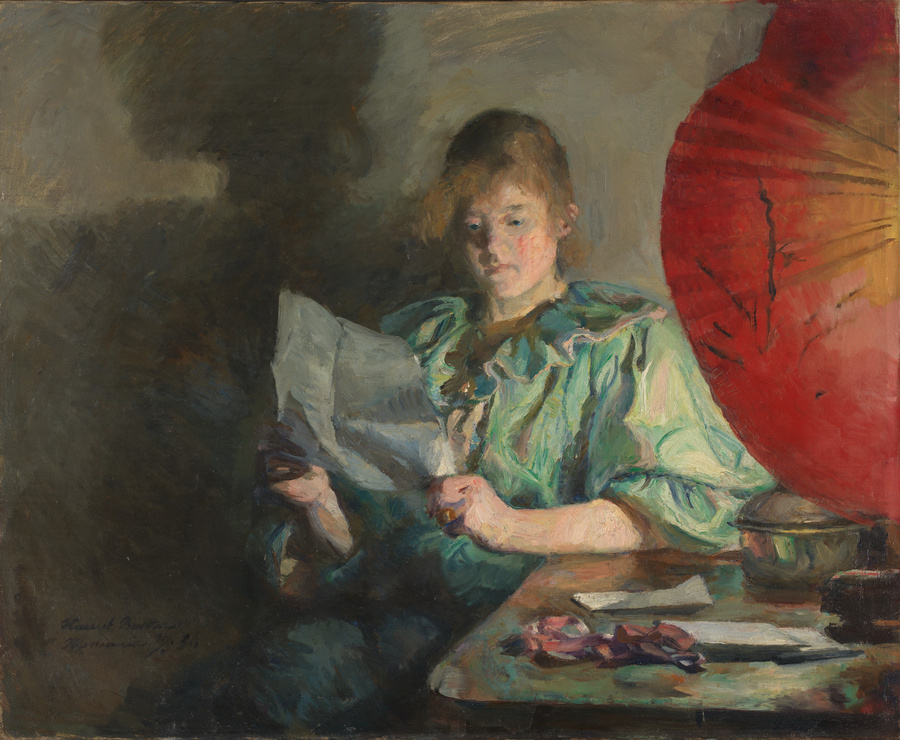
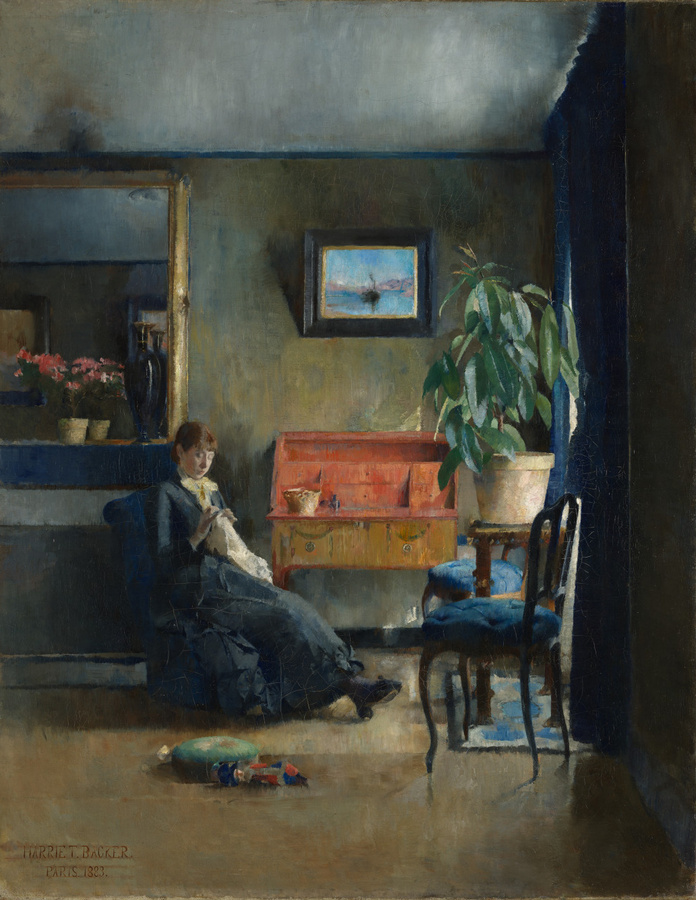
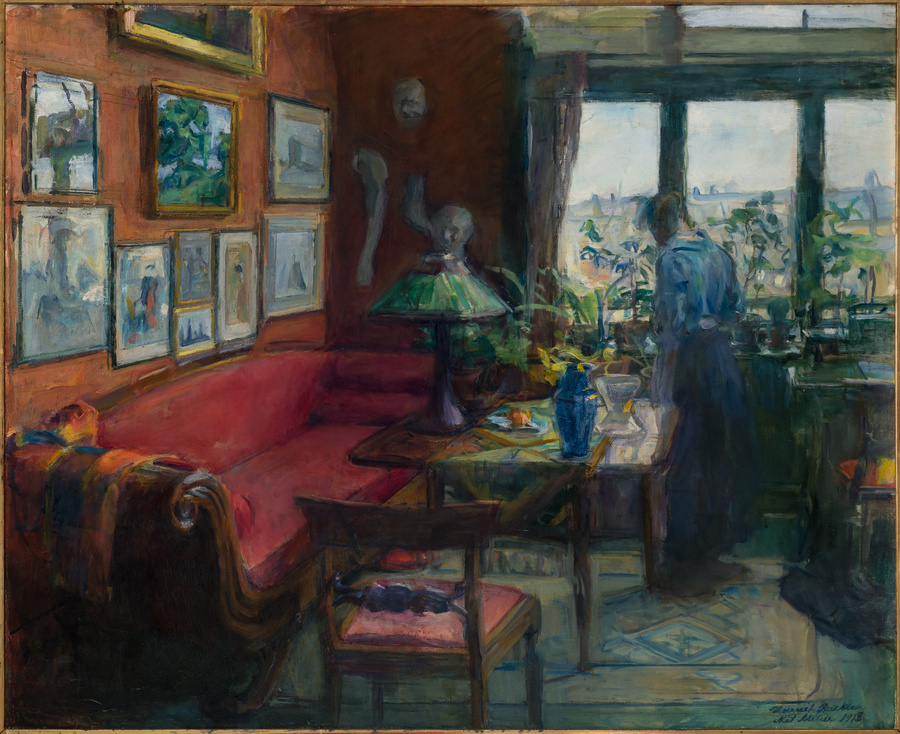
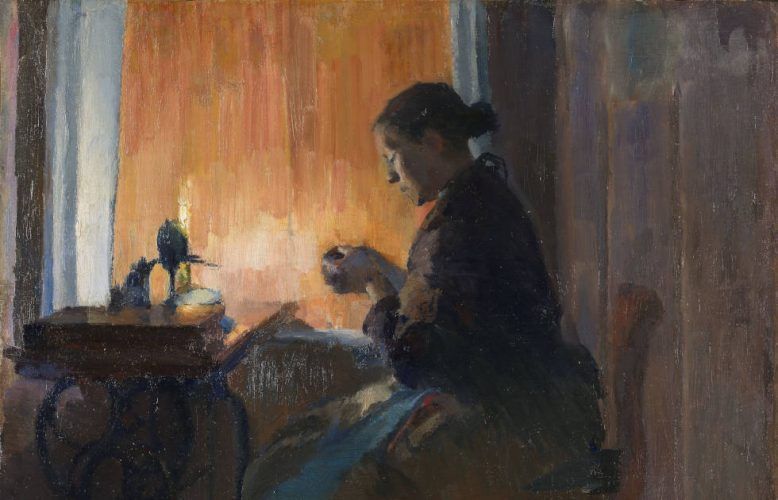
Harriet Backer

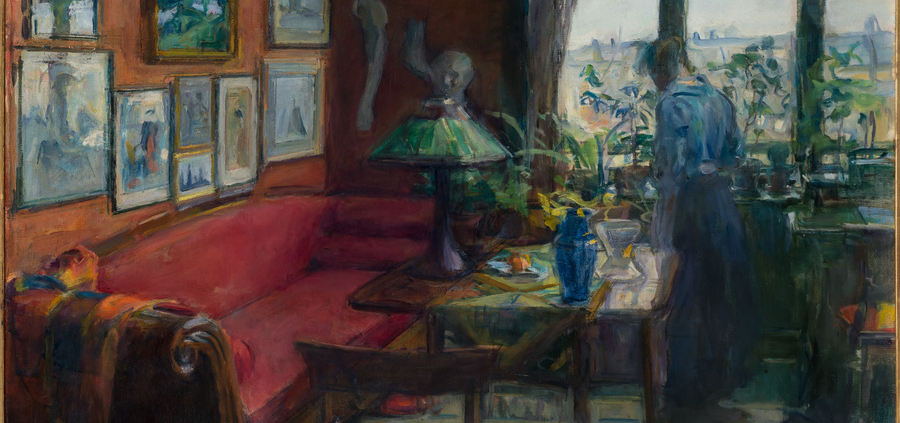
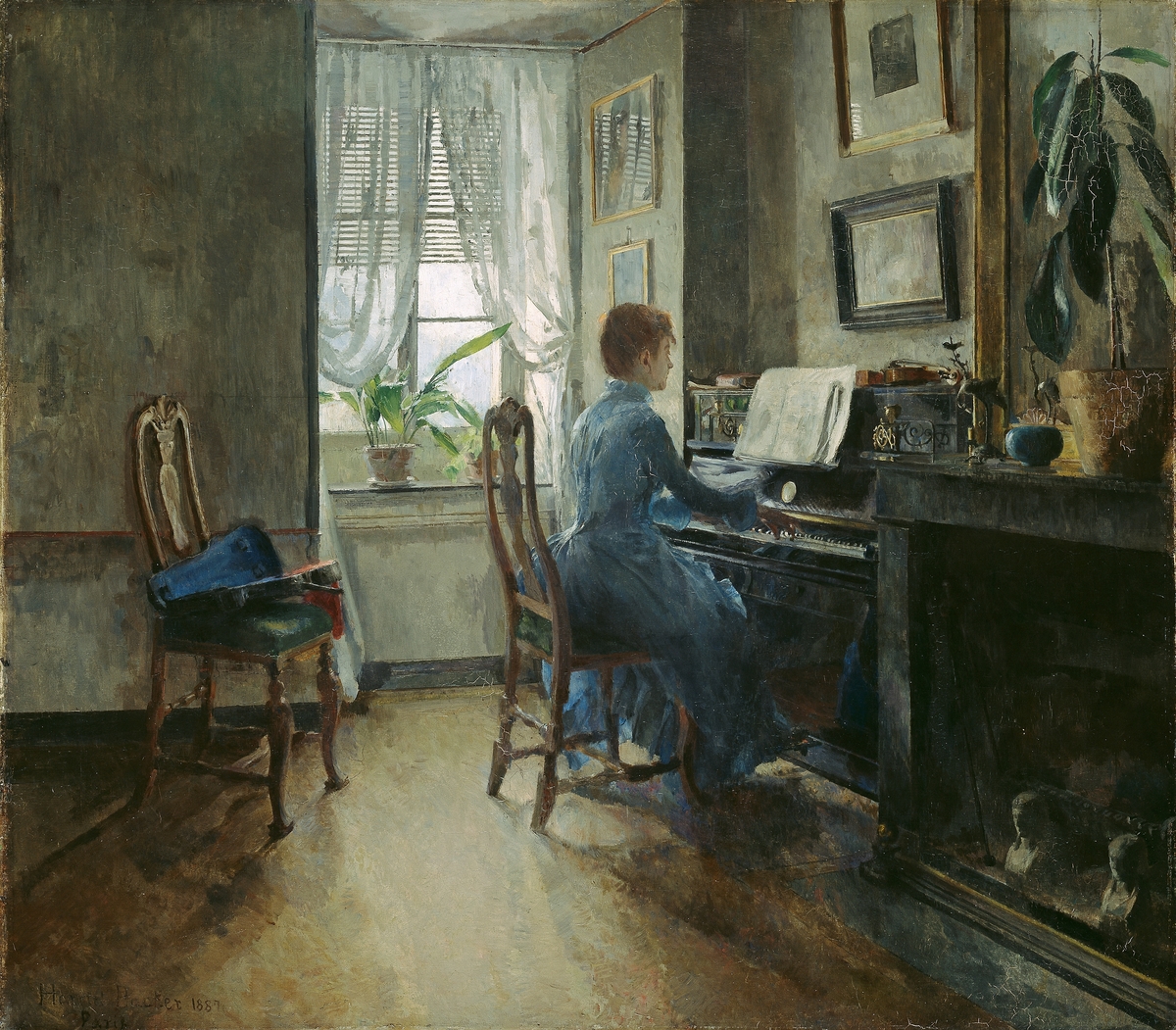
Little known outside her country’s borders, the Norwegian painter Harriet Backer was nevertheless the most renowned female painter in her country at the end of the 19th century. Famous for her use of rich and luminous colours, she created a very personal synthesis of interior scenes and the practice of the open air. She drew her inspiration from the realist movement as well as from the innovations of impressionism through a free touch and a great interest in variations in light. She is also known for her sensitive portraits of the rural world and her interest in church interiors.

At a time when women were not considered full citizens in Norway, she rose to prominence with her brush as an important figure in the art scene of her time. A member of the board of directors and acquisition committee of the National Gallery of Norway for twenty years, she opened a painting school in the early 1890s where she trained important artists of the next generation, such as Nikolai Astrup, Halfdan Egedius and Helga Ring Reusch. She was supported by the collector Rasmus Meyer, who was also a major patron of Edvard Munch.

While Backer’s painting evolved stylistically over the course of her long career, she remained faithful to a narrow range of subjects and her practice was always informed by the study of the motif. After discussing the artist’s training in the great cultural capitals of the time, notably Munich and Paris, the exhibition will also present Harriet Backer’s circle of close friends, Scandinavian women artists who also trained across Europe and shared her feminist commitments. The exhibition will then address the artist’s major favourite themes: rustic interiors, paintings of traditional Norwegian churches, landscapes and her very particular sense of still lifes. The exhibition will devote a large space to representations of musical scenes. It is indeed an important component in the life of Backer, whose sister Agathe Backer Grondhal was a renowned musician in Norway, and a central subject in his work where the vibrations of the key make the musical notes perceptible.

This exhibition, the first retrospective devoted to this artist in France, joins one of the major programming axes of the Musée d’Orsay which proposes, in parallel with the presentations of the most emblematic figures, discoveries of less famous but essential artists to understand the major evolutions of art in the second half of the 19th century. Norway is the subject of particular attention due to the dynamism of its artistic scene and the privileged links that the artists maintained with the Parisian avant-gardes.

September 24, 2024 – January 12, 2025

MUSEE D’ORSAY

Esplanade Valéry Giscard d’Estaing 
75007 Paris

BOOK YOUR TICKETS

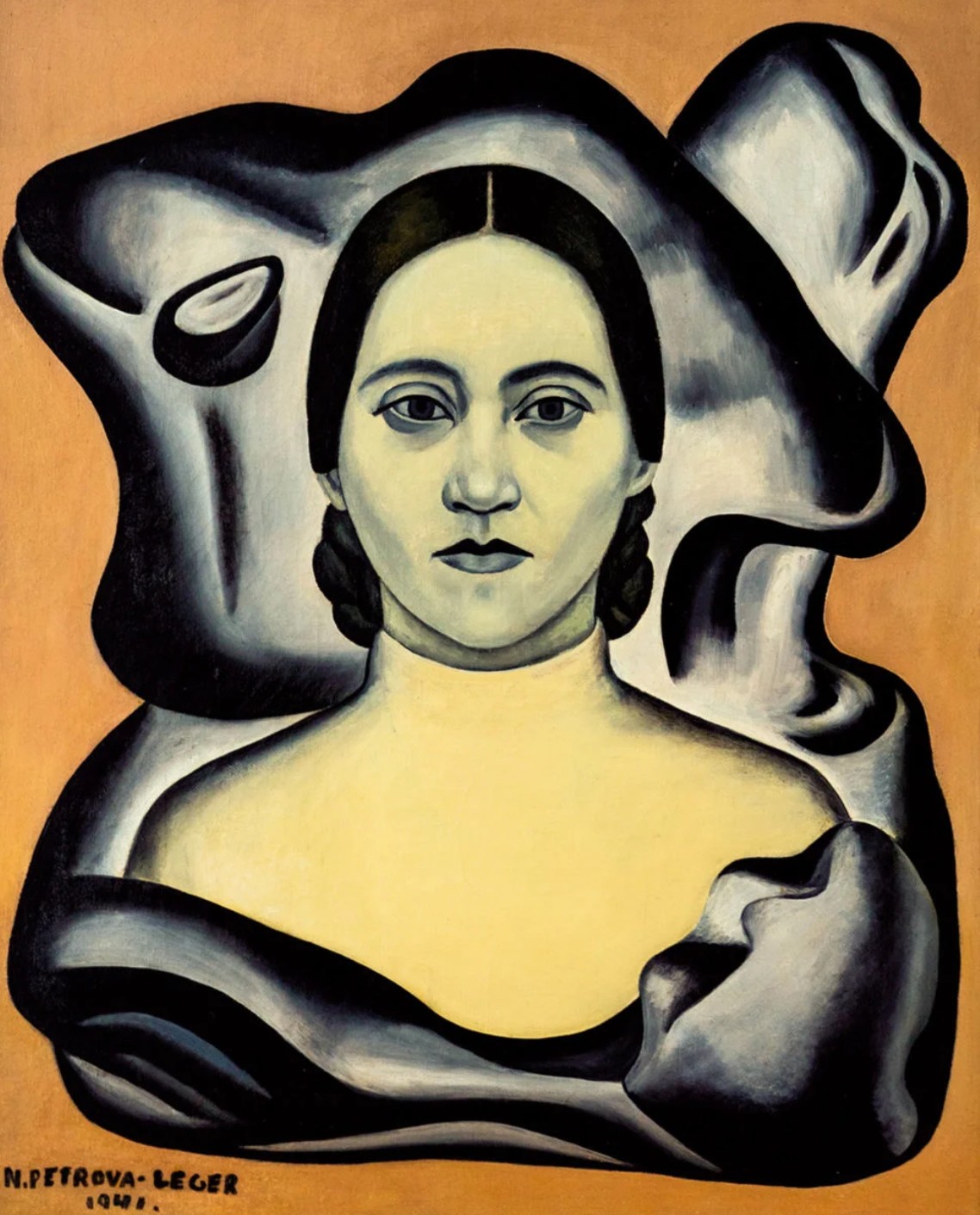
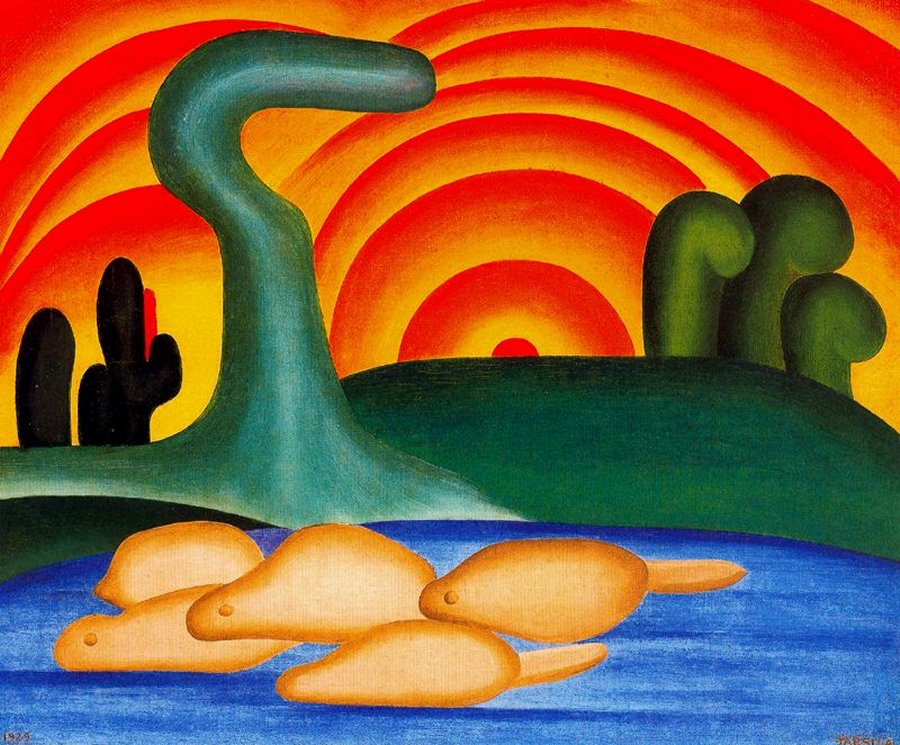
Tarsila do Amaral

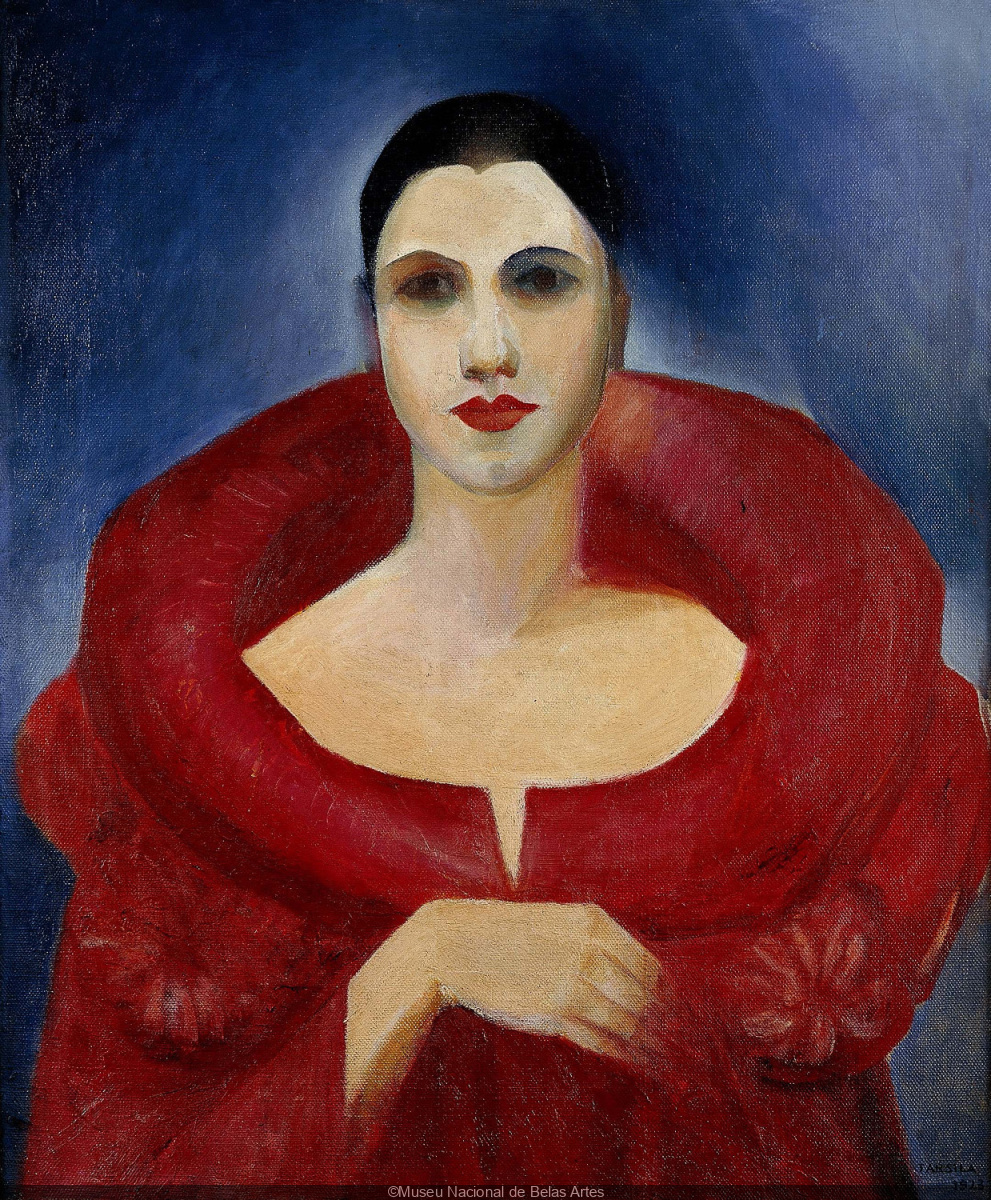
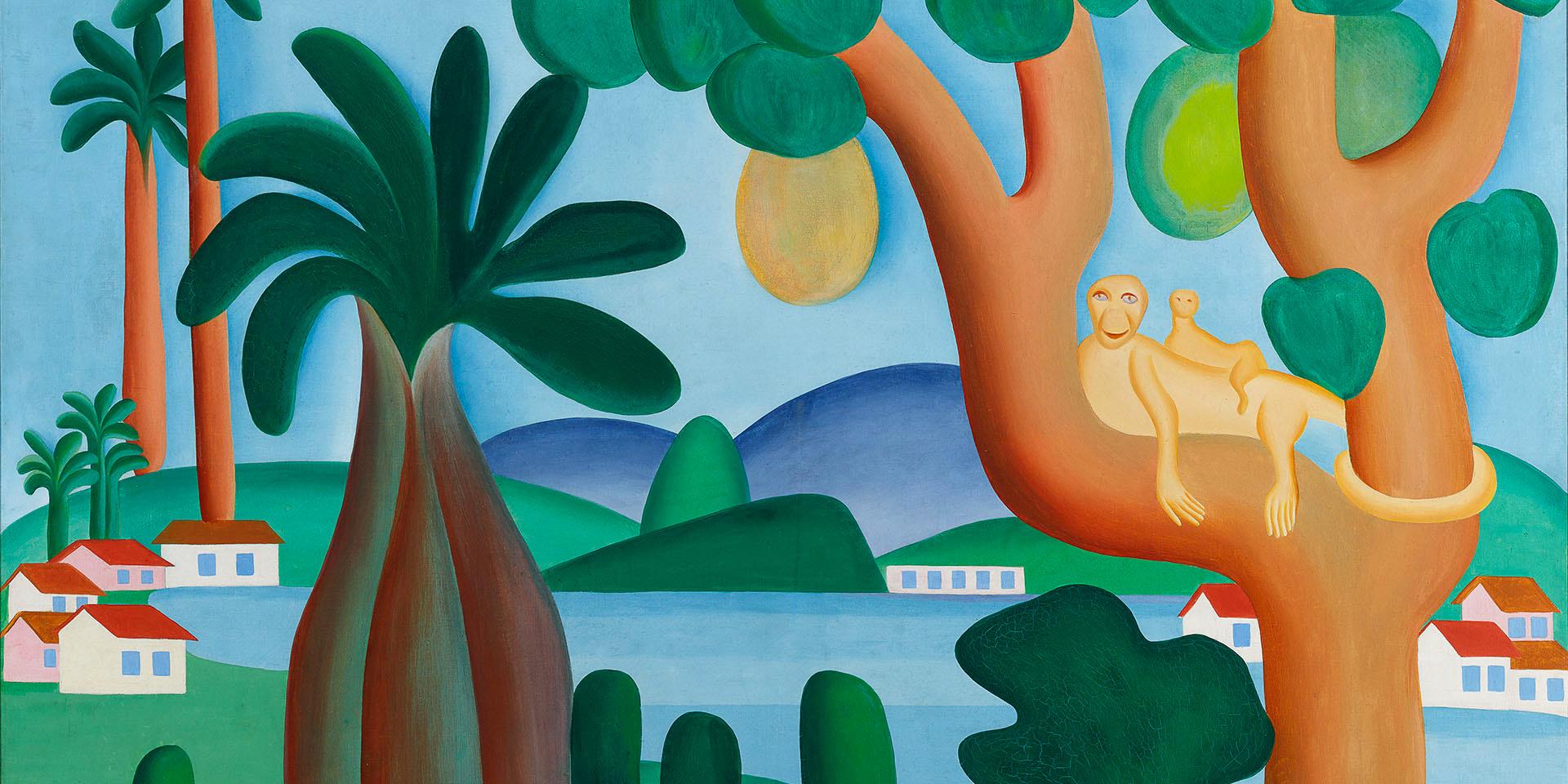
A central figure of Brazilian modernism, Tarsila do Amaral (1886-1973) created an original and evocative body of work, drawing on the indigenous, popular and modern imaginations of a country in full transformation.

In Paris, in the 1920s, she put her iconographic universe to the test of cubism and primitivism, before initiating, in São Paulo, the “anthropophagic” movement, advocating the “devouring” by Brazilians of foreign and colonizing cultures, as a form of both assimilation and resistance.

His brightly coloured landscapes then give way to unusual and fascinating visions, before a more openly political dimension appears in his paintings from the 1930s. The dreamlike gigantism and almost abstract geometry of his latest compositions only confirm the power of a work anchored in its time and always ready to renew itself.

Filling a lack of recognition of the artist in Europe and presenting some new aspects of his work, this retrospective invites us to the heart of modern Brazil and its divisions between tradition and avant-garde, centers and peripheries, learned and popular cultures.

October 9, 2024 – February 2, 2025 

MUSEE DU LUXEMBOURG

19 rue de Vaugirard 75006 Paris 

BOOK YOUT TICKETS

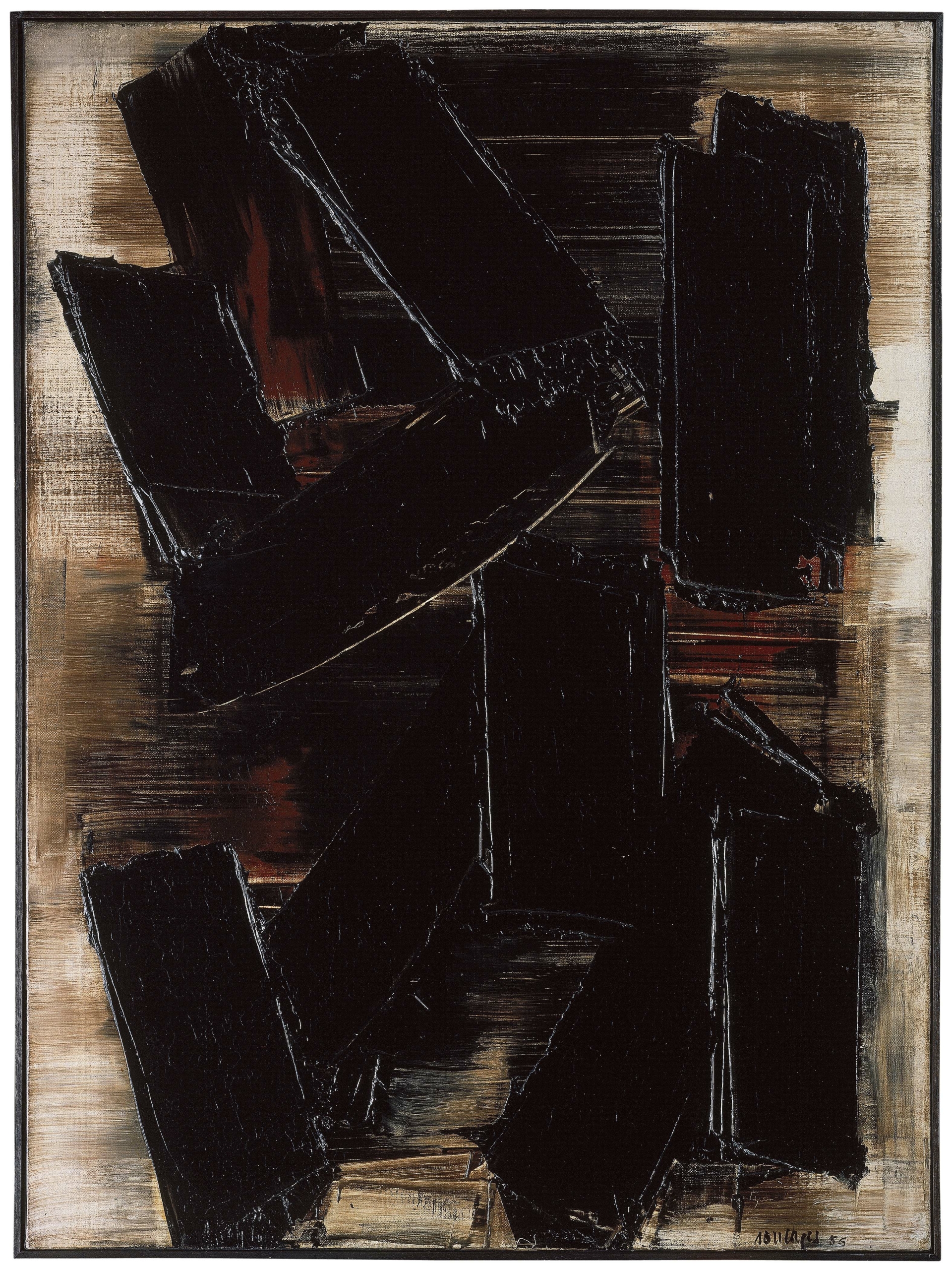
Soulages

50’s


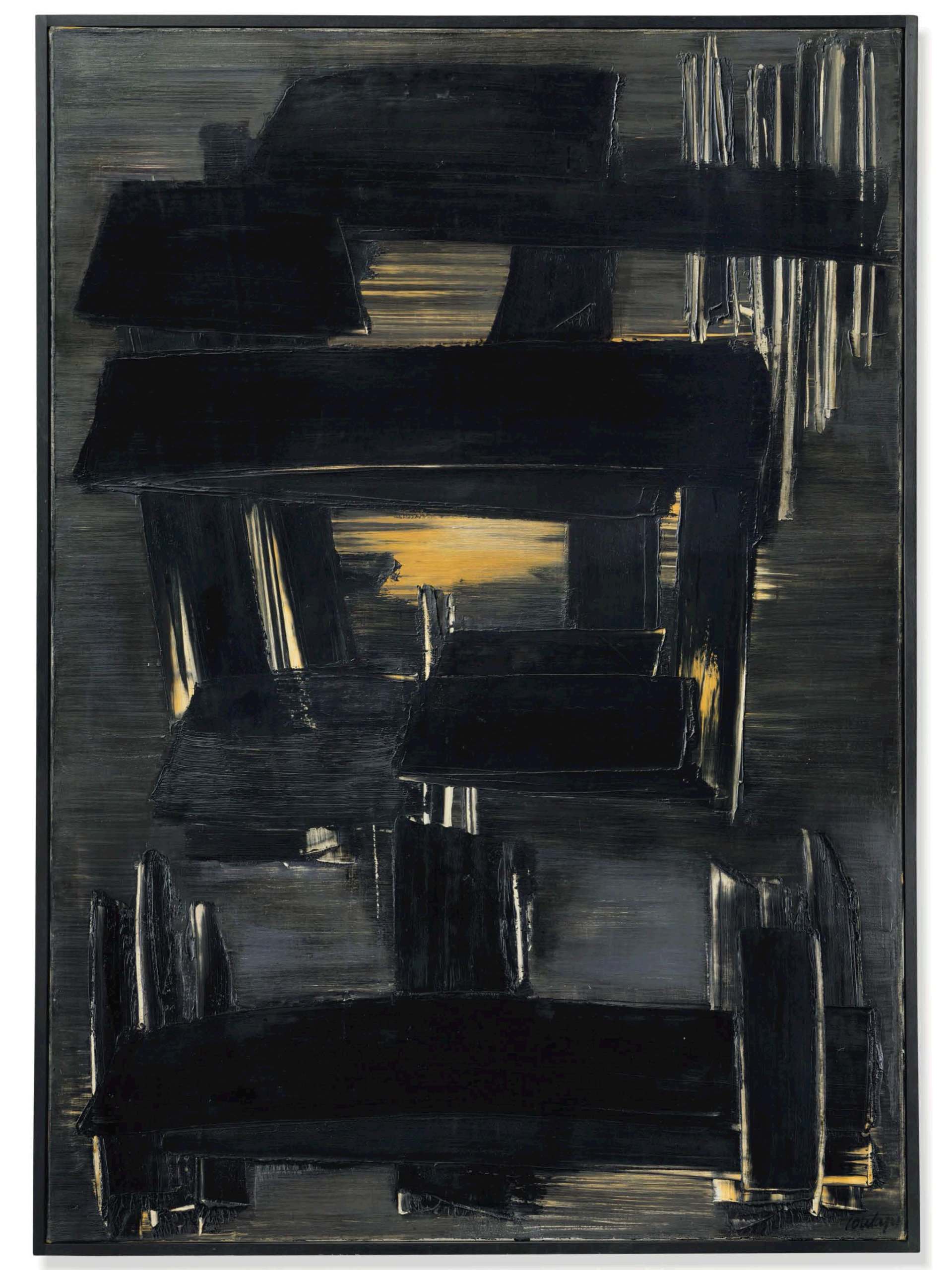
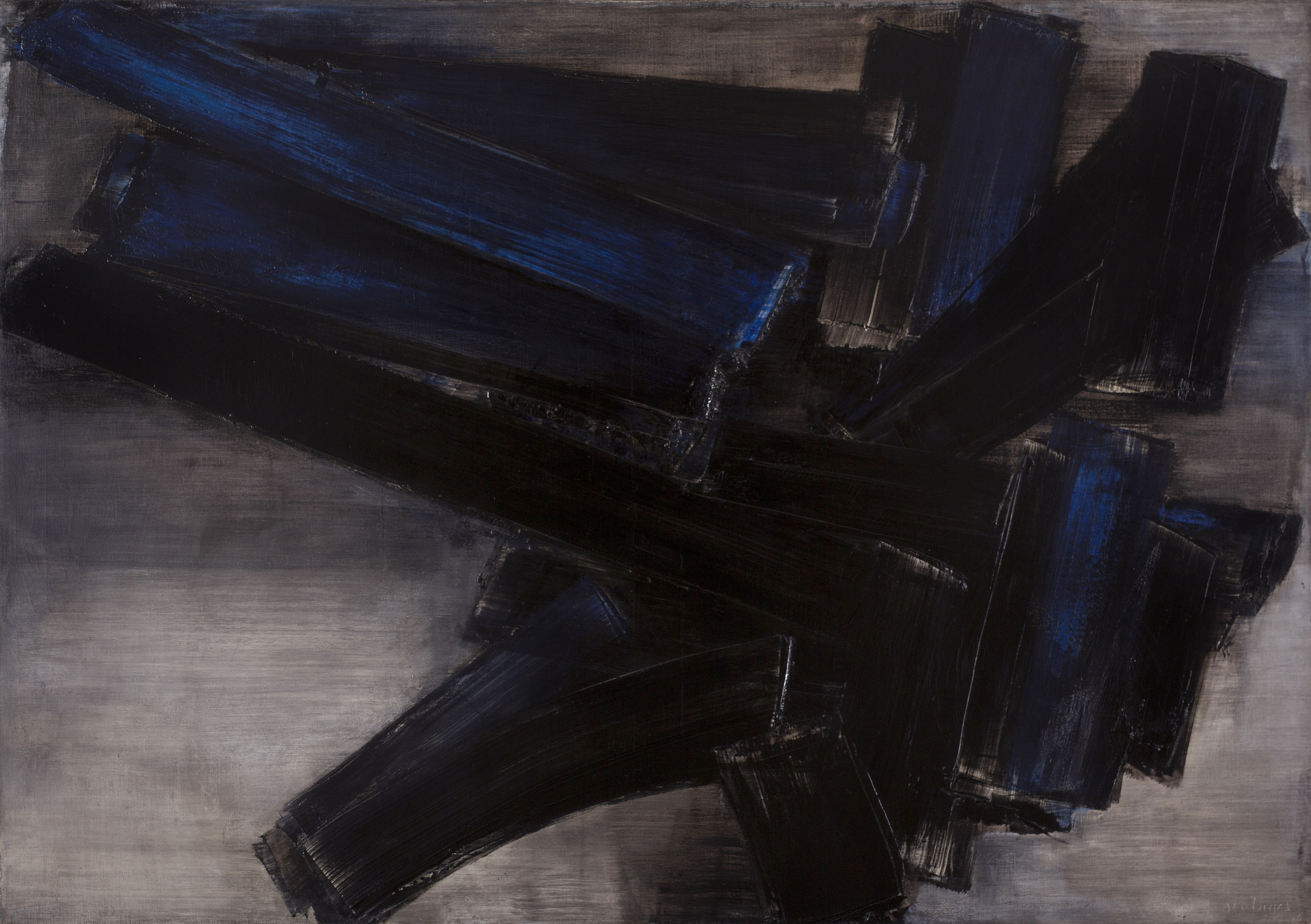
Pierre Soulages (1919 – 2022) is undoubtedly the French people’s favourite artist: his retrospective at the Pompidou in 2009 had record attendance, his eponymous museum in Rodez has become a reference point and in 2016, his exhibition at the Louvre placed him among the greatest. Also, the national tribute paid to him when he died at the age of 102, made him a permanent part of our artistic heritage. For over 30 years, as a specialist in the second School of Paris, the Pascal Lansberg gallery has fervently defended Pierre Soulages. Maurice, Pascal’s father, while he was still a collector, was lucky enough to own a key painting dated 1957, now kept at the Fondation Gandur pour l’Art. This fascinating work had the power, he said, “to relax him from all his worries”. He looked forward to this moment of escape and contemplation that she gave him every evening, after a long day of work…

With this exhibition, the gallery pays tribute to Soulages for the third time, after two exhibitions organized during the artist’s lifetime, in 2009 and 2016. For this posthumous tribute, the gallery has chosen to focus its attention on his historical works dating from the 1950s, particularly sought after by collectors and produced before the well-known Outrenoir period which began in 1979.


In the aftermath of the war, Pierre Soulages paved the way for a new and unique abstraction characterized by a controlled gesture, discovering striking chiaroscuro and striking colors. The exhibition is unique and will create a surprise! Indeed, most of the works presented have been kept in private collections and are therefore unknown to the market and the general public. Around ten emblematic paintings are thus unveiled, among which spectacular large formats, as well as some works on paper including an exceptional “walnut stain”, a material offering qualities of opacity and transparency particularly interesting for Soulages. Collectors and the general public can practice the art of differentiating a work dating from 1952 from another from 1957 because Soulages’ compositions, rhythms and techniques evolved throughout the 1950s.

October 10 – November 16, 2024

GALERIE PASCAL LANSBERG

36 rue de Seine 75006 Paris