Leonor Fini

Considered one of the most important artists of the 20th century, but also one of the most misunderstood, Leonor Fini (1907–1996) has been the subject of a passionate reevaluation in recent years. Multiple auction records, increasing representation of her painting in museums… the Minsky Gallery is celebrating this important moment in the history of her reception through three exhibitions organized under the curatorship of Richard Overstreet, Leonor Fini’s beneficiary. At the same time, she is also receiving the honors of the Centre Pompidou’s major exhibition on surrealism.
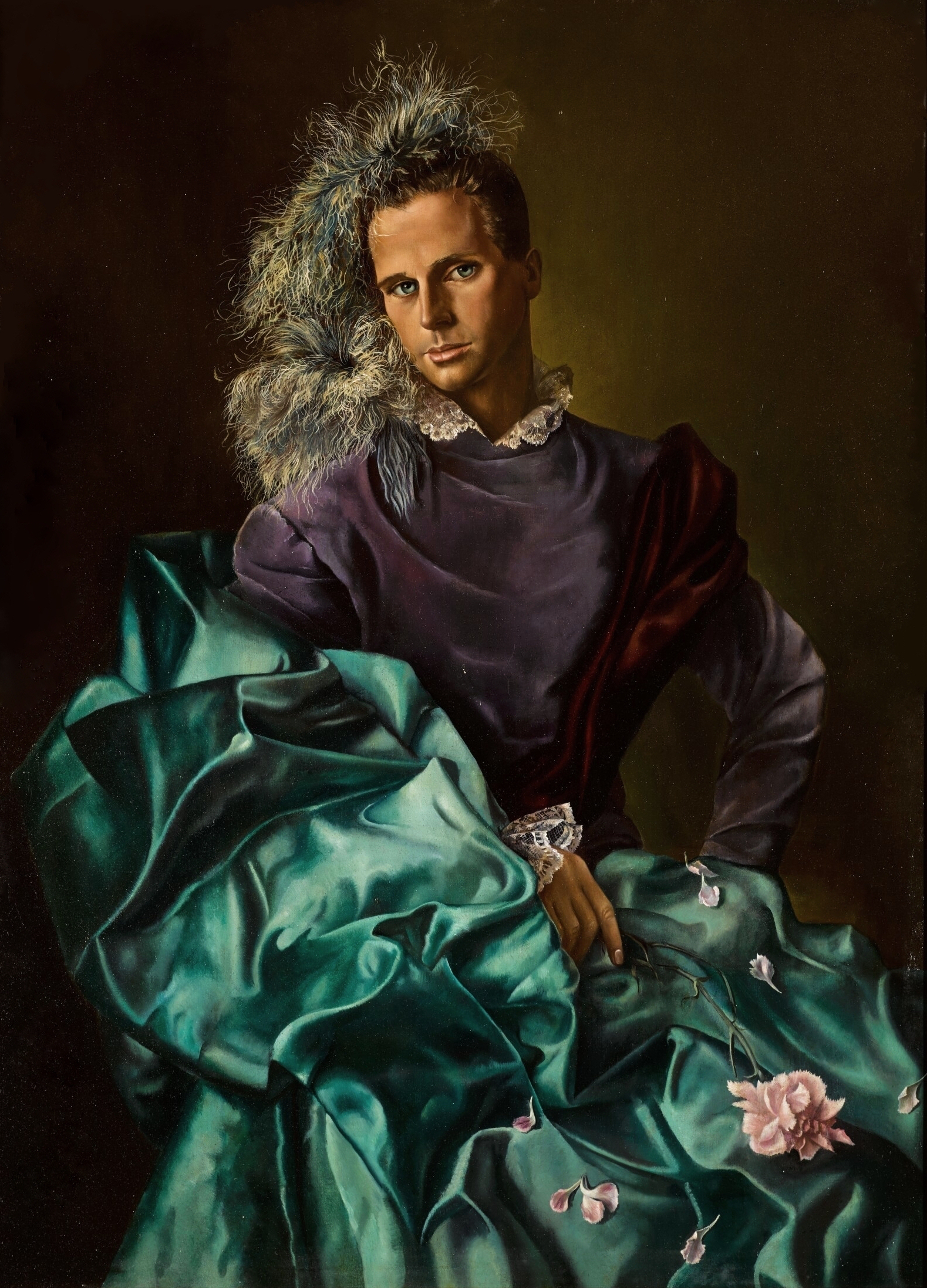
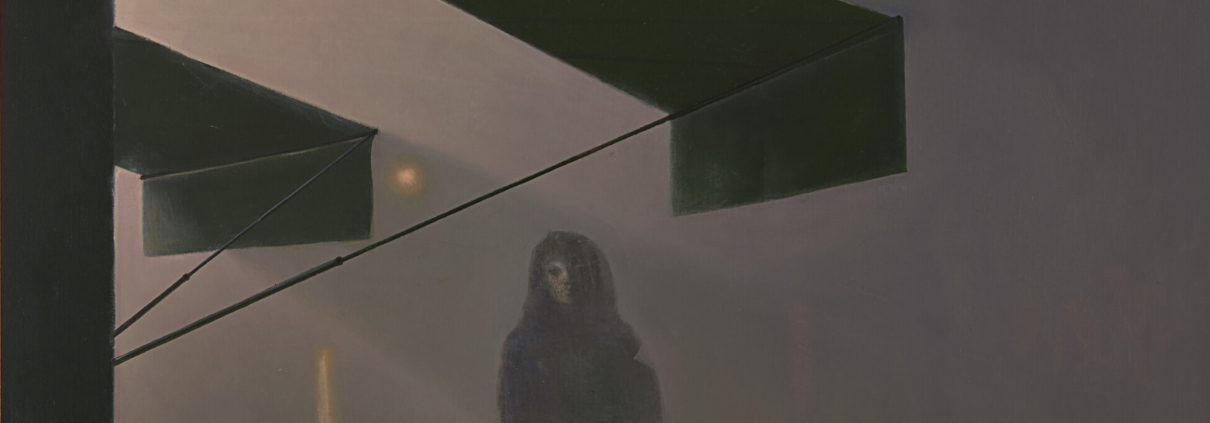
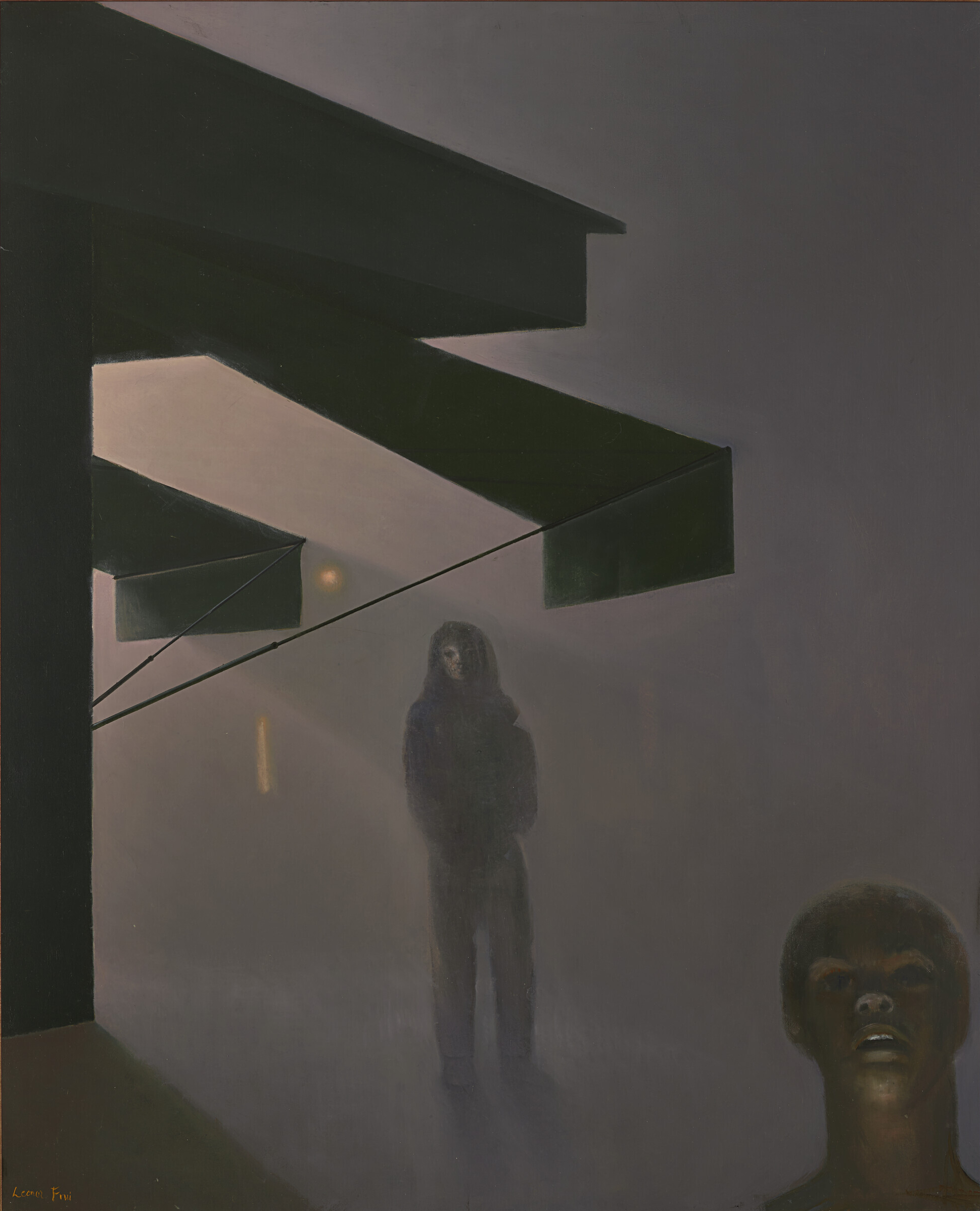
As a first part, the Minsky Gallery is organizing a solo show by Leonor Fini including masterpieces from the 1920s to the 1990s. Some twenty paintings that reveal the extraordinary palette, between symbolism and surrealism, between dream and lucidity, of Leonor Fini, including two rare self-portraits from the 1940s and 1950s that are exceptionally presented to the public. Born in Argentina before growing up in Trieste, Italy, this “scandalous” person, according to André Breton, hated being labeled! In three successive exhibitions, until January 15, 2025, the Minsky Gallery, which has represented her since 1978, offers a beautiful exploration of her extravagances. We thus discover Nebbia (1982), an enigmatic canvas that recalls a foggy theater scene (for which Leonor Fini worked on the costumes as well as the sets or posters…).
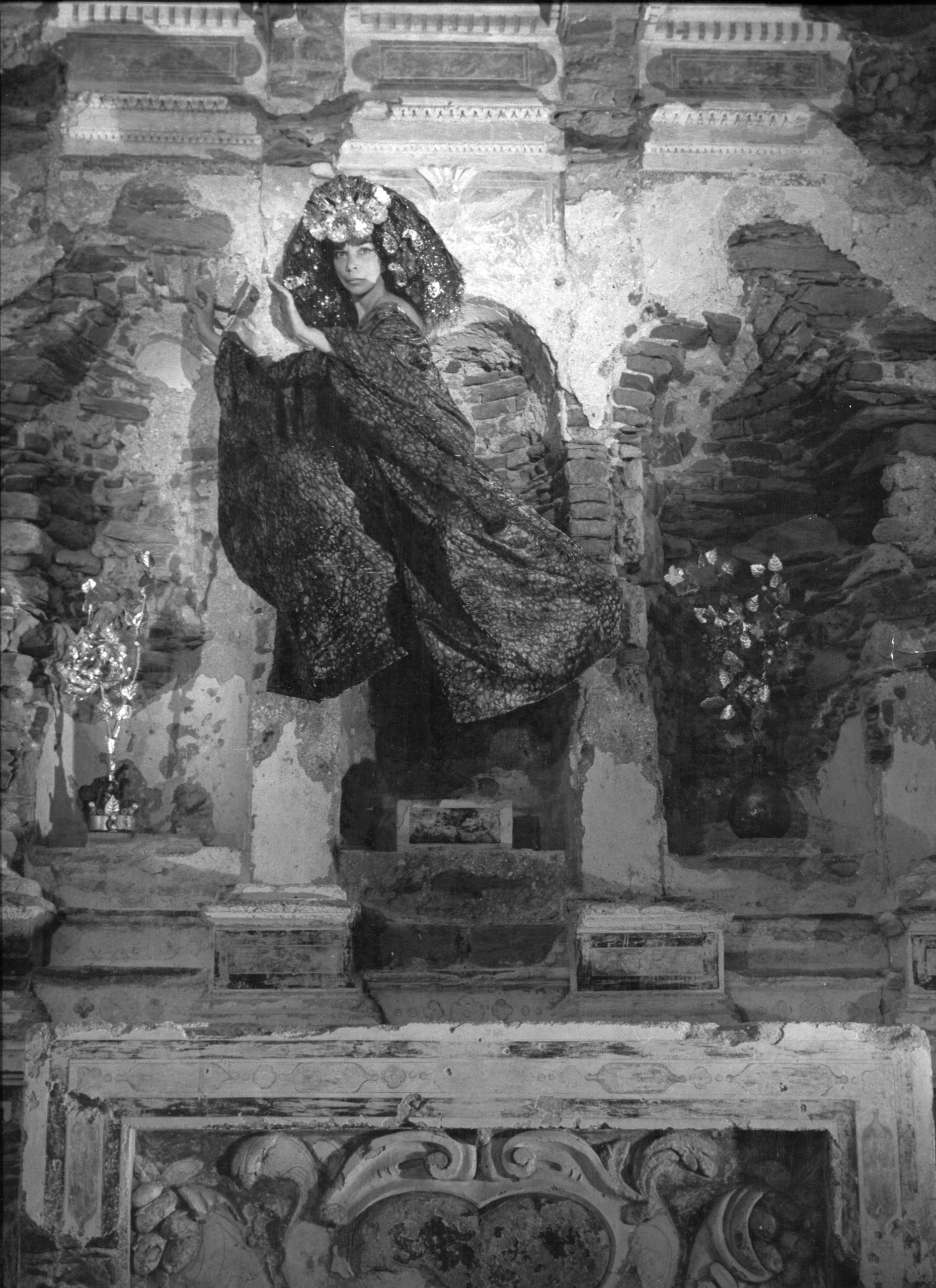
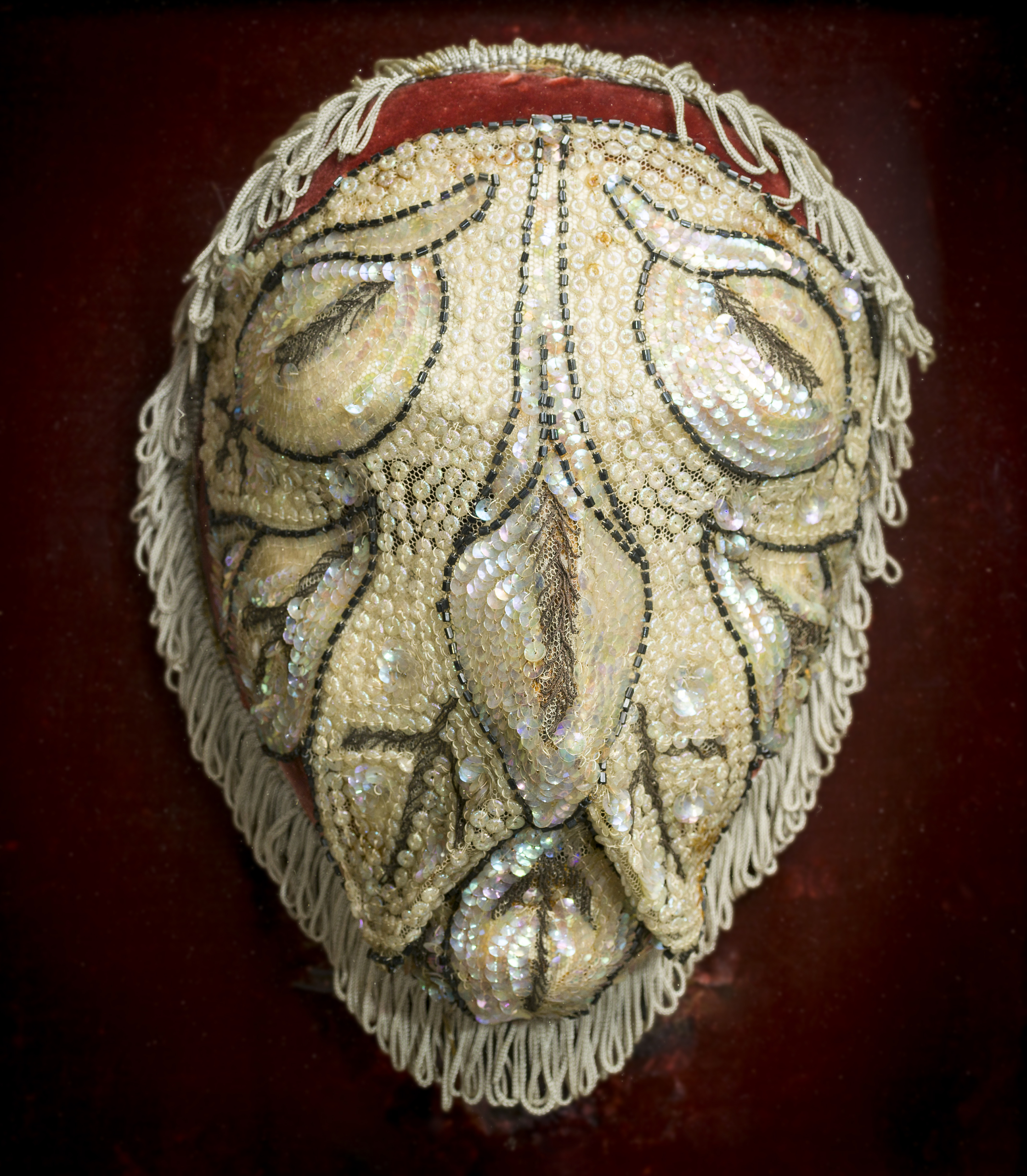
Two pearl and tulle masks also open a door to her grand intimate ball, where the Italian aristocrat and painter Stanislao Lepri, partner of the trouple formed with the scholar Constantin Jelenski, plays a leading role. From November 7, the Minsky gallery will present them together in a second exhibition, before showing their works on paper in a final hanging.
September 3 – November 5, 2024

GALERIE MINSKY

37 rue Vaneau 75007 Paris

Figures of the Fool

From the Middle Ages to the Romantics

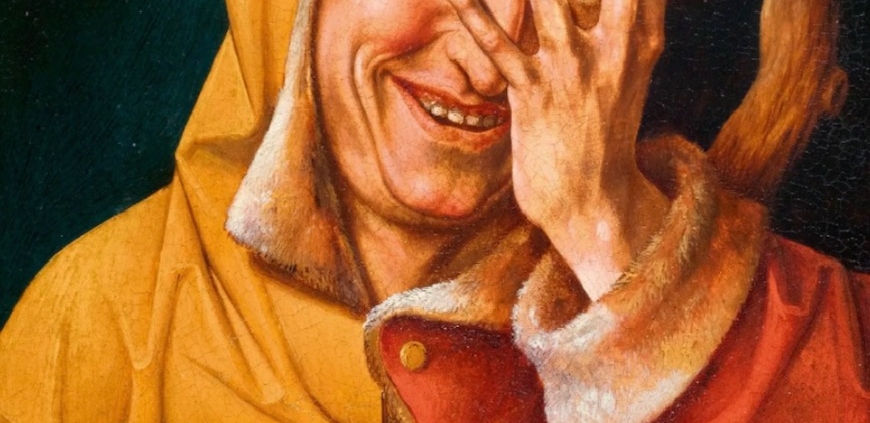
Studied by social and cultural history, the fascinating figure of the madman, who was part of the visual culture of men in the Middle Ages, has rarely been studied from the point of view of art history: yet between the 13th and the middle of the 16th century, the notion of madness inspired and stimulated artistic creation, both in the field of literature and in that of the visual arts.

For the general public, medieval art is essentially religious. However, it was the Middle Ages that gave substance to the subversive figure of the madman. While it has its roots in religious thought, it flourished in the secular world to become an essential element of urban social life by the end of the period.

For medieval man, the definition of the madman is given by the Scriptures, in particular the first verse of Psalm 52: “Dixit insipiens…” (The fool has said in his heart: “There is no God!”). Madness is above all ignorance and absence of love for God. Conversely, there are also “madmen of God”, such as Saint Francis. In the 13th century, the notion is therefore inextricably linked to love and its measure or excess, first in the spiritual domain, then in the earthly domain.

The theme of the madness of love haunts chivalric romances (that of Yvain, Perceval, Lancelot or Tristan) and their numerous representations, notably in illuminations and ivories. Soon, the character of the fool interferes between the lover and his lady: he is the one who denounces courtly values ​​and emphasizes the lewd, even obscene, character of human love.

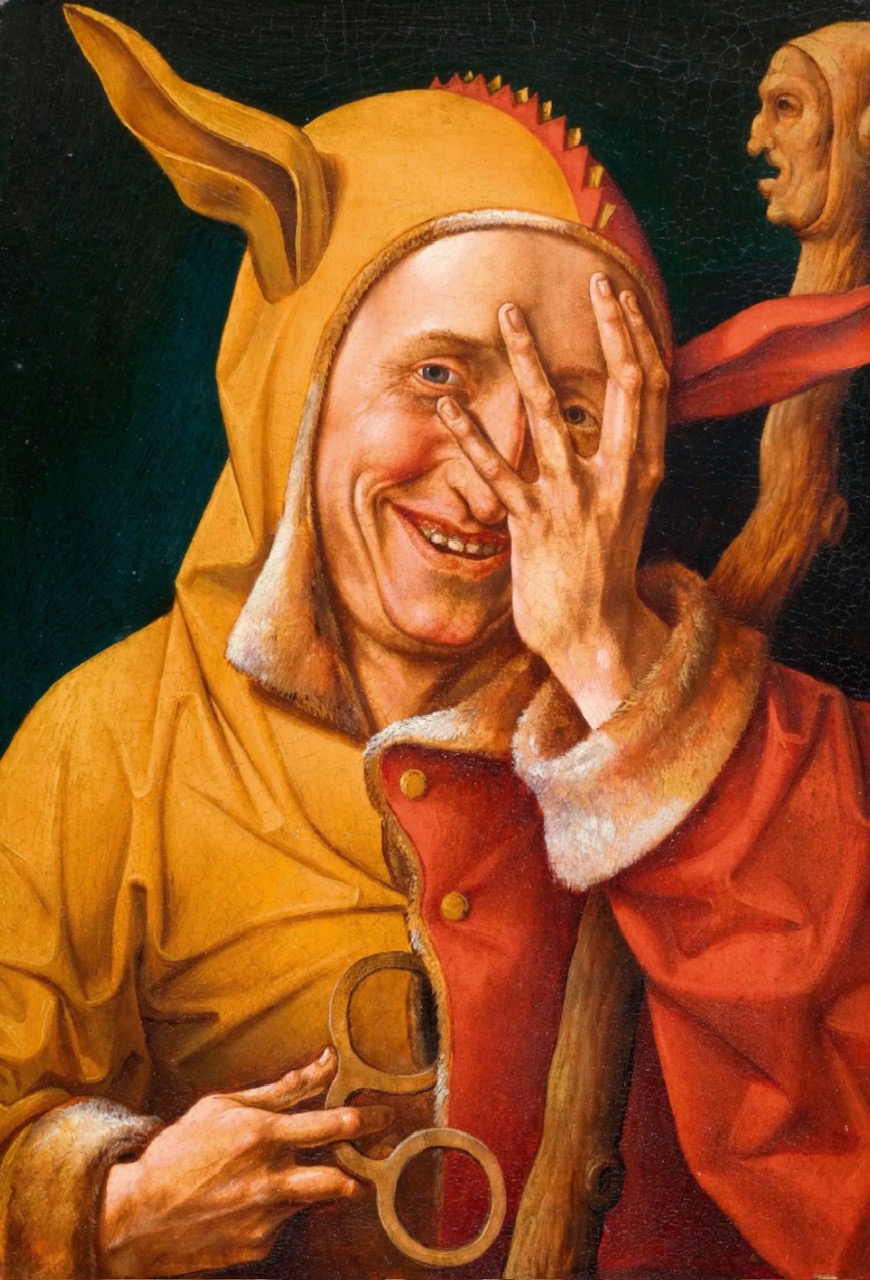
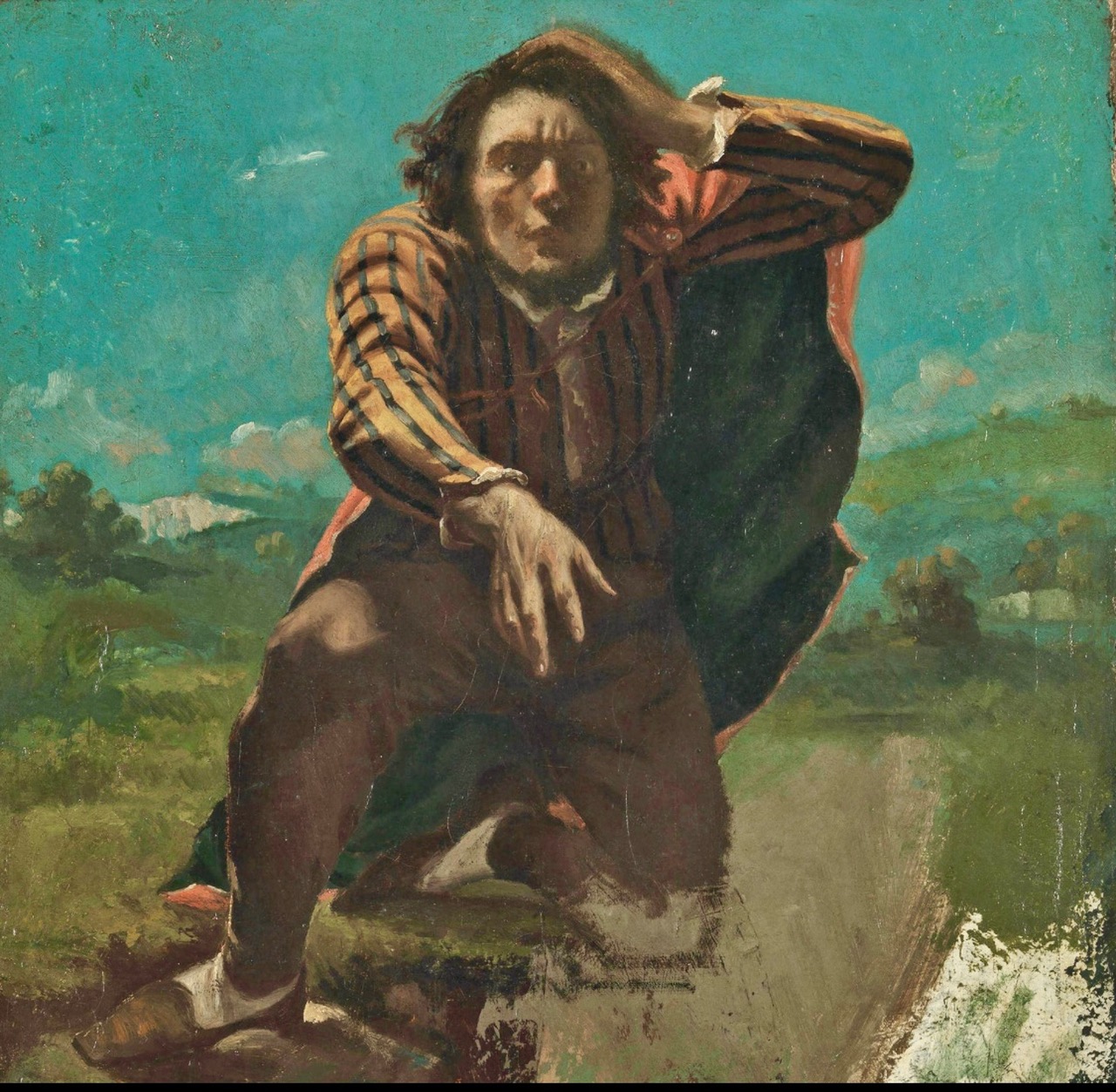
From mystical or symbolic that he was, the fool becomes “politicized” and “socialized”: in the 14th century, the court fool becomes the institutionalized antithesis of royal wisdom and his ironic or critical speech is accepted. A new iconography is established and the fool is recognized by his attributes: hobby horse, striped or half-striped coat, hood, bells.

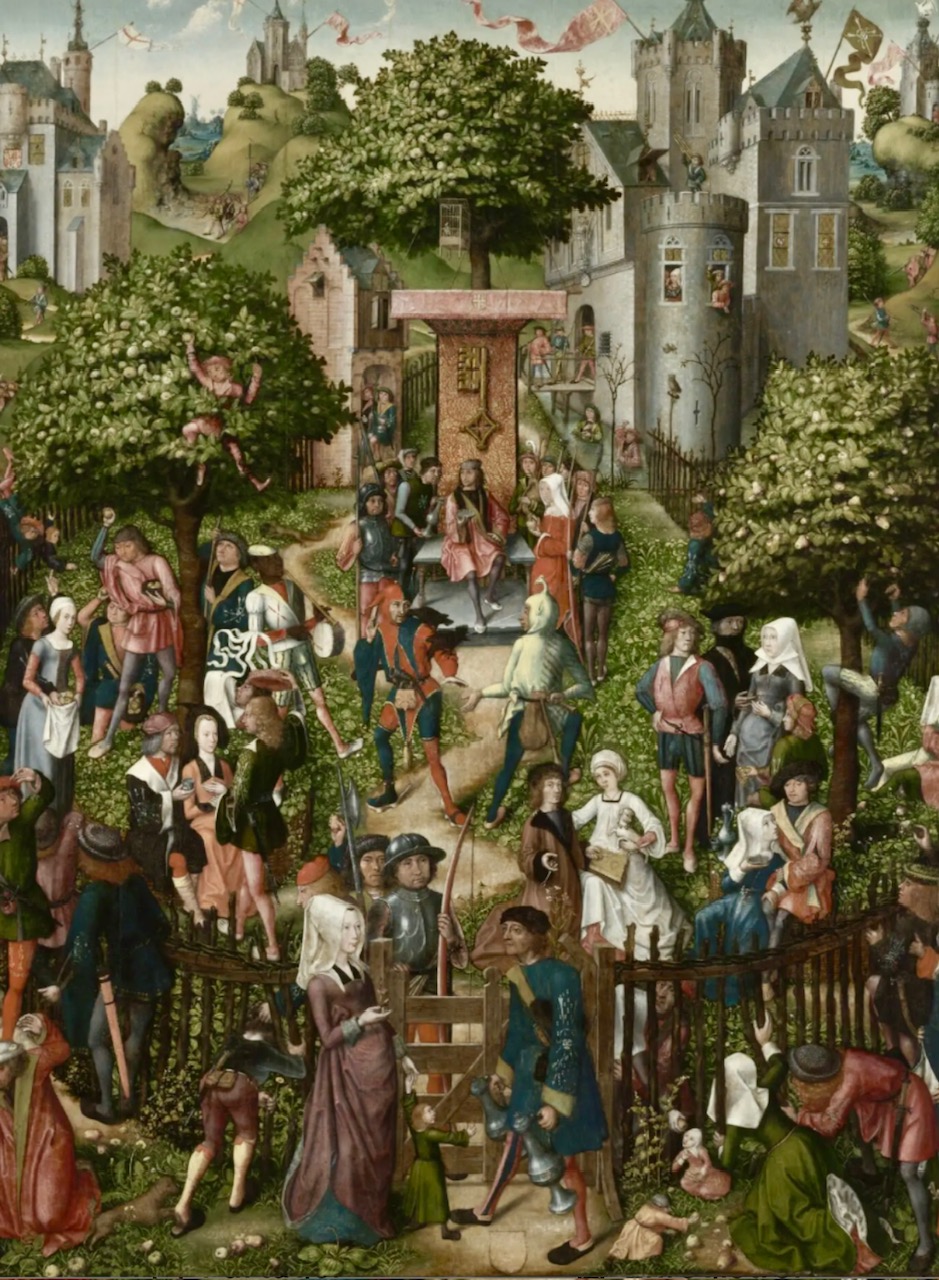
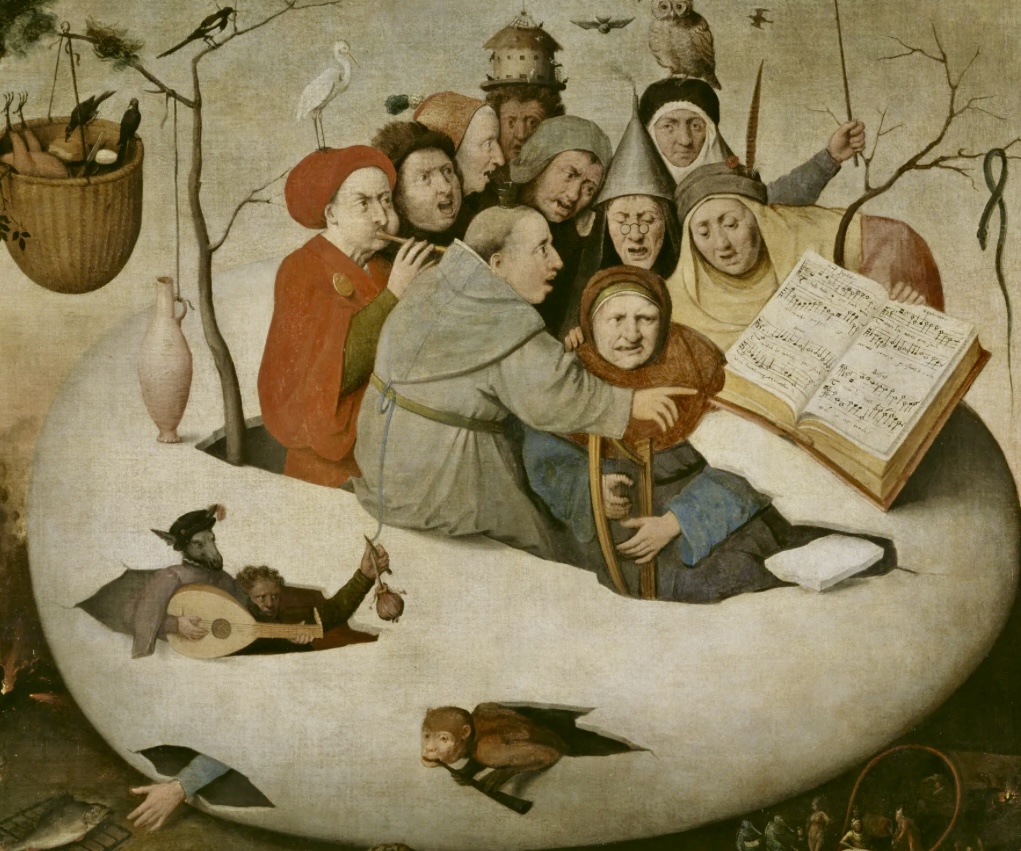
The 15th century is that of the formidable expansion of the figure of the fool, linked to carnival festivals and folklore. Associated with social criticism, the fool serves as a vehicle for the most subversive ideas. He also plays a role in the torments of the Reformation: in this context, the fool is the other (Catholic or Protestant). At the turn of the Middle Ages and the Renaissance, his figure has become omnipresent, as shown by the art of Bosch and then that of Bruegel.

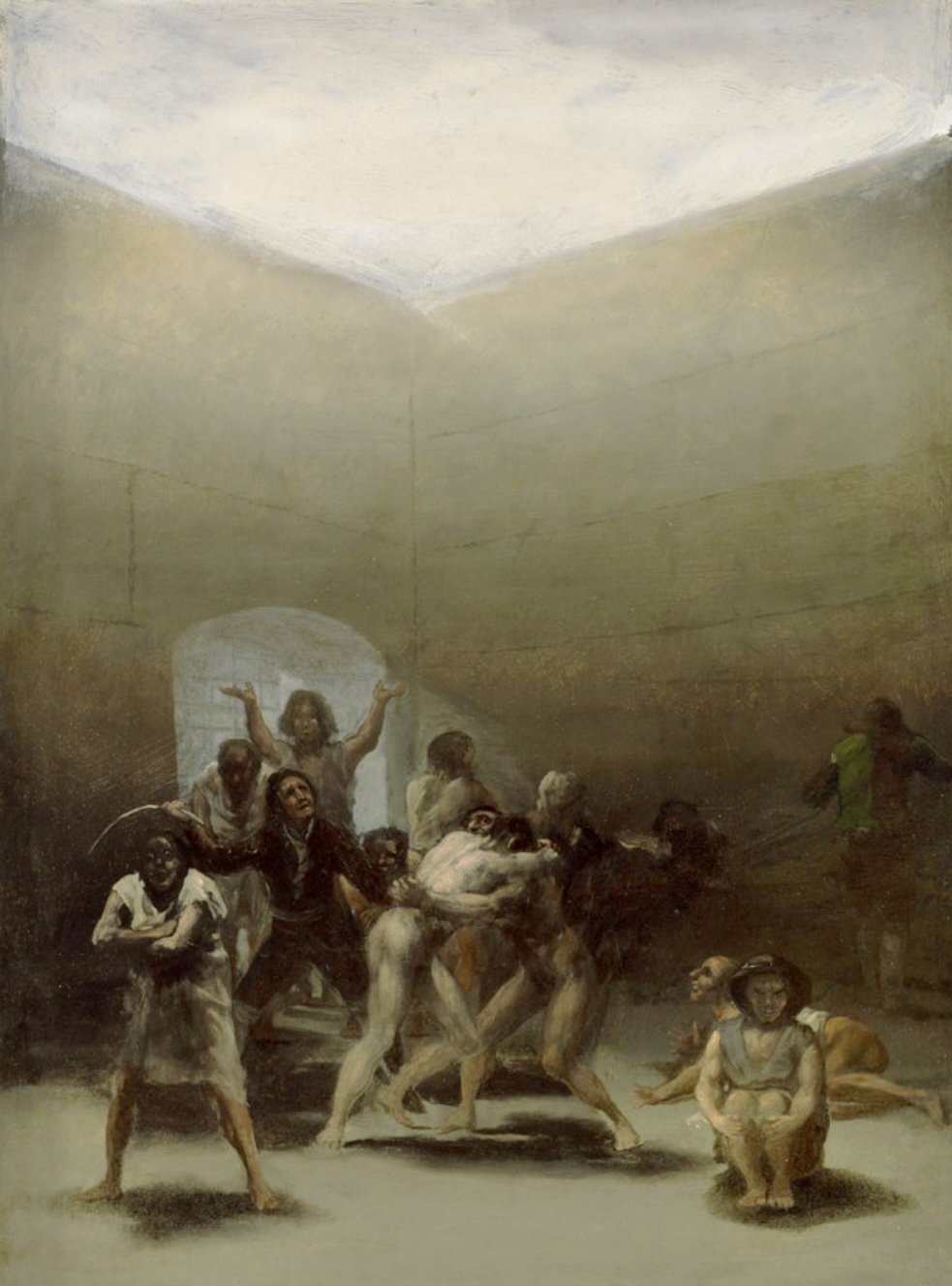
In the modern era, the figure of the institutional fool seems to be gradually fading, replaced in the courts of Europe by the jester or the dwarf. From the middle of the Age of Enlightenment, madness takes its revenge to appear in other, less controlled forms. The exhibition concludes with an evocation of the 19th century’s view of the Middle Ages through the prism of the theme of madness, but with the tragic, even cruel, light that political and artistic revolutions gave it.

October 16, 2024 – February 3, 2025

MUSEE DU LOUVRE

Corps in-visibles

An investigation into Balzac’s dressing gown

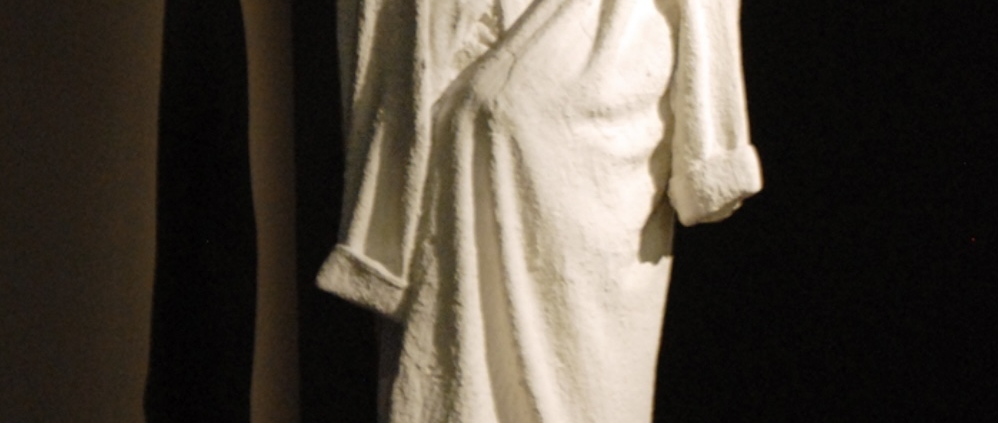
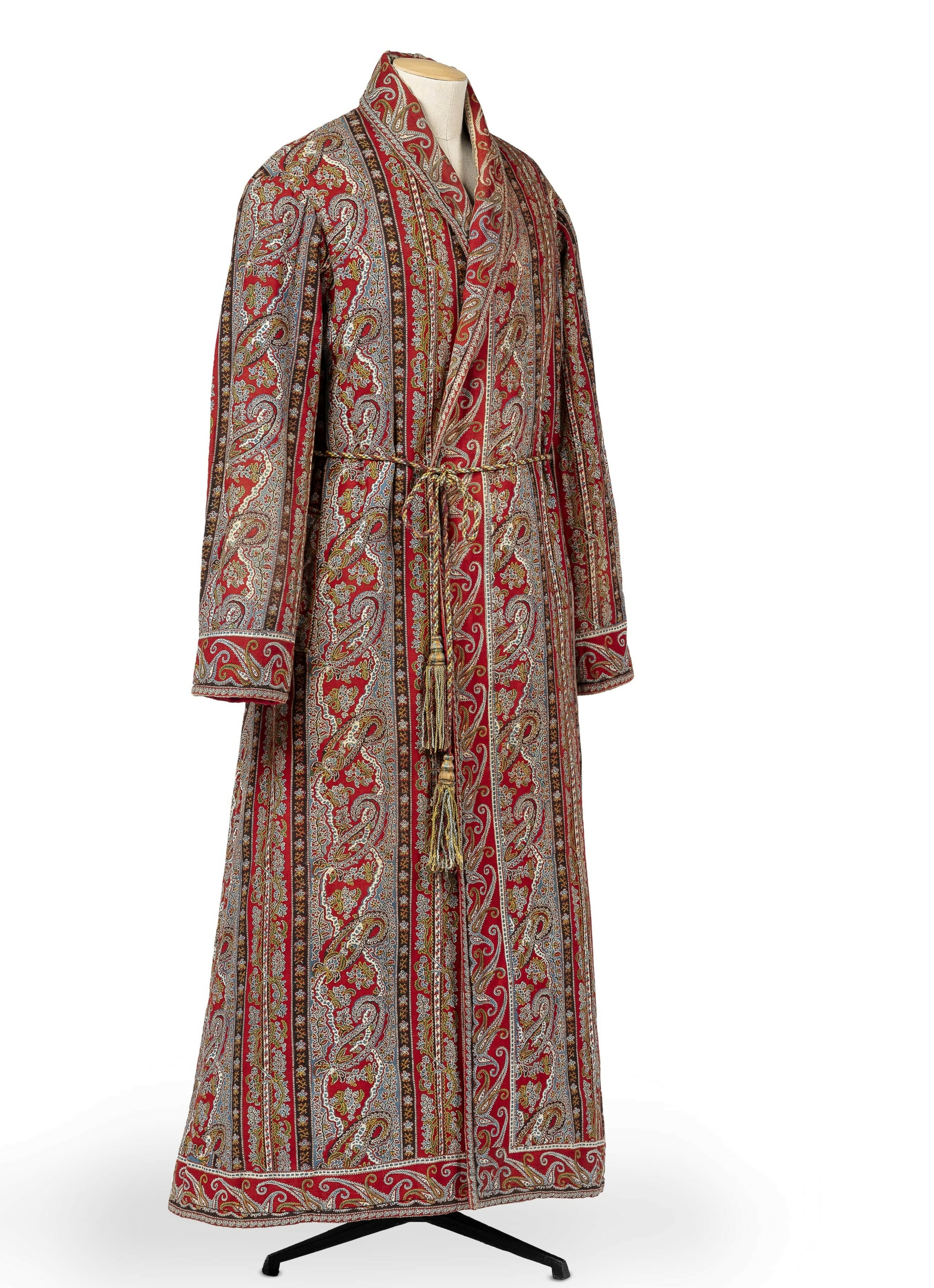
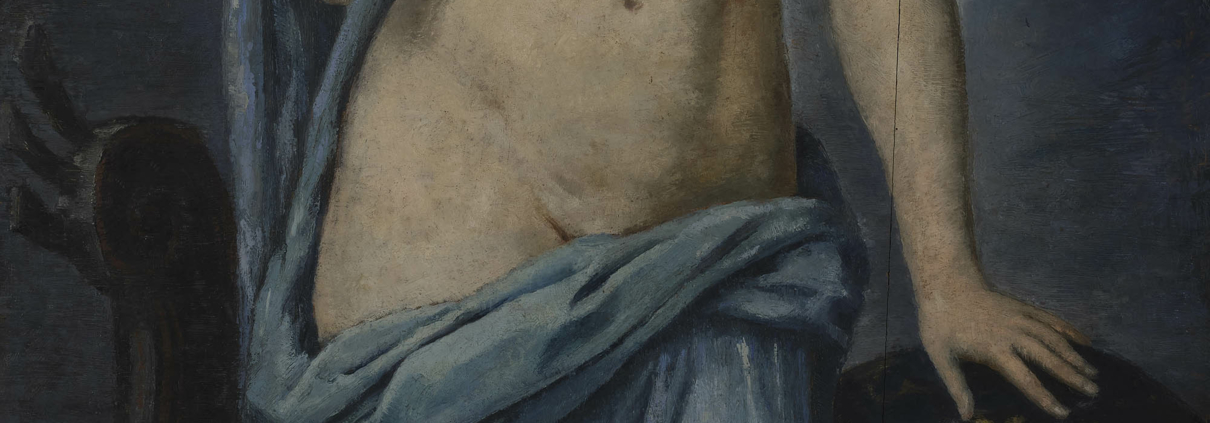
The Musée Rodin is showcasing a little-known piece from its collections, Auguste Rodin’s Study for a Dressing Gown for Balzac. Designed from a selection of sculptures from the museum’s collections, 19th-century fashion pieces from the Palais Galliera, and previously unpublished archives from the library of the Institut de France, the exhibition unfolds, starting with the singular Dressing Gown, an investigation into Rodin’s search for Balzac’s body. This investigation is a veritable prelude to a reflection on the bodies—real, idealized, statued, and hidden—in the monumental statuary of the 19th century that still populate our contemporary world.

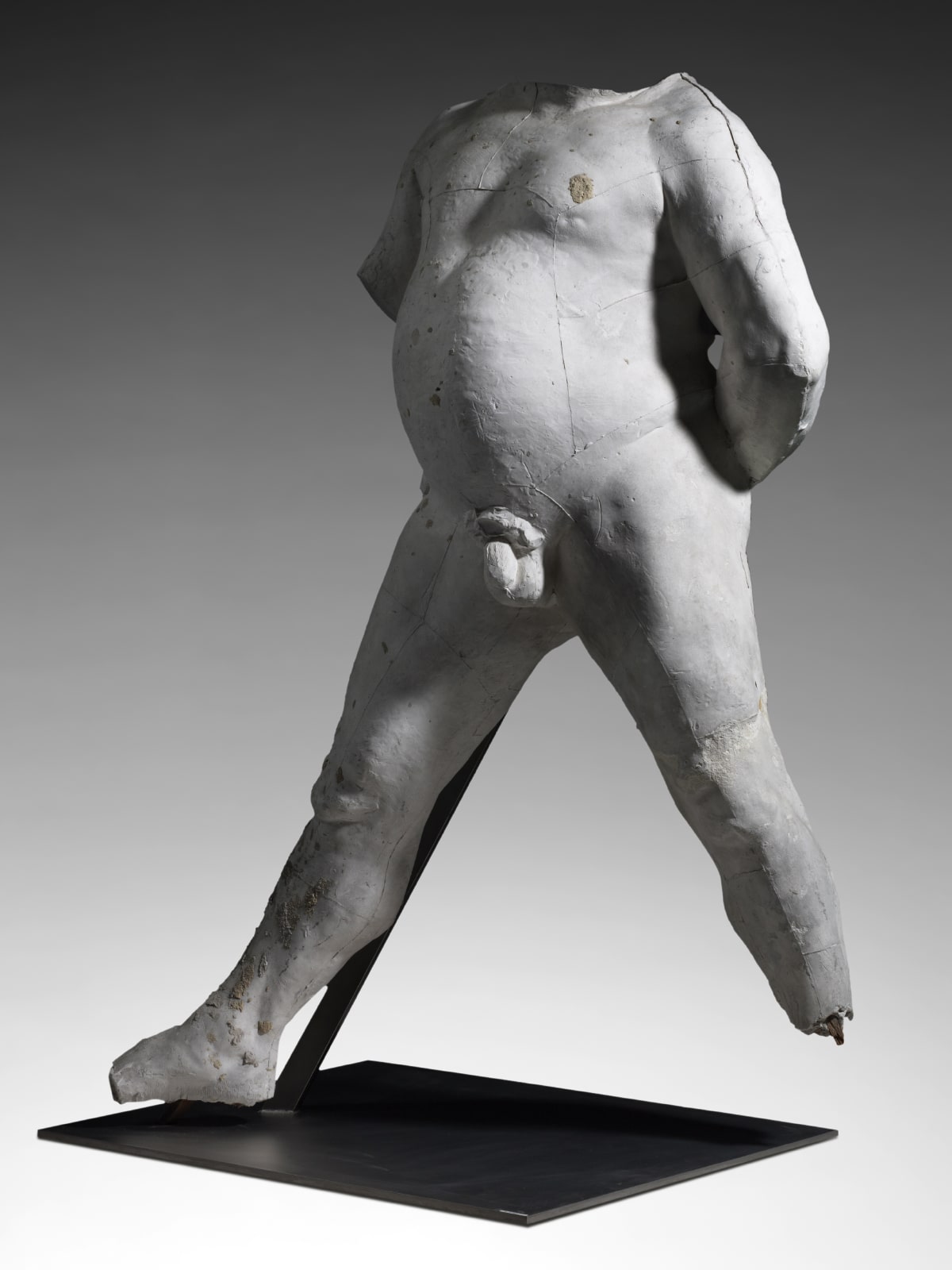
Balzac’s body, as Rodin apprehends it through clothing, when he has a costume of the deceased novelist remade by Balzac’s tailor, reveals the man’s physique, considered unflattering by the monument’s patrons: Balzac, in a word, was fat. By bringing together couture and sculpture, and comparing the practice of tailors to that of statuary, the exhibition observes how the perception of bodies influences the creation of their highly idealized bronze image. It reveals how the myth of Balzac writing in a dressing gown ultimately allows Rodin to hide under ample folds a body rejected because of its corpulence. The exhibition invites us to reflect on the representation of bodies in public space, and on the necessary contemporary broadening of these representations.

Chosen by the Société des Gens de Lettres in 1891 to sculpt a monument to Balzac, Auguste Rodin embarked on a quest for the novelist who had been missing for nearly half a century: from studying Balzac’s image in Brussels at the home of a collector of Balzacian relics, to searching for his body in the writer’s native Touraine, where Rodin found a corpulent carter as a model, the stages of this investigation are recreated throughout the exhibition. A largely unknown fact, Rodin even found Balzac’s tailor and had him remake a costume of the writer to better understand his physiognomy. Visitors will be able to discover Balzac’s frock coat, recut for the occasion based on real and unpublished measurements of his body. Rodin then took on the challenge of embodying Balzac in clay and plaster for four years. The reaction of his contemporaries, for whom a large bronze man could not be represented as small and pot-bellied, led him to turn to the myth of a Balzac writing in a dressing gown to hide this body under the folds of a large drape. The casting of a real dressing gown in plaster, around 1896-1897, then appeared as the solution to the quest for a plastic formula restoring Balzac’s idea, in the absence of representing his exact body. The extraordinary Study of a dressing gown for Balzac, to which the second part of the exhibition is devoted, reflects the sculptor’s journey towards an idealization of the body, and invites us to question the current issues related to fatphobia and the exclusion of many bodies diverging from the “norm”.

The exhibition ends with the confrontation of the statue of Balzac, completed in 1898 and immediately rejected by the Société des Gens de Lettres, with a work by the contemporary sculptor Thomas J. Price representing an anonymous black woman, in jogging pants. On one side, an idealized Balzac but difficult to understand for his patrons, late 19th century, and on the other the monumental celebration of an anonymous woman, symbol of a new diversity in public statuary of the 21st century. By taking as a starting point the process of creating the Monument to Balzac, the exhibition “Invisible Bodies” will invite a broader reflection on the evolution of representations of the body in public space.

October 15, 2024 – March 2, 2025

MUSEE RODIN

77 rue de Varenne 75007 Paris

Matisse

Drawings

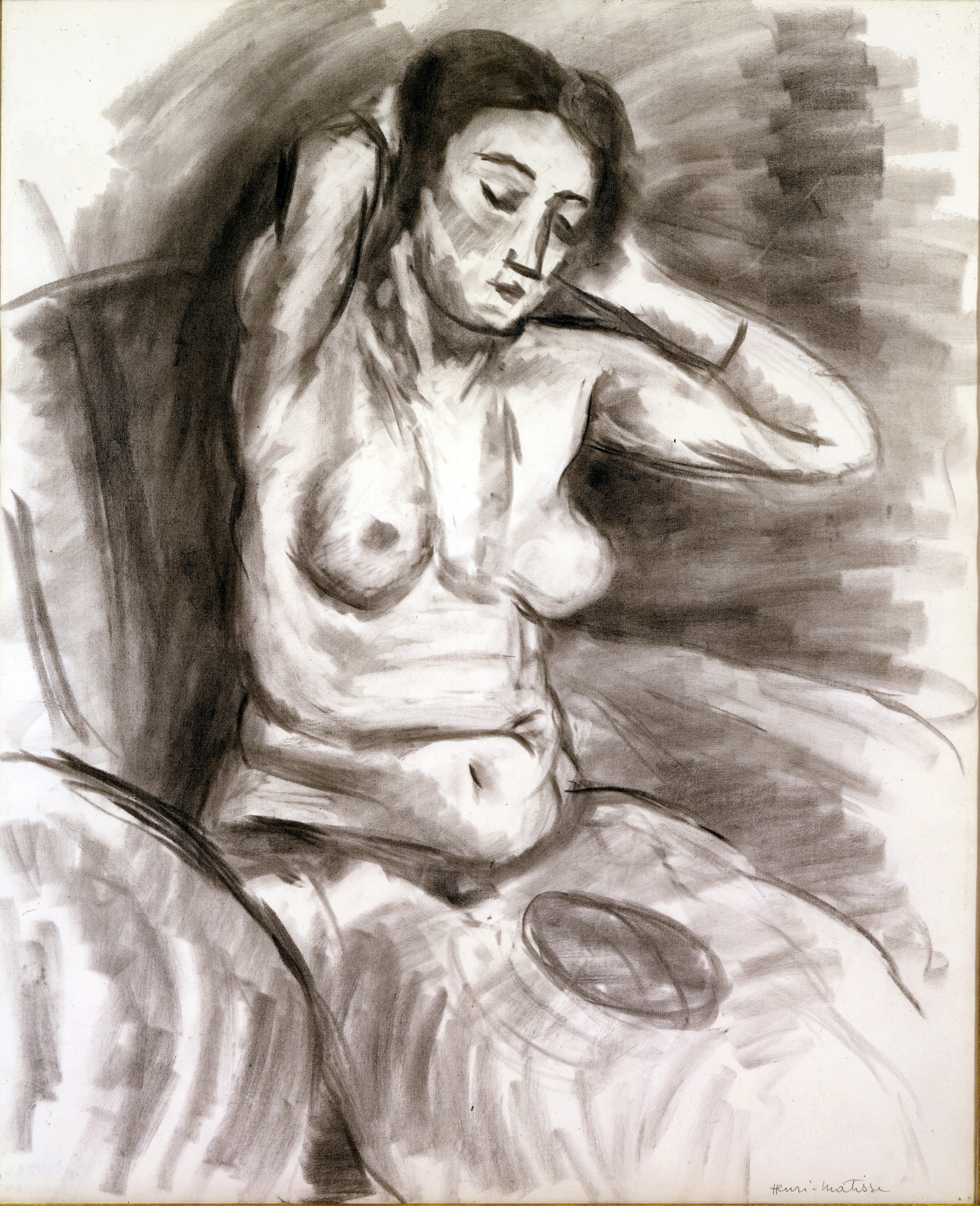
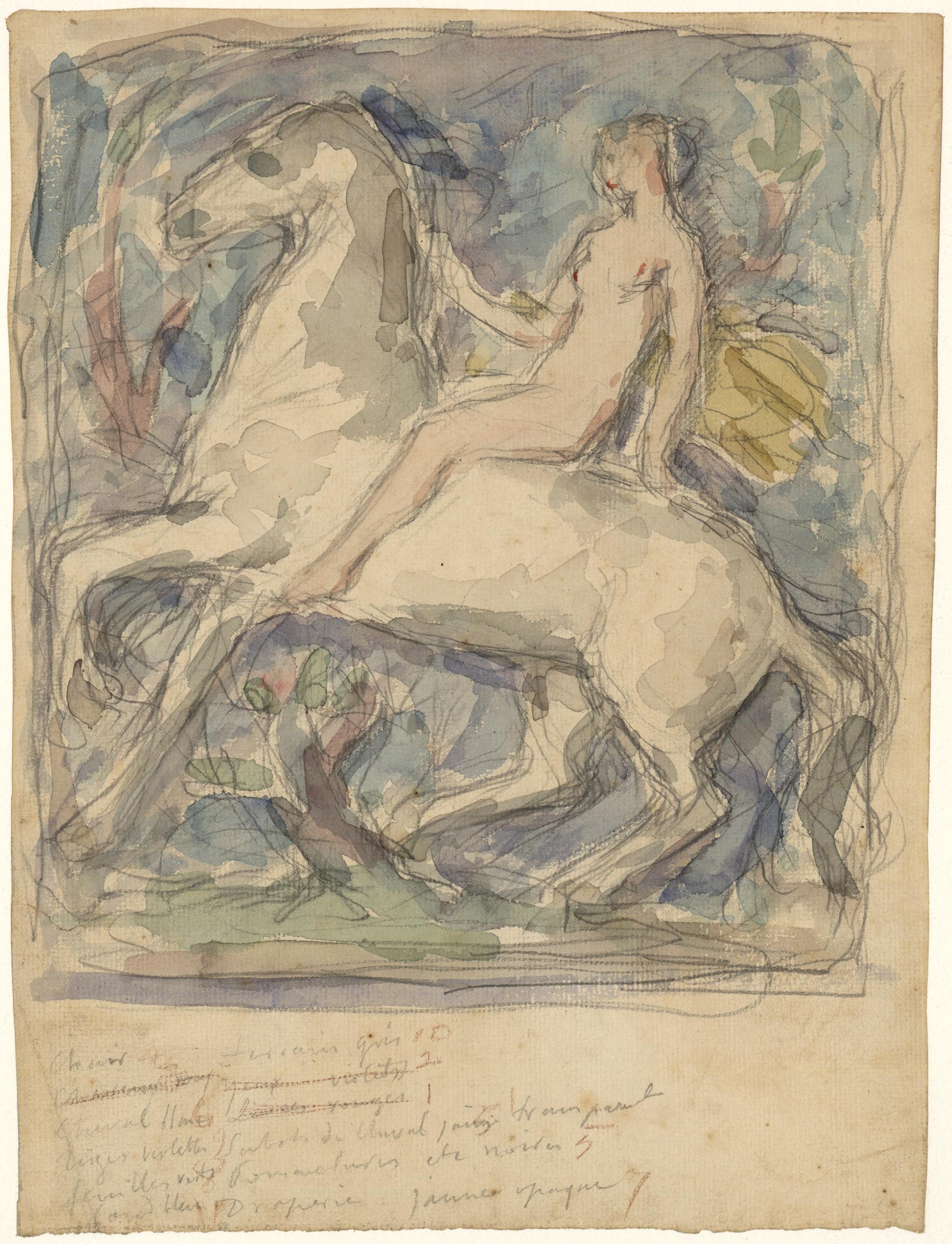
Dina Vierny’s connection with Matisse dates back to the 1940s, when Maillol recommended his model to the master with the words: “Matisse, I am sending you the object of my work, you will reduce it to a line.” The latter then embarked on an ambitious project: revisiting Manet’s Olympia. But Maillol quickly called her back, and the project remained in draft form.

This time spent together gave rise to a friendship that lasted until Matisse’s death in 1954: “I was twenty-two years old, I posed with pleasure, Matisse’s words enchanted me. As with Maillol, not a dull moment with him.” Matisse played a fundamental role in the genesis of the Dina Vierny gallery because it was also he who advised the young dealer and accompanied her in the creation of her exhibition space. He convinced Auguste Perret, busy at the time rebuilding Le Havre, to design the small gallery at 36 rue Jacob, which has not undergone any changes since its opening in 1947.

Henri Matisse’s drawings were presented four times at the Galerie Dina Vierny: in 1966, 1970, 1980 and 1982. This exhibition is therefore the fifth devoted to Matisse’s drawings at Dina. Some of them have also had their place on the gallery walls during previous events.

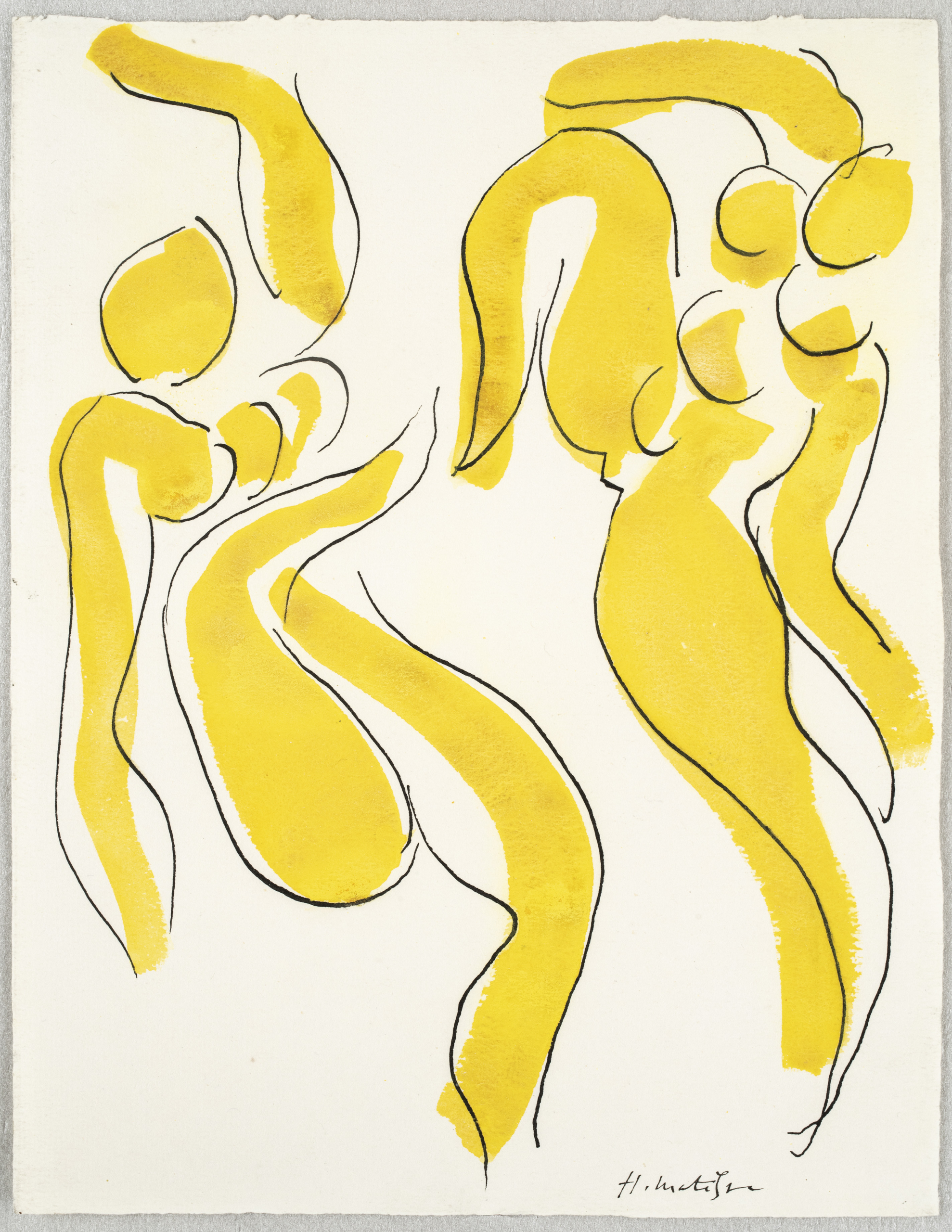
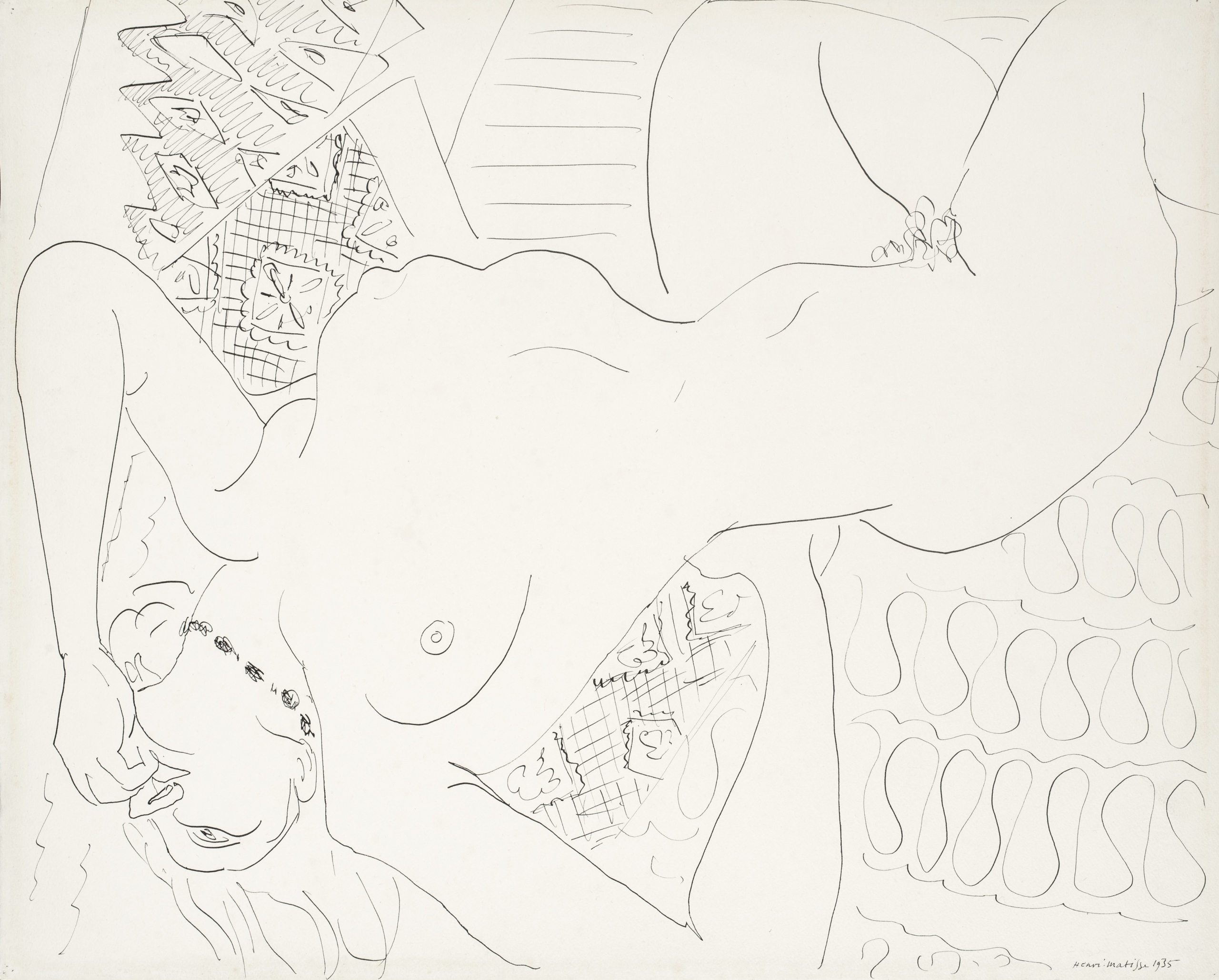
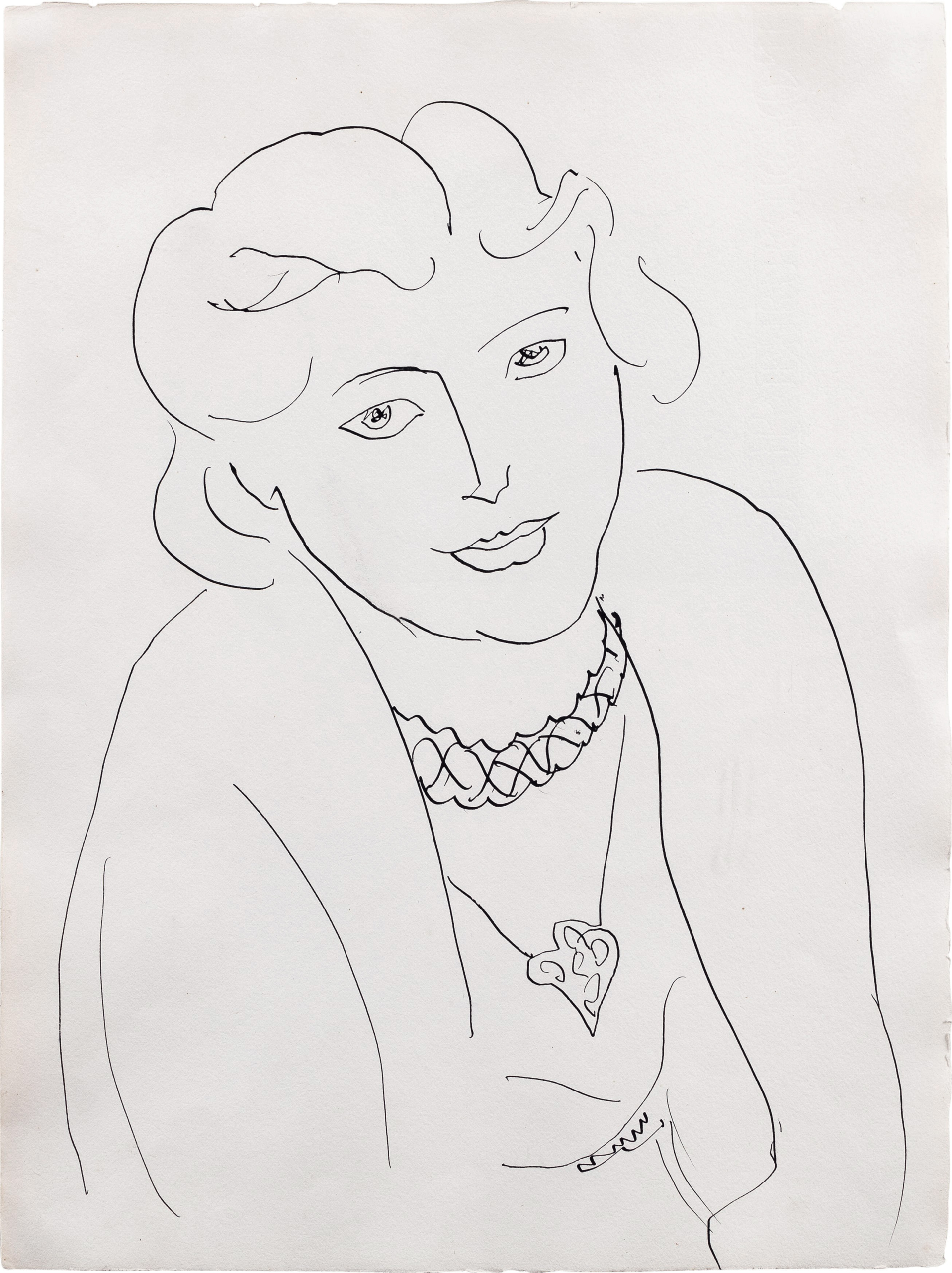
For Matisse, drawing is not only a preparatory tool, but an art in its own right, where each line translates all the sensitivity and depth of his artistic approach. It is a way to explore the essence of forms and the human figure, to get to the essential without being distracted by the superfluous. His mastery of line is recognized for its fluidity and elegance. Each line, refined but precise, captures the essence of the subject. Matisse opened the way to a new approach to drawing, in which figure and background coexist harmoniously and complement each other. In 1989, in the catalog of an exhibition organized by Dina Vierny, Pierre Schneider wrote on this subject : “The line traced by Matisse animates the figures, but also the background. In truth, we should no longer speak here of figure and ground, since the line that qualifies one also qualifies the other, since the pen, the pencil, by naming the latter, do not relegate the former to anonymity. The furrow of ink divides without separating. The whiteness that it encloses and that which encloses it weigh the same. It is rare that Matisse does not leave in these lines, at their crossroads or at their points of convergence, gaps, barely perceptible openings, through which they communicate, exchange their substance, and this substance is common to them. Matisse puts an end to the war between black and white, the limited and the unlimited, the full and the empty.
October 1 – December 21, 2024

GALERIE DINA VIERNY

36 rue Jacob 75006 Paris

History of a Gallery

2024 marks the hundredth anniversary of the Larock-Granoff gallery, probably the oldest Parisian gallery still in operation, today represented by the 4th generation of dealers.

When Katia Granoff invented her profession as an art dealer in 1924 and created this unique place, she was already betting on those who would make the history of modern art. The choices she made then inscribed these major artists in history, as their works are masterpieces. A defender of the poetic work of Marc Chagall, whose importance she was the first to understand at the beginning of the 20th century, she exhibited the living art of her time and quickly established herself as one of the most powerful and most followed dealers in Paris.

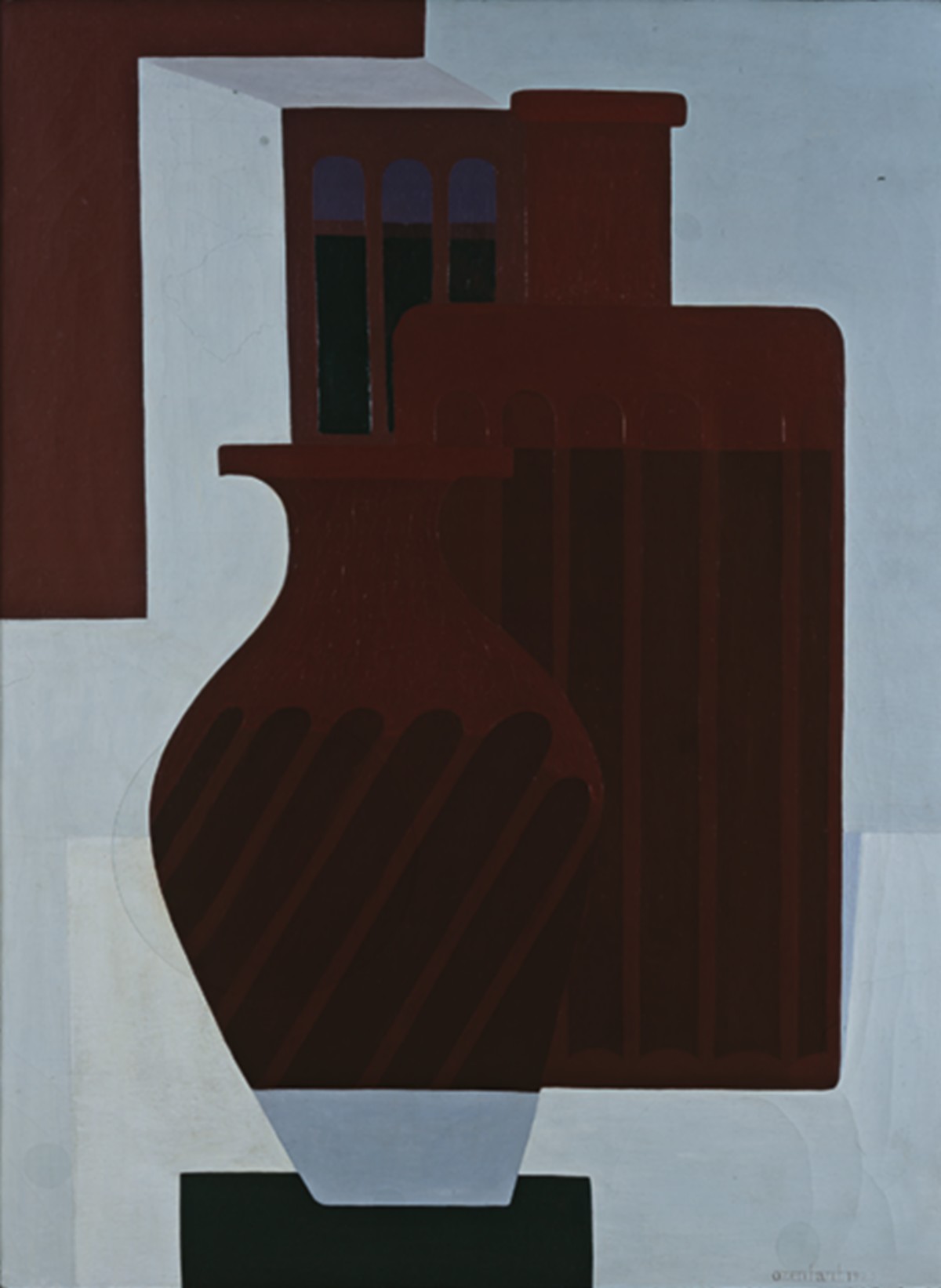
The gallery thus presents a group of 20th century artists from Claude Monet, whose work she is the architect of the rediscovery in France and around the world from the 1950s, to Marc Chagall, via Amédée Ozenfant, Othon Friesz, Jean Messagier and young contemporary painters. Katia Granoff fervently defends the Russians of the School of Paris, exiled like her from this Russian Empire that is hunting them down. Alongside Chagall, she exhibits Chaïm Soutine Emmanuel Mané-Katz, Michel Kikoïne, Chana Orloff…

In a way, a short history of 20th century art. In the 1950s, Katia Granoff fell in love with Norman Impressionism and the Rouen School. The gallery then also moved to Honfleur, on the Vieux Bassin, where it presented painters such as Othon Friesz, Charles Angrand, Jacques Bouyssou, etc.

Driven by her inextinguishable passion for art, Katia Granoff redefined the profession of dealer in the 20th century; her gallery was a place for meetings, intellectual and artistic exchanges, she also brilliantly devoted herself to poetry and the translation of great Russian poets. Her many works were rewarded with prestigious prizes.

A dedicated patron, she bequeathed major works to French and international museums throughout her life. When she died in 1989, her gallery was taken over by her nephew, Pierre Larock, then by her great-grandnephews, Marc and Édouard Larock, who endeavored to do a work of memory, transmission and testimony of all the work carried out by this exceptional woman and perpetuate Katia Granoff’s tradition of patronage and defense of the art of their time.

October 16 – December 28, 2024

Galerie Larock Granoff

13 quai de Conti 75006 Paris

Robert Couturier

Silhouettes

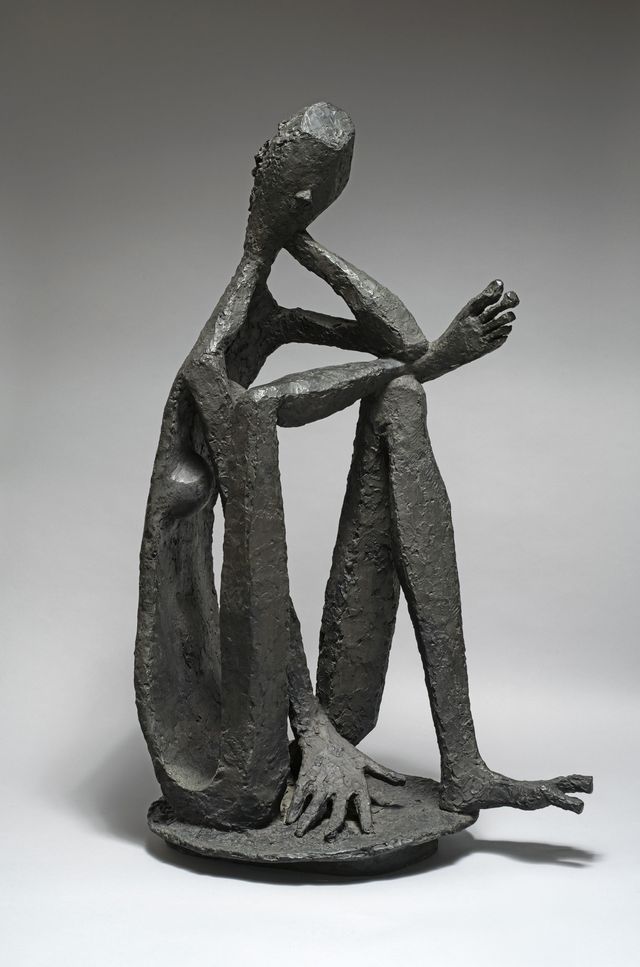
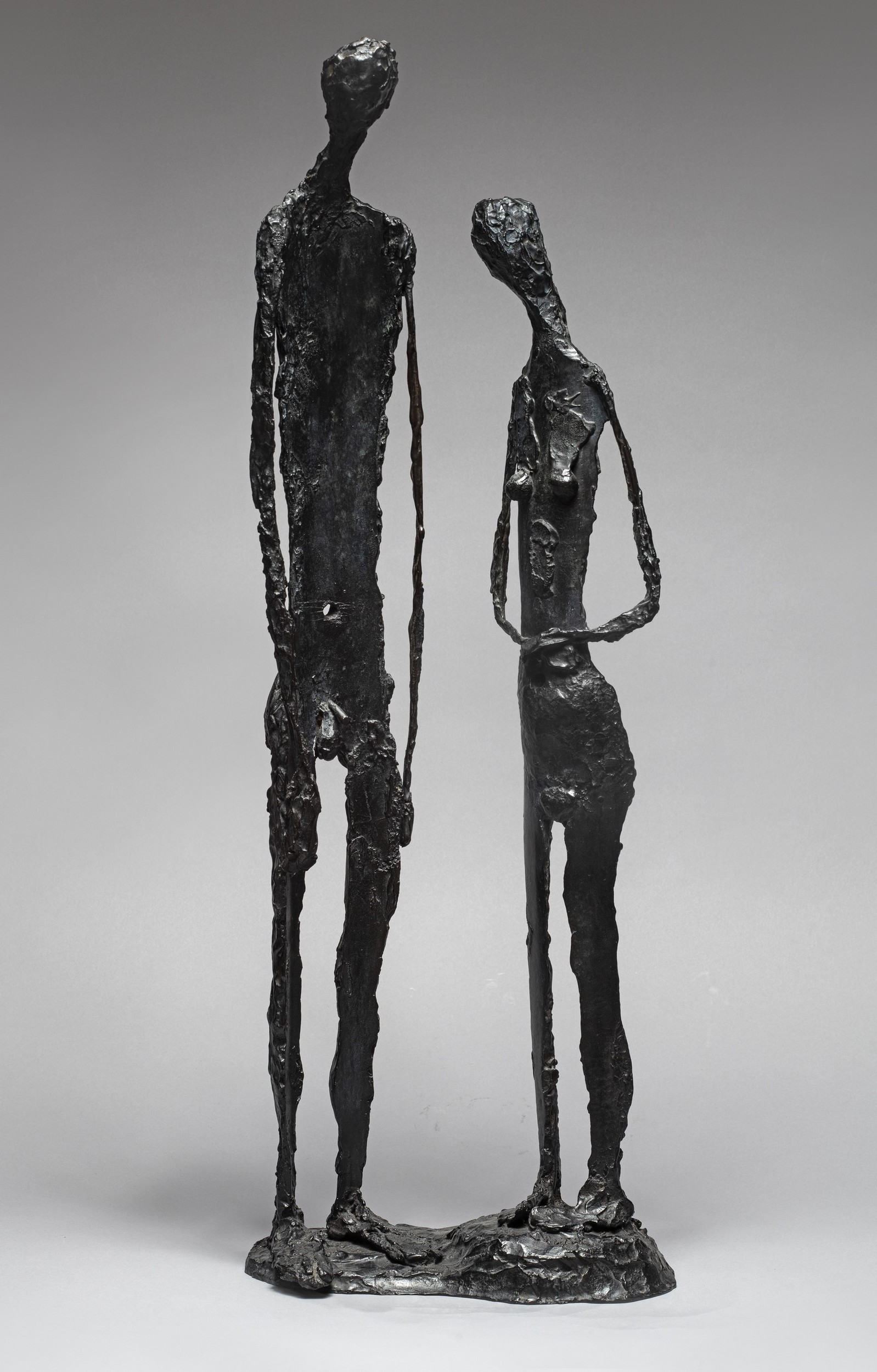
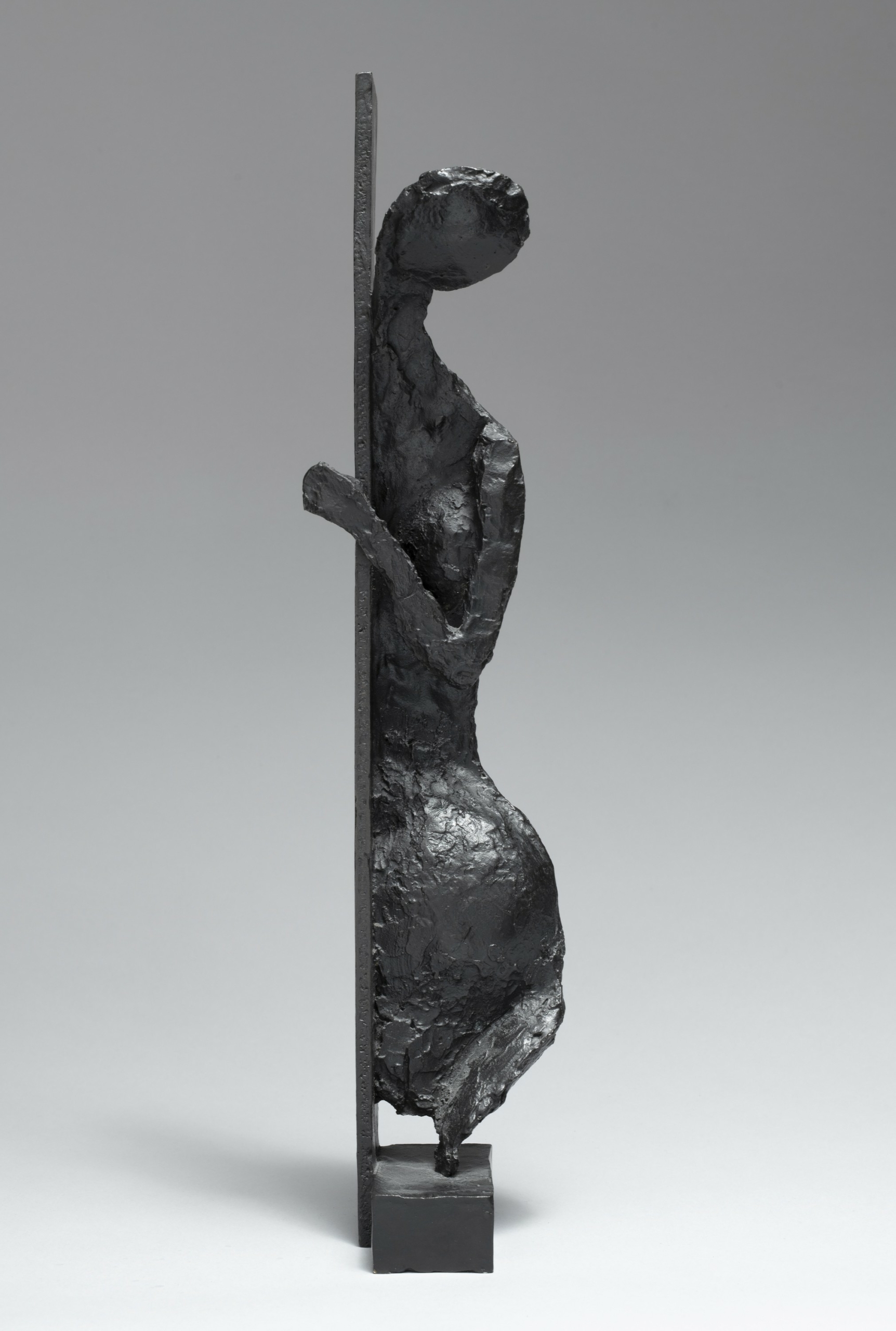
Sculptor of the generation of Alberto Giacometti and Germaine Richier, Robert Couturier (1905-2008) plays with figurative inventions, with silhouettes and bodies. A gateway to art, between vitalism of form and geometric rigor, Couturier breathed life into sculpture, like Gustav Mahler to the symphony, Mahler who associated the modern with dissonance, at the meeting of the lyric and the rondo burlesque. Decentering is in sculpture what dissonance is in music. Couturier is the sculptor of decentering.
For this exhibition, Claire Maingon and Thierry Dufrêne have chosen to treat silhouettes as emblematic forms of Robert Couturier’s art. “A la Silhouette”, as the shadow portraits were drawn and then cut out from the cast shadow of a face which was fashionable at the time of Etienne de Silhouette (1709-1767), minister of finance and friend of the philosophers of the Enlightenment before the latter denigrated it because of its “reductive” function. The short-lived minister had fun by having his guests sit near a parchment screen and lighting them with a lamp to cut out their shadows. Humor and the sense of unity of the figure are found in the works of Robert Couturier who has no equal in summarizing a body, an attitude, a couple, in a few essential features, in an incisive cut, making to be born a true drawing in space, a quasi-two-dimensional sculpture “with nothing in it that weighs or poses” (to use the poetic art of Verlaine) Robert Couturier, one of the most important sculptors of the post-war, in the same way as Giacometti or Richier, will have a major exhibition dedicated to the Dina Vierny gallery from May 24 to July 25. The curators, Thierry Dufrêne and Claire Maingon, eminent specialists in 20th century sculpture, will focus on the idea of the silhouette in his sculpted work.

May 24 – July 25, 2024

Galerie Dina Vierny

36 rue Jacob 75006 Paris

Ellsworth Kelly

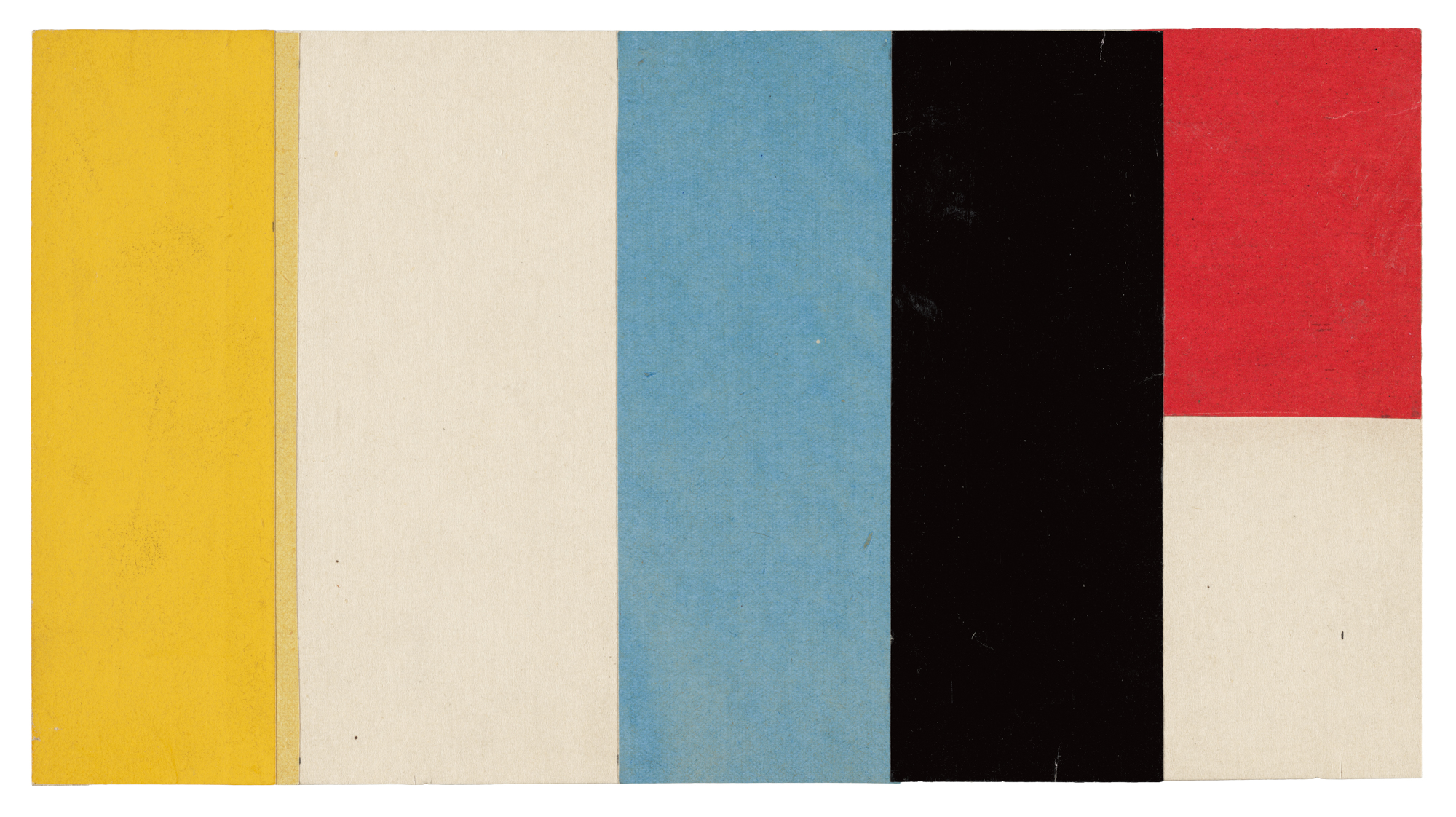
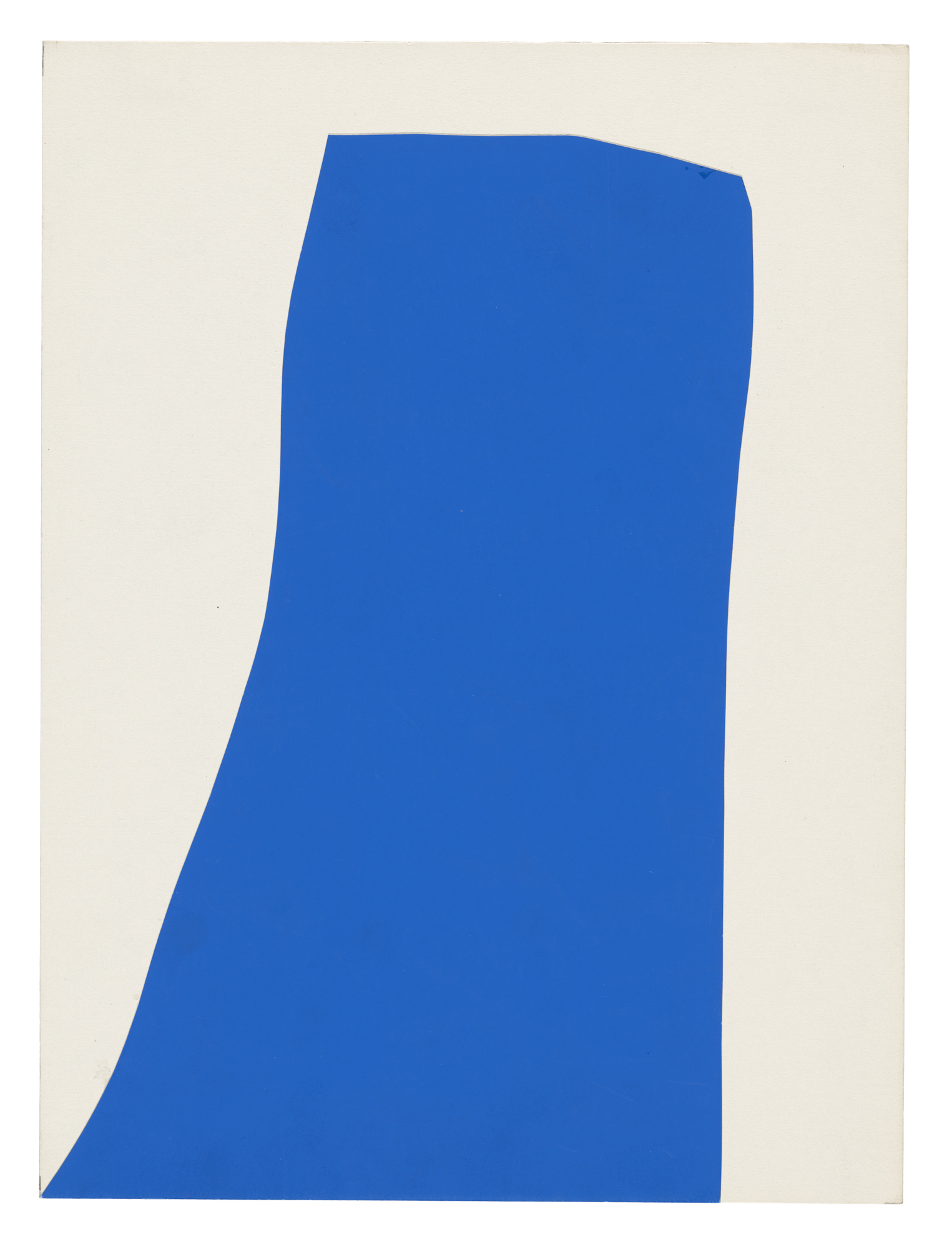
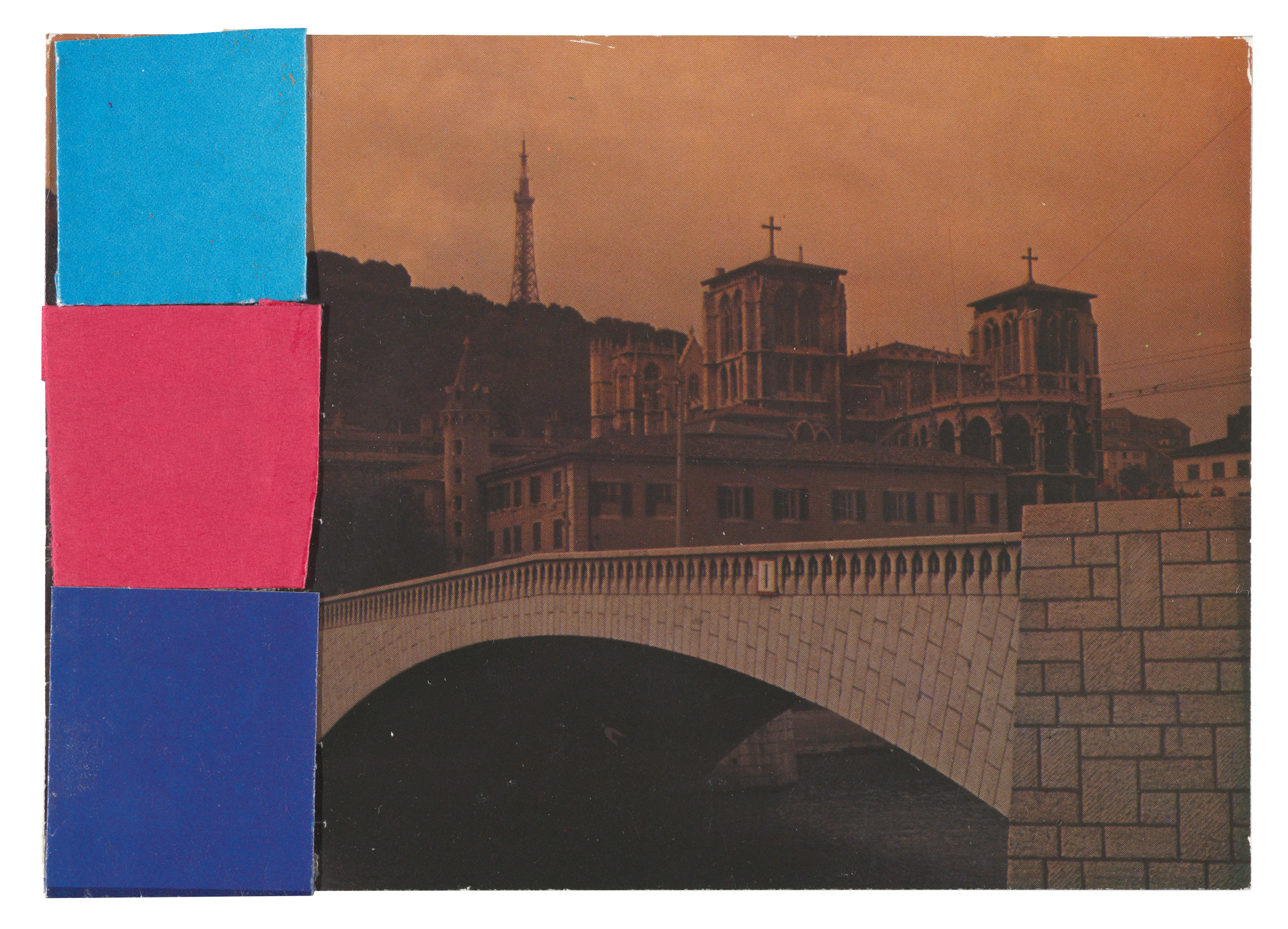
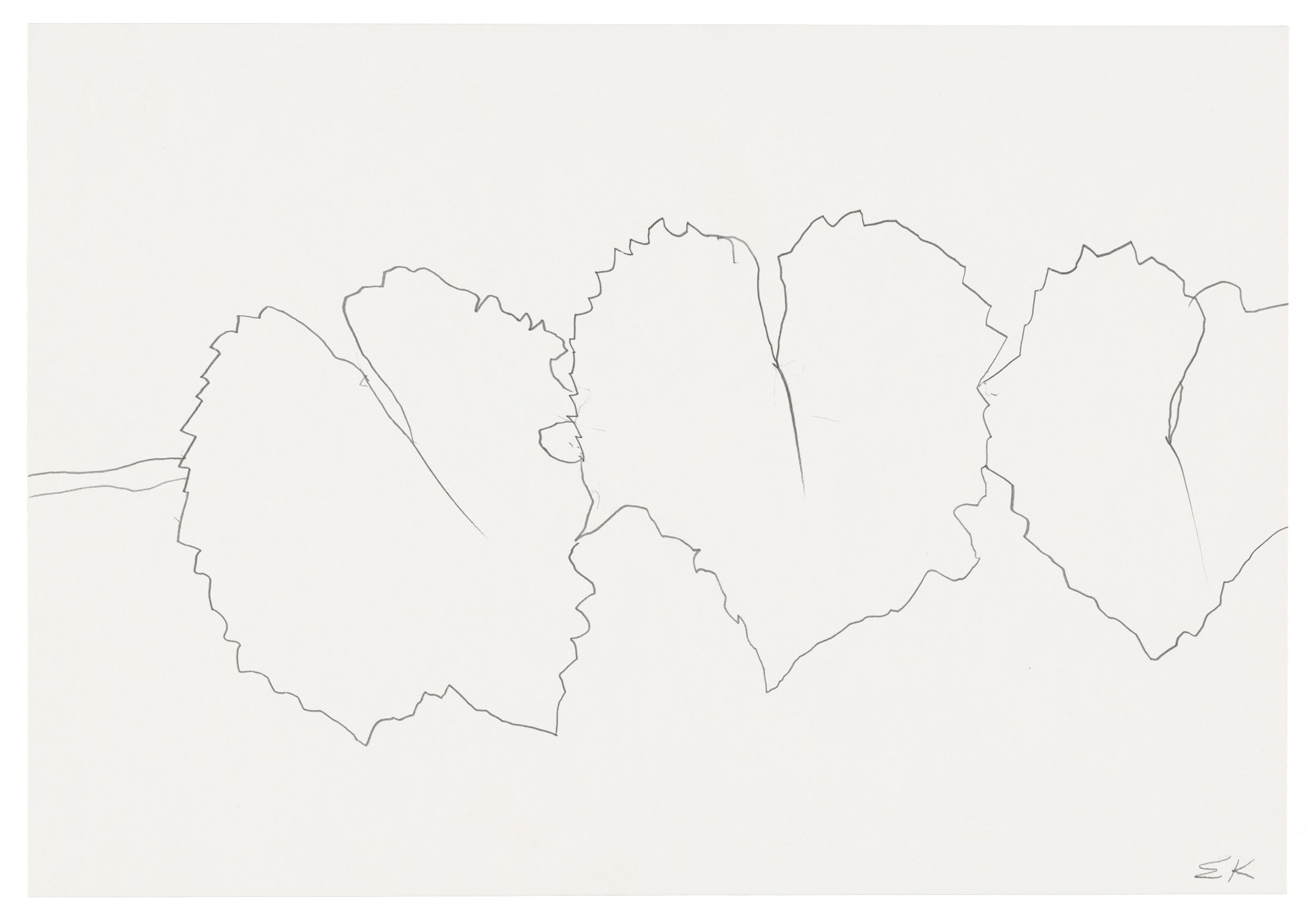
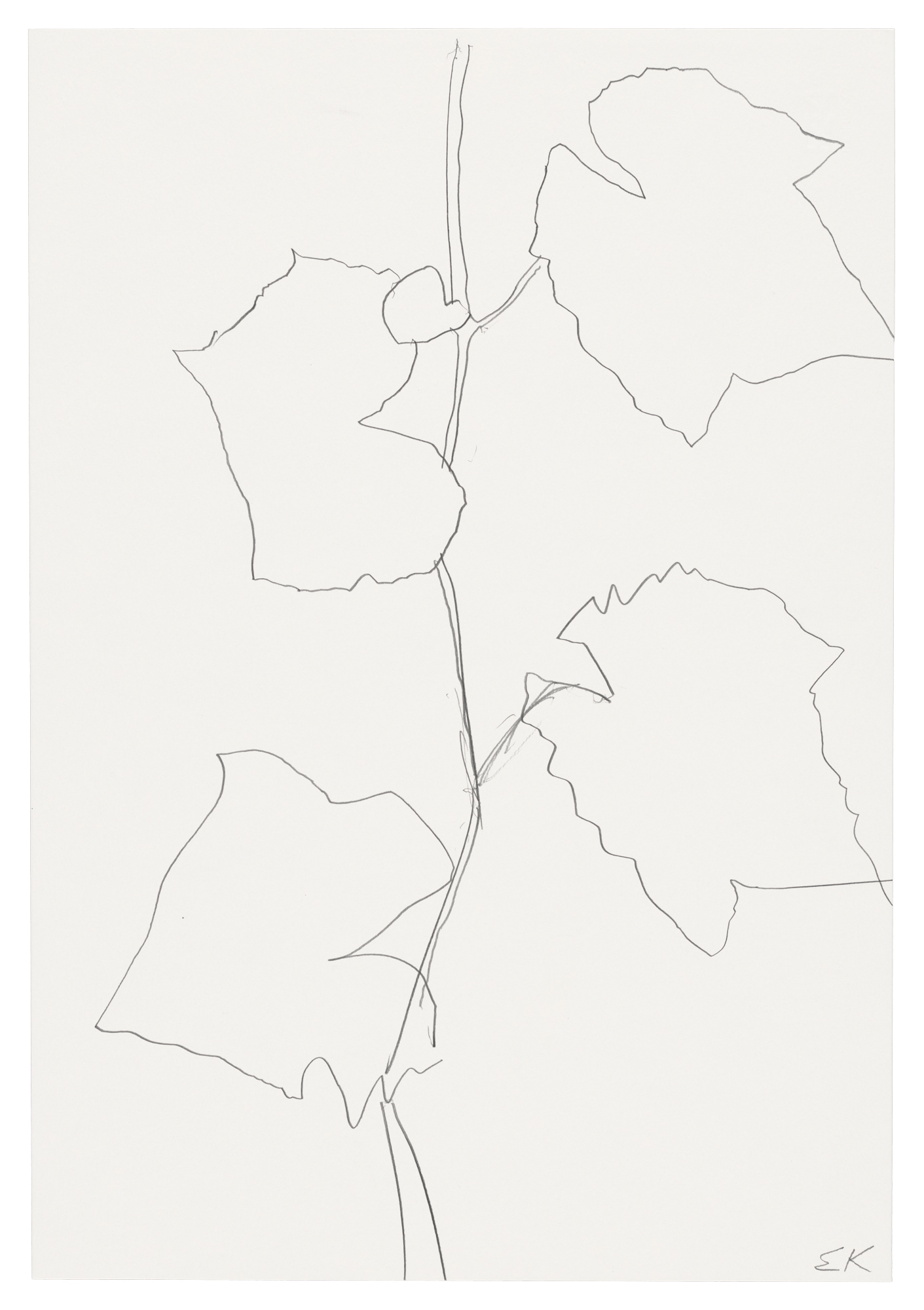
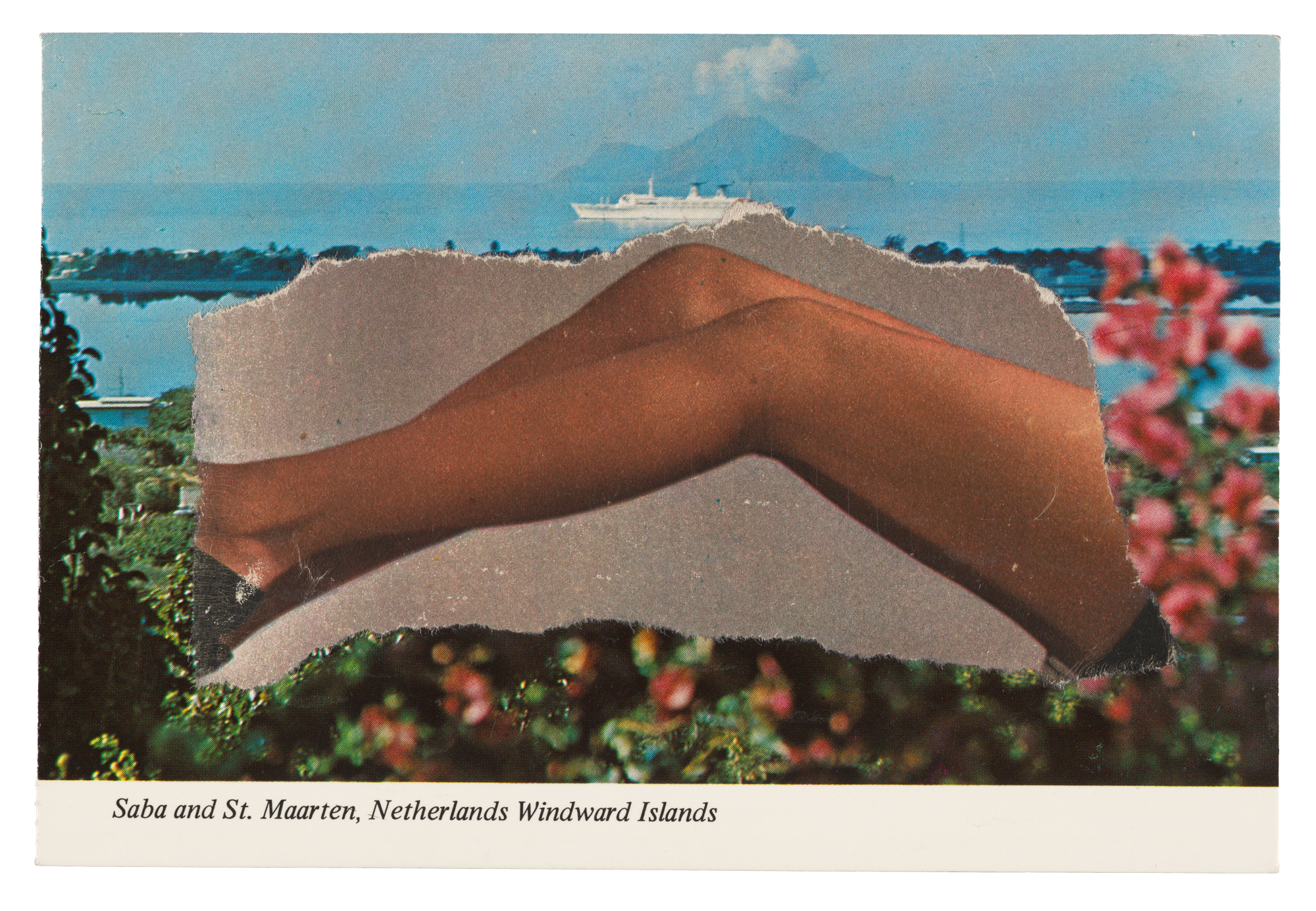
A collection of collages, drawings and postcards from the 1950s to Ellsworth Kelly’s last collaboration with the Revue Cahiers d’Art in 2012: this exhibition, designed in close collaboration with the Ellsworth Kelly Foundation, invites us to discover Kelly’s research into form, colour and composition on paper.

The small format of the works provides a unique opportunity to capture the intimacy of Kelly’s artistic process. Spanning seven decades, these works illustrate the artist’s love of line, form, and the beauty of nature’s shapes. Kelly’s postcards highlight the artist’s mastery of a strong aesthetic in a concise composition. Often sent to family and artist friends, these works reflect Kelly’s deep attraction to the colors and poetic forms of everyday life.

The collages express Kelly’s innovative exploration of formal and chromatic relationships. More than that, they demonstrate his constant experimentation with form and abstraction. Ellsworth Kelly was inspired by the connection between abstraction and nature to draw shapes and colors. His deep attachment to natural forms is reflected in his plant studies, with their subtle and delicate lines. Through these clean lines, Kelly manages to embody and feel the essence of organic forms.

Ellsworth Kelly (1923-2015) was born in Newburgh, New York. In 1948, he moved to France, where he discovered many classical and modern works of art. In 1951, Kelly’s first solo exhibition was organized by the Galerie Arnaud in Paris. In 1954, Kelly decided to return to New York. In 1973, the Museum of Modern Art in New York organized his first retrospective. Subsequent exhibitions took place in major museums, including the Solomon R. Guggenheim Museum in New York, the Tate Gallery in London, the Haus der Kunst in Munich, and the Centre Pompidou in Paris. The connection between Ellsworth Kelly and Cahiers d’Art is a continuation of the artist’s attraction to the famous magazine, collecting issues while he was still a young American student in Paris. The Revue Cahiers d’Art was renowned for covering the different periods of art history, from prehistory to modern art, and this editorial choice had appealed to Kelly because it echoed his artistic approach and his collection of Native American antiquities.

This relationship was sublimated by the rebirth of Cahiers d’Art in 2012, when the first publication of the new edition of the magazine was dedicated to him, thus concretizing the artist’s reunion with his Parisian youth and the history of Cahiers d’Art. By publishing his catalogue raisonné, Cahiers d’Art celebrates Kelly’s importance in the history of modern art.

June 6 – September 30, 2024

CAHIERS D’ART


14-15 rue du Dragon 75006 Paris

Fashion Jewelry Design Course

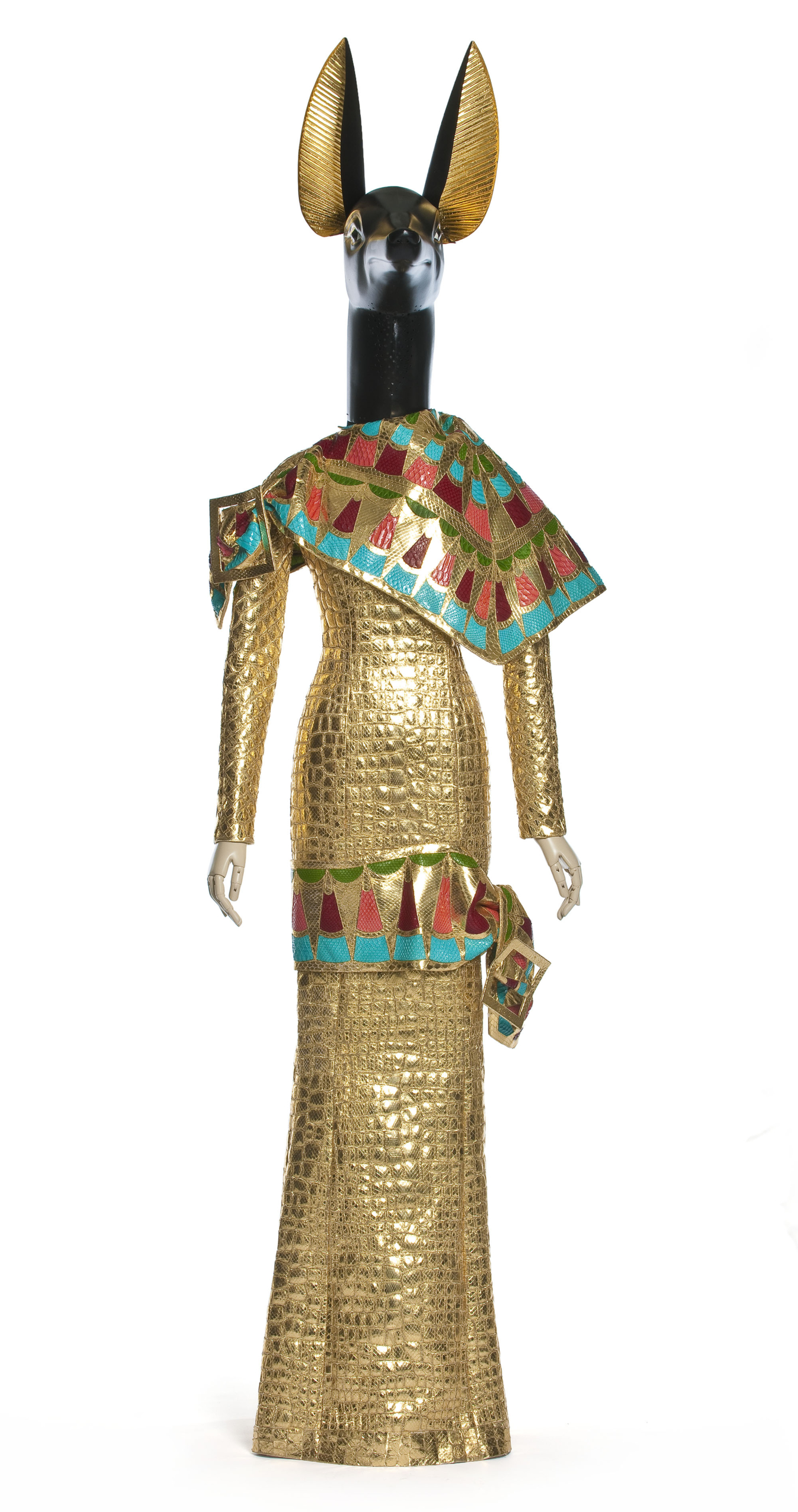
The Museum of Decorative Arts presents for the first time a selection of haute couture, ready-to-wear and jewelry pieces in the permanent galleries dedicated to design from the 20th century to the present day.

This thematic presentation pays homage to famous jewelry houses and designers. The circuit highlights the collections of the great houses of Place Vendôme: Cartier and Van Cleef & Arpels, but also the fertile imagination of creators and artists like Jean Desprès, Jean Schlumberger, Florence Lehmann or even Costanza and Roger Jean- Pierre who showed great creativity.

This unique tour also reveals iconic pieces from the museum’s fashion collections and devotes an important place to designers such as Paco Rabanne, Issey Miyake and Rick Owens. The big fashion houses are also represented, Balmain by Olivier Rousteing, Christian Dior by John Galliano, or even Courrèges and its artistic director Nicolas de Felice, and also, Stéphane Rolland recently entered the collections.

This exhibition allows us to take a new look at design from the post-war period to the present day, French and international, deployed in a thematic journey from Nathalie du Pasquier to Martin Szekely, from Jean Prouvé to Charlotte Perriand, via Michael Graves , Roger Tallon and contemporaries Marc Newson and Pierre Charpin. It thus highlights the creative and historical links between the disciplines of Decorative Arts.

This visit shows the games of correspondence between forms, techniques and approaches revealed by the selection of works. Another way to sharpen your perspective and approach contemporary creation!

April 3 – November 10 novembre, 2024

MAD

107 rue de Rivoli 75001 Paris

Jaime Hayon

Atelier Wonderland

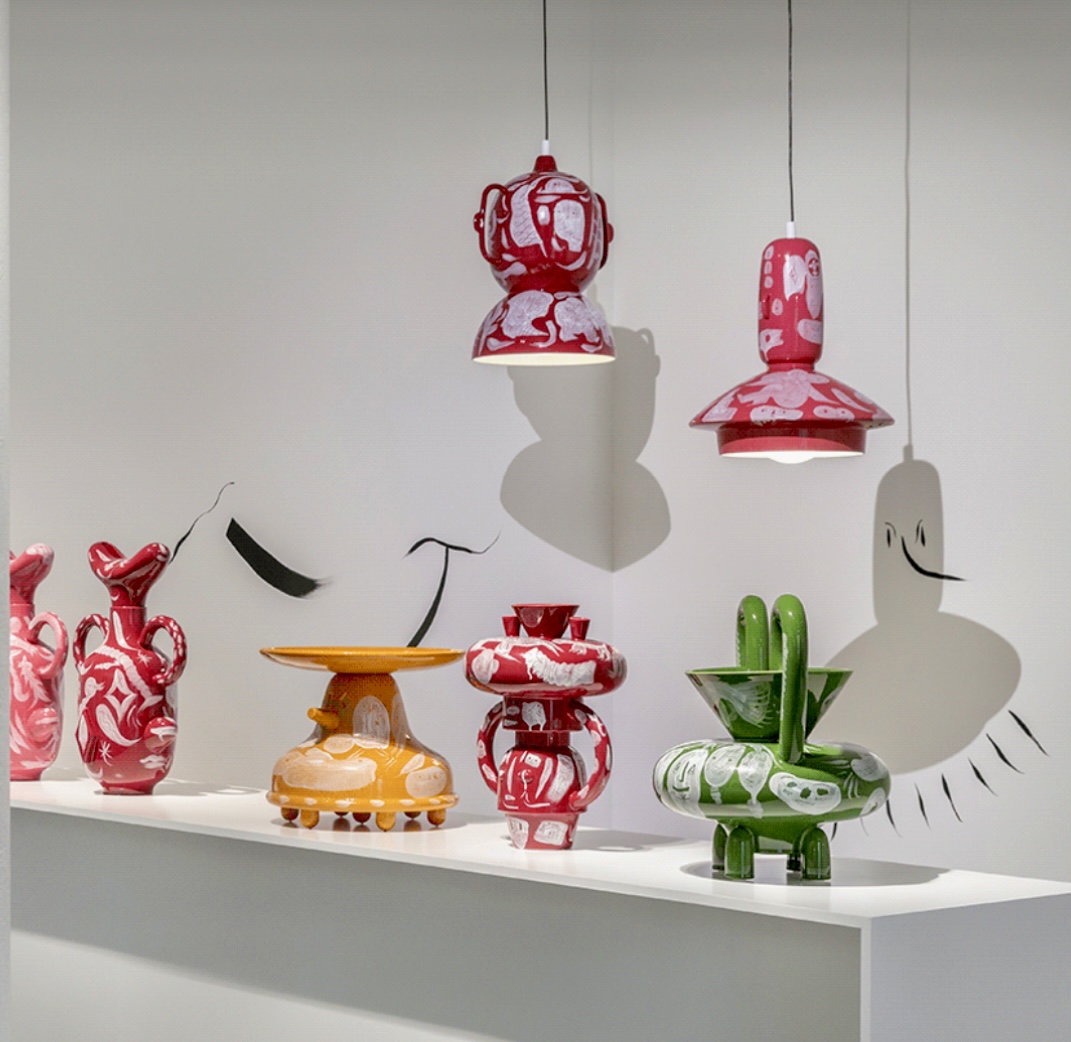
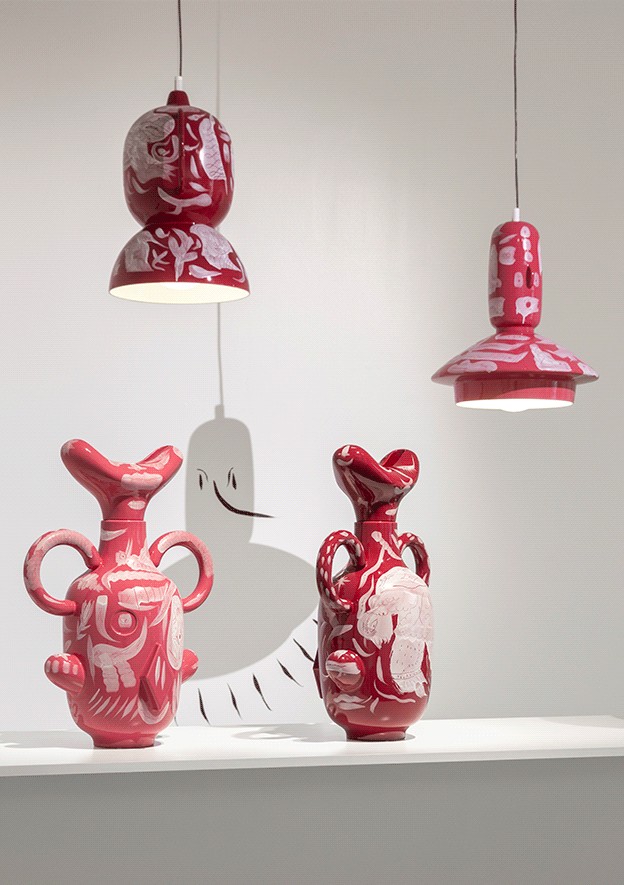
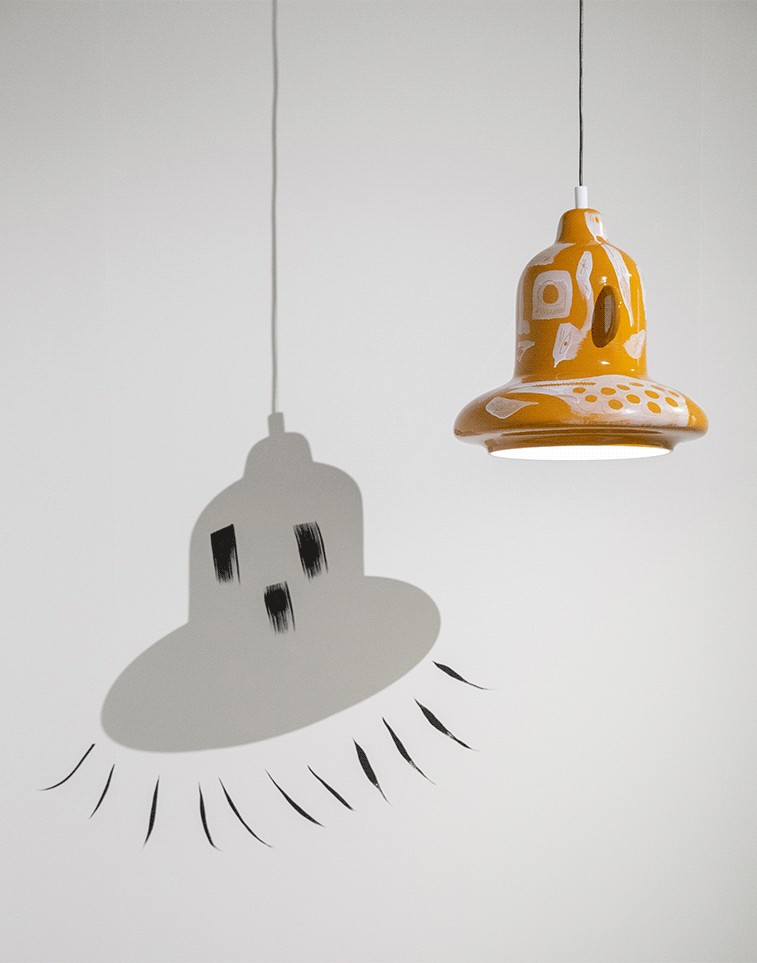
Jaime Hayon is a Spanish artist and designer whose protean work is expressed in the design of furniture and objects, interior designs, monumental urban installations, sculptures and paintings. His style is characterized by a resolutely optimistic aesthetic and a unique, bold and colorful visual language. His internationally recognized work has been presented in solo exhibitions in prestigious museums across Europe, the United States, the Middle East and Asia. His pieces belong to the collections of the Groninger Museum in the Netherlands, the Design Museum in London, MUDAC in Lausanne, the Museo del Disseny in Barcelona and the MAD Museum in New York. This new exhibition by Jaime Hayon at Kreo vividly expresses the Spanish designer’s flamboyant visual language through various mediums, inviting visitors to explore his world rich in color and complexity.

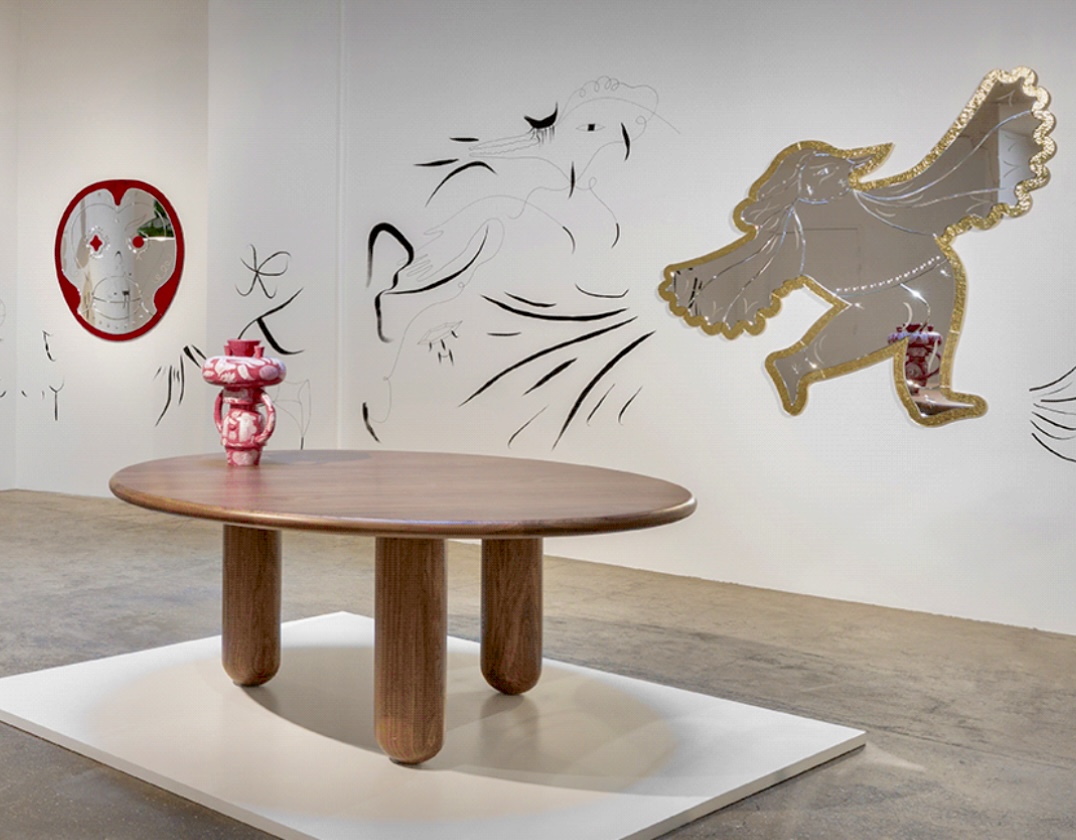
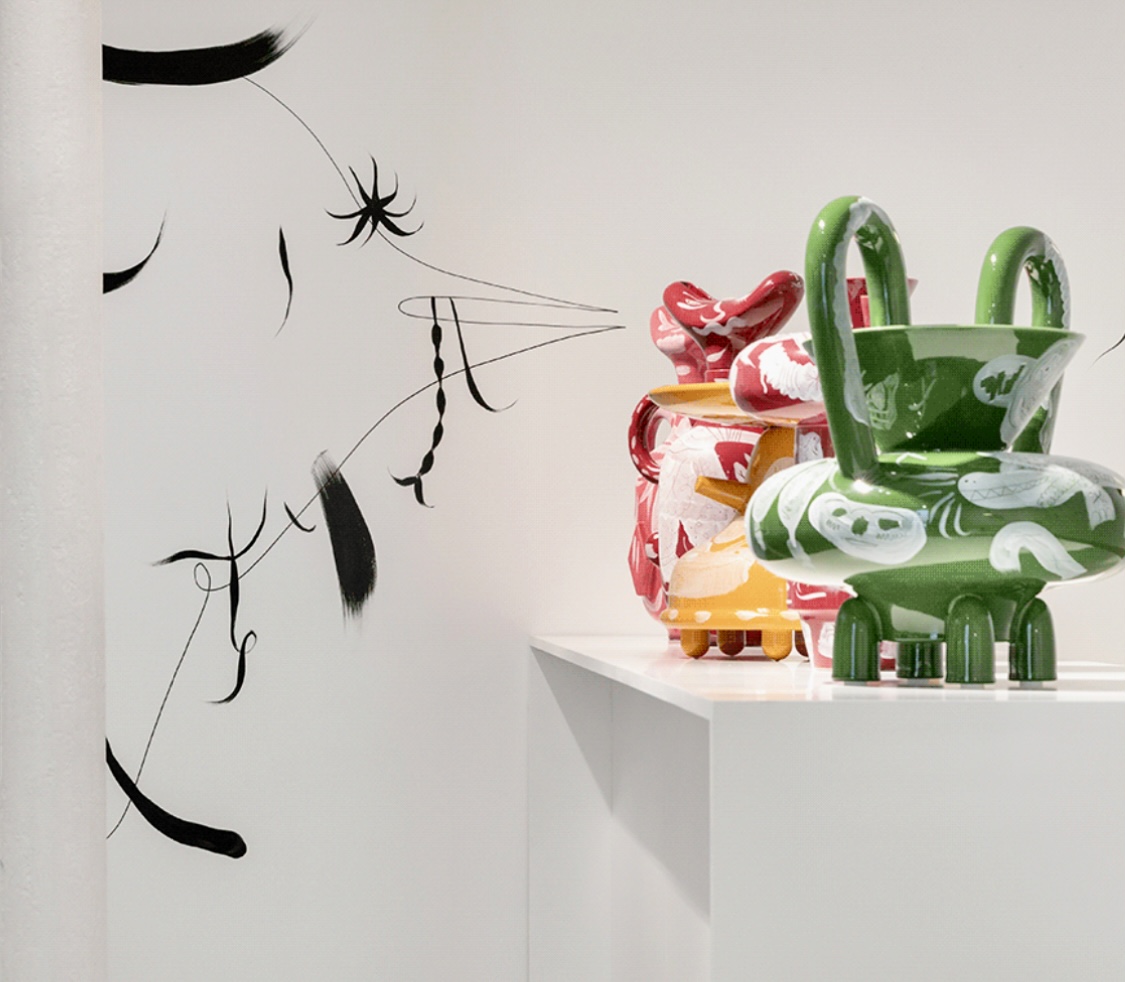
“Atelier Wonderland” reflects the fluidity of Hayon’s artistic expression, brilliantly merging his passion for traditional crafts and his incessant exploration of new forms. In this exhibition, he presents a unique collection of 15 pieces combining meticulous craftsmanship and bold artistic expression. We thus discover a series of Mediterranean-inspired vases and chandeliers, adorned with expressive faces and oversized handles, alongside organic walnut tables that resonate with the characteristic curves of the artist’s work. Each ceramic, meticulously painted by Hayon, illustrates his multidisciplinary approach, transcending the conventional boundaries of art and design.

The exhibition also presents a series of Murano glass mirrors made entirely by hand, with complex shapes and enhanced with colorful ornamentation. Heavily involved in this complex production process, Hayon worked with Venetian master glassmakers to create mirrors that were both precious and playful. Celebrating this artisanal heritage, these mirrors bear witness to his fascination with historical techniques and his ambition to push these traditions towards new horizons.

His pronounced taste and commitment to the preservation of traditional artisanal talents, combined with his innate creativity, lead him to constantly push the limits of materials and manufacturing processes. He collaborates with a range of major international brands, breathing a breath of freshness and innovation into each project. This pioneering approach, at the forefront of a new wave of creators blurring the boundaries between art and design, contributes to the rebirth of finely crafted and complex objects within contemporary design culture.

April 26 – July 26 2024

GALERIE KREO

31 rue Dauphine 75006 Paris

The MET in Louvre

Dialogues of oriental antiquities

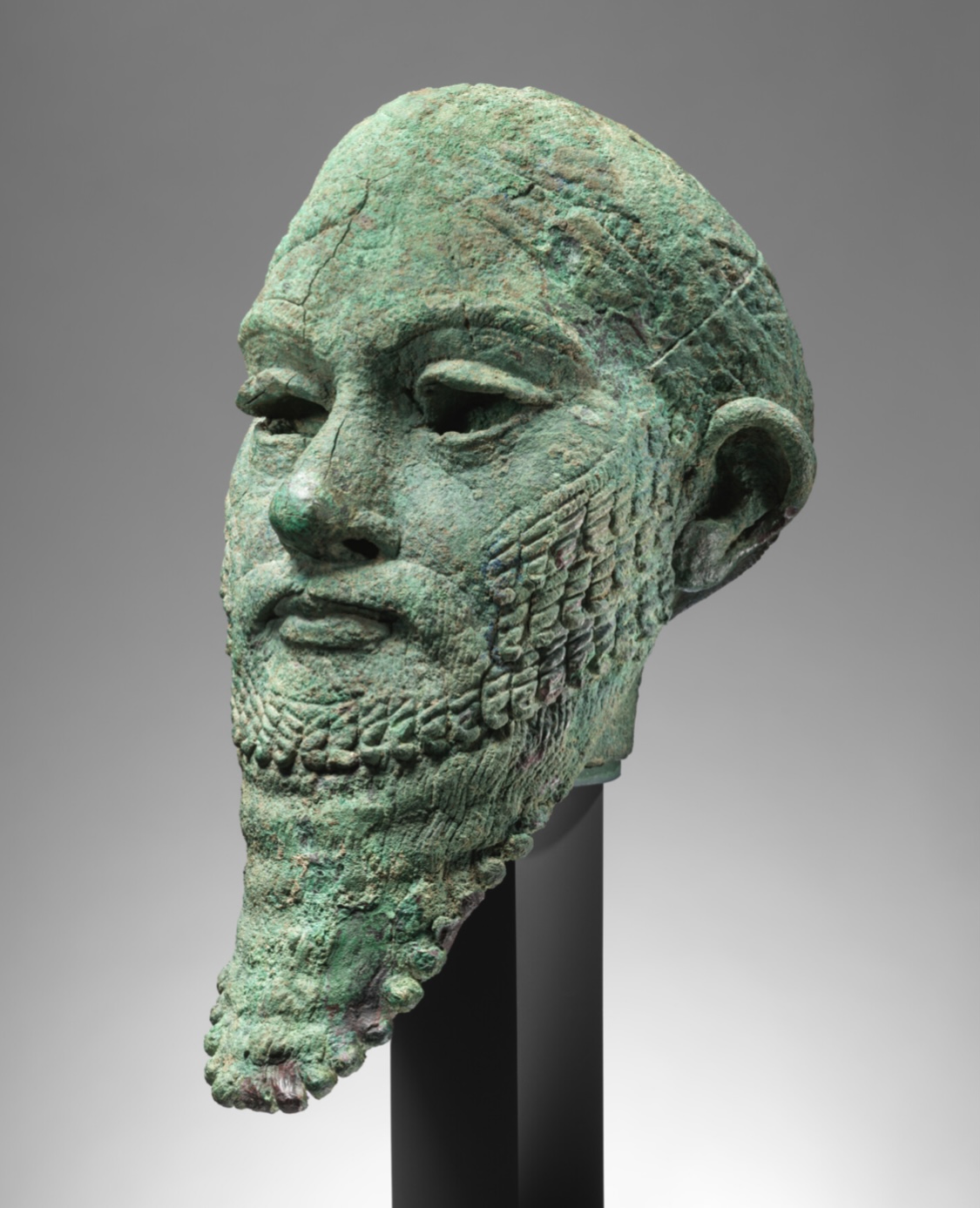
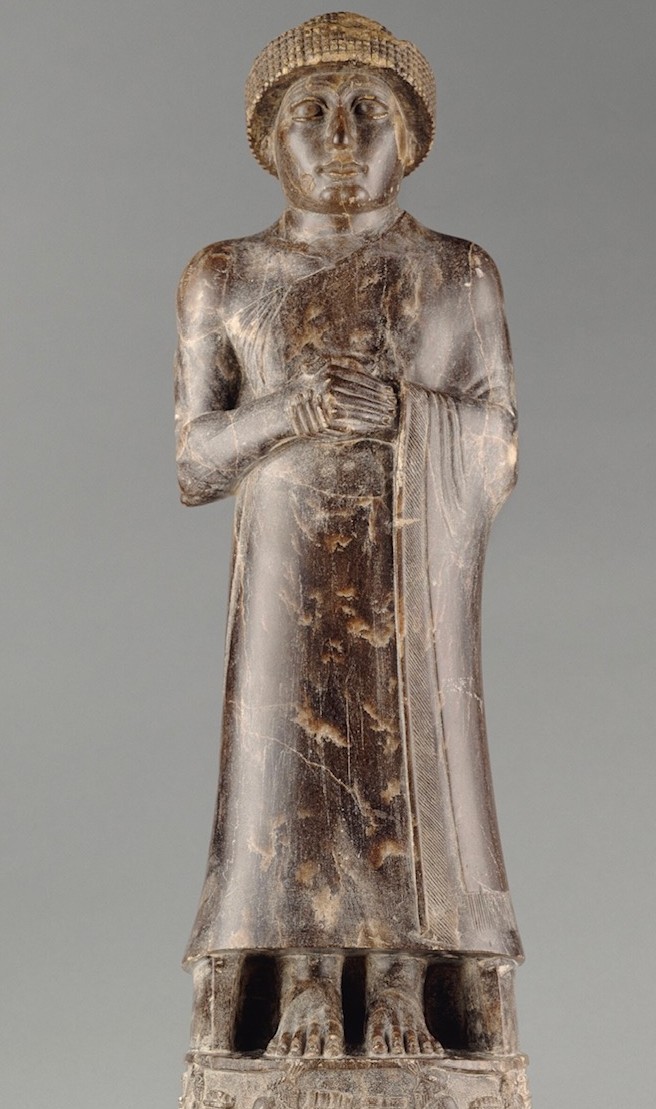
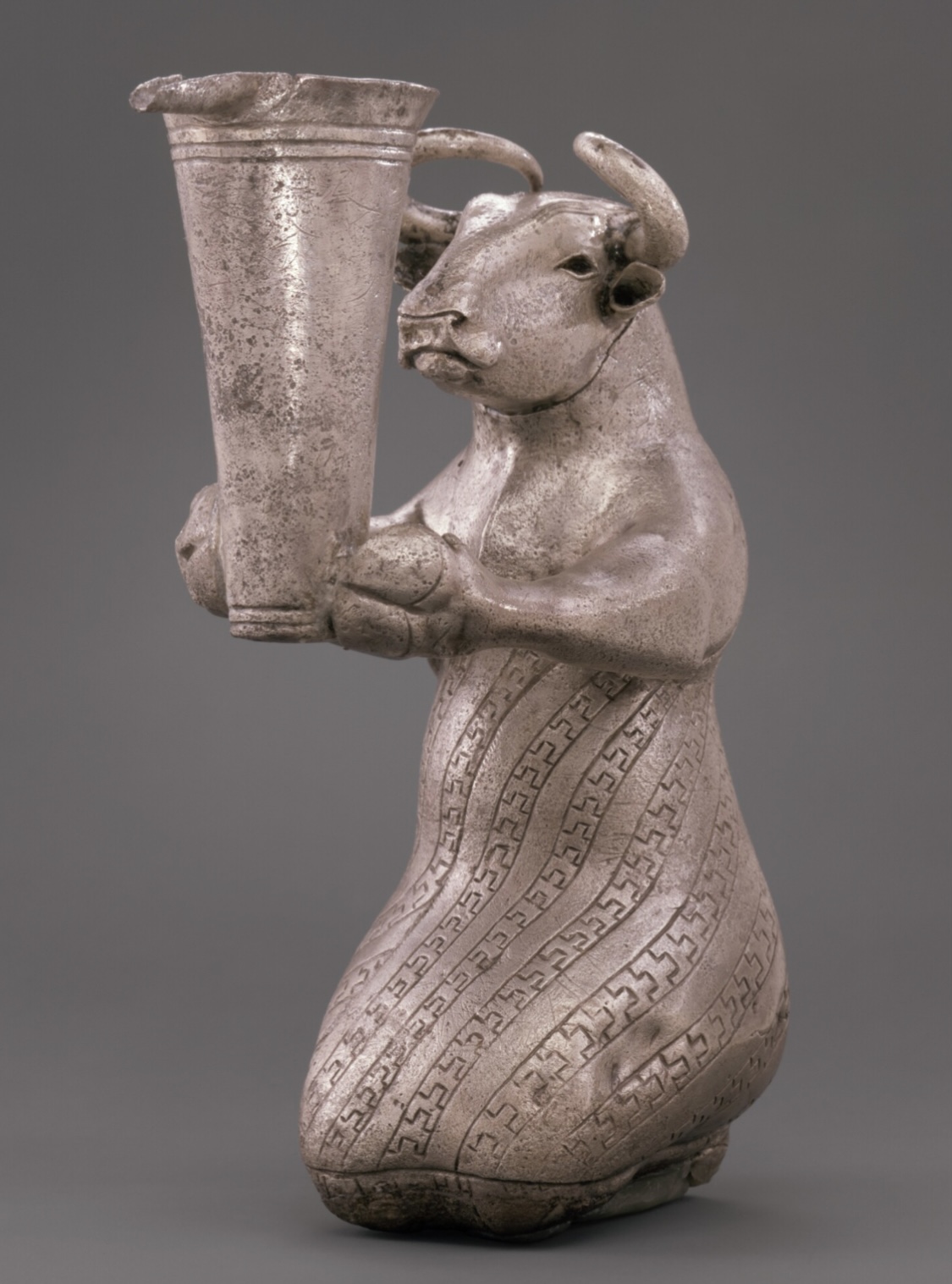
The Department of Oriental Antiquities hosts ten major works from the Department of Ancient Near Eastern Art of the Metropolitan Museum of Art (The Met) in New York, currently closed for comprehensive renovation work. The Louvre was thus able to design with the Met an unprecedented dialogue between these two collections which will take place within the permanent rooms of oriental antiquities.

Dated between the end of the 4th millennium BC and the 5th century AD, the Met’s works, exceptional guests, introduce remarkable correspondences with the collections of the Louvre, that is, together they form a pair brought together for the first time on this occasion, or that they complement each other due to the specificities linked to the history of each of the two collections. From Central Asia to Syria, often passing through Iran and Mesopotamia, these collection dialogues allow us to (re)discover these multi-millennial works and the stories to which they bear witness in a different way.

February 29, 2024 – September 28, 2025

MUSEE DU LOUVRE

AILE Richelieu et Aile Sully, niveau 0

BOOK YOUR TICKETS

Masterpieces from the Torlonia Collection

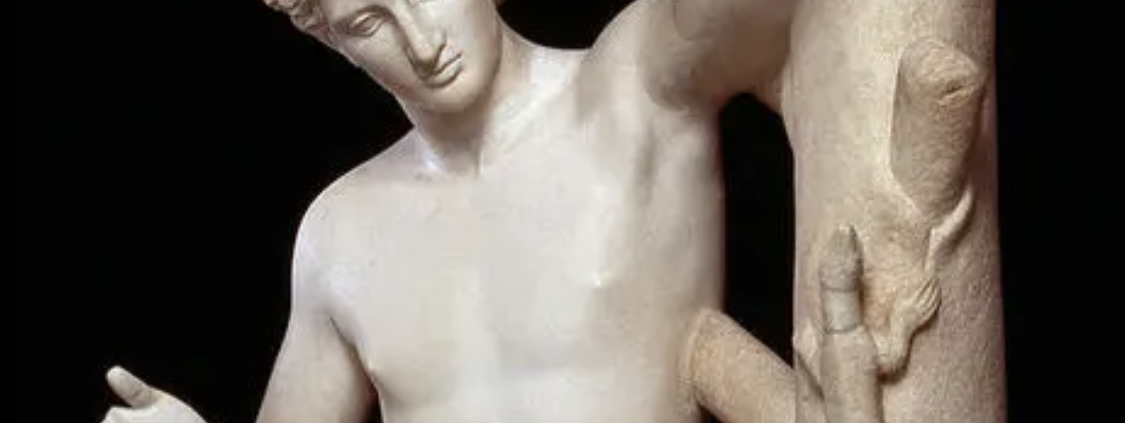
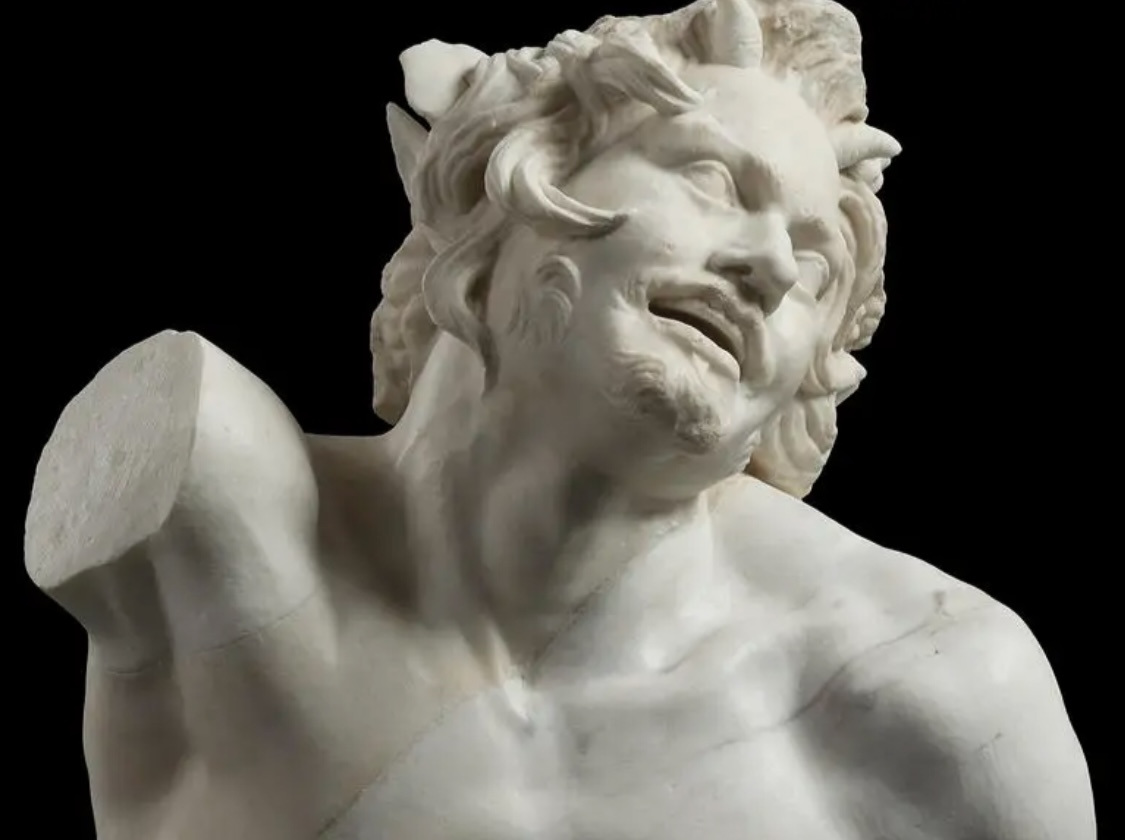
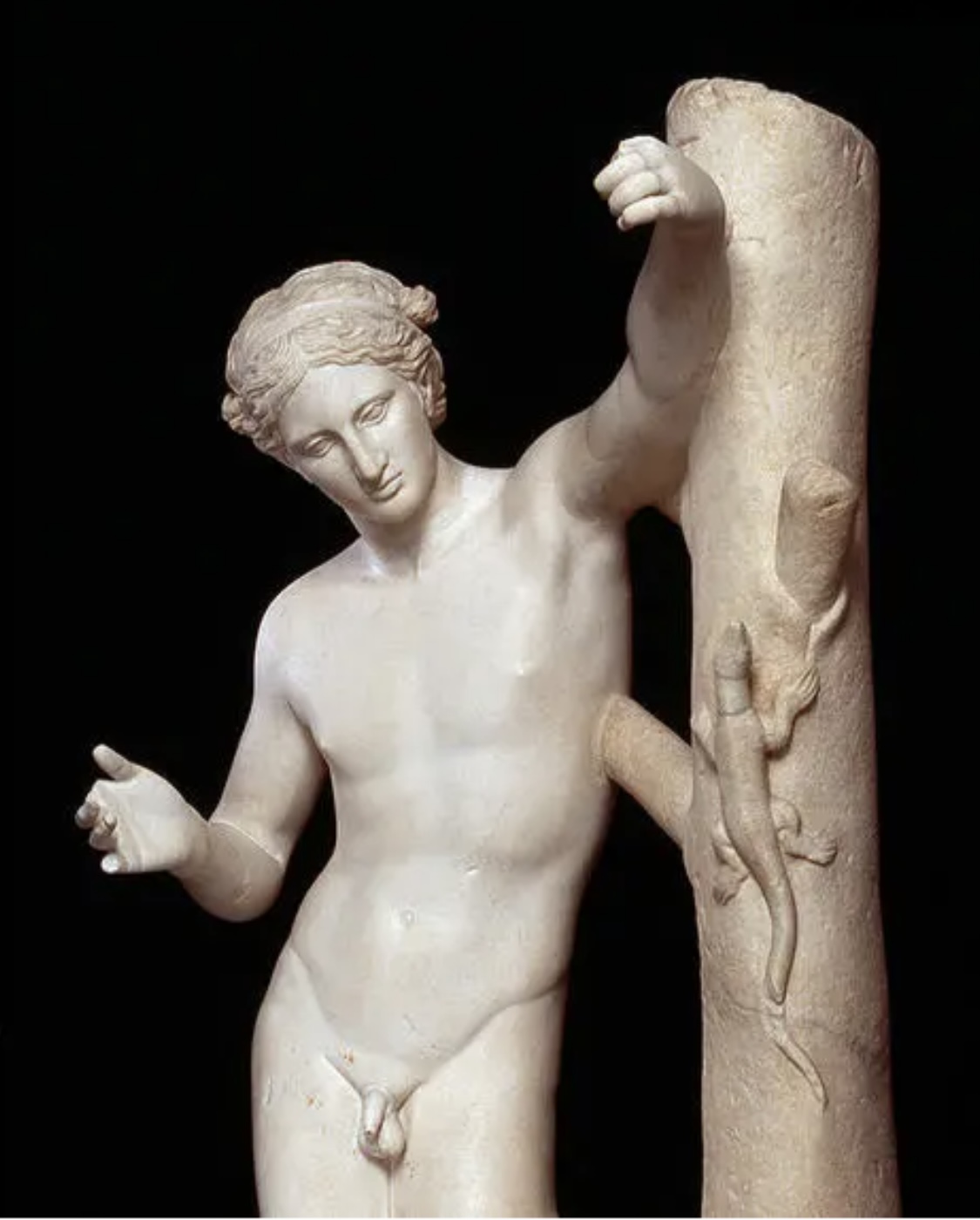
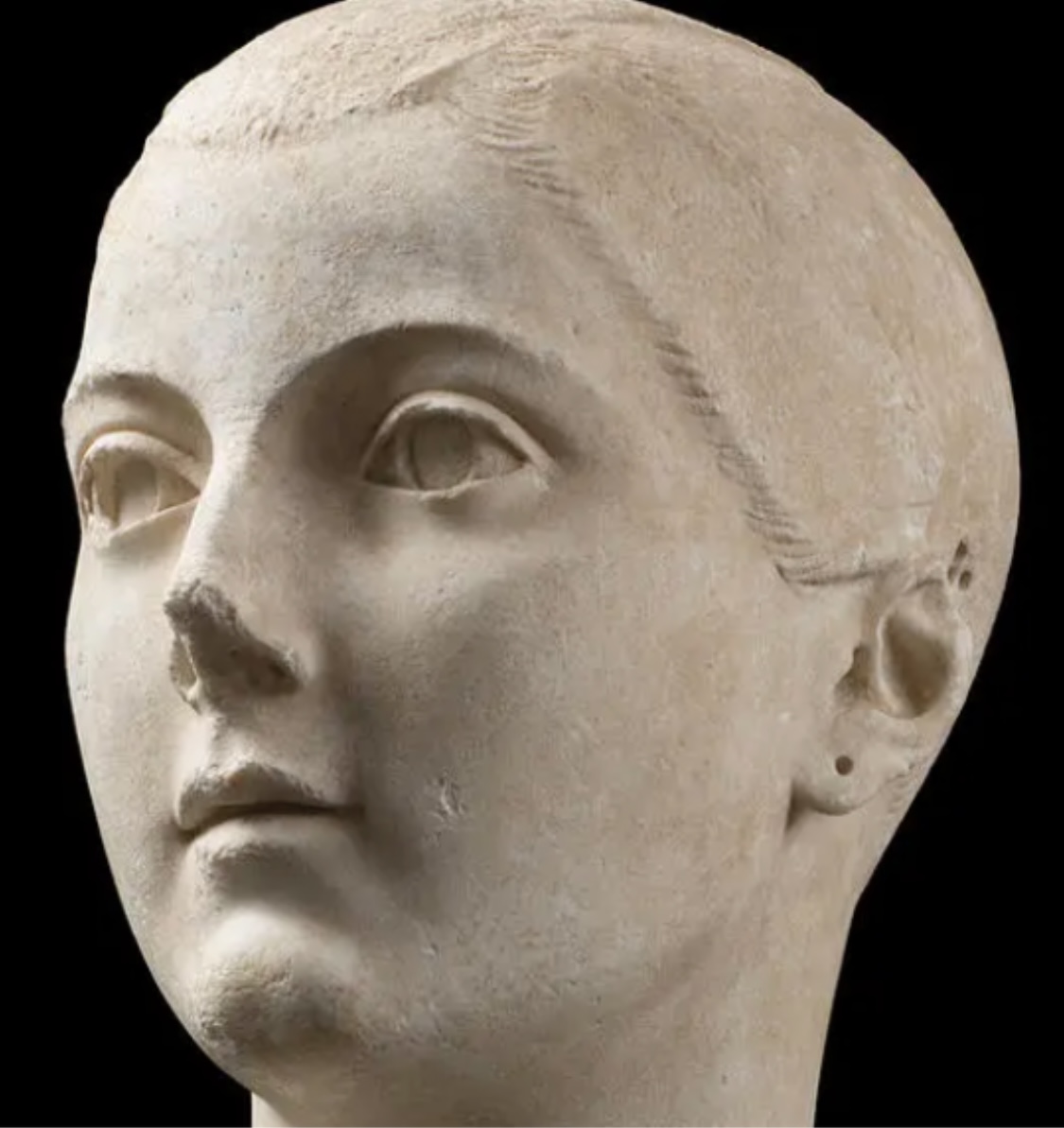
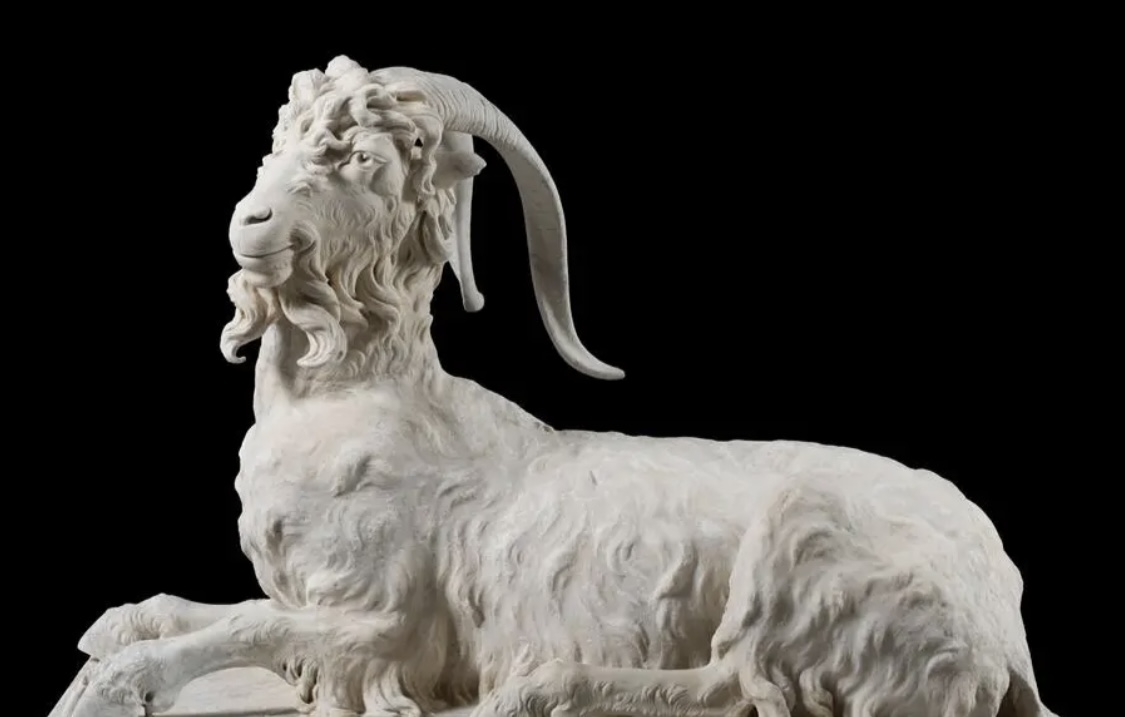
The largest private collection of ancient Roman sculpture preserved to date – that gathered by the Torlonia princes throughout the 19th century in Rome – is being revealed to the public for the first time since the mid-20th century in a series of exhibitions – events.

It is at the Louvre that the Torlonia marbles are installed for their first stay outside Italy, in the restored setting of the apartments of Anne of Austria, home to the permanent collections of ancient sculpture since the end of the 18th century and the birth of the Louvre Museum. The French national collections willingly lend themselves to a fruitful dialogue with the Torlonia marbles, which questions the origins of museums and the taste for Antiquity, a founding element of Western culture.

This exhibition highlights masterpieces of ancient sculpture and invites visitors to contemplate the undisputed jewels of Roman art, but also to delve into the roots of the history of museums, in the Europe of the Enlightenment and the 19th century.

June 26 – November 11, 2024

MUSEE DU LOUVRE

Henry Cros, sculptor and designer

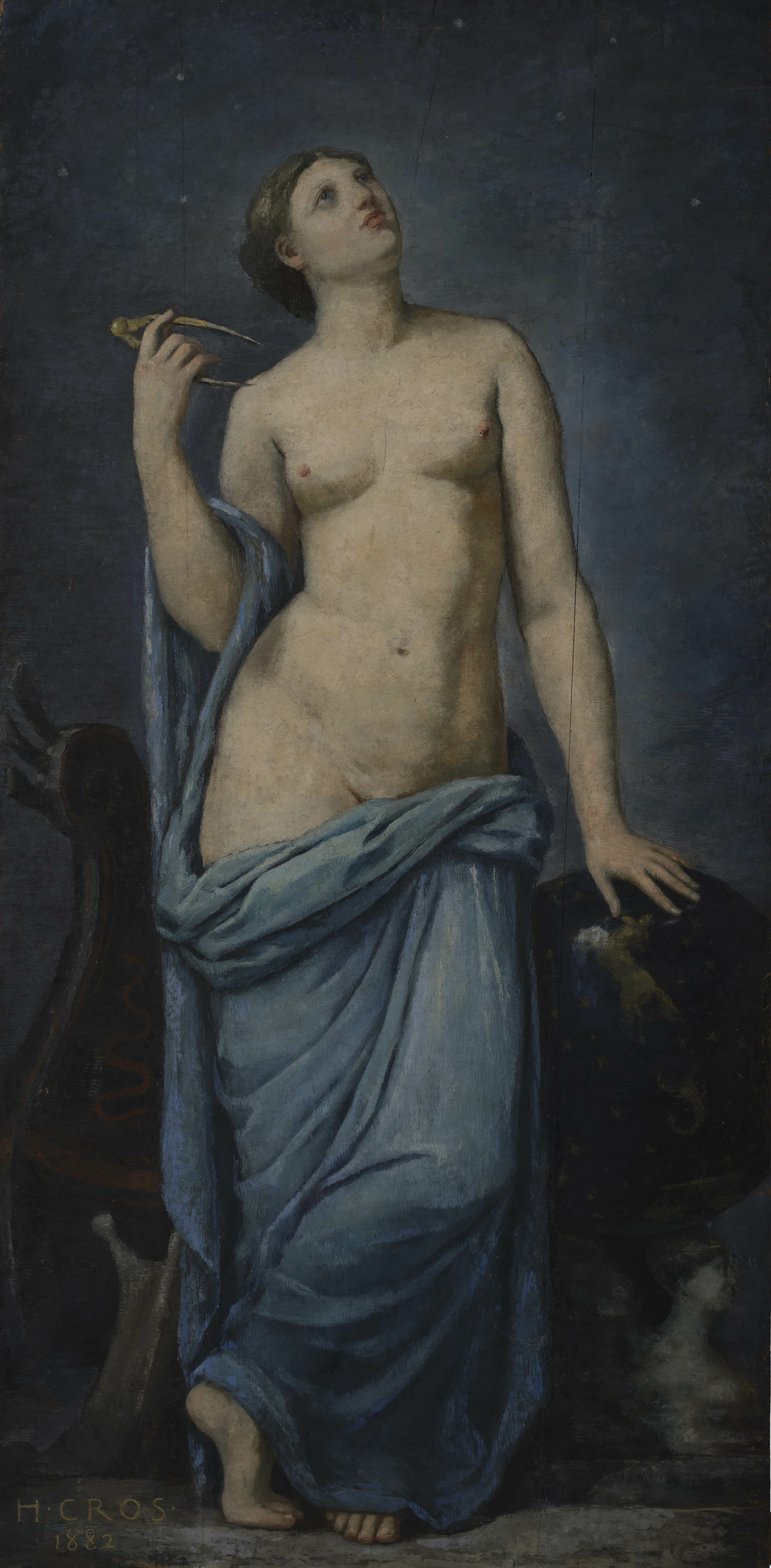
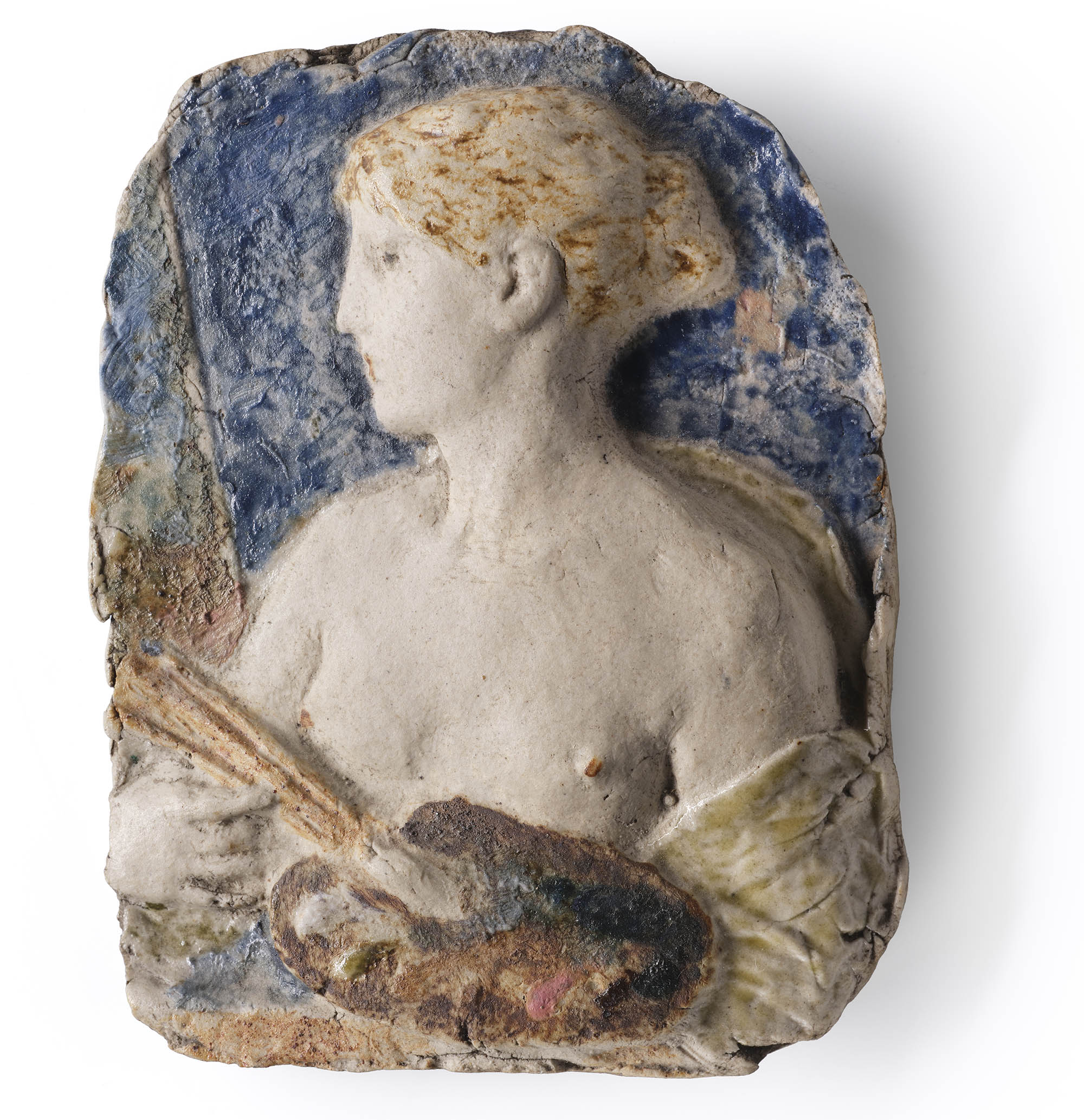
The 19th century still has some great discoveries in store for us, the little-known figure of the painter, sculptor, ceramist and glassmaker Henry Cros is one of them. Thanks to the important collection of drawings by the artist, inventor of glass paste sculpture, the Museum of Decorative Arts is offering from March 6 to May 26, 2024, a monograph by this artist admired by Auguste Rodin and Antoine Bourdelle, friend by Paul Verlaine and Édouard Manet. Was he romantic, neo-classical, or symbolist? This is one of the questions posed by the exhibition “Henry Cros, 1840-1907, sculptor and designer”, through more than a hundred works bringing together sculptures, paintings and drawings, from the museum’s collections, alongside some exceptional loans. The artist’s major themes are presented: touching portraits of children, figures from a dreamed Antiquity and fairy tales. The artist’s technical mastery is illustrated by more than fifty drawings and around thirty sculptures in glass, wax, terracotta, bronze and marble. This project allows us to discover the work of Henry Cros, of whom Bourdelle said that he brings together “all of Antiquity in a new soul”.

Henry is the brother of the famous inventor and poet Charles Cros and the doctor Antoine Cros. This famous trio participates in the literary and artistic modernity of the 1860s-1870s. The exhibition addresses the various personalities of the artistic and literary worlds around which the three brothers revolve with portraits drawn by Henry Cros: that – rare – of a young Paul Verlaine autographed, of the caricaturist André Gill, of the publisher of the Parnassien poets Alphonse Lemerre , the actor Coquelin junior and of course the legendary figure of the free and scandalous salonnière Nina de Vilars de Callias, the lover of his brother Charles. Antoine’s collection of poems, illustrated with a print by Henry in 1882, evokes the other brother, a doctor by profession, who also runs a political-literary salon.

The dual practice of painter and sculptor and the contemporary rediscovery of ancient polychrome plastic guide Cros on the path of color sculpture. His monochrome projects remained numerous until 1880, the exhibition presents some in terracotta, marble and bronze including the moving Portrait of a little boy dated 1875. Among the works presented, we discover the vase cast by Hébrard d ‘after the model of the glass vase from the Museum of Decorative Arts. Numerous drawings and sketches for portraits or original photographs are highlighted, such as the preparatory drawing for the bust of Nina de Vilars.

The exhibition unveils a large encaustic painting, Urania (1882), muse of astronomy, an important state commission demonstrating the culmination of Cros’s research. The ancient encaustic paint then used for coloring marbles is one of the sources of his research. His modern portraits, inspired by those modeled during the Renaissance, which marked his contemporaries, remain of rare originality and psychological presence. The portrait of his young wife or that of the astonishing Shah of Persia, Nasse el Din, are examples of this. His compositions close to the poetic universe of the first Renaissance correspond to the great successes of the artist’s beginnings. The exhibition highlights five of them, including La Promenade du Salon of 1874, where we observe the contrast between the precise delicacy of the figures and the freedom of the backgrounds with impressionist touches, whose photographic focus is outstanding.
At the crossroads of his two technical periods, between waxes and glass pastes, Henry Cros creates a few polychrome terracotta busts with colored clays (engobes). He gives life and presence to these young figures, like the gypsy woman from the Pyrenees in the Cité de la Ceramique museum in Sèvres. An example far from his parallel research on the archetypal image of a feminine ideal.
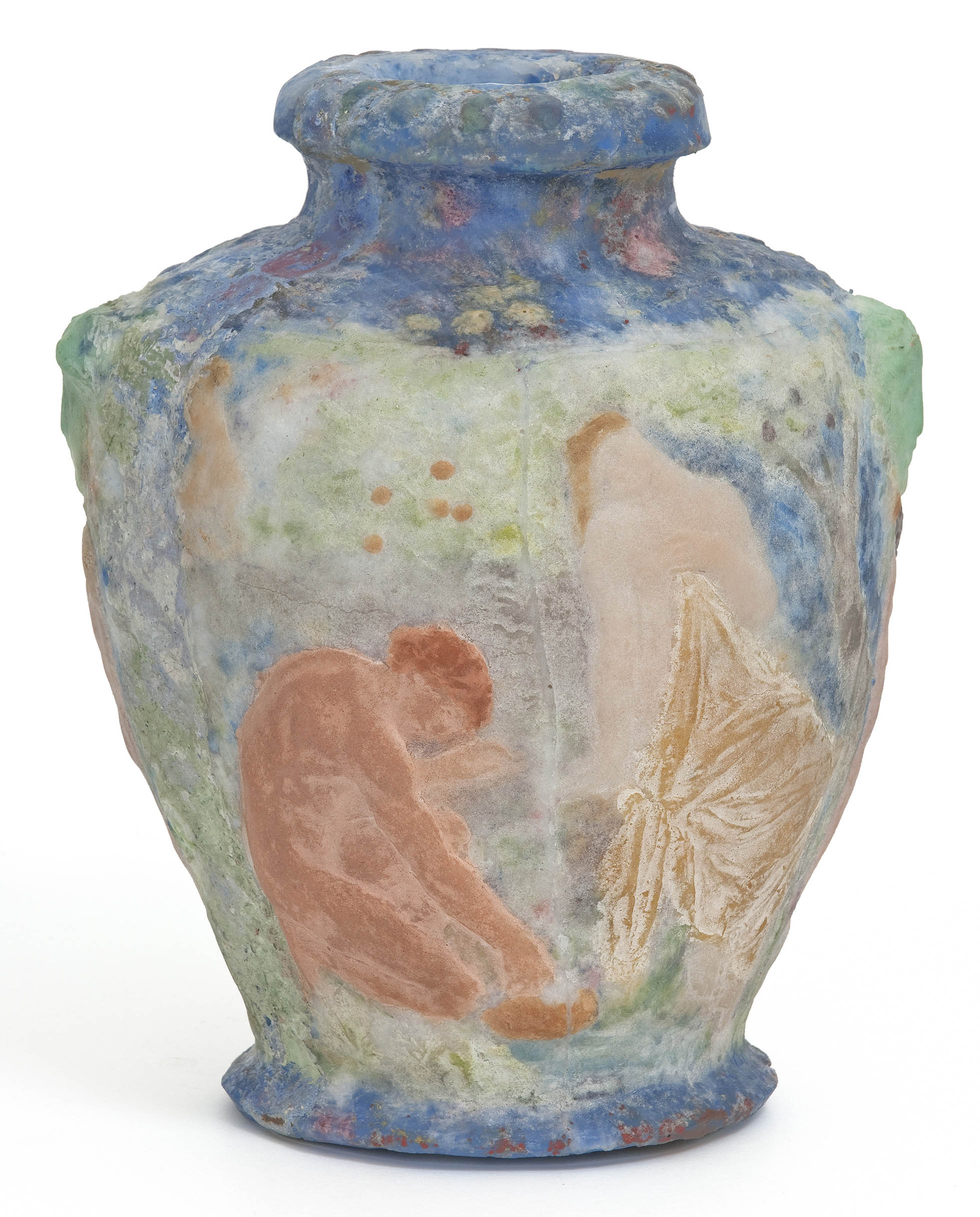
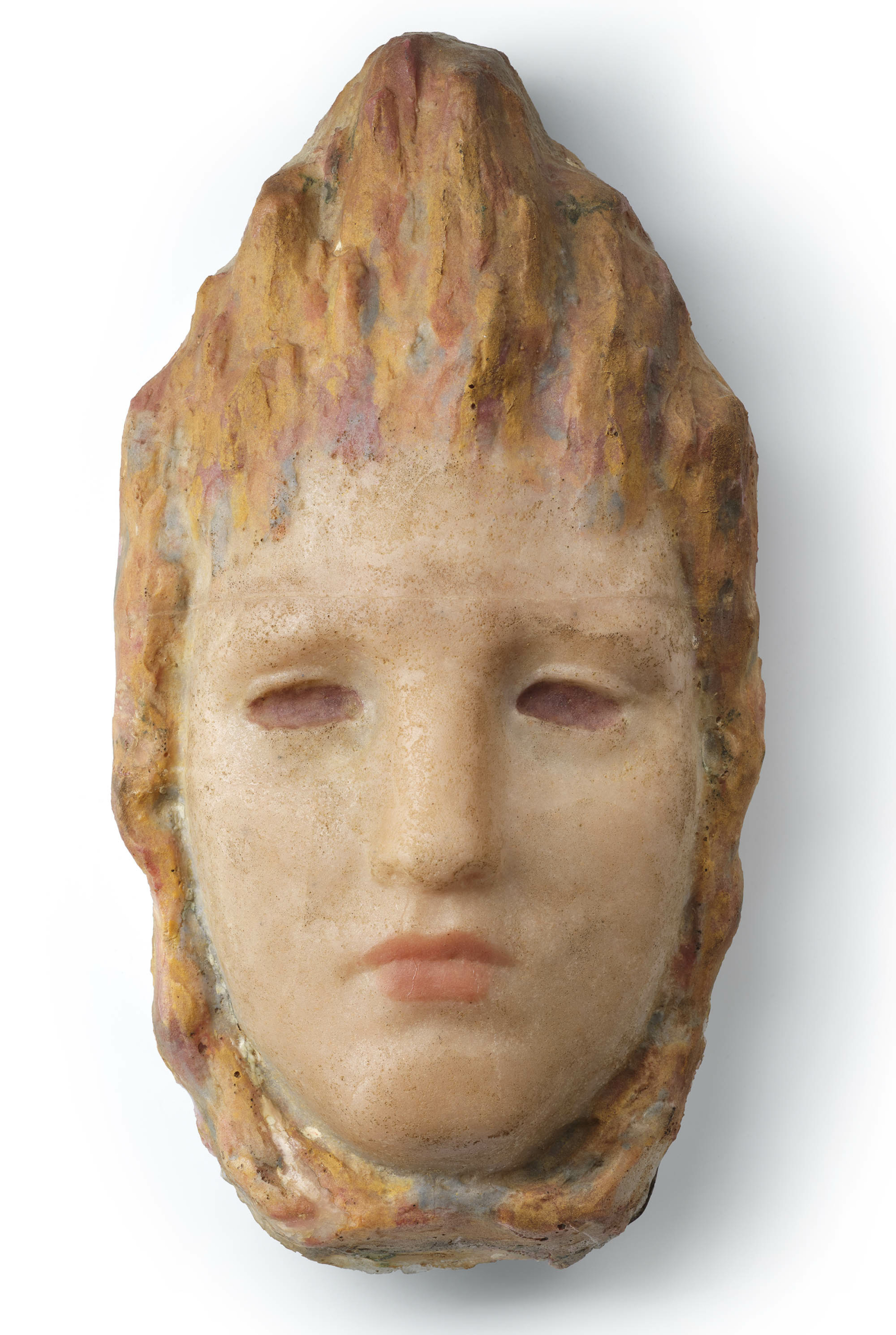
“Glass paste” is the name given by Henry Cros to a new technique of molding polychrome glass powders, which allows him to create colored sculptures and opens a new path in the creation of modern glass. He devoted the last twenty years of his life to this medium, and produced the most significant works of his artistic career. A large part of the exhibition is dedicated to him, with the remarkable watercolor projects, but also the masks, medallions and bas-reliefs, which retrace this period.

The exhibition highlights the two large watercolor projects and the version cast in bronze by Hébrard, as well as the rare glass vase produced by the hand of Henry Cros. Among the works in glass paste, the medallion portrait of young François Coppée, The Nymph Galatea, the mask La Flamme from the Universal Exhibition of 1900 or the cup Le Silence, illustrate the great richness and diversity of the themes addressed by the ‘artist.

This monograph demonstrates the mark left by this unique artist, celebrating a man whose daring creativity and innovative and poetic research have undoubtedly marked the history of 19th century art and particularly a certain history of modern glass.

March 6 – May 26, 2024

MAD

107 rue de Rivoli 75001 Paris