
,

Matisse

Dessins

Les liens entre Dina Vierny et Matisse remontent aux années 1940, lorsque Maillol recommanda son modèle au maître avec ces mots : « Matisse, je vous envoie l’objet de mon travail, vous la réduirez à un trait. » Ce dernier se lança alors dans un ambitieux projet : revisiter L’Olympia de Manet. Mais Maillol la rappela rapidement, et le projet resta à l’état d’ébauches.
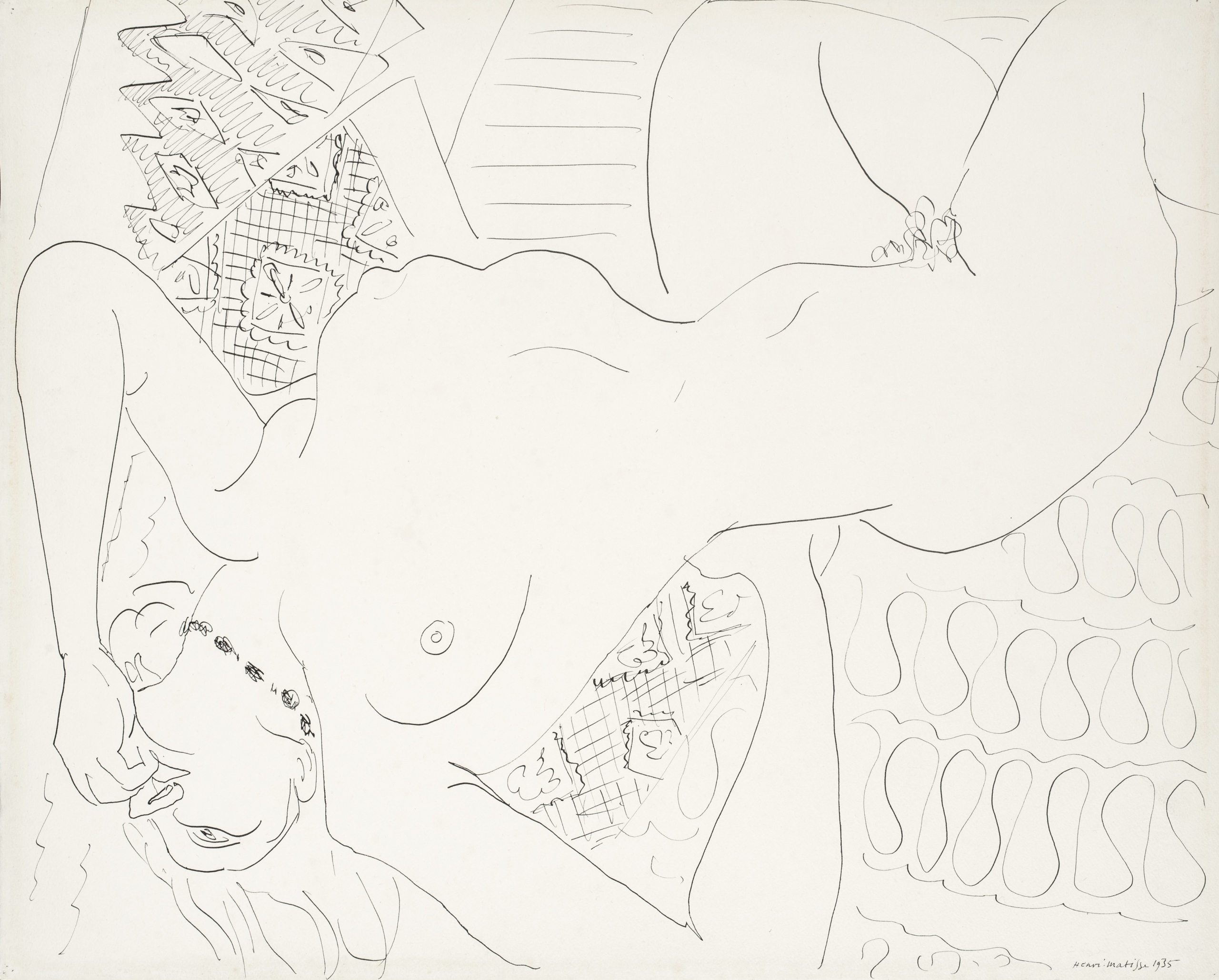
Ce moment passé ensemble fit naître une amitié qui dura jusqu’au décès de Matisse en 1954 : « J’avais vingt-deux ans, je posais avec plaisir, les propos de Matisse m’enchantaient. Comme avec Maillol, pas un instant d’ennui avec lui. » Matisse joua un rôle fondamental dans la genèse de la galerie Dina Vierny car c’est aussi lui conseilla la jeune marchande et l’accompagna dans la création de son espace d’exposition. Il convainquit Auguste Perret, occupé à l’époque à reconstruire le Havre, de dessiner la petite galerie du 36 rue Jacob, qui n’a subi aucun changement depuis son ouverture en 1947.
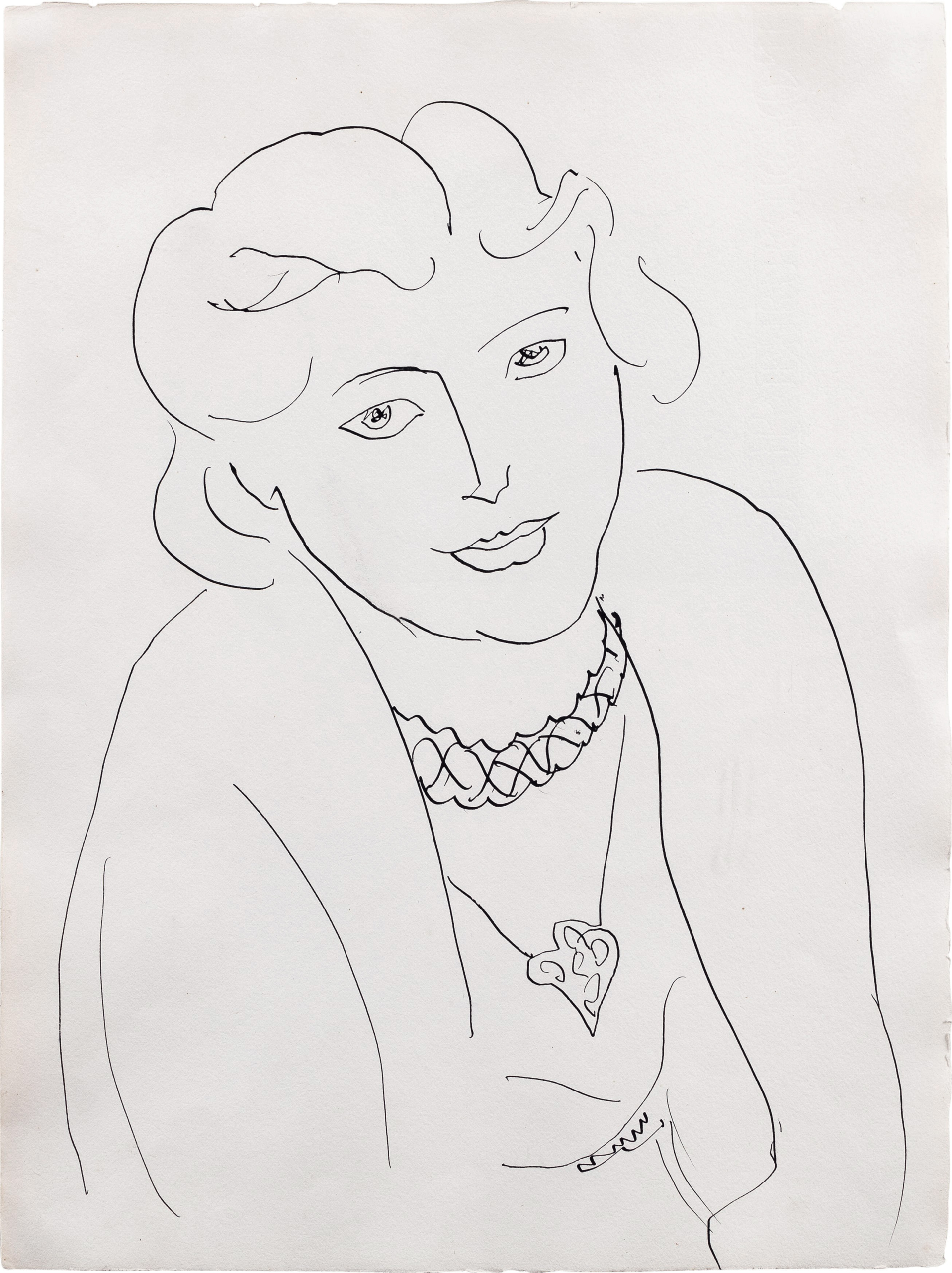
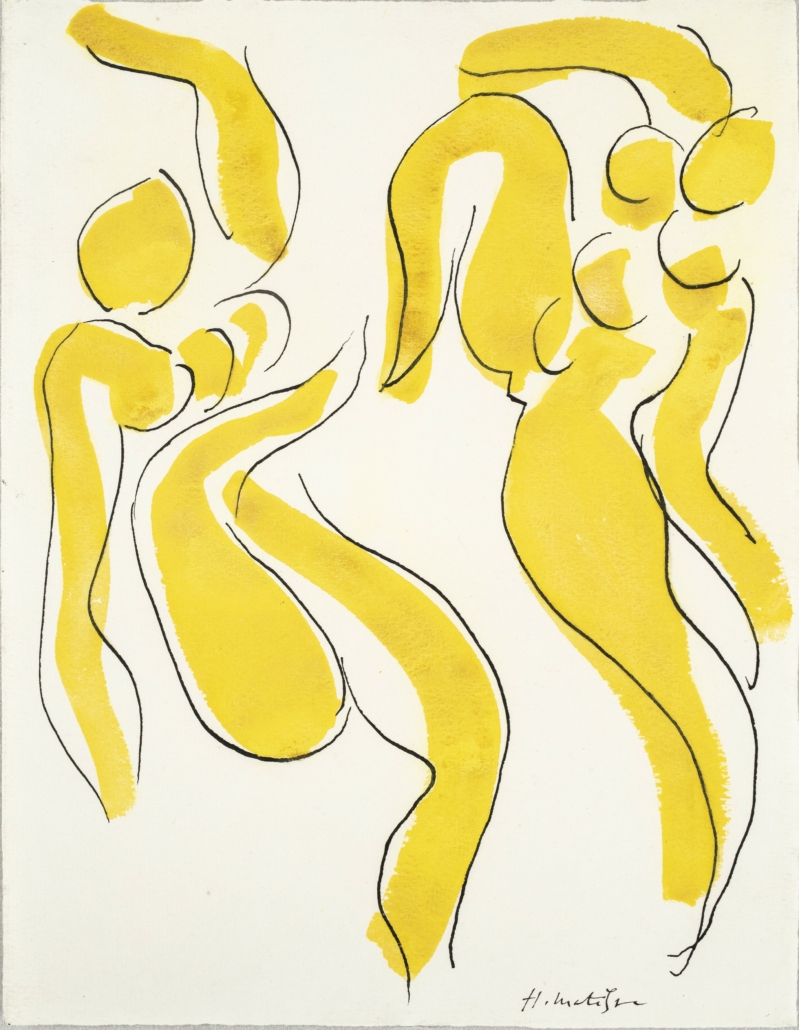
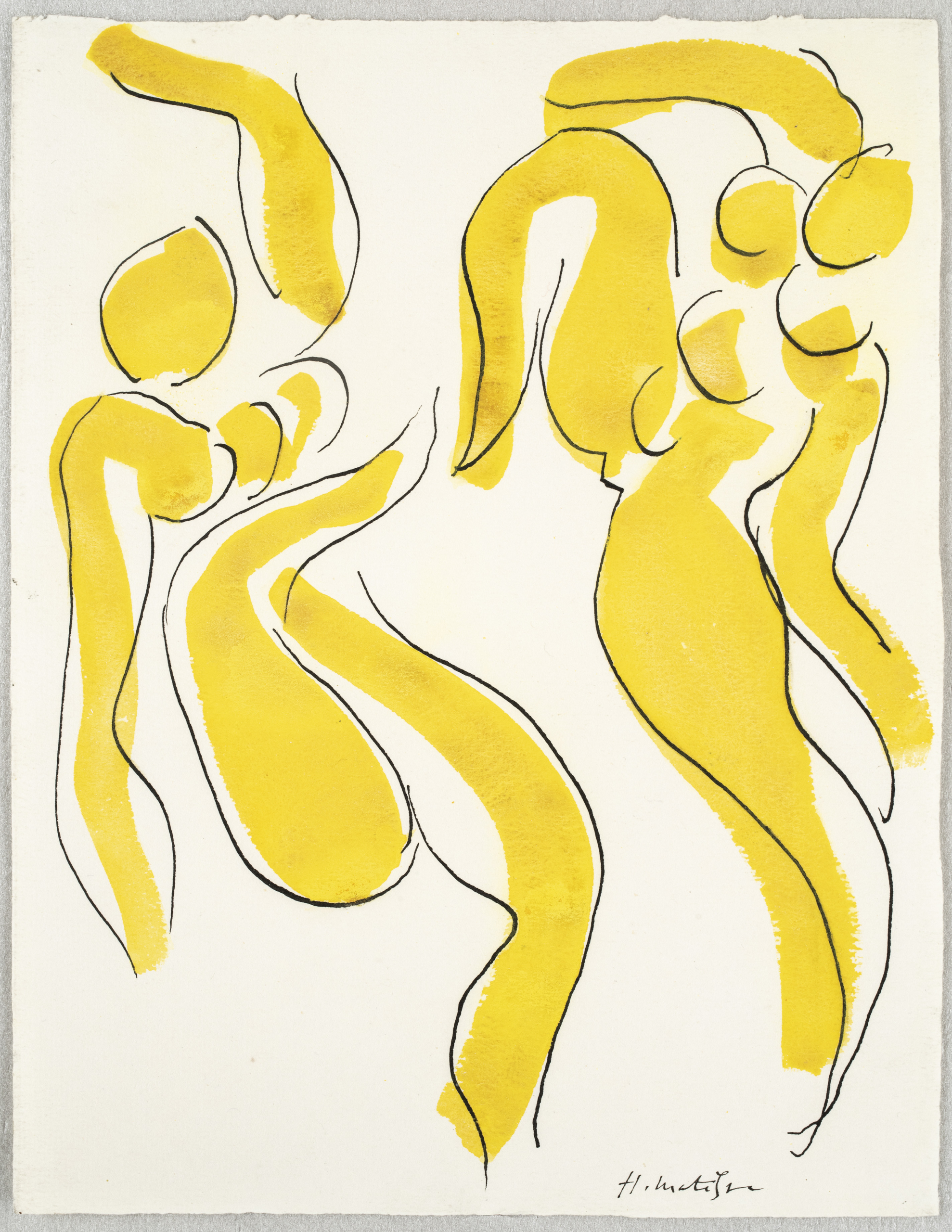
L’œuvre dessiné d’Henri Matisse fut présenté à quatre reprises à la Galerie Dina Vierny : en 1966, 1970, 1980 et 1982. Cette exposition est donc la cinquième consacrée aux dessins de Matisse chez Dina. Certains d’entre eux ont d’ailleurs eu leur place sur les cimaises de la galerie lors des précédentes manifestations.
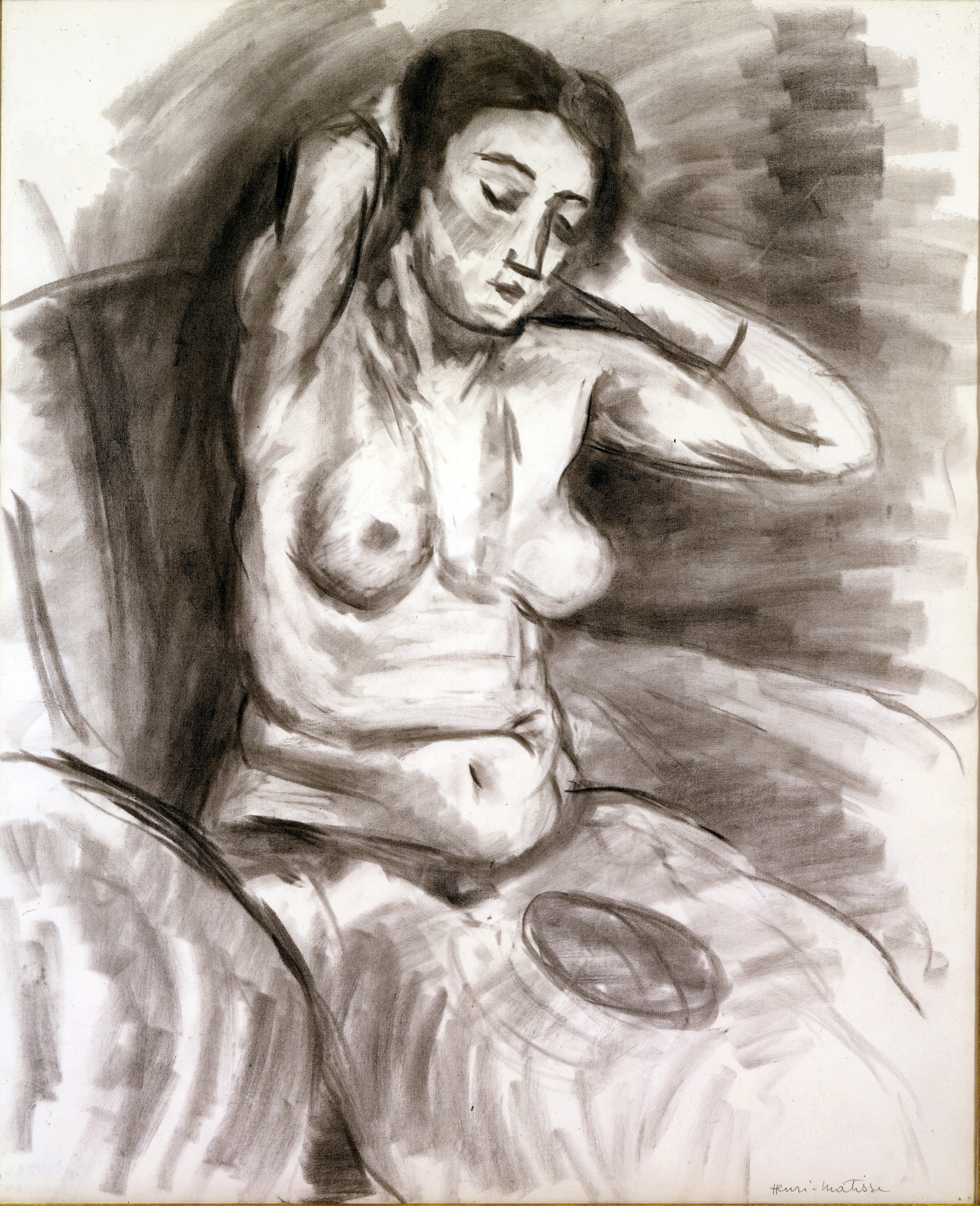
Pour Matisse, le dessin n’est pas seulement un outil préparatoire, mais un art à part entière, où chaque ligne traduit toute la sensibilité et la profondeur de son approche artistique. Il est un moyen d’explorer l’essence des formes et de la figure humaine, d’aller à l’essentiel sans se laisser distraire par le superflu. Sa maîtrise du trait est reconnue pour sa fluidité et son élégance. Chaque ligne, épurée mais précise, capte l’essence du sujet. Matisse a ouvert la voie à une nouvelle approche du dessin, dans laquelle figure et fond cohabitent harmonieusement et se complètent. En 1989, dans le catalogue d’une exposition organisée par Dina Vierny, Pierre Schneider écrivait à ce propos :
« La ligne tracée par Matisse anime les figures, mais aussi le fond. En vérité, on ne devrait plus parler ici de figure et de fond, puisque le trait qui qualifie l’une qualifie également l’autre, puisque la plume, le crayon, en nommant celle-ci, ne relèguent pas celui-là dans l’anonymat. Le sillon d’encre divise sans séparer. La blancheur qu’il enclôt et celle qui l’enclôt pèsent du même poids. Il est rare que Matisse ne ménage pas dans ces tracés, à leurs carrefours ou à leurs points de convergence, des brèches, des ouvertures à peine perceptibles, par lesquelles ils communiquent, échangent leur substance, et cette substance leur est commune. Matisse met fin à la guerre entre le noir et le blanc, le limité et l’illimité, le plein et le vide. »

du 15 octobre au 21 décembre 2024

GALERIE DINA VIERNY

36 rue Jacob 75006 Paris

Matisse

Drawings

Dina Vierny’s connection with Matisse dates back to the 1940s, when Maillol recommended his model to the master with the words: “Matisse, I am sending you the object of my work, you will reduce it to a line.” The latter then embarked on an ambitious project: revisiting Manet’s Olympia. But Maillol quickly called her back, and the project remained in draft form.

This time spent together gave rise to a friendship that lasted until Matisse’s death in 1954: “I was twenty-two years old, I posed with pleasure, Matisse’s words enchanted me. As with Maillol, not a dull moment with him.” Matisse played a fundamental role in the genesis of the Dina Vierny gallery because it was also he who advised the young dealer and accompanied her in the creation of her exhibition space. He convinced Auguste Perret, busy at the time rebuilding Le Havre, to design the small gallery at 36 rue Jacob, which has not undergone any changes since its opening in 1947.

Henri Matisse’s drawings were presented four times at the Galerie Dina Vierny: in 1966, 1970, 1980 and 1982. This exhibition is therefore the fifth devoted to Matisse’s drawings at Dina. Some of them have also had their place on the gallery walls during previous events.

For Matisse, drawing is not only a preparatory tool, but an art in its own right, where each line translates all the sensitivity and depth of his artistic approach. It is a way to explore the essence of forms and the human figure, to get to the essential without being distracted by the superfluous. His mastery of line is recognized for its fluidity and elegance. Each line, refined but precise, captures the essence of the subject. Matisse opened the way to a new approach to drawing, in which figure and background coexist harmoniously and complement each other. In 1989, in the catalog of an exhibition organized by Dina Vierny, Pierre Schneider wrote on this subject : “The line traced by Matisse animates the figures, but also the background. In truth, we should no longer speak here of figure and ground, since the line that qualifies one also qualifies the other, since the pen, the pencil, by naming the latter, do not relegate the former to anonymity. The furrow of ink divides without separating. The whiteness that it encloses and that which encloses it weigh the same. It is rare that Matisse does not leave in these lines, at their crossroads or at their points of convergence, gaps, barely perceptible openings, through which they communicate, exchange their substance, and this substance is common to them. Matisse puts an end to the war between black and white, the limited and the unlimited, the full and the empty.

October 1 – December 21, 2024

GALERIE DINA VIERNY

36 rue Jacob 75006 Paris