Think you know everything about unicorns ? Ubiquitous in contemporary popular culture, the unicorn has traversed centuries and continents. And yet, this mythical creature remains full of mysteries.
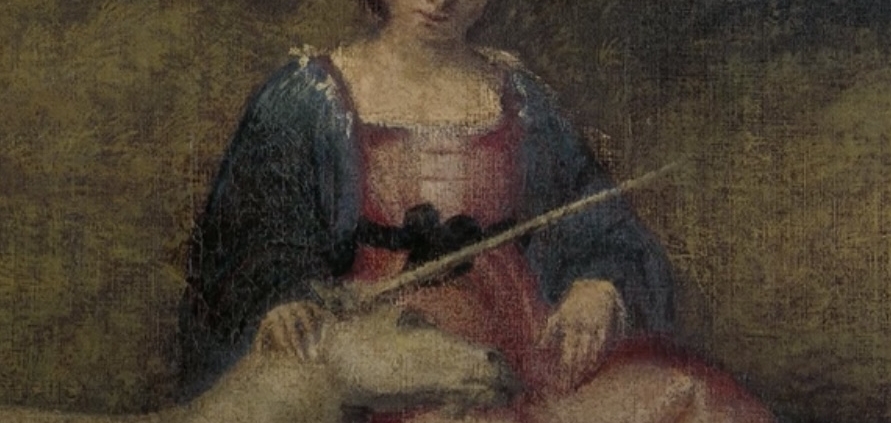
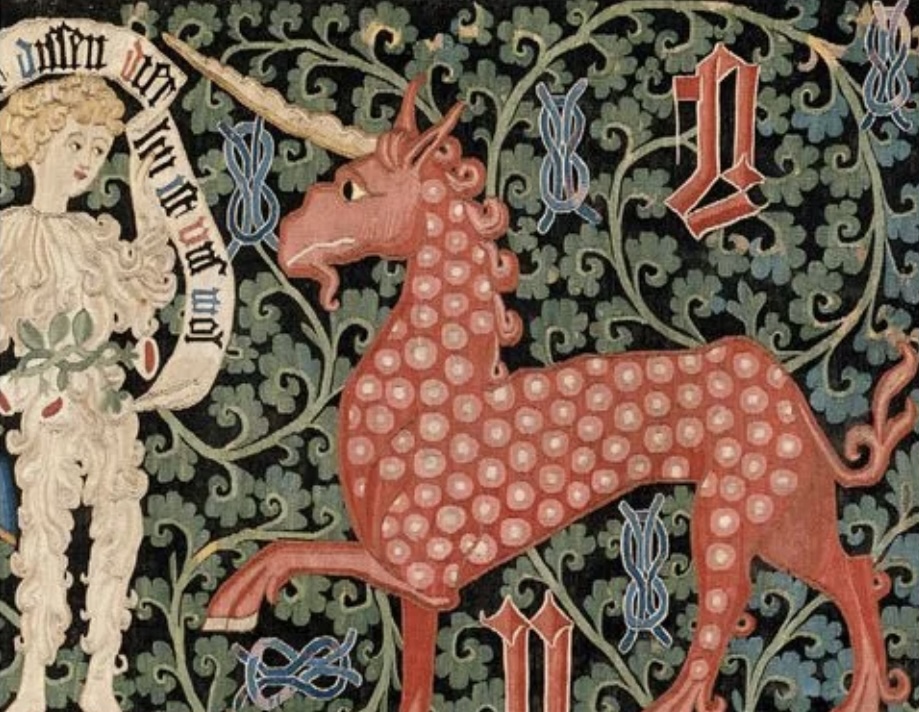
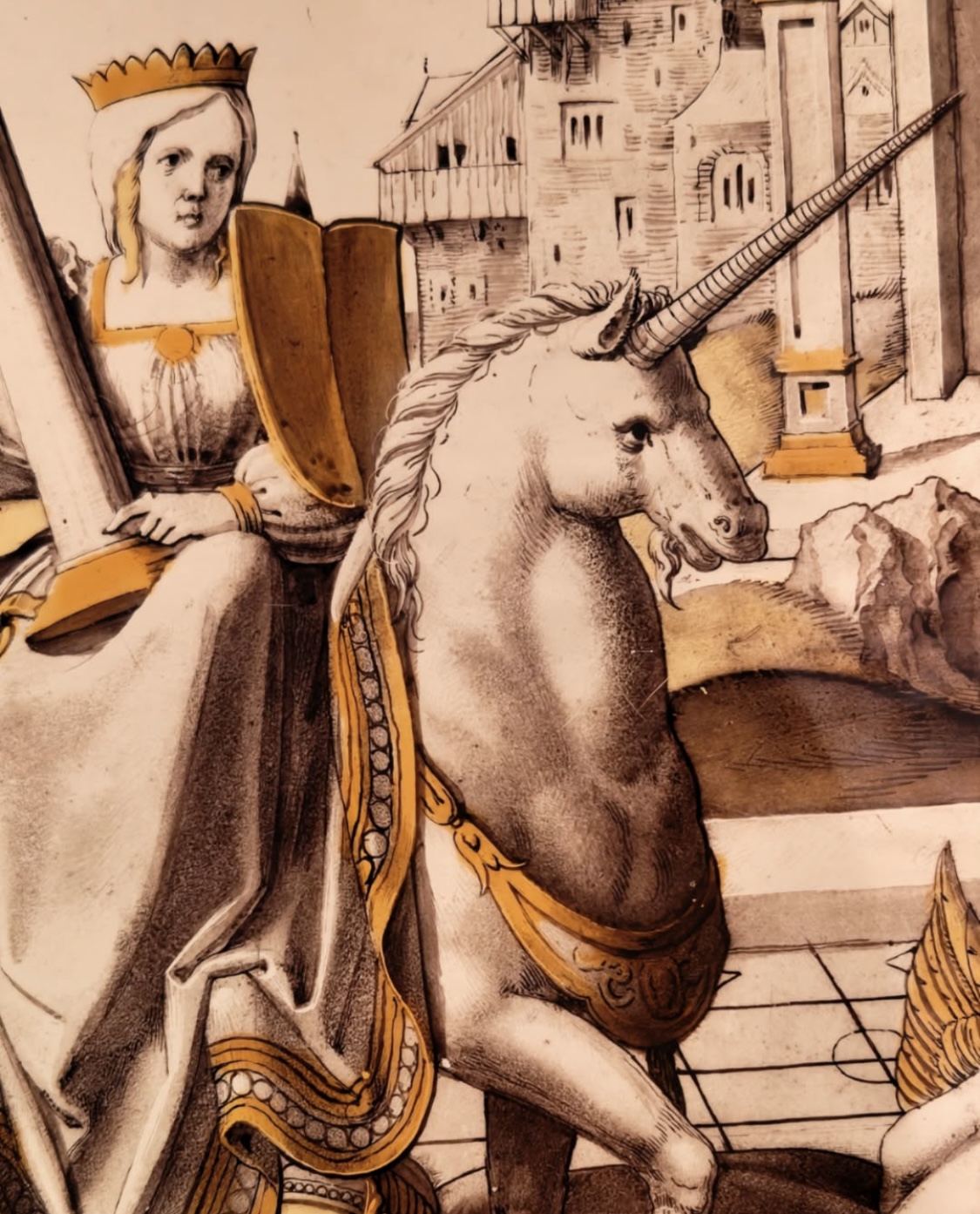
Known since antiquity, it wasn’t until the modern period that its existence was questioned. However, it did not disappear from the collective imagination. A figure of purity or the abandoned lover, it could also be portrayed as dangerous and threatening, as in certain medieval representations.
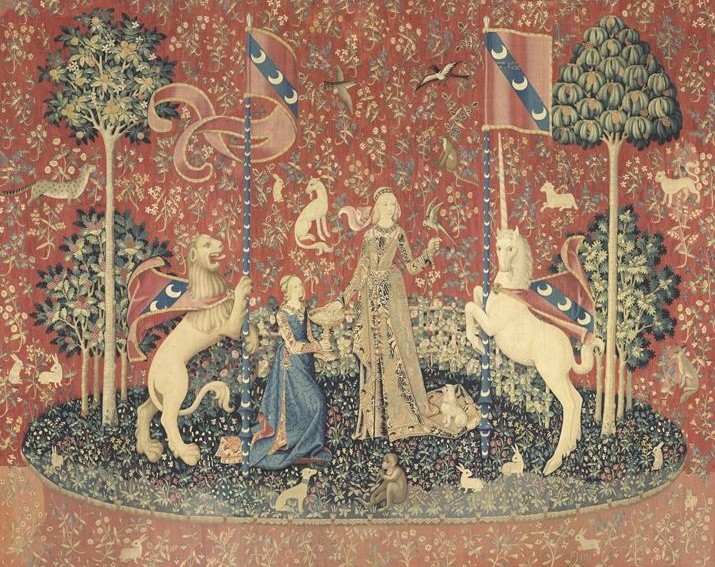
A symbol of good fortune in Asian culture, it is sought after in Europe for its medicinal properties. Its horn, in particular, is reputed to have purifying powers. Even today, the unicorn fascinates and populates fantasy literature as well as children’s worlds. It takes on various meanings, evoking singularity when brandished as a banner of gender differences, or success in the world of startups.
Unravel, loop by loop, the hair of an idol before your joints give way…
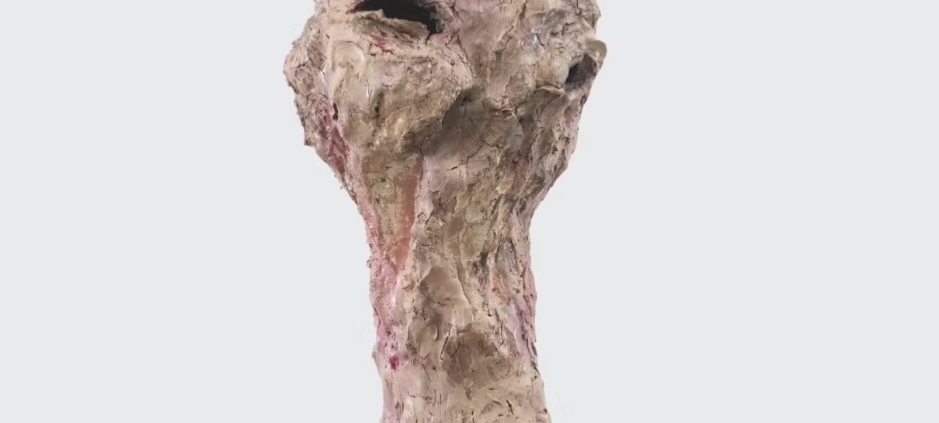
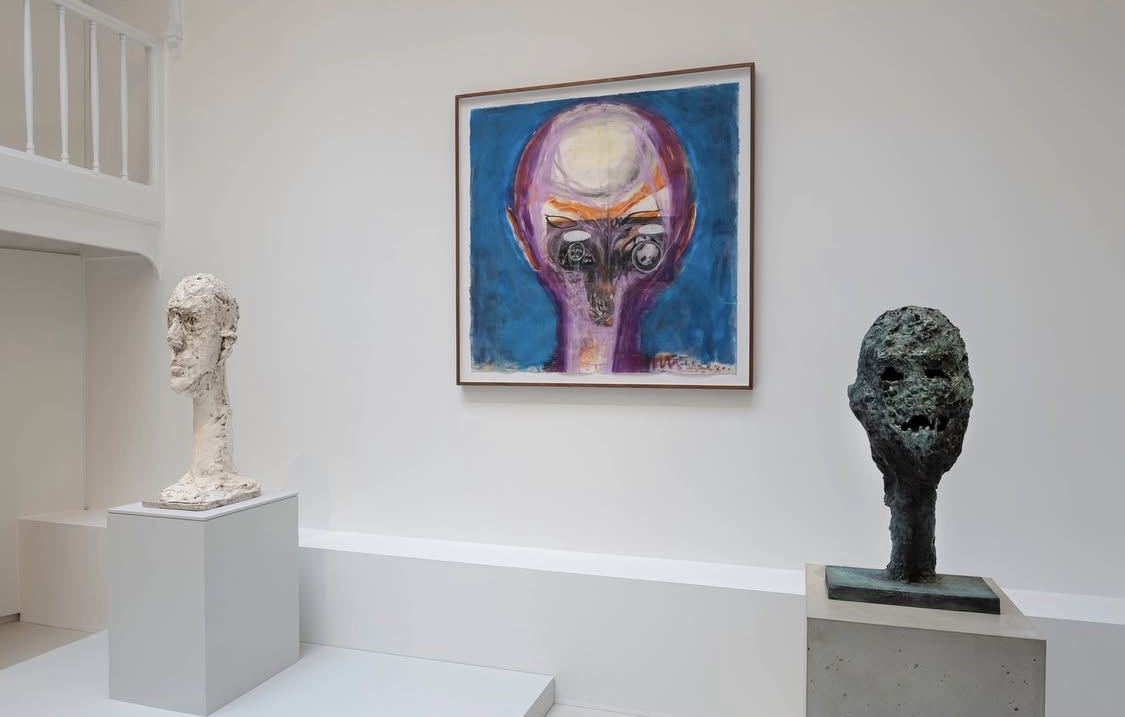
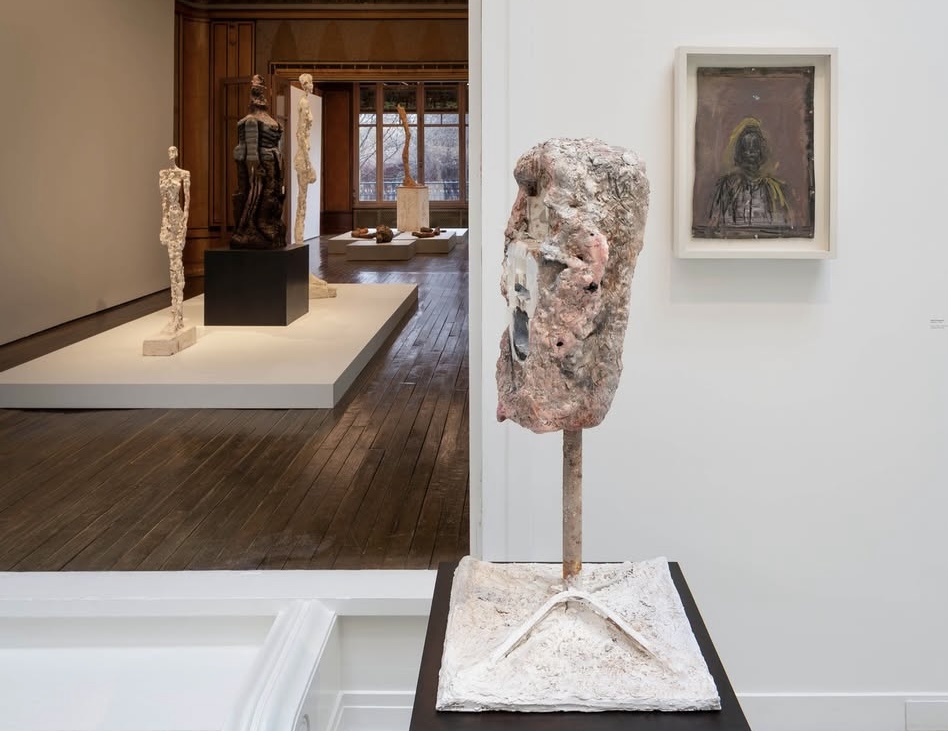
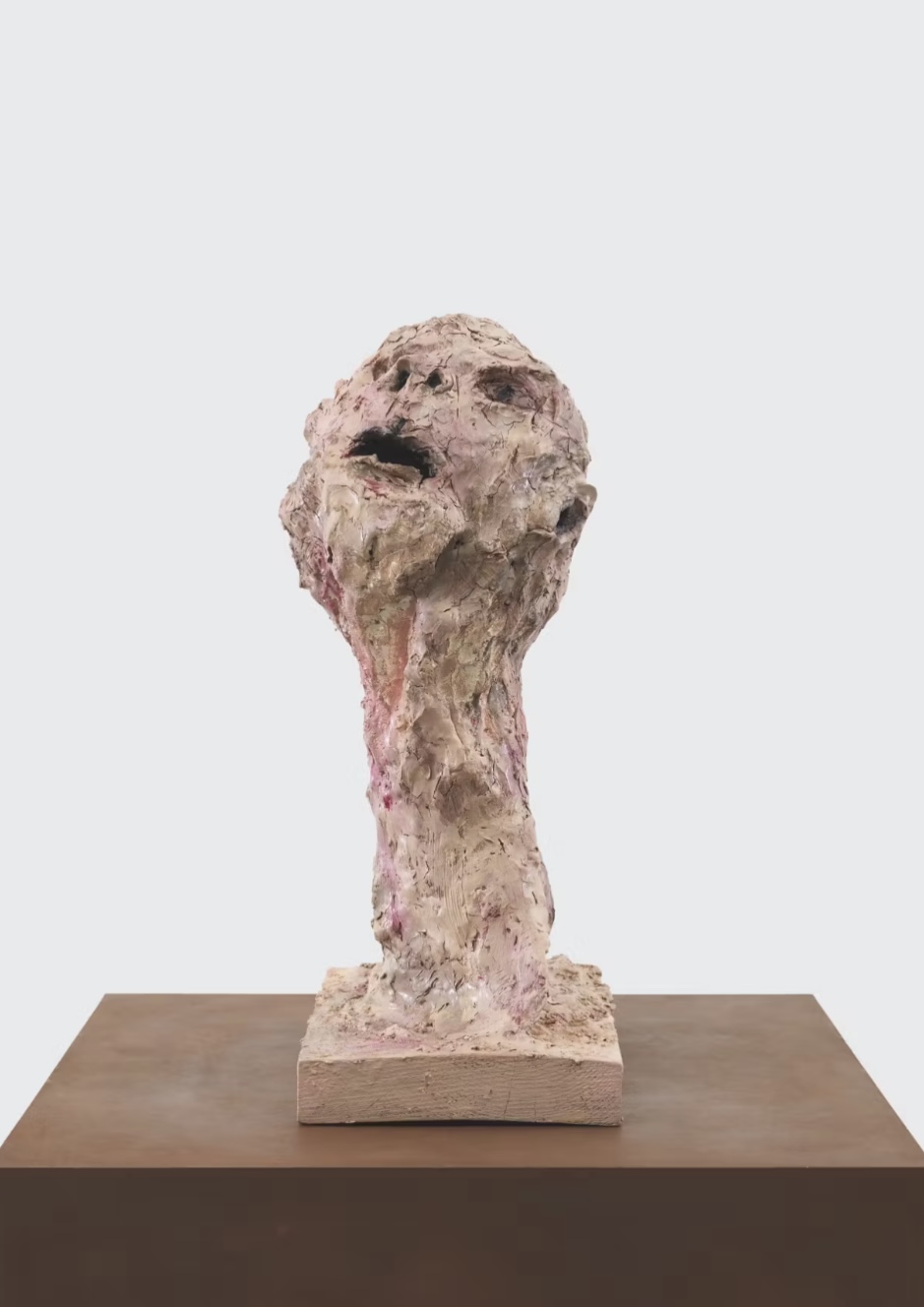
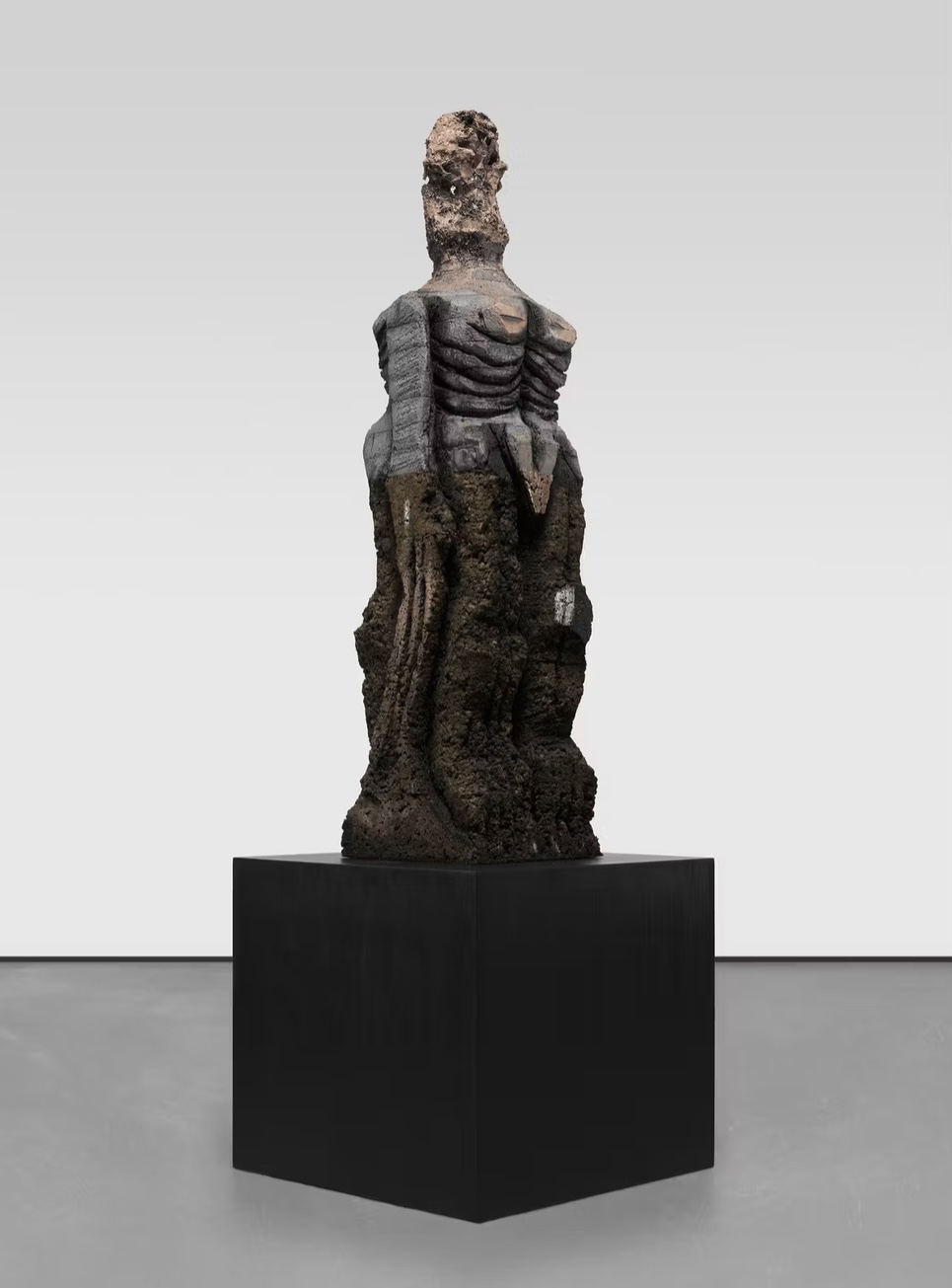
A unique exhibition dedicated to the Pakistani-American artist, Huma Bhabha (Karachi, 1962), in confrontation with the work of Alberto Giacometti.
Designed specifically for the Giacometti Institute, the exhibition reveals their shared search for a representation that balances the strength and weakness of the human figure.
Two standing figures created by Huma Bhabha for the exhibition, sculptures of heads and body fragments, drawings and photographs are confronted with the icons of Alberto Giacometti such as Walking Man (1960), Leg (1958), Women of Venice (1956) or Large Head (1960).
The title of the exhibition is taken from a quatrain by the Persian poet Omar Khayyam (1048-1131).
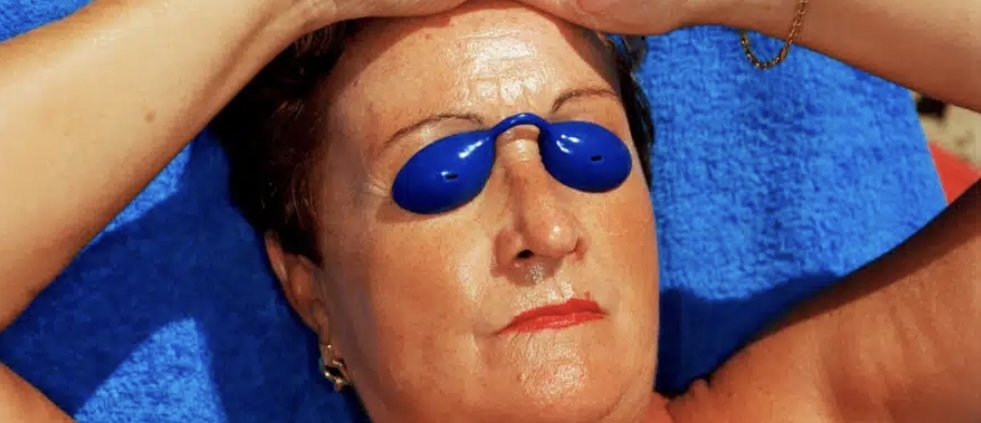
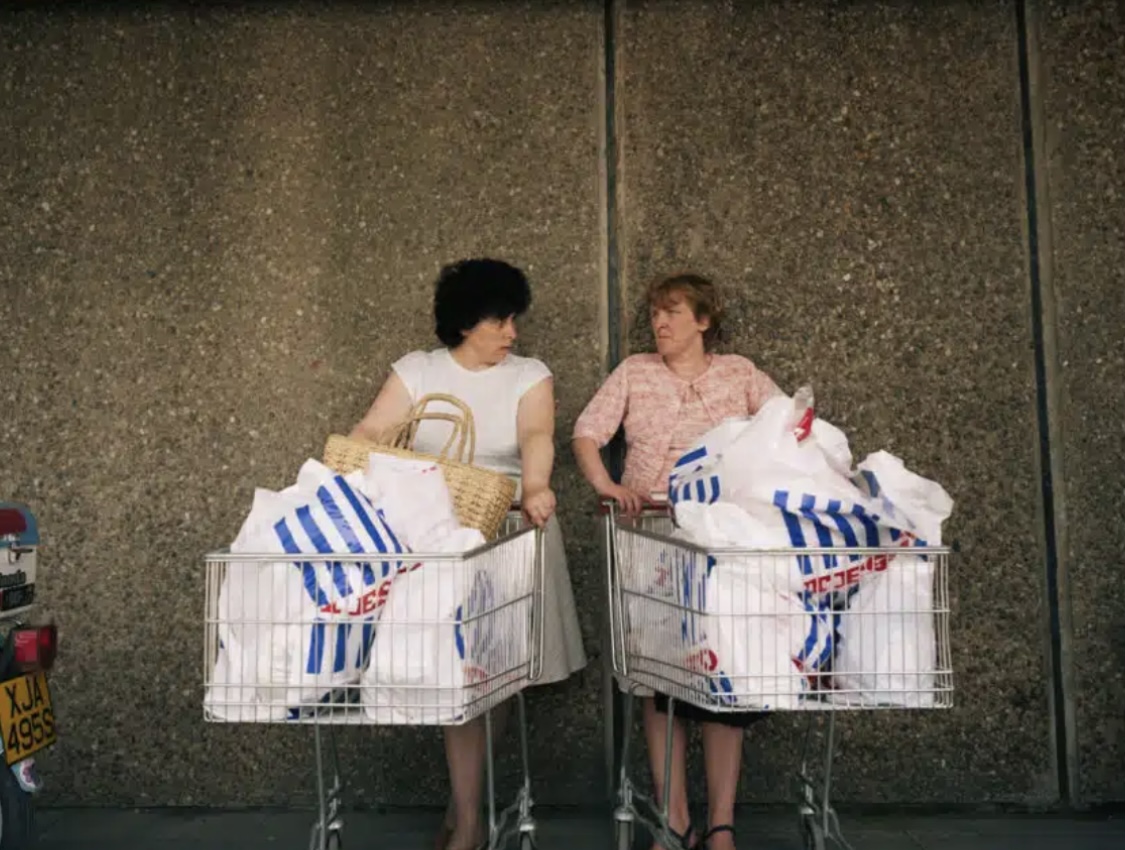
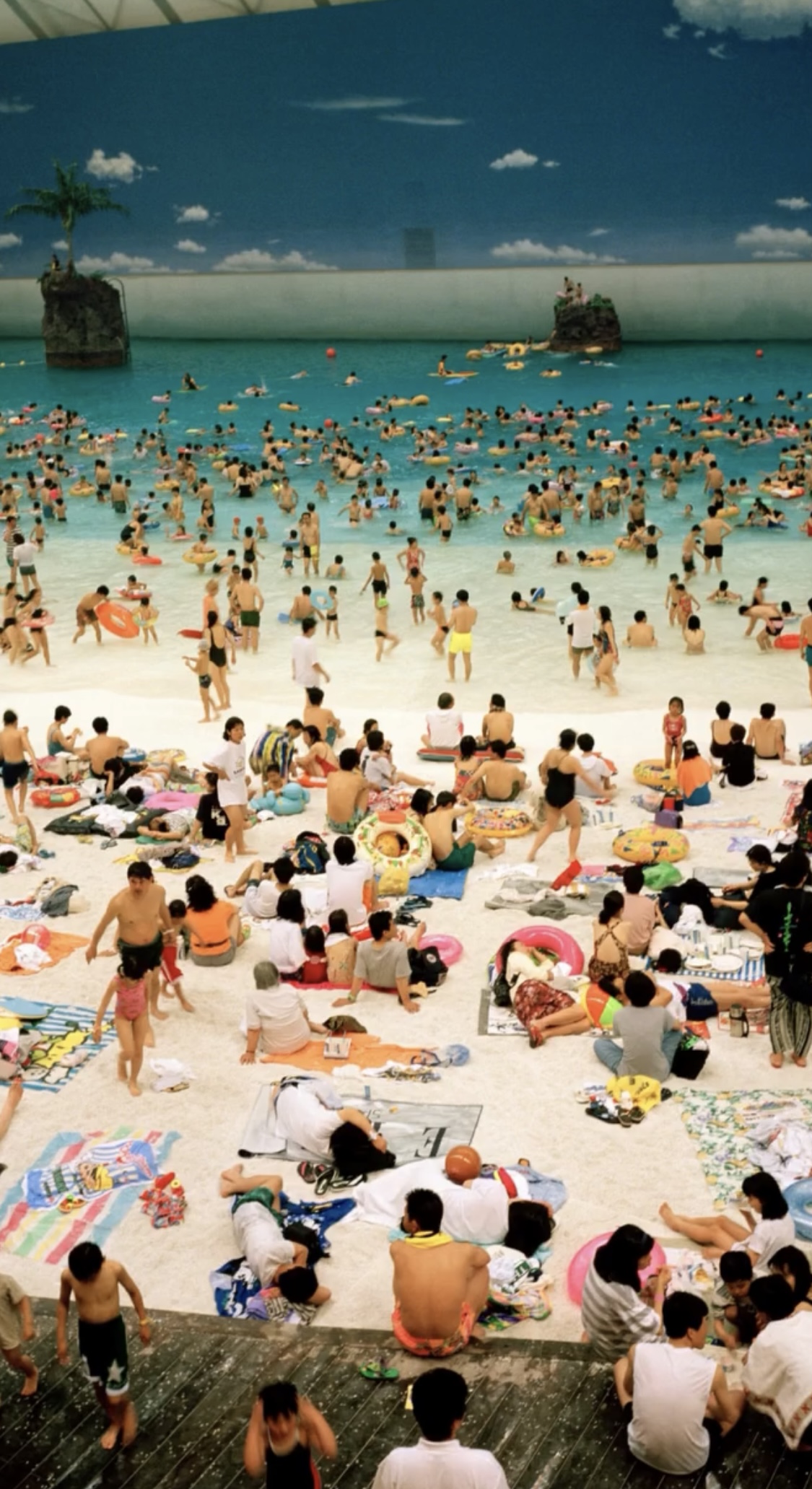
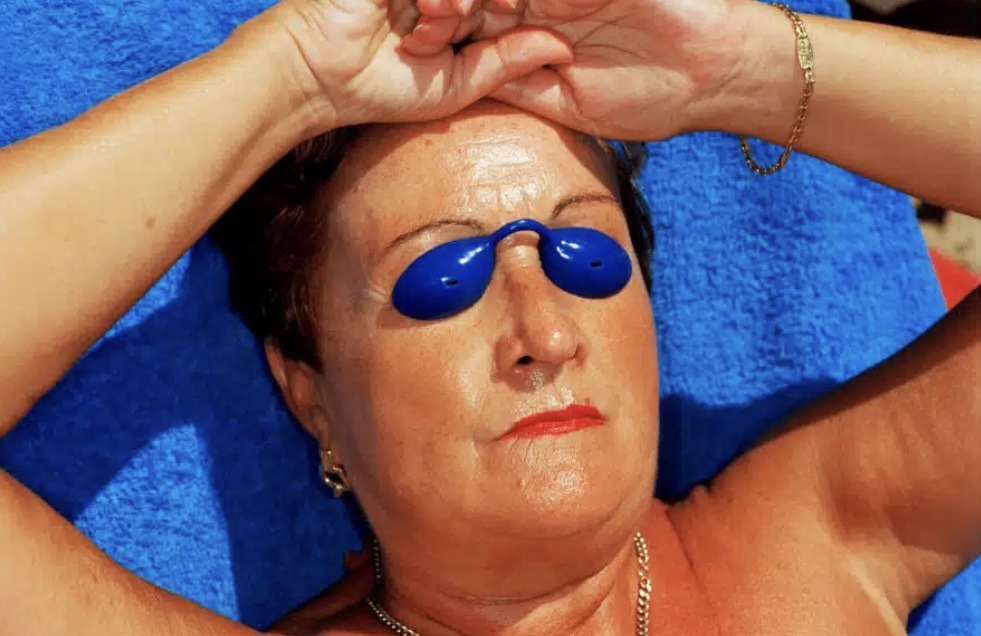
This exhibition offers a fresh look at Martin Parr’s work in light of the widespread disorder of our time, through various series created from the late 1970s to the present day. For fifty years, without activism but with unwavering consistency, across the globe, Martin Parr has painted a striking portrait of the planet’s imbalances and the excesses of our lifestyles.
“I create entertainment, which contains a serious message if you’re willing to read it, but I’m not trying to convince anyone— I’m simply showing what people already think they know,” Martin Parr said in 2021.
Through his numerous series, which began in the British Isles and Ireland and then expanded to all five continents in the 1990s, recurring themes emerged: the excesses and ravages of mass tourism, the dominance of the car, technological dependencies, consumer frenzy, and our ambivalent relationship with the living world.
Always with his unique and unconventional perspective, Parr indirectly addressed several major identified causes of the Anthropocene’s climate upheavals: the rampant use of transportation, the consumption of fossil fuels, global overconsumption, and environmental damage.
This seemingly lighthearted work, with time and evolving attitudes, revealed itself to be perhaps more serious than it initially appeared. In retrospect, its biting irony seemed to place it within a certain British satirical tradition: incisive humor, a bittersweet mockery, serving a critical, indirect yet profound perspective.
In some 180 works spanning more than fifty years of production, from his early black and white pieces to recent works, the exhibition, in five sections, explores our contemporary follies through recurring themes, motifs, and obsessions.
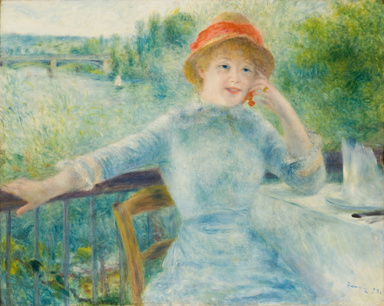
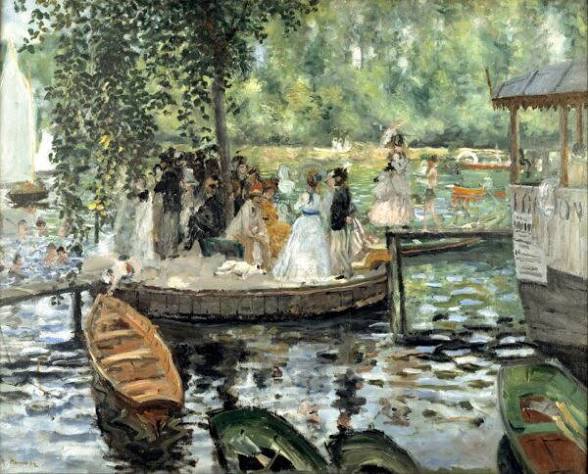
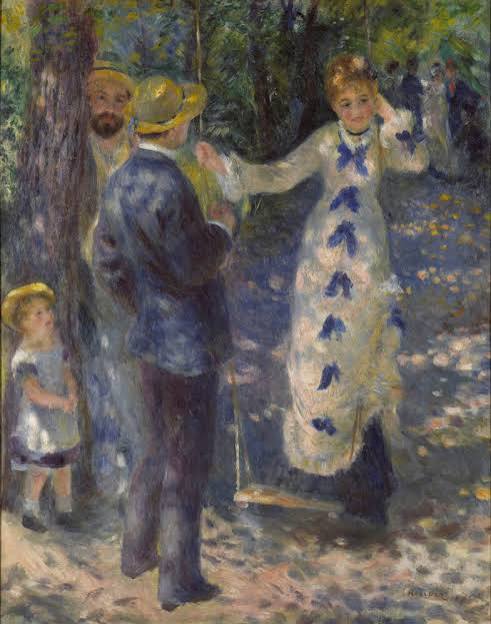
Auguste Renoir’s colorful and joyful paintings, his iconography of open-air cafes and public dances, have earned him the title of “painter of happiness.” This reputation has sometimes led to his marginalization among the great painters of modernity, on the grounds that modernity can only be melancholic or ironic, disillusioned or disenchanted. Yet his work offers an original reflection on modernity, placed under the sign of love, understood both as a force governing human relationships and as a feeling guiding the artist’s gaze upon his models, the world, and painting itself.
“I know very well that it is difficult to convince people that a painting can be truly great while remaining joyful” (Auguste Renoir).
To mark the 150th anniversary of Bal du Moulin de la Galette (1876), a masterpiece in the Musée d’Orsay’s Impressionist collection, this exhibition brings together for the first time this major body of “scenes of modern life”—multi-figure paintings depicting contemporary subjects (distinct from portraits and landscapes)—created by Renoir during the first twenty years of his career (1865–1885). During this period, he participated in the collective invention of a “New Painting” alongside Manet, Monet, Morisot, Degas, and Caillebotte. He distinguished himself from his Impressionist friends, however, by his singular sense of empathy and his capacity for wonder, choosing only joyful subjects and always highlighting his models. This “loving” gaze is manifested by a pronounced taste for connections – in his motifs (conversations, meals, dancing…) as well as in his way of painting, attentive to everything that can contribute to a feeling of unity (gestures of the characters, enveloping light, balance of colors, fluid and sketched touches that blend the objects into one another).
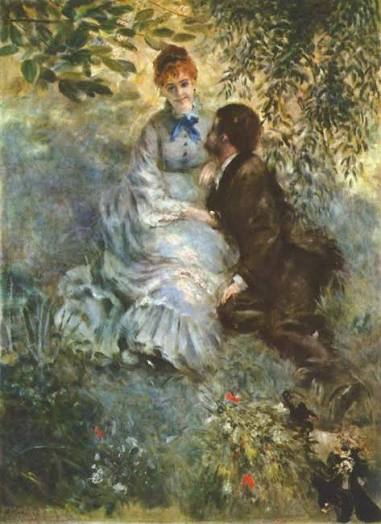
The exhibition also highlights Renoir’s predilection for depicting young couples but aims to deconstruct the common misconception that his painting is “sentimental.” On the contrary, he avoids overly direct expressions of emotion, romantic narratives, and erotic scenes. An admirer of 18th-century French painters (Watteau, Boucher, Fragonard), Renoir revived the atmosphere of “fêtes galantes” and promoted a form of sexual freedom and gender equality in Paris during the late Second Empire and early Third Republic. This choice must be understood in light of the Impressionist artist’s biography, which revealed his bohemian lifestyle marked by relationships considered “illegitimate” at the time, and placed within the context of the 19th century, characterized by marriage and bourgeois norms, religious morality, the prevalence of prostitution, and stark inequalities between men and women. In this context, Renoir’s large-format works devoted to the happy couple, to “camaraderie” (in the words of his friend Rivière) and to conviviality, appear as so many manifestos against the violence of relations between the sexes, class antagonisms and the growing solitude of urban life.
Co-organized with the National Gallery in London and the Museum of Fine Arts in Boston, this exhibition offers a fresh perspective on paintings so famous that it has become difficult to perceive their full novelty today. For the first time since 1985 – the date of the last Renoir retrospective organized in Paris – an exhibition brings together a focused but significant group of works (approximately fifty paintings) from the first part of the artist’s career, including his greatest masterpieces: from La Grenouillère (1869, Stockholm, Nationalmuseum) to The Umbrellas (1881-1885, London, The National Gallery), by way of La Promenade (1870, Los Angeles, The J. Paul Getty Museum), Danse à Bouvigal (1883, Boston, Museum of Fine Arts) and Le Déjeuner des canotiers (1880-1881), very exceptionally loaned by the Phillips Collection in Washington.
https://www.germanopratines.fr/wp-content/uploads/2026/03/IMG_7150.jpg306384Hélènehttps://www.germanopratines.fr/wp-content/uploads/2019/12/logo-germanopratines-3-1030x221.pngHélène2026-01-28 16:05:002026-04-27 08:36:52Renoir et l’amour
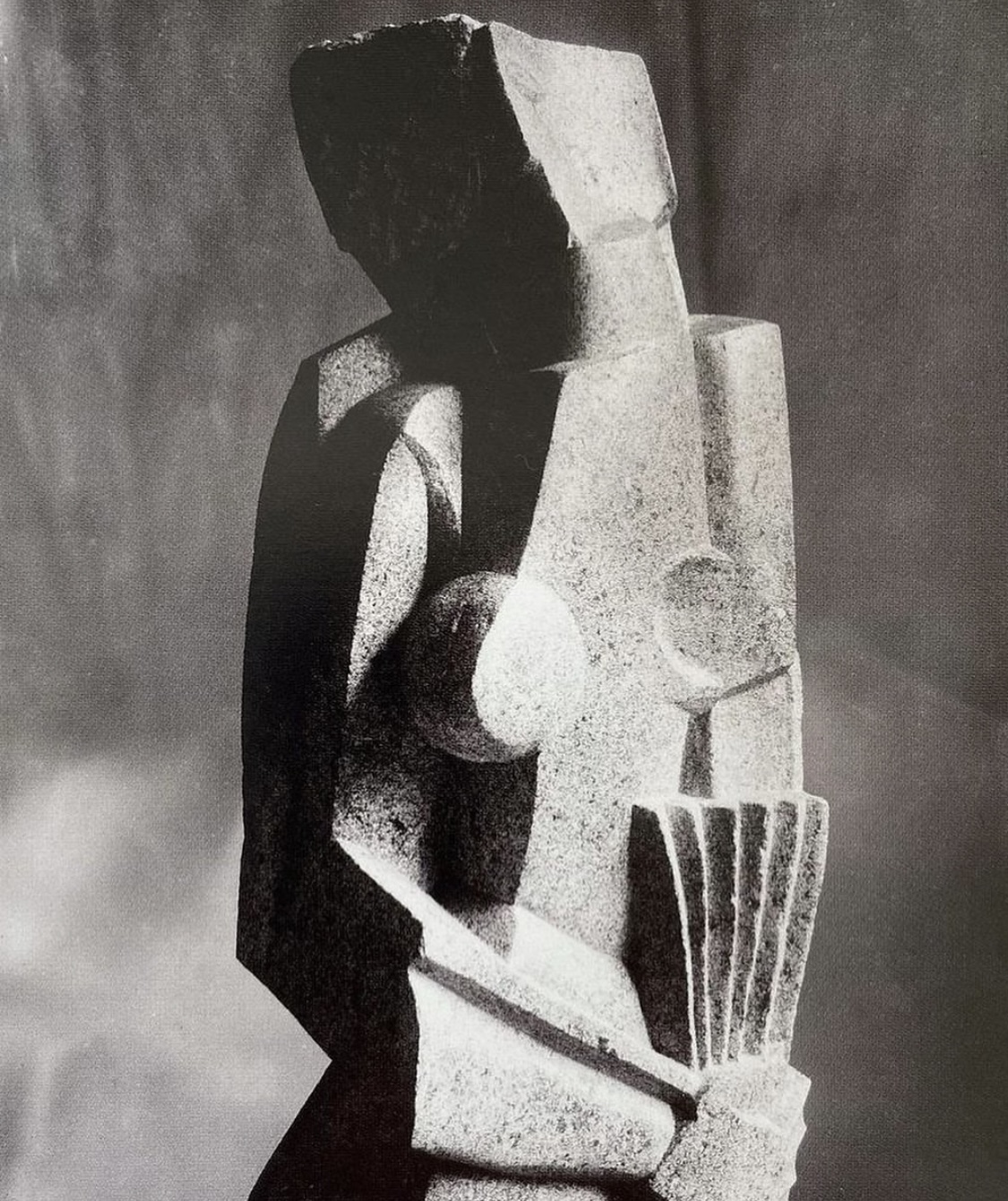
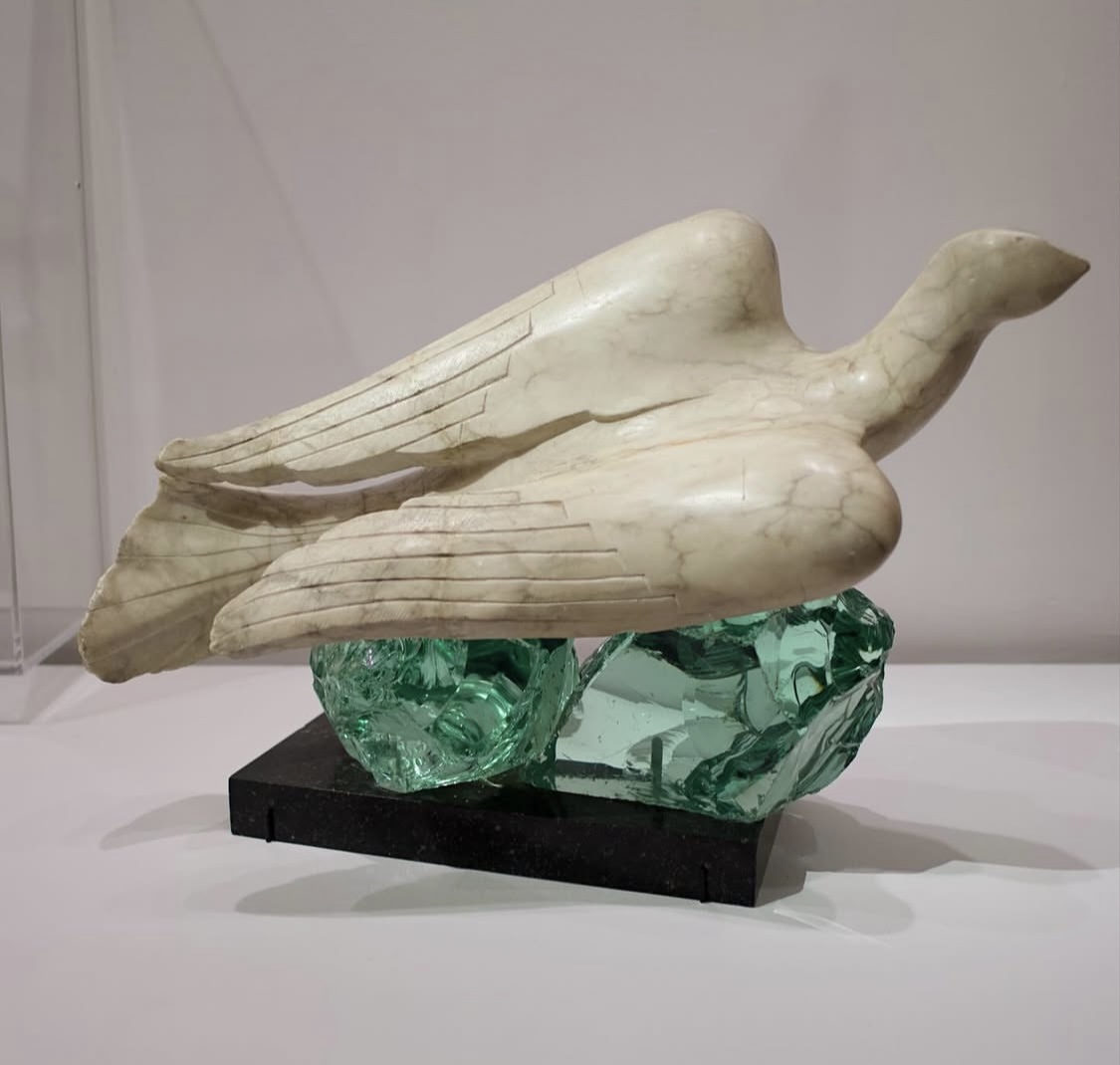
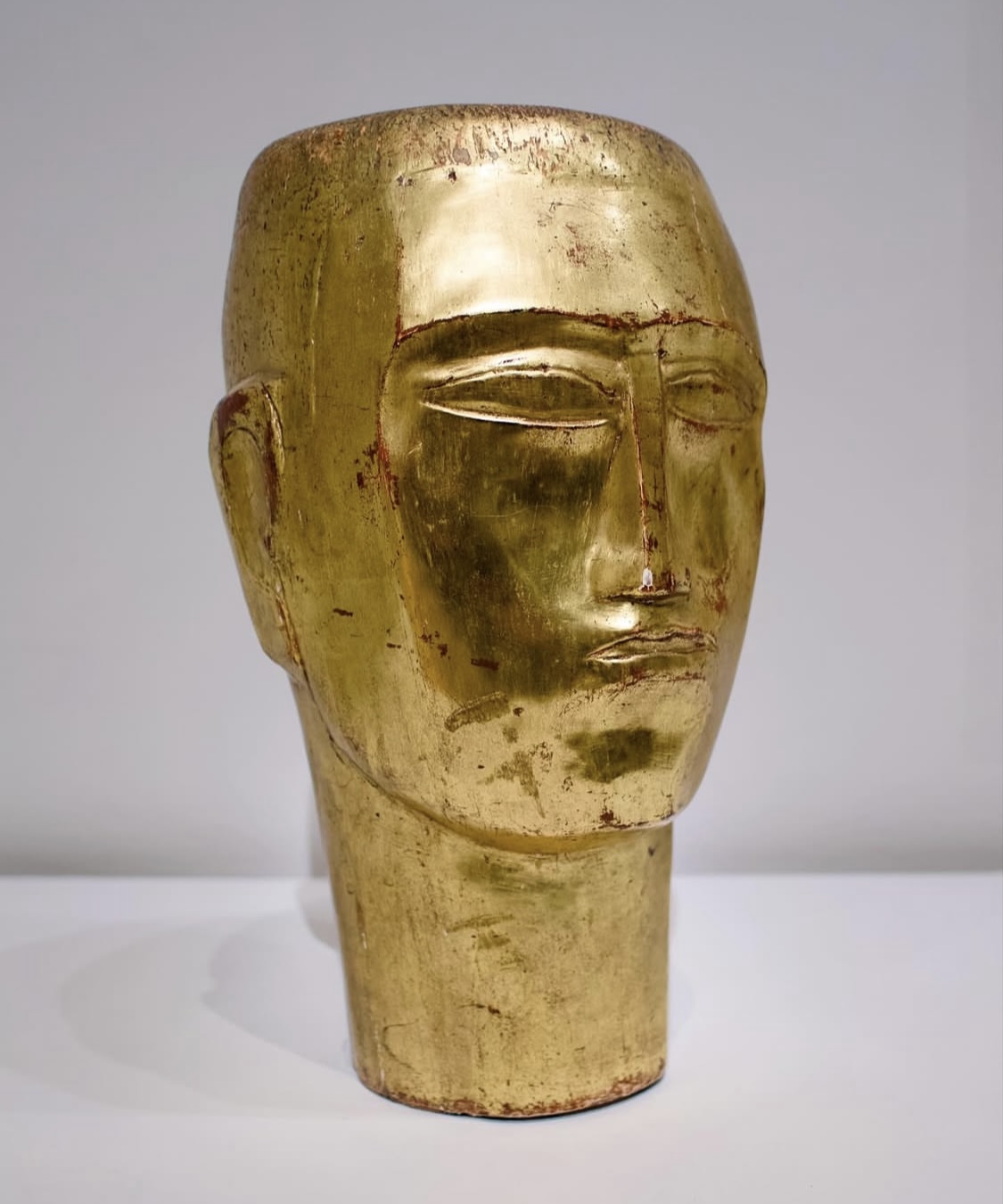
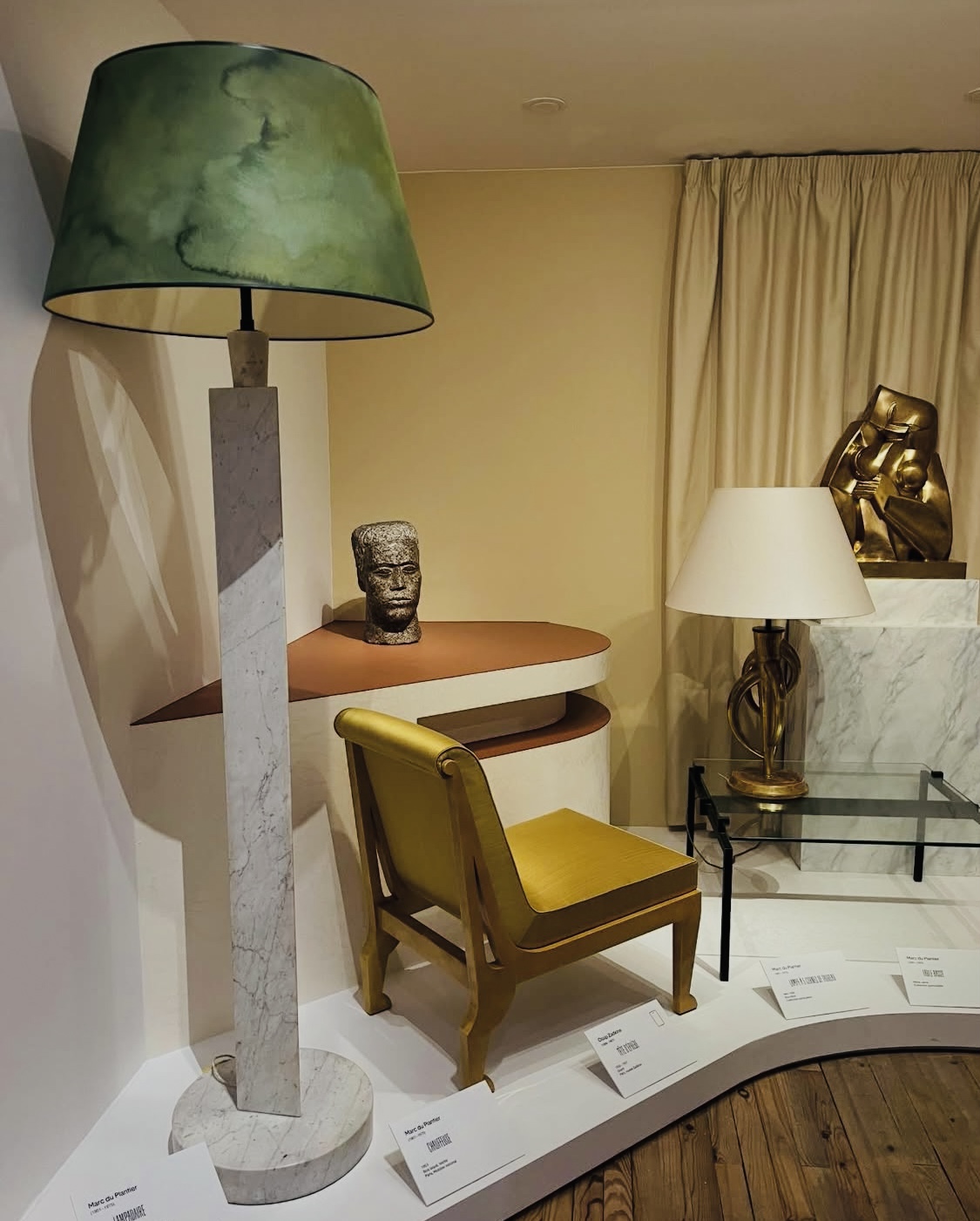
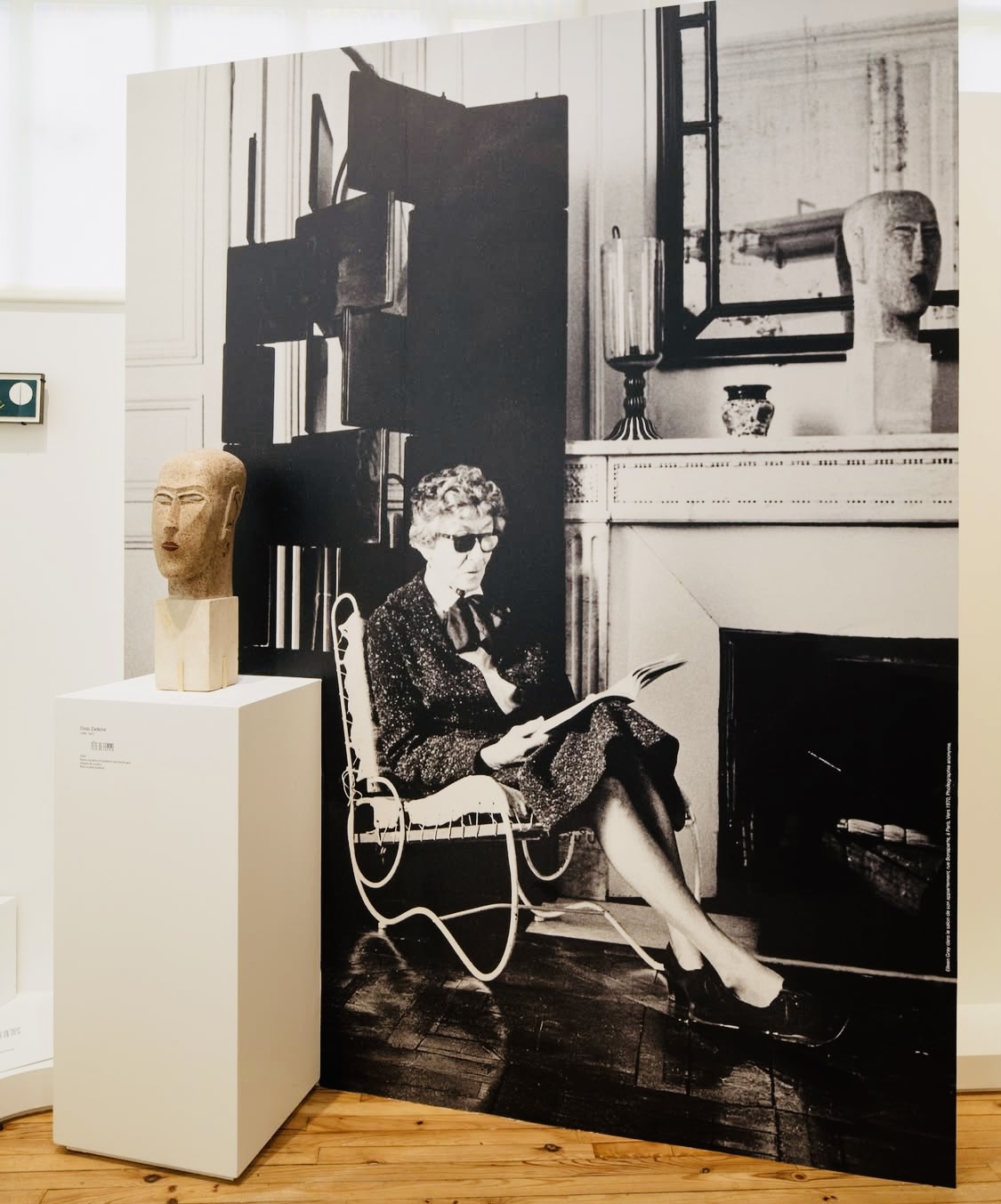
In 2025, the Zadkine Museum celebrates the centenary of Art Deco by highlighting the connections sculptor Ossip Zadkine forged with the decorative arts in the 1920s and 1930s. Through more than 90 works—sculptures, objects, and furniture—the exhibition explores, for the first time, Zadkine’s relationships with some of the leading decorators of the Art Deco period, such as Eileen Gray and Marc du Plantier. It also reveals the shared inspiration that unites their creations.
Thanks to numerous loans—from both private collections and prestigious institutions, such as the Royal Museum of Fine Arts Antwerp, the Sèvres porcelain factory, the Mobilier National (National Furniture Collection), and the Musée des Années 30 (Museum of the 1930s) in Boulogne-Billancourt—the exhibition allows visitors to appreciate the breadth of Zadkine’s talent as a complete artist, passionate about the beauty and variety of materials.
He who intended to behave “like a 13th and 14th century cabinetmaker who always trusted his instinct,” as he wrote in his memoirs, maintained a constant interest in the skills borrowed from craftsmanship. In the early 1920s, when Zadkine, having returned from Cubism, sought a new path, he experimented with different techniques: he colored, gilded, and lacquered his sculptures, giving birth to some of his masterpieces such as the Golden Bird, a plaster cast gilded with gold leaf, or the Torso of Hermaphrodite, lacquered with the collaboration of the decorator André Groult. However, it was his mastery of direct carving that led to his being invited to participate in the International Exhibition of Decorative Arts in 1925. Alongside sculptors such as Pompon and the Martel brothers, he contributed to the decoration of the Pergola de la Douce France, a monumental structure erected on the Esplanade des Invalides, intended to revive the ancestral technique of direct stone carving, perceived as more authentic than modeling.
The exhibition, conceived in five sections, first explores the “decorative turn” that took place in Zadkine’s work during the 1920s, a period when the sculptor developed a passion for color in sculpture and experimented with techniques such as gilding and lacquering.
A second section highlights Zadkine’s sculptures designed for architecture: Zadkine collaborated on several occasions with architects to decorate monuments, in Paris as well as in Brussels.
Sections three and four are devoted to the 1925 and 1937 exhibitions, to which Zadkine contributed. In this centenary year, the focus is on the 1925 Exhibition and the Pergola of Douce France, one of the few remaining monuments from 1925. Presented at the Zadkine Museum through a model, sketches, and documents, the Pergola was reassembled in 1935 in Étampes, where it can still be admired today.
The exhibition concludes with a tribute to three decorators with whom Zadkine was close: Eileen Gray, Marc du Plantier, and André Groult. In the sculptor’s former studio, furniture and objects are displayed alongside Zadkine’s works, presented in the way they were integrated into the Art Deco interiors designed by the renowned creators who recognized his talent.
https://www.germanopratines.fr/wp-content/uploads/2026/01/ZADKINE-ART-DECO-7.jpg13401125Hélènehttps://www.germanopratines.fr/wp-content/uploads/2019/12/logo-germanopratines-3-1030x221.pngHélène2026-01-25 18:34:152026-01-25 18:42:16Zadkine Art Déco
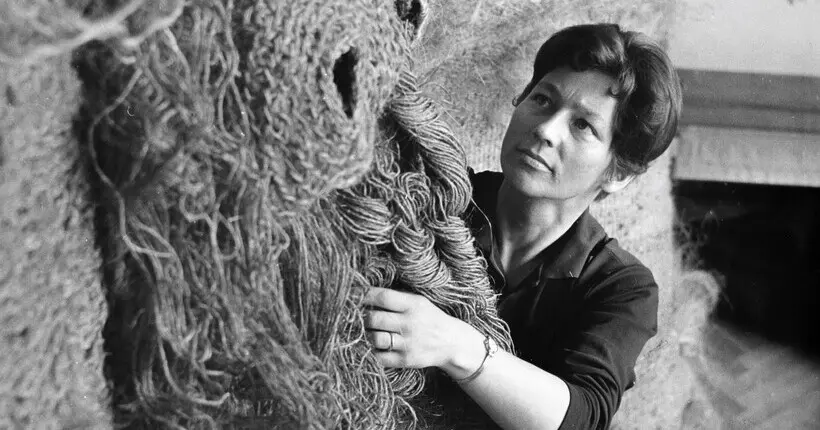
A pioneering artist in contemporary sculpture and textile art, Magdalena Abakanowicz (1930–2017) created powerful, political, and monumental works despite censorship under the Polish communist regime. Following the Tate Modern in London in 2023, the Musée Bourdelle presents the first major exhibition dedicated to the artist in France.
A leading figure on the 20th-century Polish art scene, Magdalena Abakanowicz experienced war, censorship, and the deprivations imposed by the communist regime from a very young age. Inspired by the organic world, seriality, and monumentality, her work possesses undeniable power and presence, resonating with contemporary issues—environmental, humanist, and feminist. The exhibition’s subtitle, “The Fabric of Existence,” combines two terms used by the artist to define her work. She considered fabric to be the elementary organism of the human body, marked by the vagaries of its destiny.
In the corridor of the Portzamparc wing, the first section offers a glimpse into the breadth of Magdalena Abakanowicz’s output: early textile pieces, small-scale (often anatomical) sculptures, drawings, and projects for public spaces. She initially practiced painting before turning to tapestry, soon subverting its traditional, decorative framework. At the crossroads of disciplines, the artist explores the combination of textile materials and sculptural techniques. All her creations stem from the same fundamental question: what is humanity’s place in its environment?
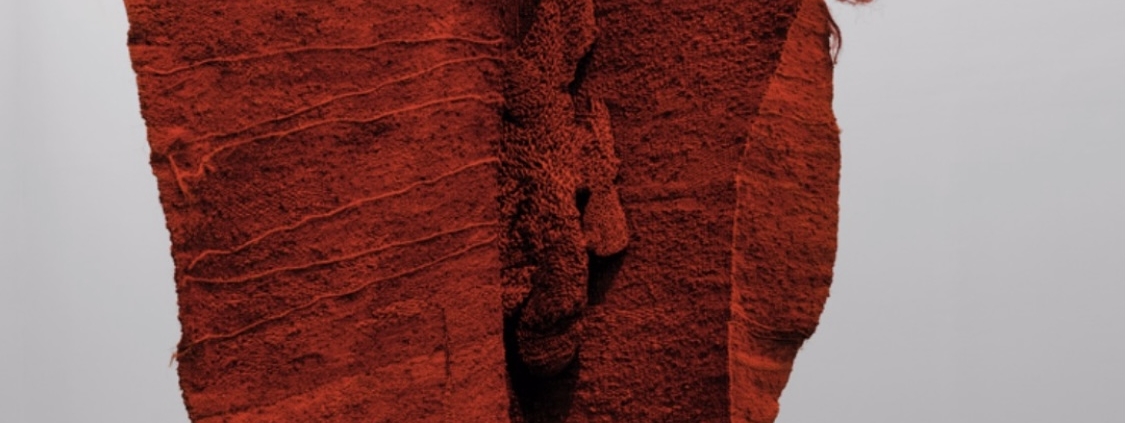
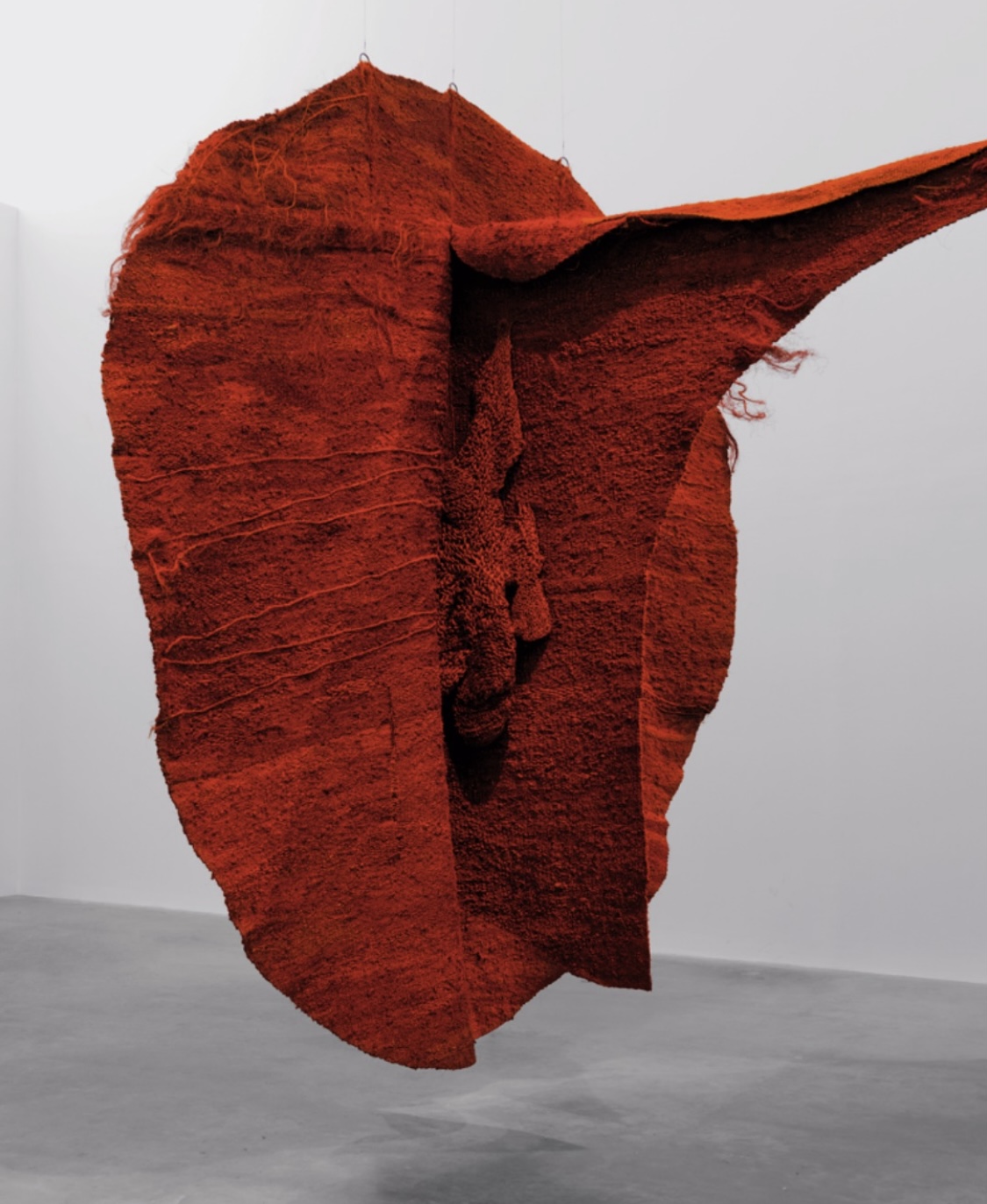
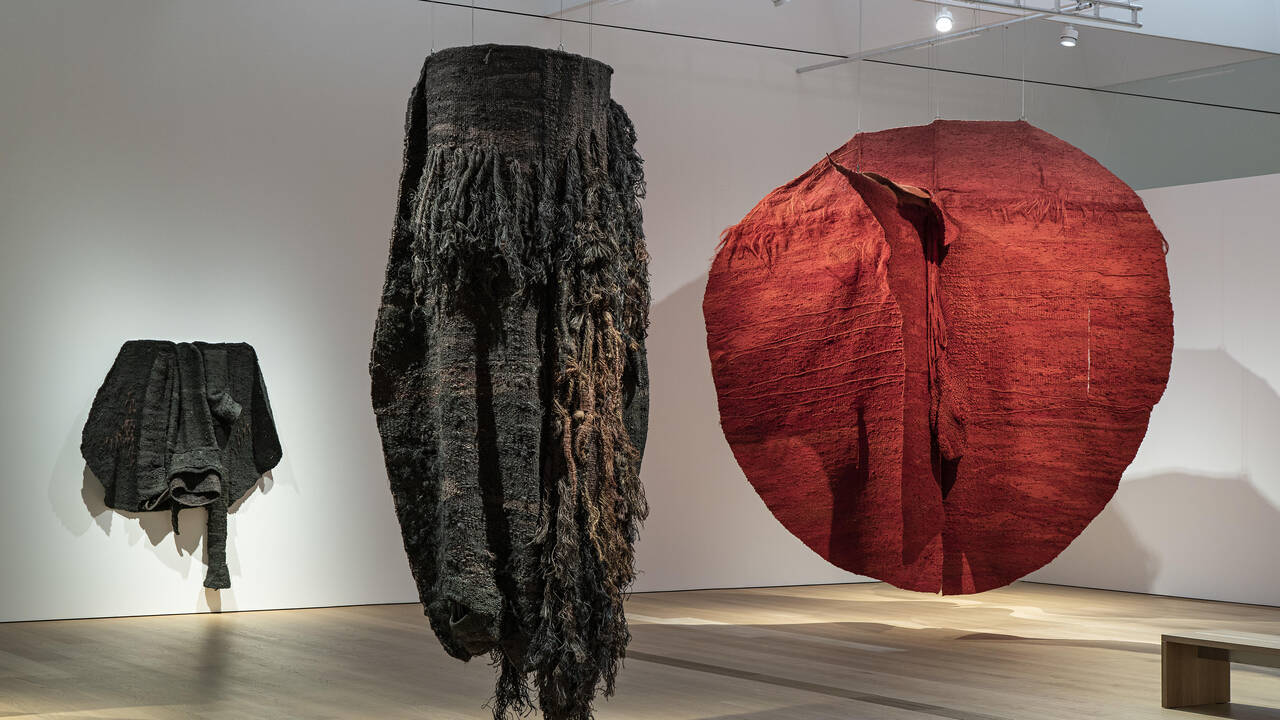
The exhibition continues with the cycle of monumental works that Abakanowicz began in the mid-1960s: the Abakans, spectacular textile pieces suspended from the ceiling. Despite a shortage of materials, the artist wove these objects from natural fibers using ropes and salvaged fabrics she found under her bed. In 1969, the fourth International Tapestry Biennial in Lausanne marked a decisive turning point: freed from the constraints of the picture rail, the four-meter-diameter red Abakan was displayed in all its glory.
Floating and suspended above the ground, the textile sculptures of the Abakans simultaneously reveal and conceal the “secrets” of their nature. Rich in slits and folds, their tactile texture evokes all sorts of organic analogies: the raw flesh of wood, the fur of an animal, the swollen lips of female genitalia… Closely linked to the society in which the artist lived, the genesis of the Abakans was an act of resistance. The space they inhabit is literally this political sanctuary where Abakanowicz, with “contained rage,” reconnects the fabric of a territory and the thread of a history.
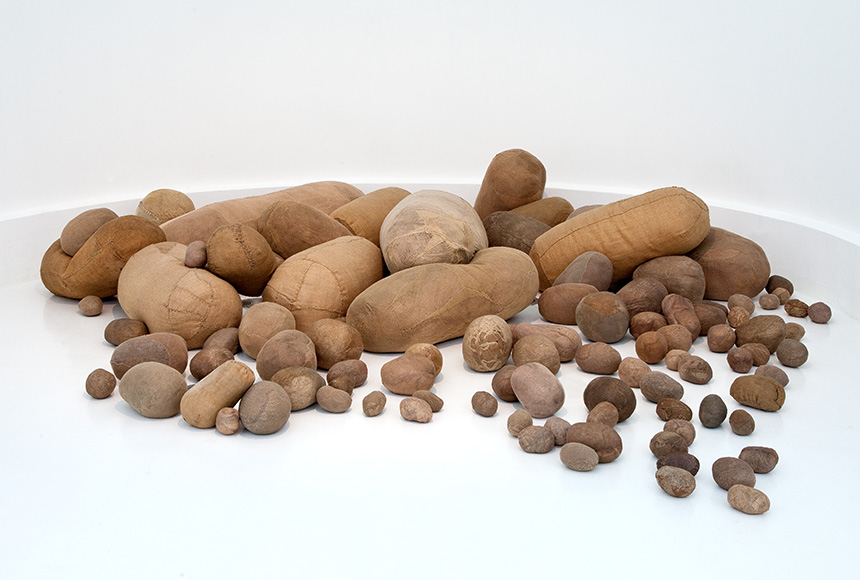
The fourth part opens with his iconic installation Embryology, unveiled at the Venice Biennale in 1980. Between body, organic matter, and rock, these accumulated cocoons immerse the viewer in an ambiguous and hybrid space. Cell clusters observed under a microscope, tissues, or skins… Embryology plunges the gaze into the mystery of life.
A masterful graphic counterpoint to the Embryology series, the Compositions collection was conceived in 1981. On the flat sheet of paper, animated by a slow rotation, the ink thickens and becomes defined before the artist disperses it across the paper’s surface with a wash. Illustrated with drawings and reliefs of Landscapes, the exhibition emphasizes the materiality of Abakanowicz’s works and his interest in metamorphosis.
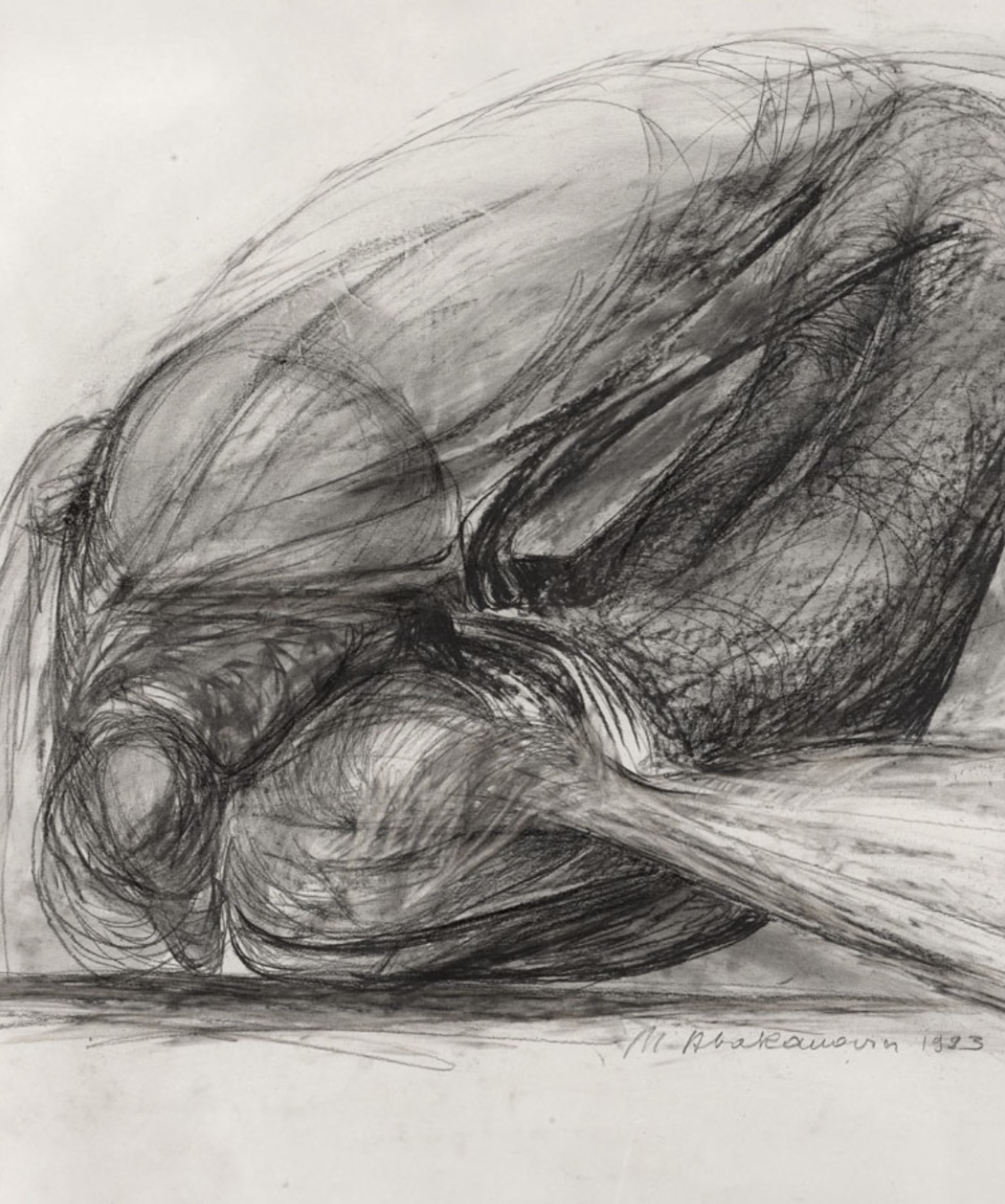
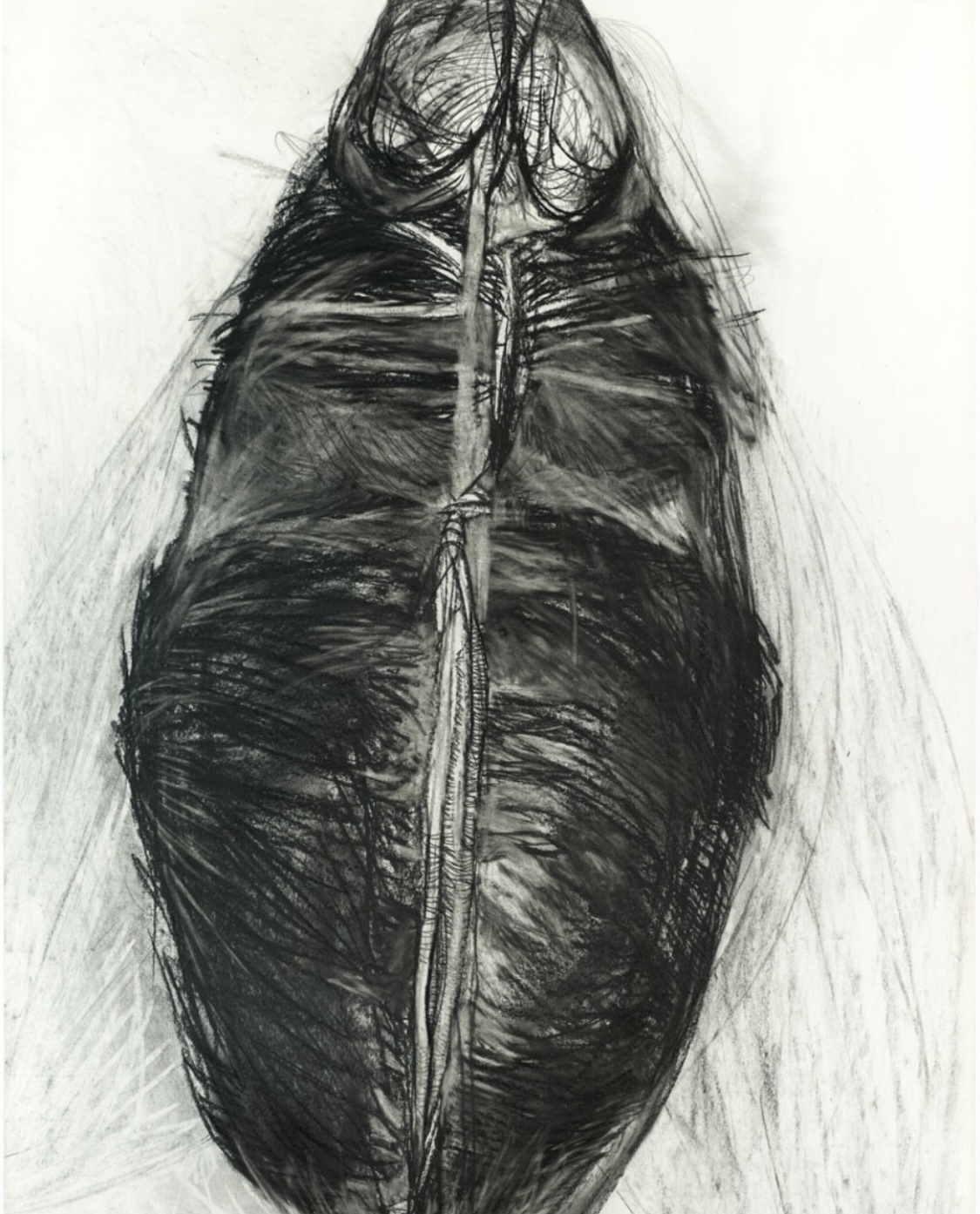
At the beginning of her career, Abakanowicz occasionally used drawing to represent the plant and animal world. From the 1980s onward, she intensified her graphic art practice. The charcoal series Flies (1993-1994) transposes the observation of dead flies or flies in their pupal stage into a monumental format. Abakanowicz enlarges their bodies, as if under the eyepiece of a microscope, to reveal their structure. Far from being anxious about decomposition, the artist expresses her visceral curiosity about organic reality.
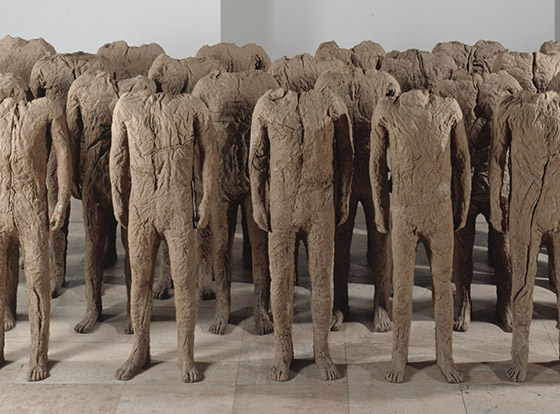
Next, within the museum’s concrete alcoves, we discover the Mutants and Crowd V series. While the Mutants occupy the space in an indeterminate way, the anonymous and unsettling crowd of Crowd V materializes Abakanowicz’s reflection on “the crowd acting like a mindless organism.” From a life cast of a standing man, arms at his sides, Abakanowicz creates a series of figures. These series, titled Crowds, were produced between 1986 and 1997. The technique itself—compressing resin-soaked burlap into a plaster mold—manifests this crushing effect: the individual is literally forced into the mold. Lacking heads, even arms, this faceless horde, which the artist erects as “a barrier” between itself and “all those who frighten it,” fulfills a conjuring function.
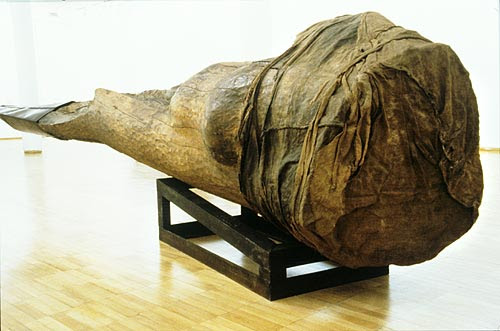
The exhibition concludes with the monumental sculpture cycle War Games, composed of enormous tree trunks encased in steel hoops. It echoes the destructive power of war. Abakanowicz created this series between 1987 and 1995, a period that saw the communist regime crumble and a new political and social order emerge. The perplexing oxymoron of the title War Games is reflected in the juxtaposition of disparate materials, where the organic, cellular nature of the wood contrasts with the coldness of the metal.
Lee Ufan has followed his own path for over six decades. The successive fads of his contemporaries hold no interest for him. From his earliest works, certain principles were established and have remained unchanged ever since. In sculpture, these are the simplicity of volumes and the use of few materials, natural or man-made: eroded rocks and sheets of metal or glass. In painting, they are also the simplicity of forms placed and repeated on the canvas, and for a long time, the use of a limited palette. In a world saturated with images of all kinds that inspire mistrust, this restriction of means is to the visual arts what a retreat once was to ordinary life: a deliberate break and the creation of a space for reflection, silence, and contemplation. There is something of the hermit and the poet in him. In his writings, this inner necessity is immediately apparent, as is the breadth of his philosophical references.
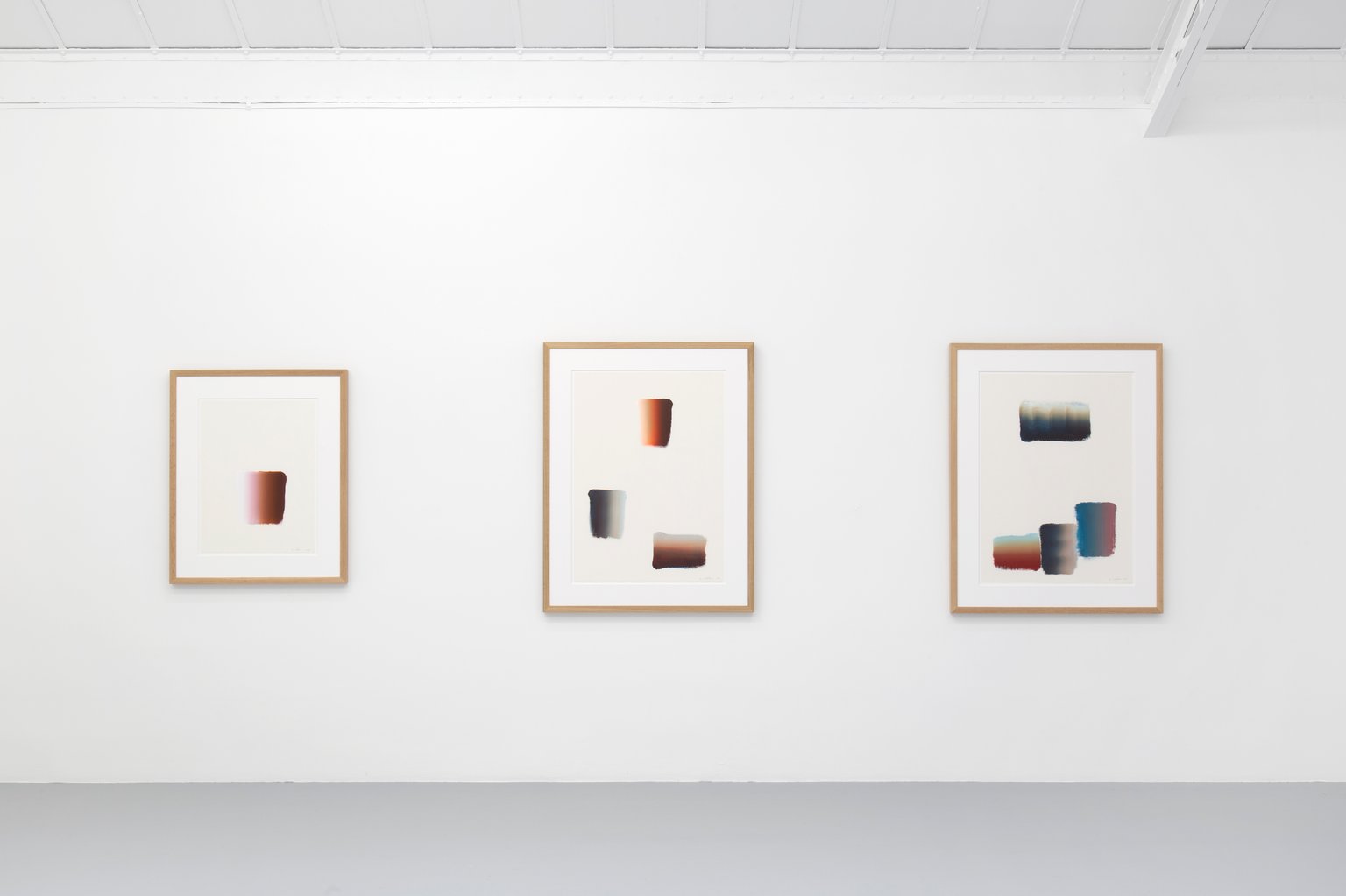
These lines could have been written long ago, during the time of the From Point and From Line series, for they are the fundamental characteristics of his work. But, starting with the first Correspondences of 1991-1992, Lee Ufan’s painting changes. While the canvas remains white, the forms become larger and denser. The brushes lay down oblong strokes, sometimes edged with a light foam of paint. They unfold variations of gray from one edge to the other, from the very dark to the almost transparent. Sometimes a single form is placed at the center of the canvas. At other times, there are two, three, or more, distributed across the surface. In this case, their positions relative to one another evoke sensations of space and movement, as in his From Winds and With Winds series, but with different, more restrained pictorial solutions. This is also true of the Dialogue series, whether the painting is on the canvas or on the wall.
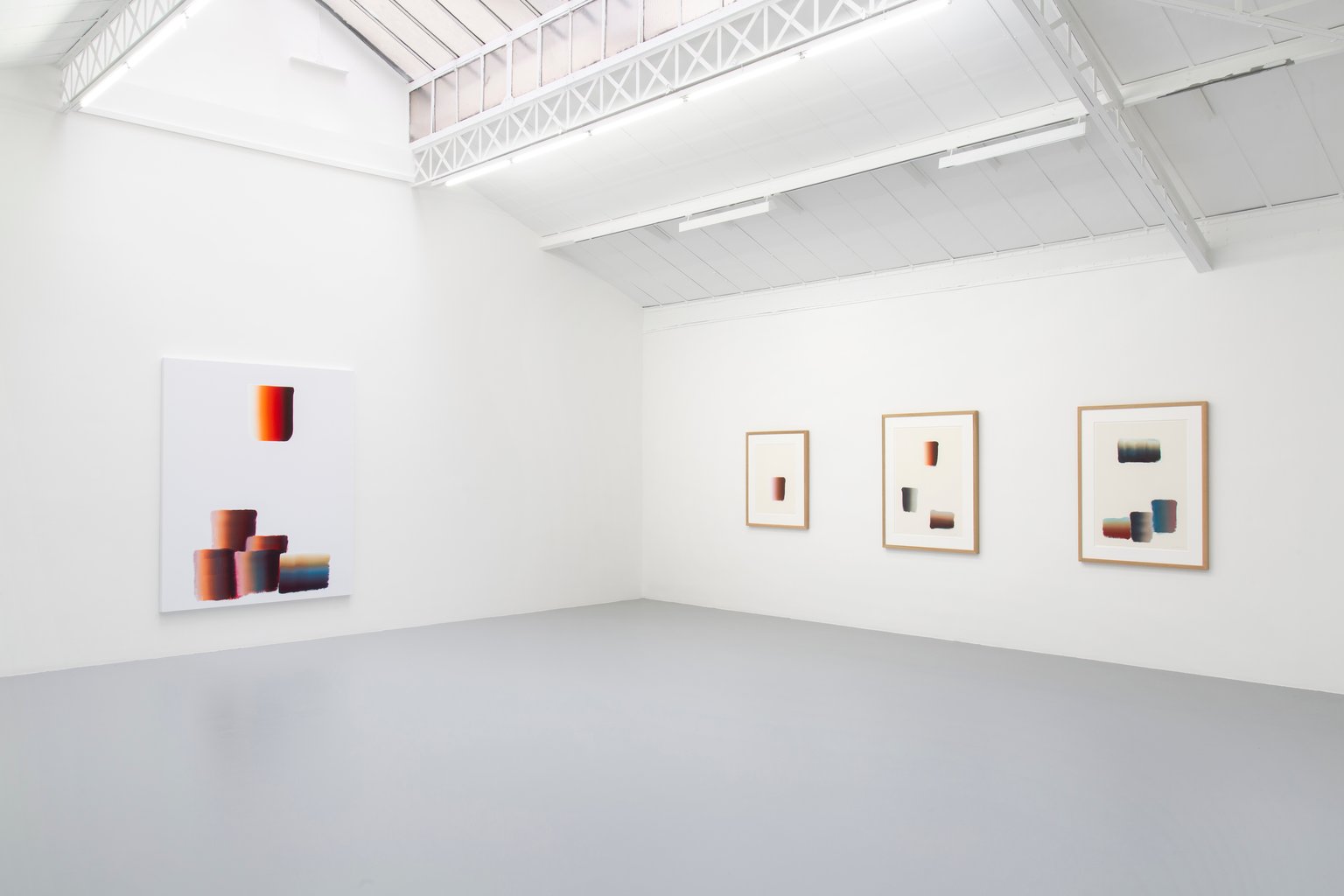
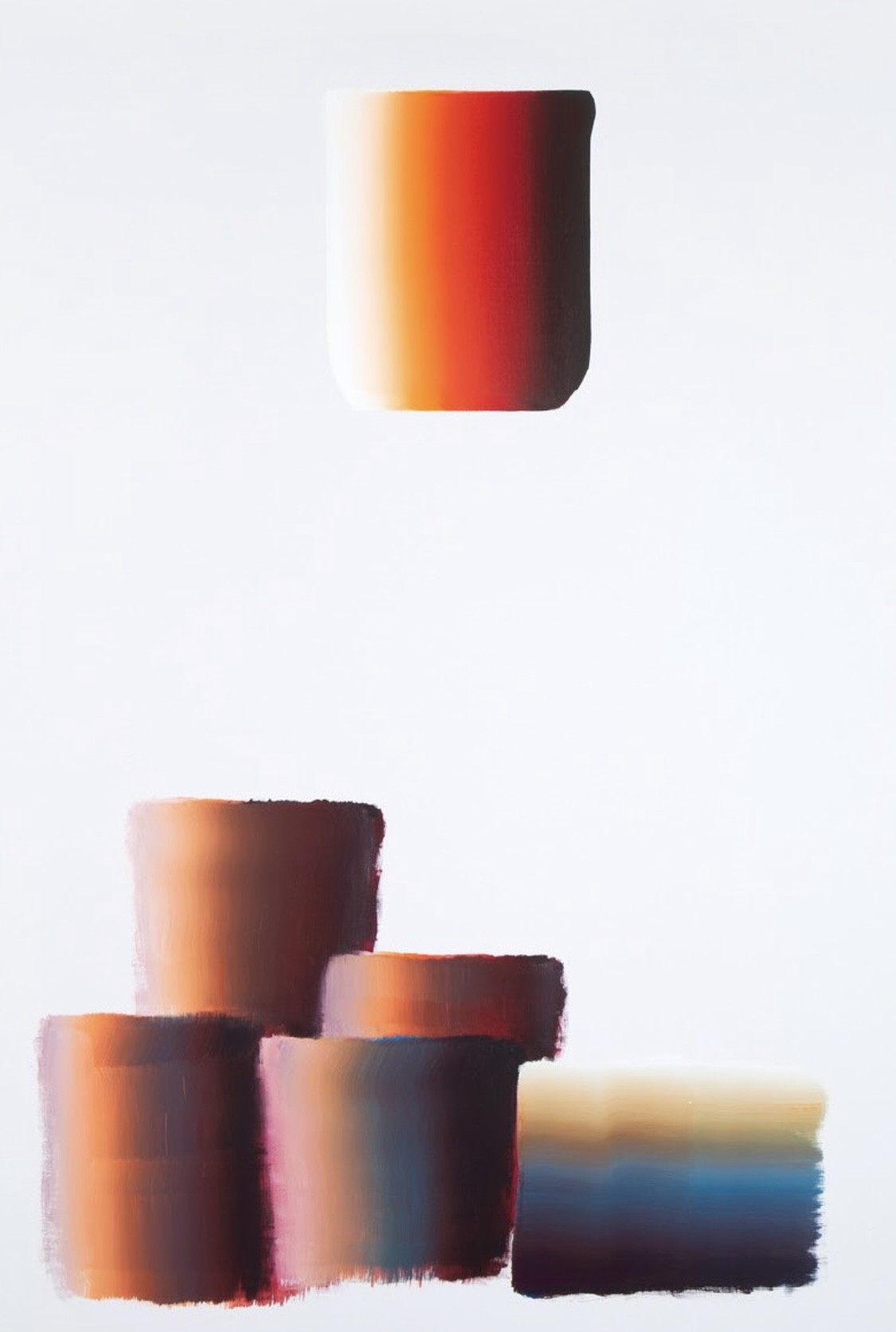
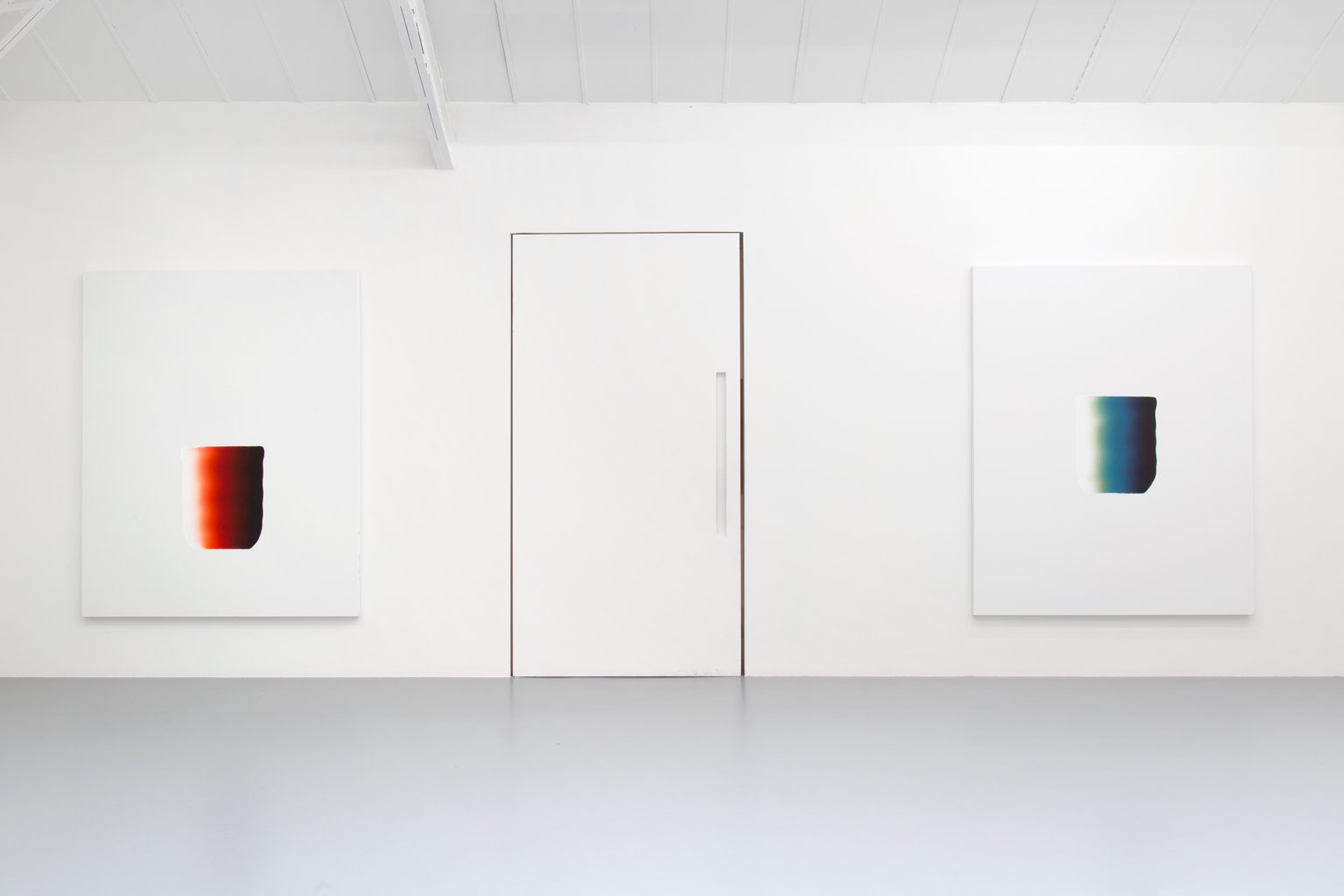
The most recent works, many of which are titled Response, are composed in much the same way: one or more separate forms on a white background. But they incorporate color. Just as gray shifted from shadow to pallor, blue or red, in all their intensity at the center of the form, are absorbed by shadow on one edge and by light on the opposite edge. The color then disappears, engulfed by a gradual darkening that almost reaches black and, symmetrically, devoured by an increasingly blinding whiteness. Whether the form is vertical or horizontal, the transition from light to shadow is inexorable. As the eye approaches, it perceives the undulating movements of the brushstrokes, which accentuate the sensation of life. Neither color nor form is stable. Nor is space, for frontality is disrupted by this chromatic phenomenon.
Lee Ufan finds here, once again and in a different way than before, how to inscribe and convey the passage of time. There is the time of the artist, that of pictorial creation and its completion, which leaves its light traces in the movements of color, which are those of the painter’s hand and wrist. There is the time of the one whose gaze follows these vibrant lines along these chromatic shifts and, at that moment, is extracted from the ordinary temporality of daily life, that of our overwhelming present. This moment is one of contemplation that makes life more intensely alive. “The life of a work of art,” the artist wrote in 2012, “is a transcendent sensation. This life woven by the work is deeply embedded in the order and complex principle of repetition that connects it with the universe, with waves and breaths. This is what is beyond me, other, and what belongs to universal life.” “This art is so vibrant that the exhibition reveals some truly surprising, very recent acrylic and watercolor paintings. The forms, with their shifting colors, seem to glide against one another and, at times, merge. Simultaneously, the chromatic palette incorporates previously absent nuances, mineral or marine. Lee Ufan’s works are once again heading in a new direction.”
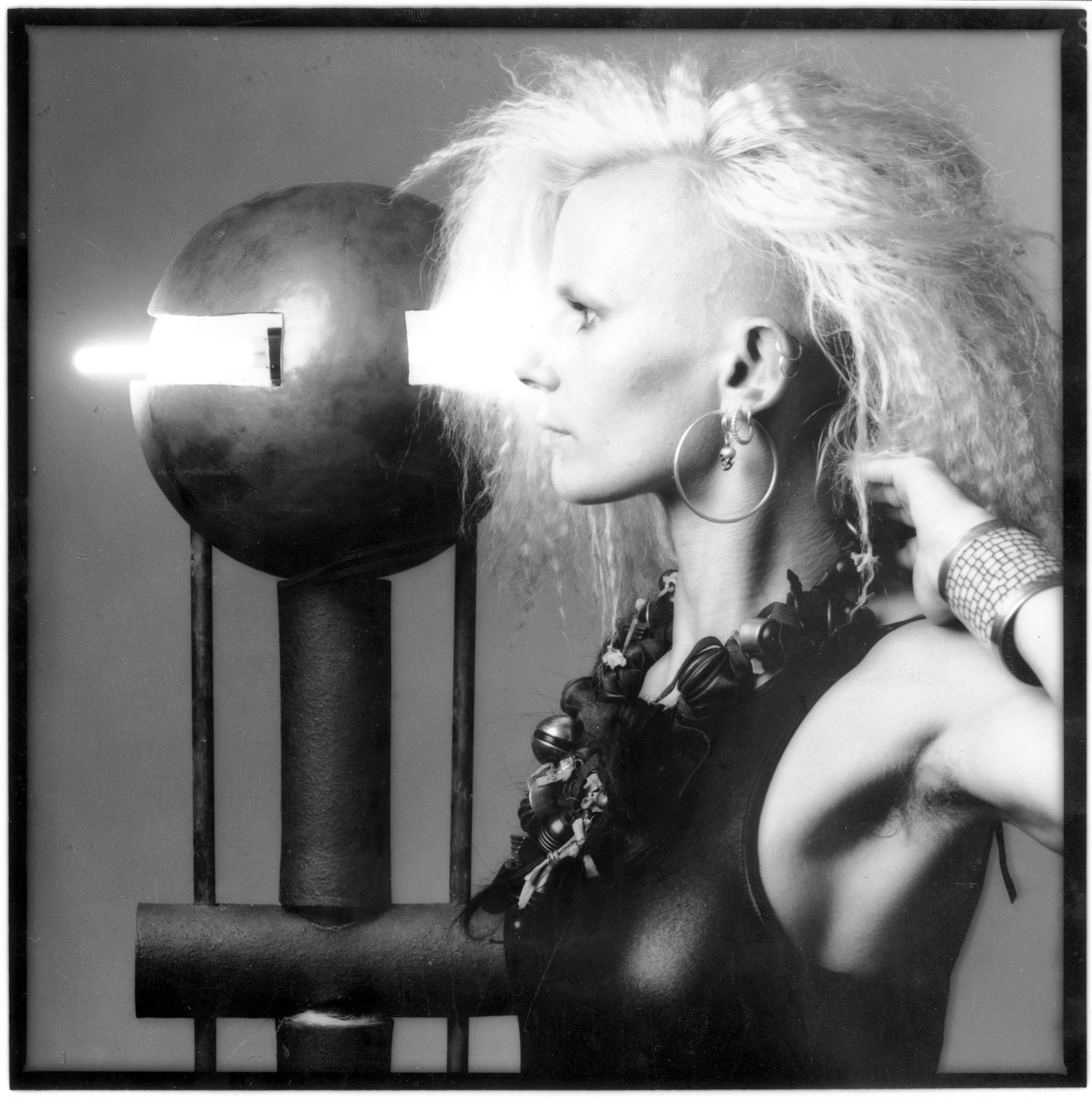
Cocktail, an explosive name whose blast still resonates more than forty years after its launch. In 1981, Heike Mühlhaus, a recent graduate of the Wiesbaden School of Design and Ceramics, founded what would become one of the most iconic labels of the German counterculture. Together with Renate von Brevern, she opened a studio in this peaceful Hessian spa town, which quickly transformed into a veritable laboratory for experimentation.
Cocktail’s first catalog, titled “Innovative Keramik für Tisch und Raum” (Innovative Ceramics for Table and Space), reflects a desire to revitalize the discipline and push its boundaries. Disregarding conventions, Heike Mühlhaus departed from traditional methods, which she found too rigid and contrary to her ambition to “create large, simple forms” with open surfaces, conducive to the flourishing of painterly gesture and chromatic exploration.
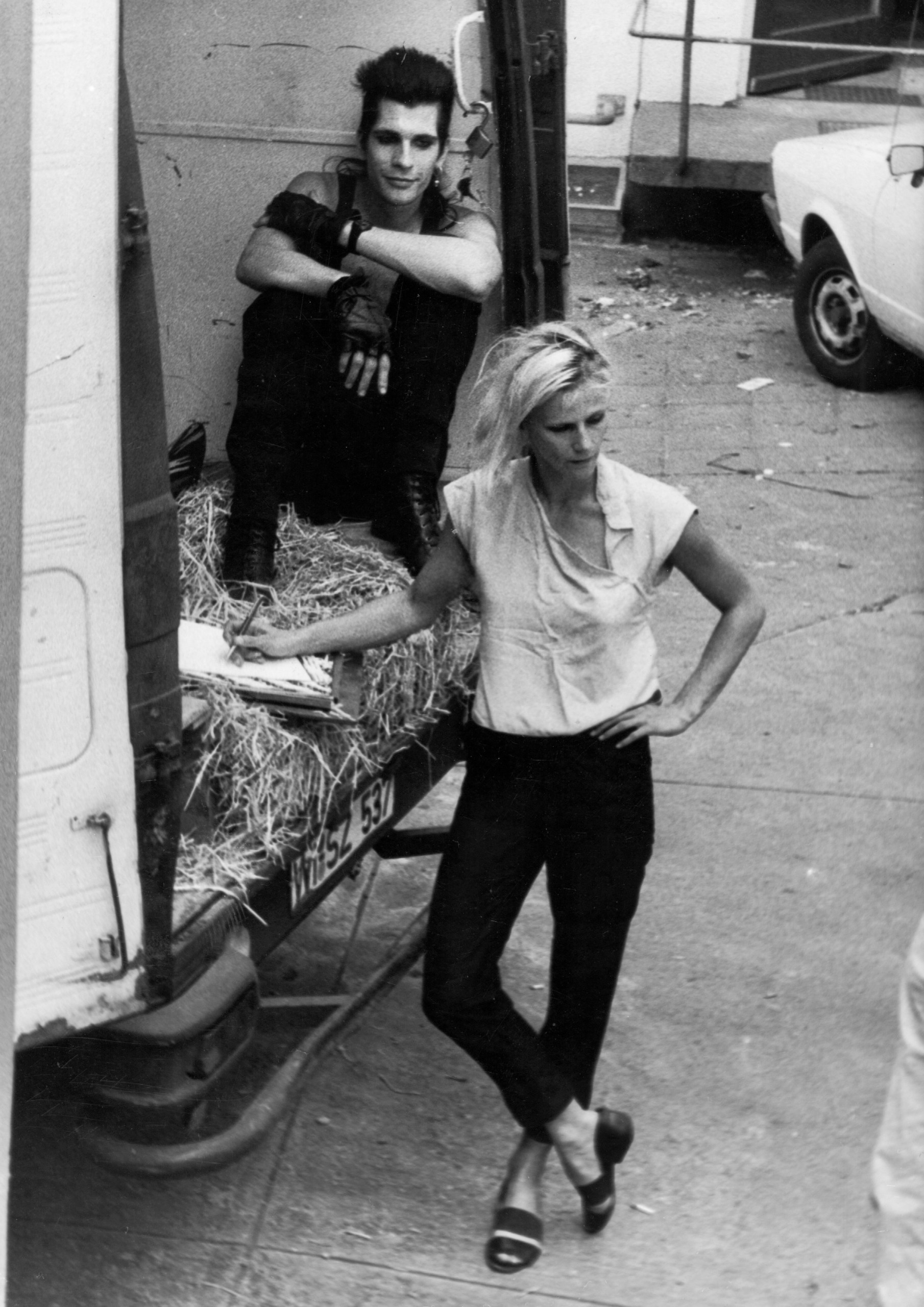
Cocktail’s audacity was evident as early as 1984, when the duo attempted to participate in a design fair for the first time. Excluded from official channels, they decided to exhibit their creations in a bus parked in front of the building’s main entrance—a subtle yet powerful act of resistance, revealing their independent spirit and their ability to circumvent institutional structures.
This refusal to compromise found an even more radical expression during the famous “Cruise” they organized on the Rhine, during which pieces they deemed unsatisfactory were symbolically thrown into the water. This gesture, both performative and cathartic, reflected Heike Mühlhaus’s desire to liberate creation from all complacency. It also marked the birth of a true method: eliminating to clarify, rejecting to move forward.
Cocktail gradually abandoned tableware—cups, tumblers, vases, and plates—to focus on form pieces. Fueled by the electric energy of the 1980s and driven by the desire to project their work beyond the regional sphere, the two women moved their studio to Berlin in 1985. This move marked a new stage: the Label’s integration into a vibrant art scene where disciplines intersected.
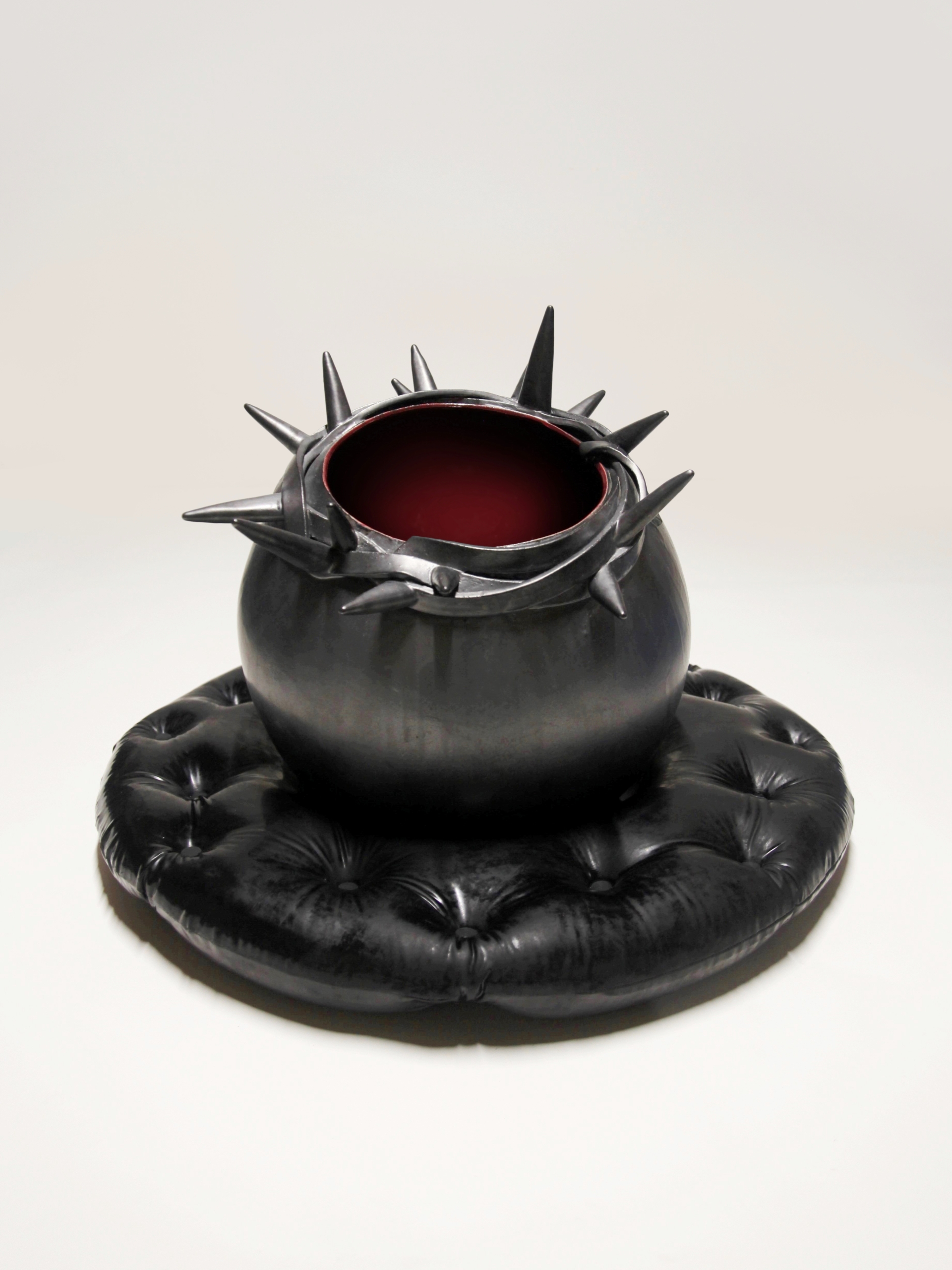
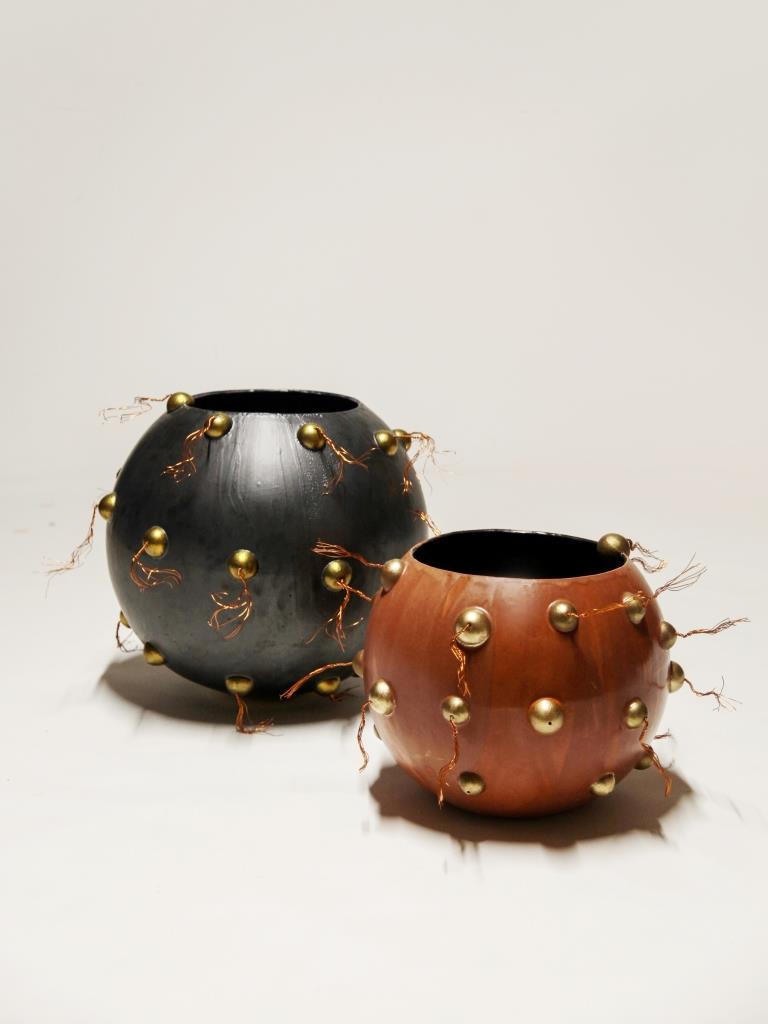
Claiming an approach that is “open, evolving, and always uncertain in its outcome,” Heike Mühlhaus is revolutionizing the working of clay. By combining metal with ceramics, she reinforces its telluric character; each piece seems to emerge from the earth’s core, which, metaphorically, contributes to forging an underground aesthetic.
This relationship to the origins of beings and matter is also manifested in her treatment of form, which is alternately archetypal of Antiquity and the Middle Ages and universal, such as the sphere and the disc, whose geometry embodies unity, balance, and totality.
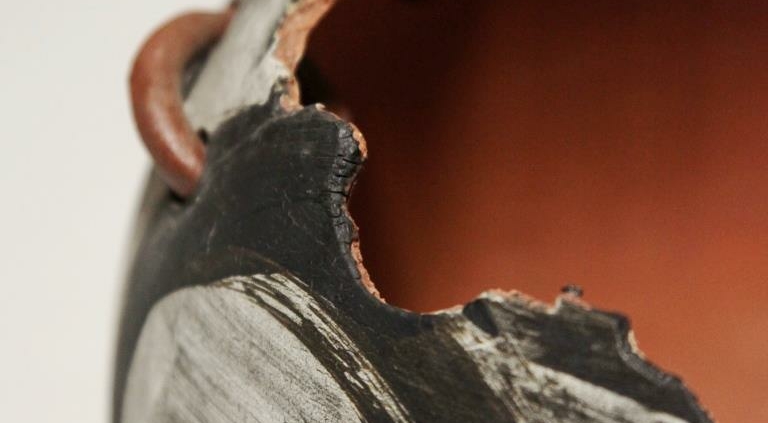
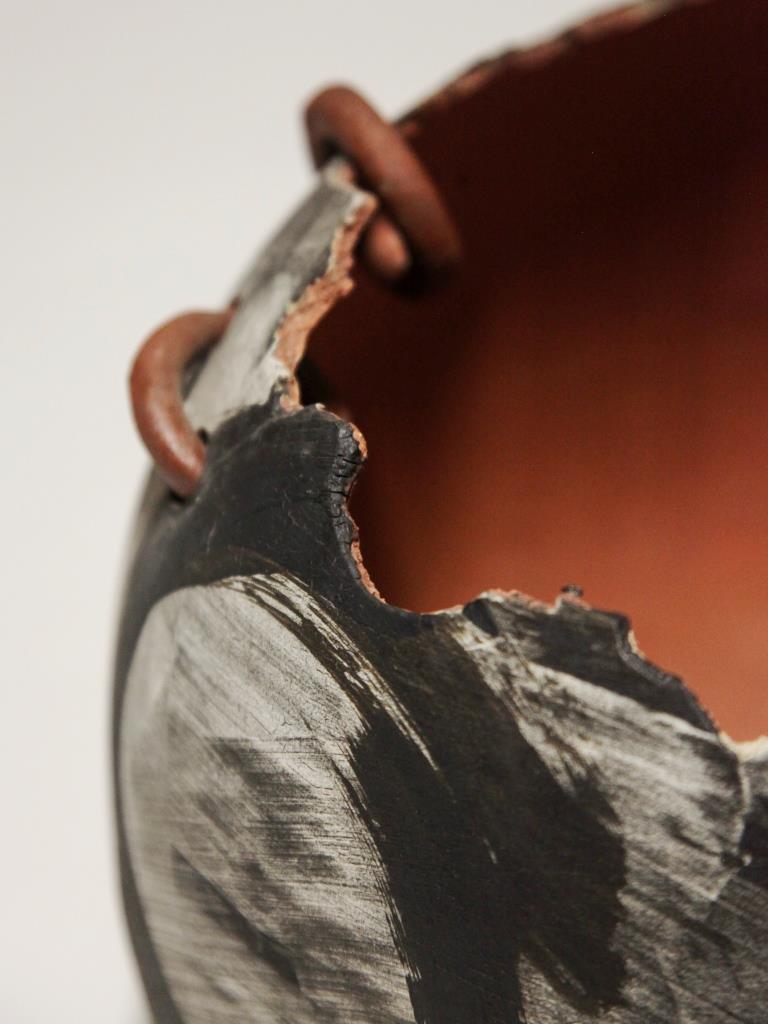
Through a subtle mise en abyme of the creative process, Heike Mühlhaus’s works with their jagged collars seem to blossom, defining themselves as much by what they retain as by what they liberate.
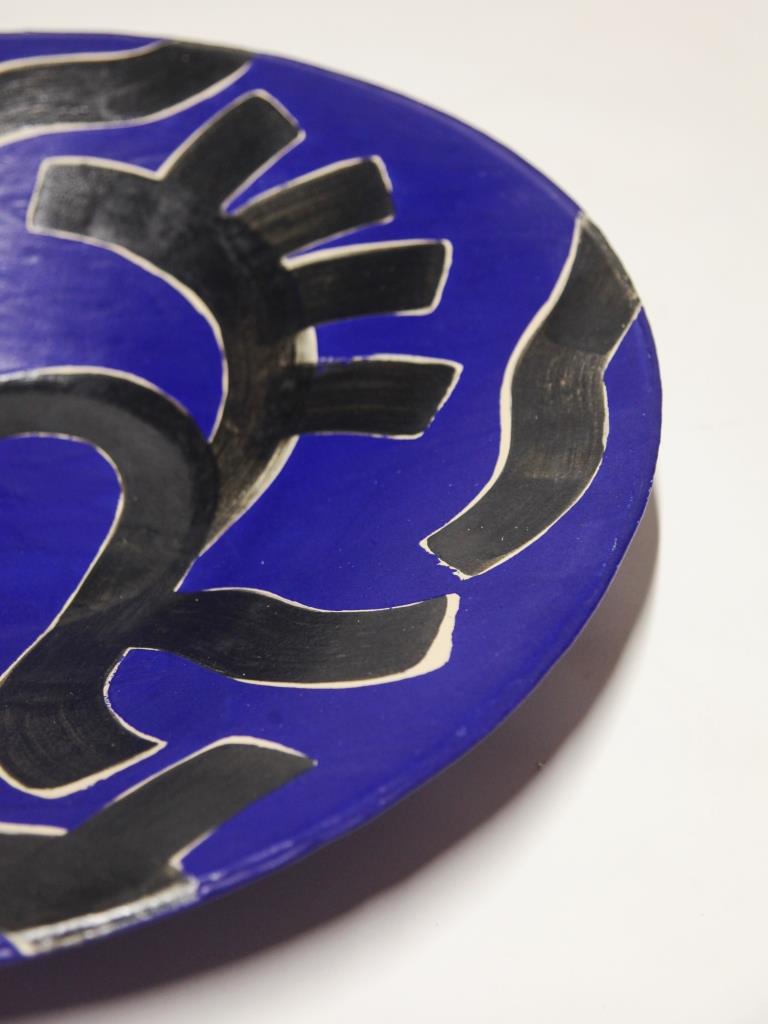
The Berlin-based ceramicist also draws on the motif: the Greek Cross, a recurring motif in Cocktail’s work, constitutes a strong visual marker, shared by the alternative scene of the late 1980s. Both immediately recognizable and culturally polysemous, it is part of the transgressive iconography developed by punk, metal, and techno music groups, while artists like Jean-Michel Basquiat, Keith Haring, and Barbara Kruger use it to structure space and create visual tensions in painting.
Similarly, the tribal motifs Cocktail draws from African and Asian cultures are graphically reinterpreted and detached from their ritual function. As components of distinctive ensembles, they mark both an attachment to traditions perceived as authentic and an aesthetic and identity claim.
The 1991 retrospective at the Magdeburg Museum celebrated the label’s 10th anniversary. Following Renate von Brevern’s departure that same year, Heike Mühlhaus continued to lead Cocktail alone. She then conceived new collections of objects and developed numerous collaborations in both interior architecture and design. By placing the working of clay at the heart of avant-garde movements, Cocktail illustrates ceramics’ capacity to transcend its utilitarian function and become a leading cultural and symbolic force, at the crossroads of contemporary practices. Each of Heike Mühlhaus’s works thus functions as a fragment of a total artwork, both intimately Berlin-based and universally resonant, whose impact on European design is still felt today.
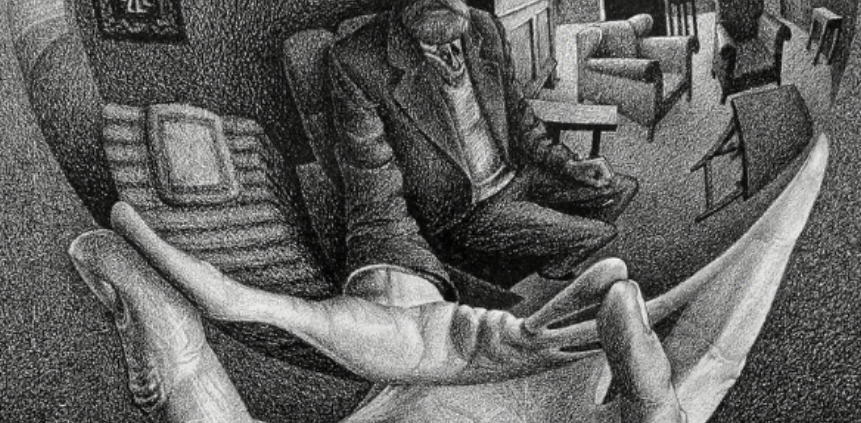
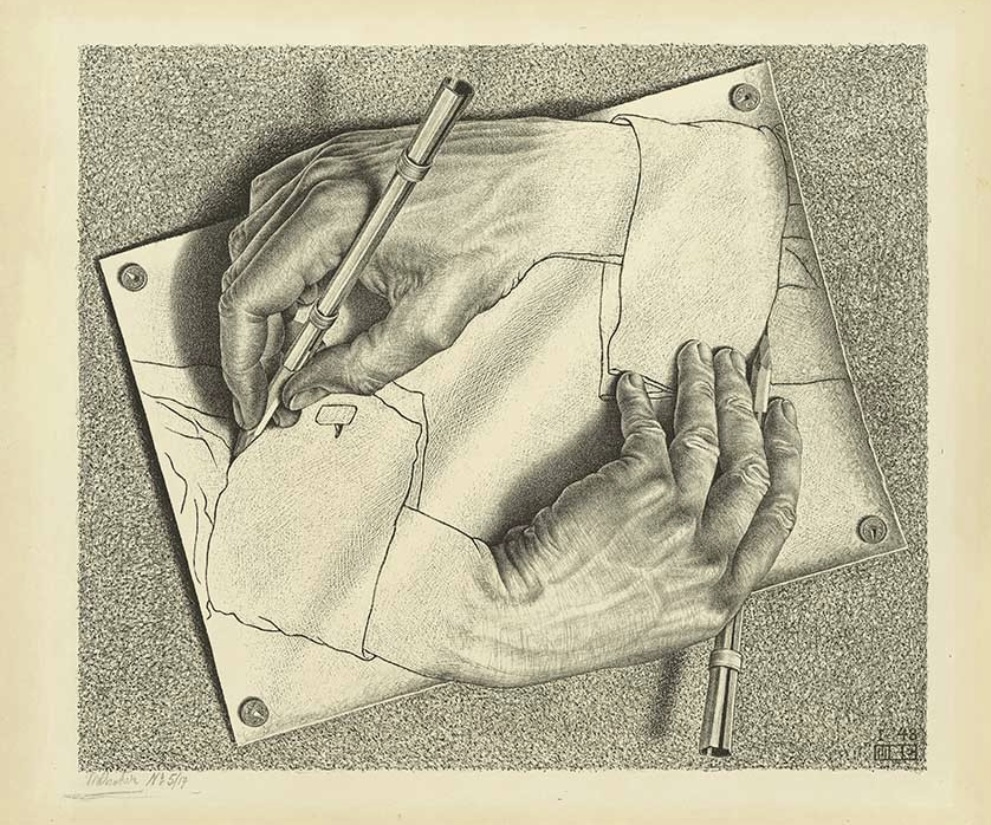
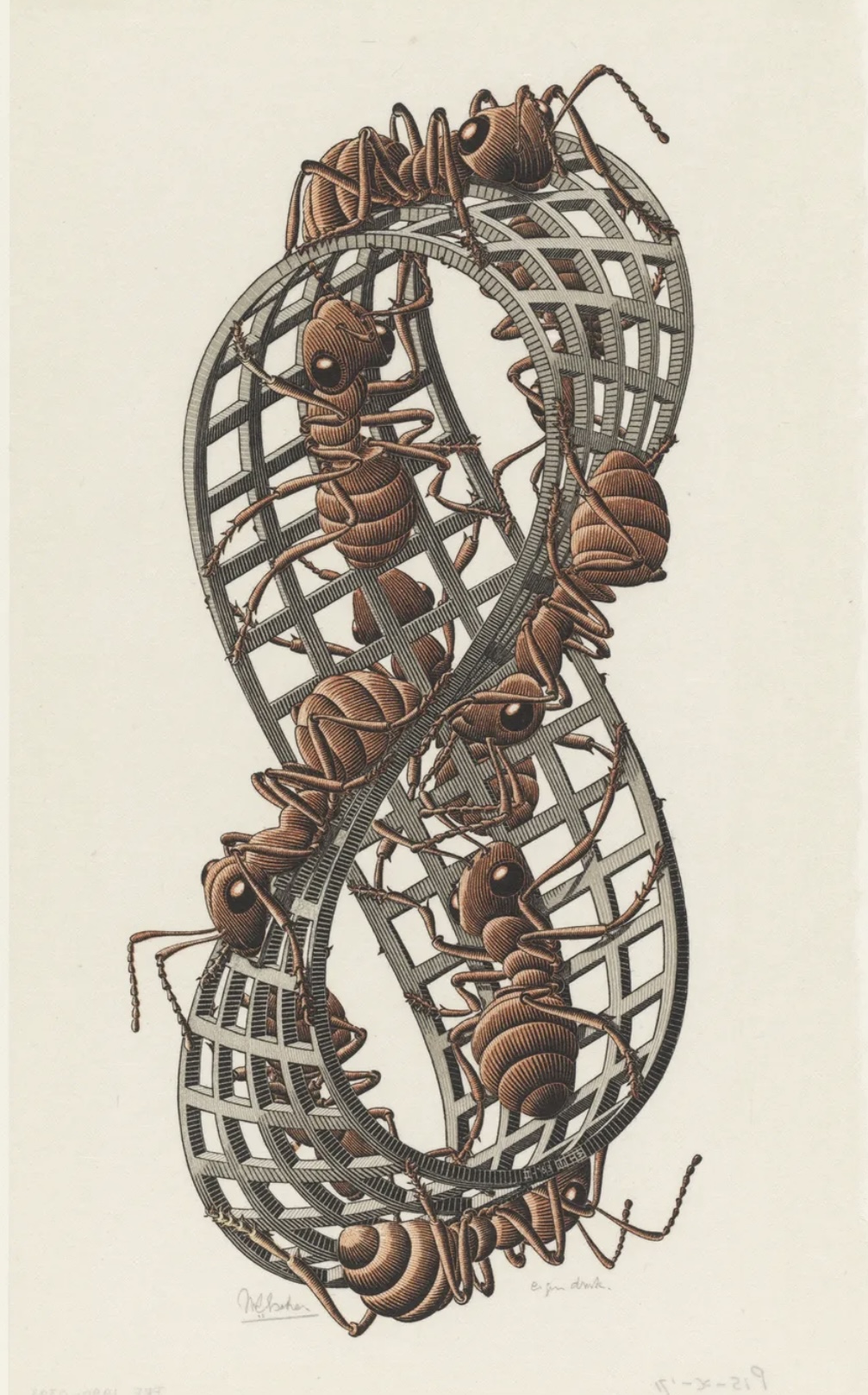
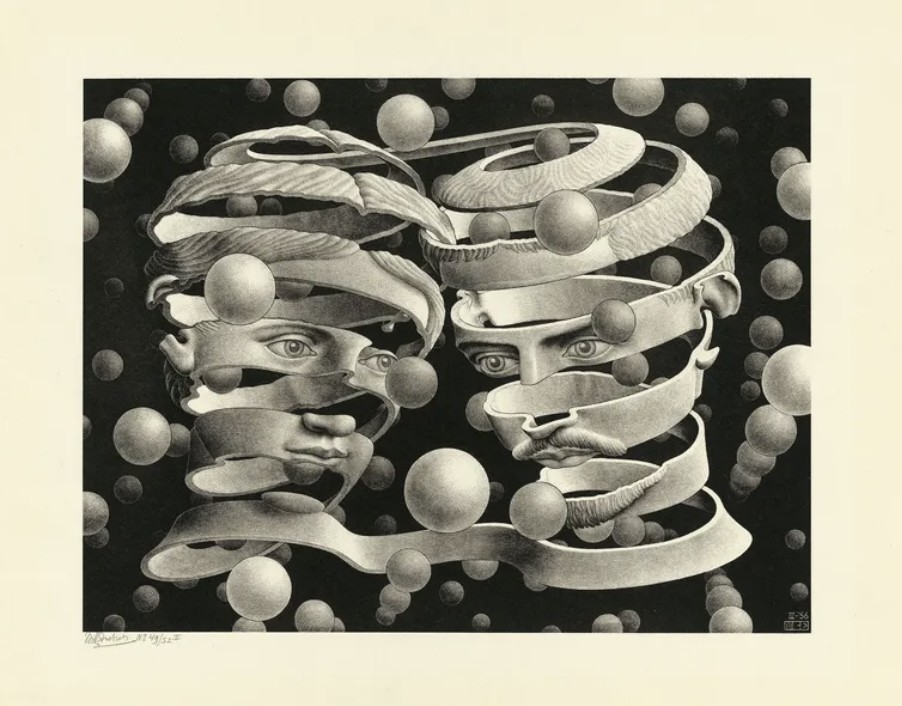
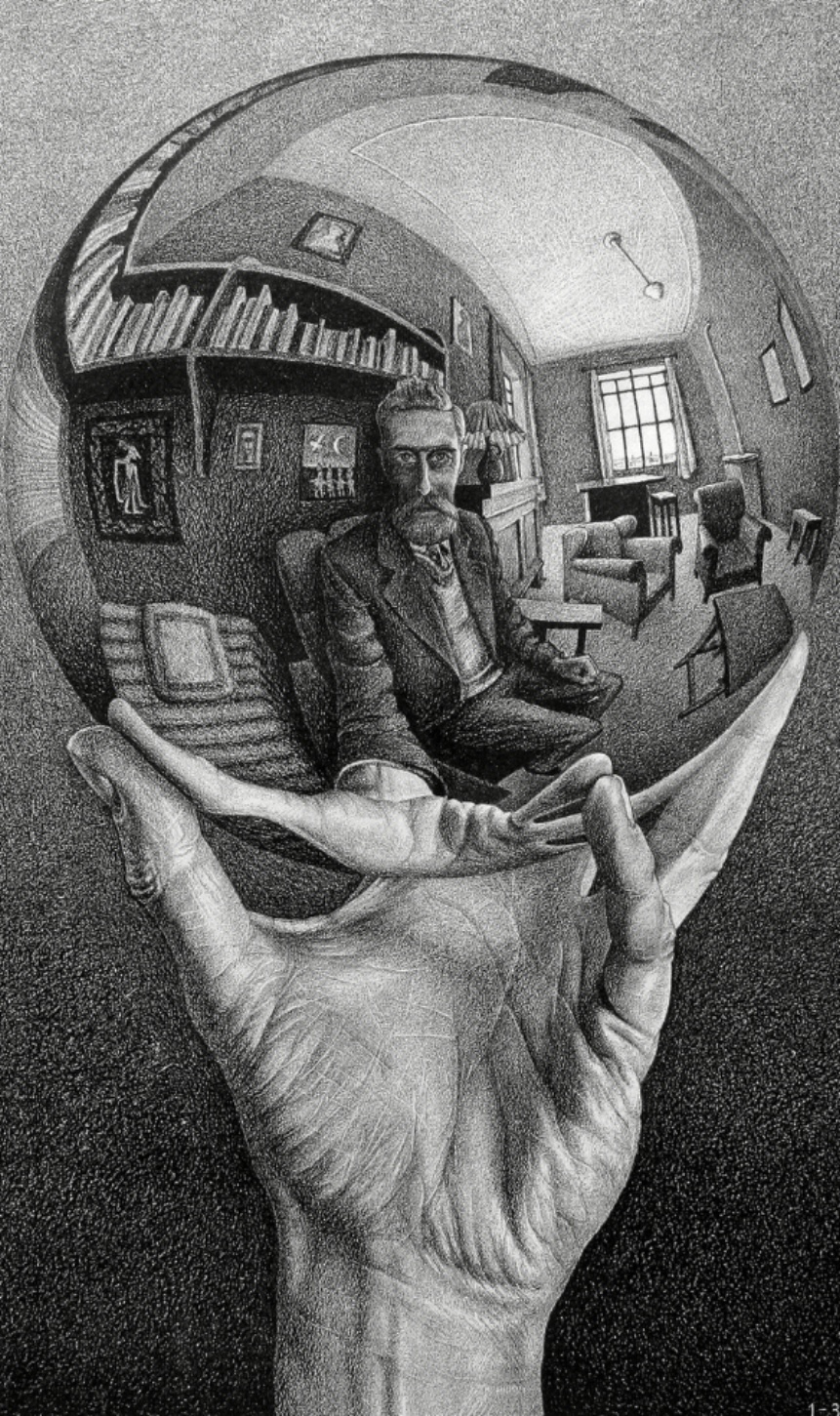
Maurits Cornelis Escher, or as he preferred to be called, M.C. Escher, is a fascinating artist who knew how to transform geometry and mathematics into art, through his tessellations, optical illusions and impossible worlds, but who was initially also a remarkable landscape painter.
The exhibition, curated by Jean-Hubert Martin and Federico Giudiceandrea, two of the leading experts on the artist, immerses us in the imaginative and astonishing world of this Dutch genius, born in 1898 in Leeuwarden, Netherlands.
Celebrated for his visionary creations, visual paradoxes, and infinite geometries, he has become an icon over time, not only for mathematicians and researchers, but also for the general public, captivated by the visual and conceptual power of his work. His creations represent a true convergence of the scientific world and artistic creation, profoundly influencing the worlds of design, graphic arts, film, advertising, fashion, and music even today.
From the 1950s onward, his popularity steadily increased. Thanks also to his connections with the scientific and academic world, various journals began to dedicate articles and reviews to him. In the United States, the hippie movement appropriated his works, modifying and reproducing them on posters and T-shirts, in a psychedelic style.
The exhibition immerses us in his work and its progression toward abstraction, impossible perspectives, and astonishing, sometimes disconcerting, representations of seemingly plausible worlds irreconcilable with reality, which M.C. Escher managed to bring together in a unique artistic dimension.
Limoges enamels from the Renaissance and their collectors
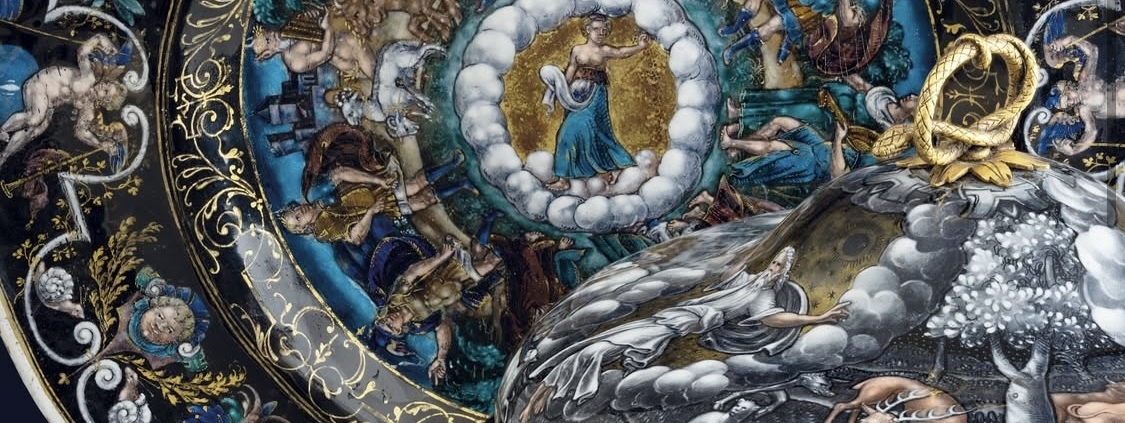
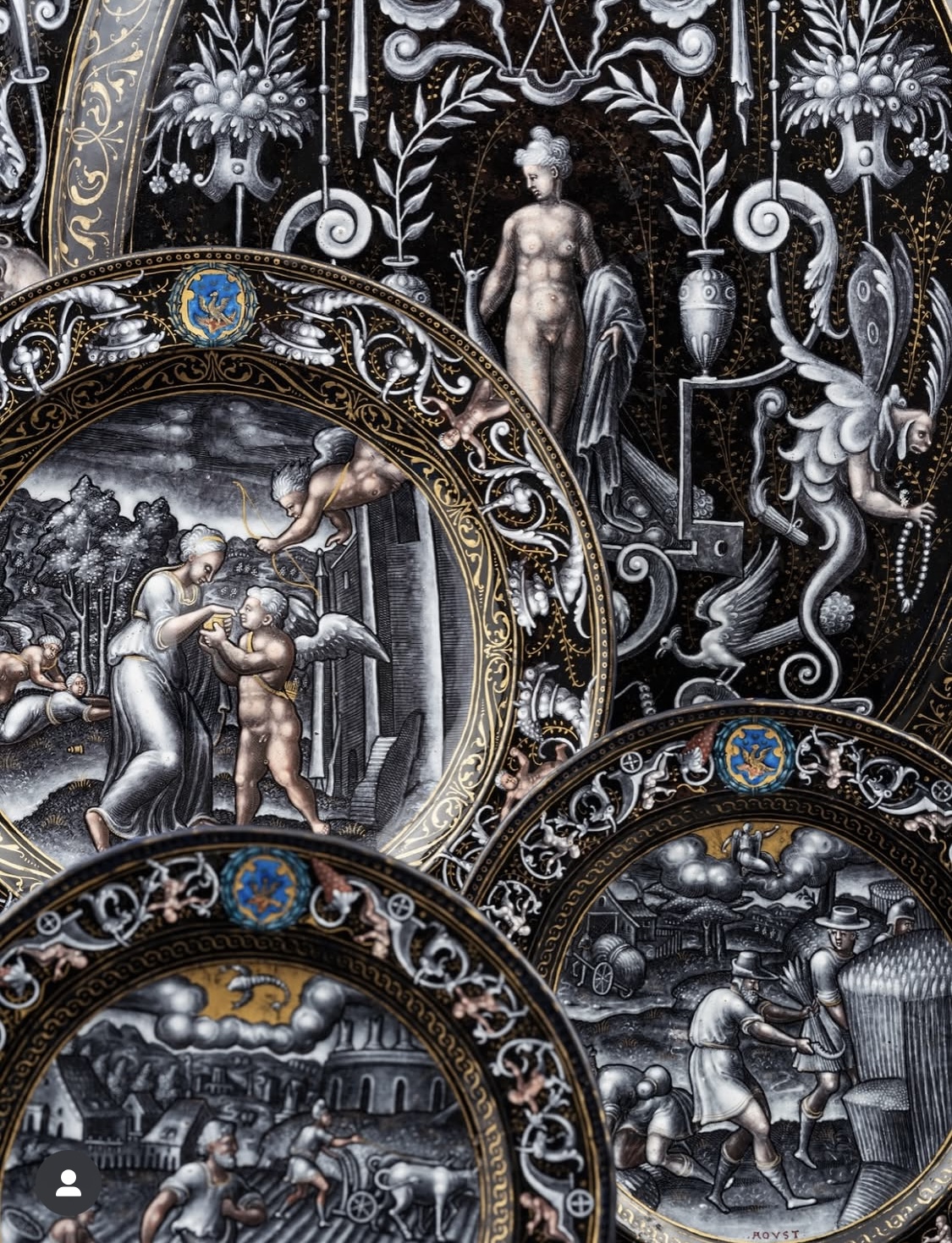
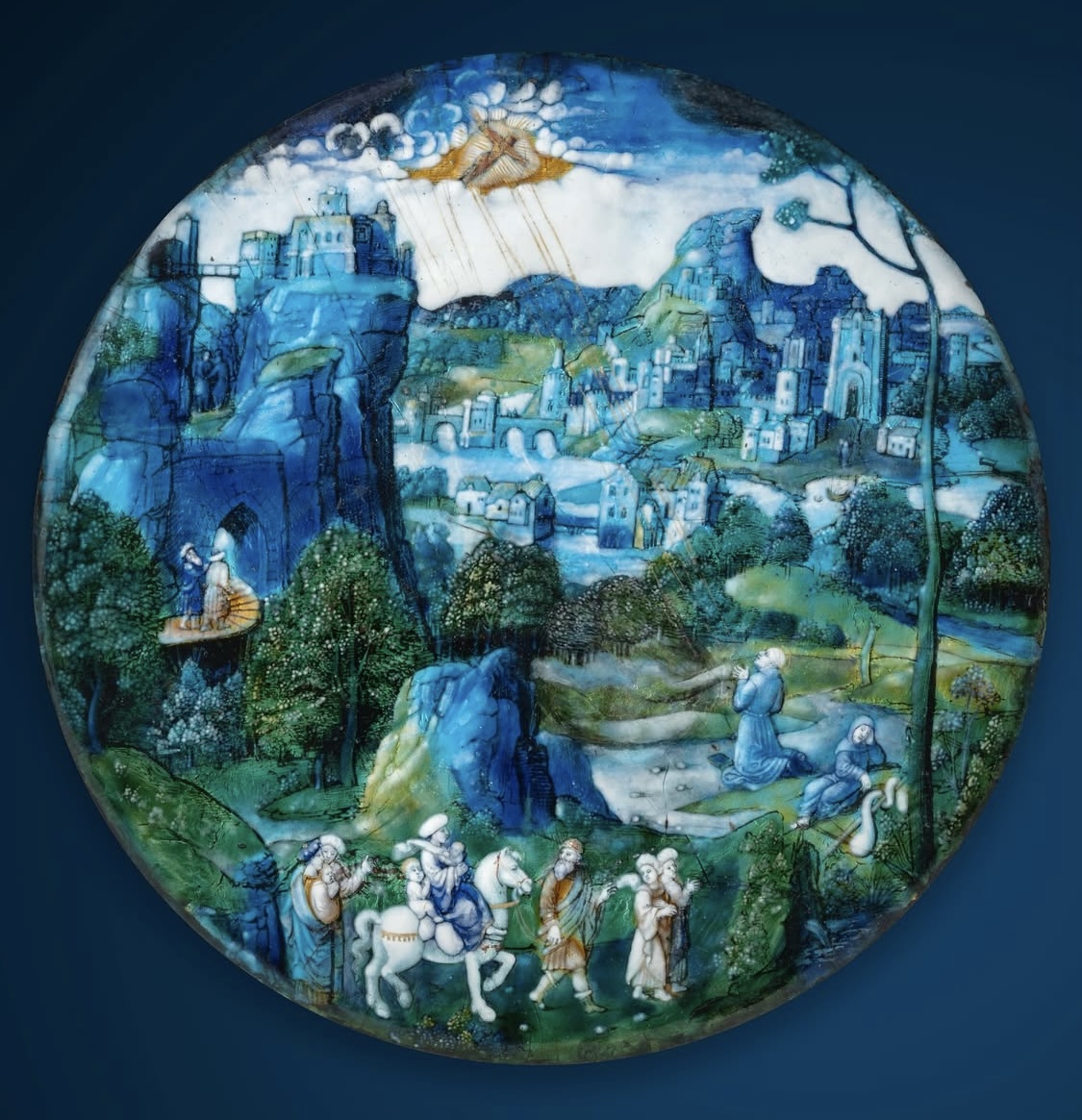
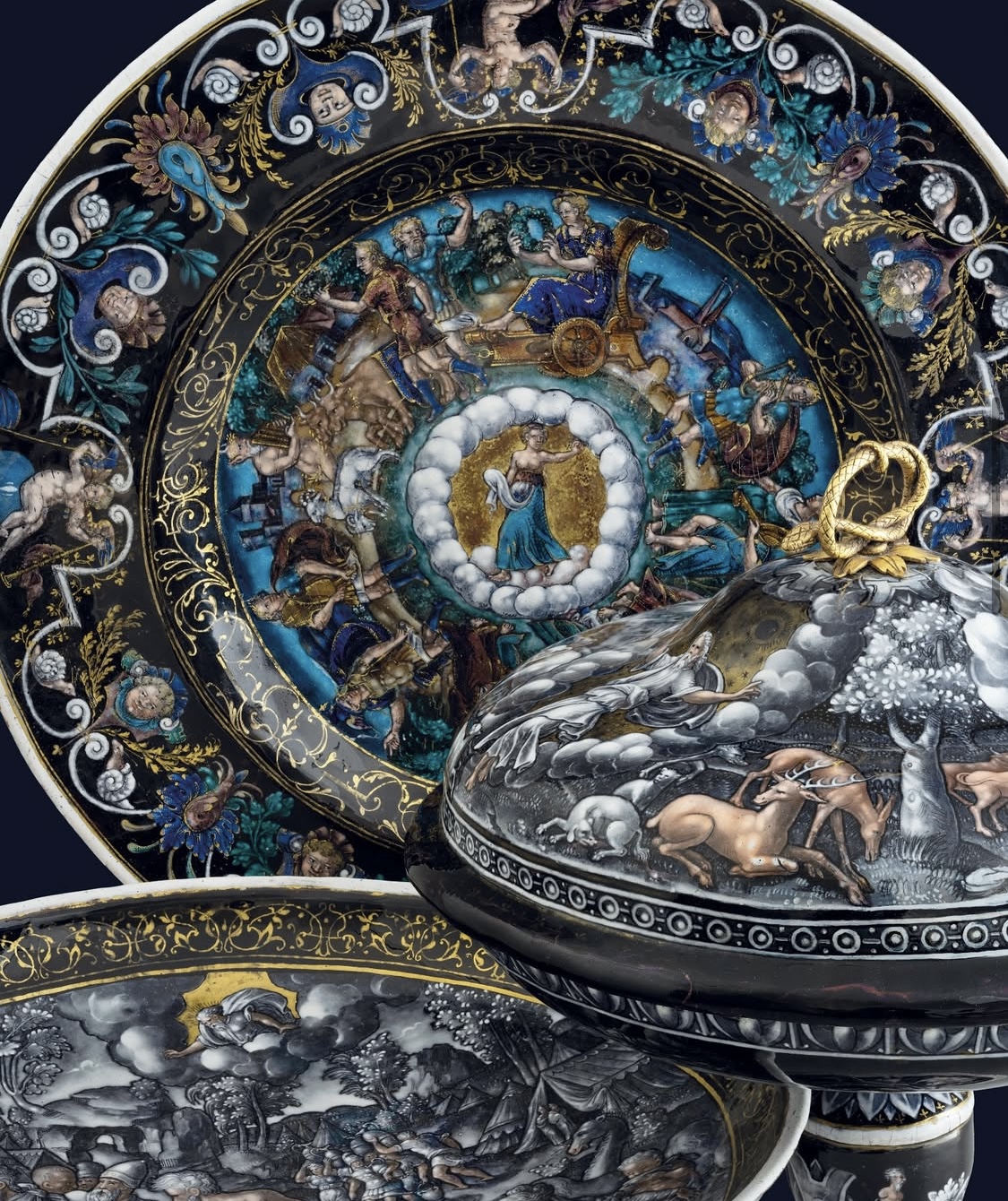
Limoges enamels from the Renaissance have fascinated people for five centuries with their enduring brilliance and their ability to transcend time. The new exhibition at Galerie Kugel traces their history, as well as that of their passionate and visionary collectors.
In an 1866 poem addressed to the enamel painter Claudius Popelin, Théophile Gautier celebrates “the imperishable enamel”—this vitrified material whose brilliance defies the centuries. At the end of the 15th century, Limoges, already renowned for its medieval enamels, developed a new way of painting on copper. The works gathered in this exhibition cover a century of excellence, from 1520 to 1620, marked by the rise of this distinctly French art. Copper, coated with colored glass fired in a kiln, produces a smooth, glossy, and unalterable surface: neither light, nor air, nor time can alter its deep colors and the delicate golds enhanced by the brush. Thus, one holds in one’s hands an imperishable image, in the most concrete sense: unalterable, it will not fade.
Renaissance Limoges enamels have long been a specialty of the Kugel Gallery. In the 1990s, Hubert de Givenchy sold his famous Boulle cabinet with its Apollo chariot and the enamel collection it contained to Alexis and Nicolas Kugel. He had an overflowing passion for these pieces, particularly those in grisaille, bucking the trend of a then-dormant market, and had assembled a remarkable collection. Presented at the 1994 Biennale des Antiquaires, it was not dispersed: the Kugel brothers sold it all at once, in the opening hours, to Pierre Bergé. The news of this spectacular sale was enough to revitalize the market for Renaissance Limoges enamels.
The exhibition offers the general public a unique opportunity to discover over 70 pieces. From the creation of these objects to the present day, the richly illustrated catalogue accompanying the exhibition will trace periods of enthusiasm and neglect, demonstrating that in each generation, a few curious and discerning collectors are all it takes to revive this timeless beauty. Many of their names are still familiar: the various branches of the Rothschild family,
J. P. Morgan, Henry Clay Frick, William Randolph Hearst, Hubert de Givenchy, Pierre Bergé, and Yves Saint Laurent… And, of course, dealers like the Kugels, who have rediscovered the enduring brilliance of this art.
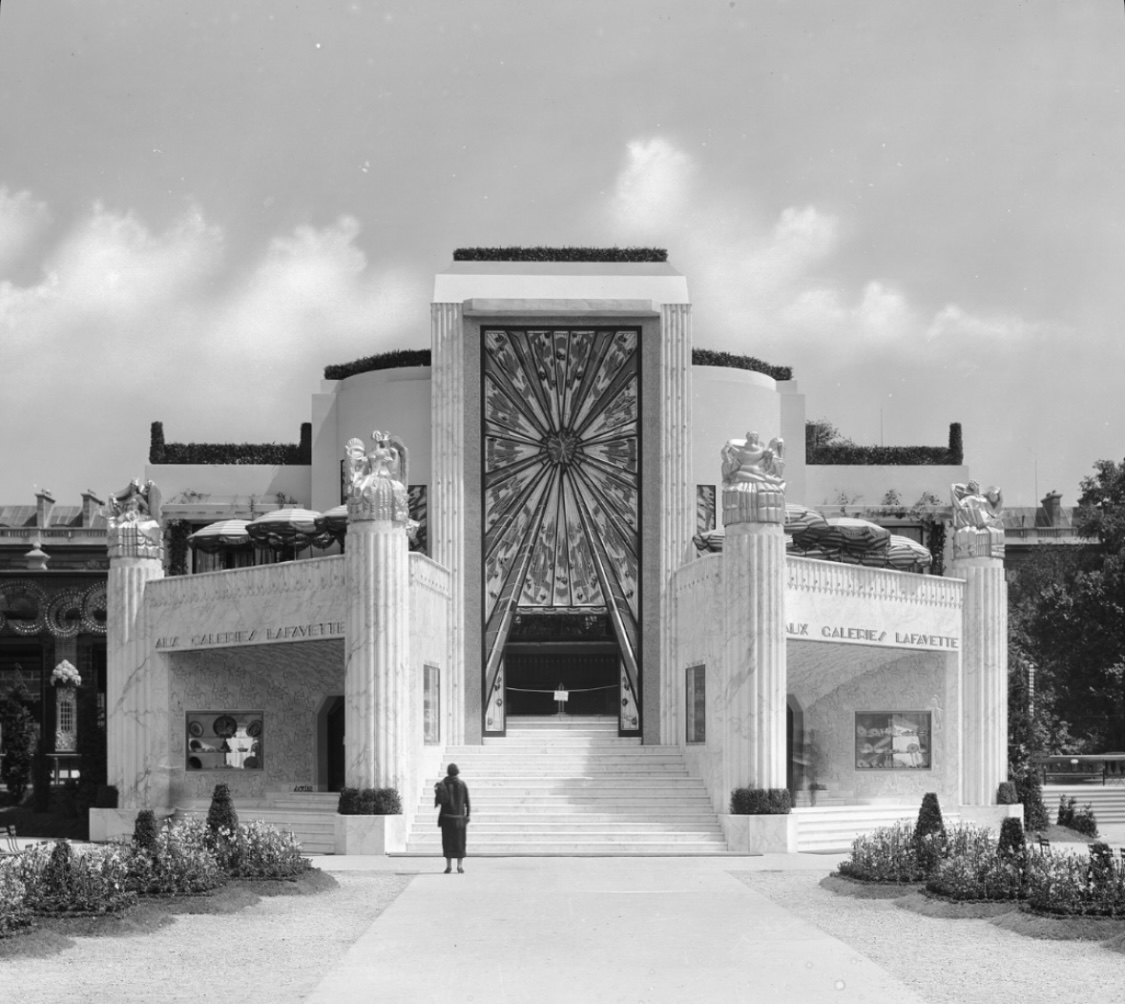
Born in the 1910s in the wake of European reflections on ornamentation, Art Deco drew on the research of Art Nouveau. It fully developed in the 1920s and was distinguished by a structured, geometric, and elegant aesthetic that combined modernity and preciousness.
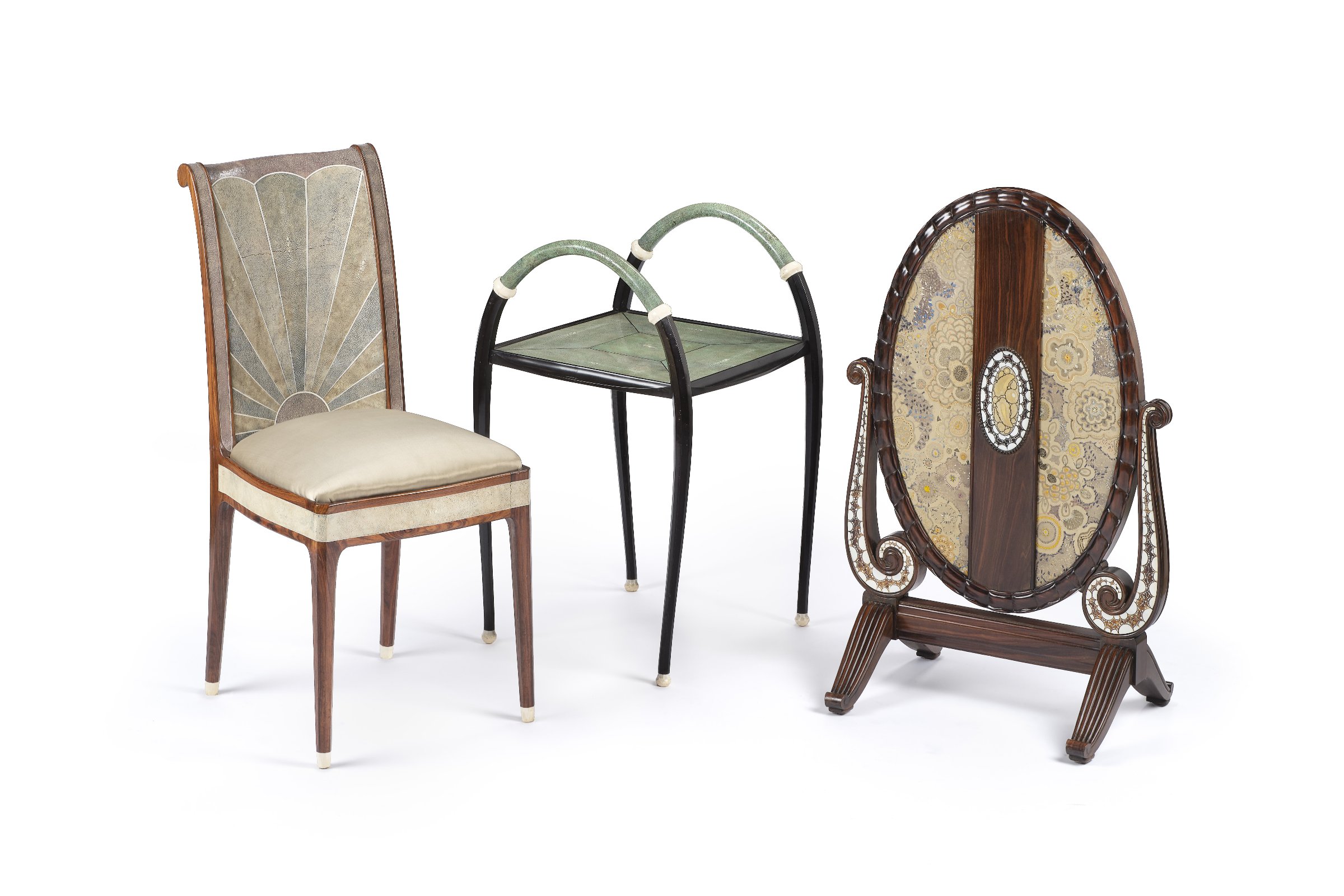
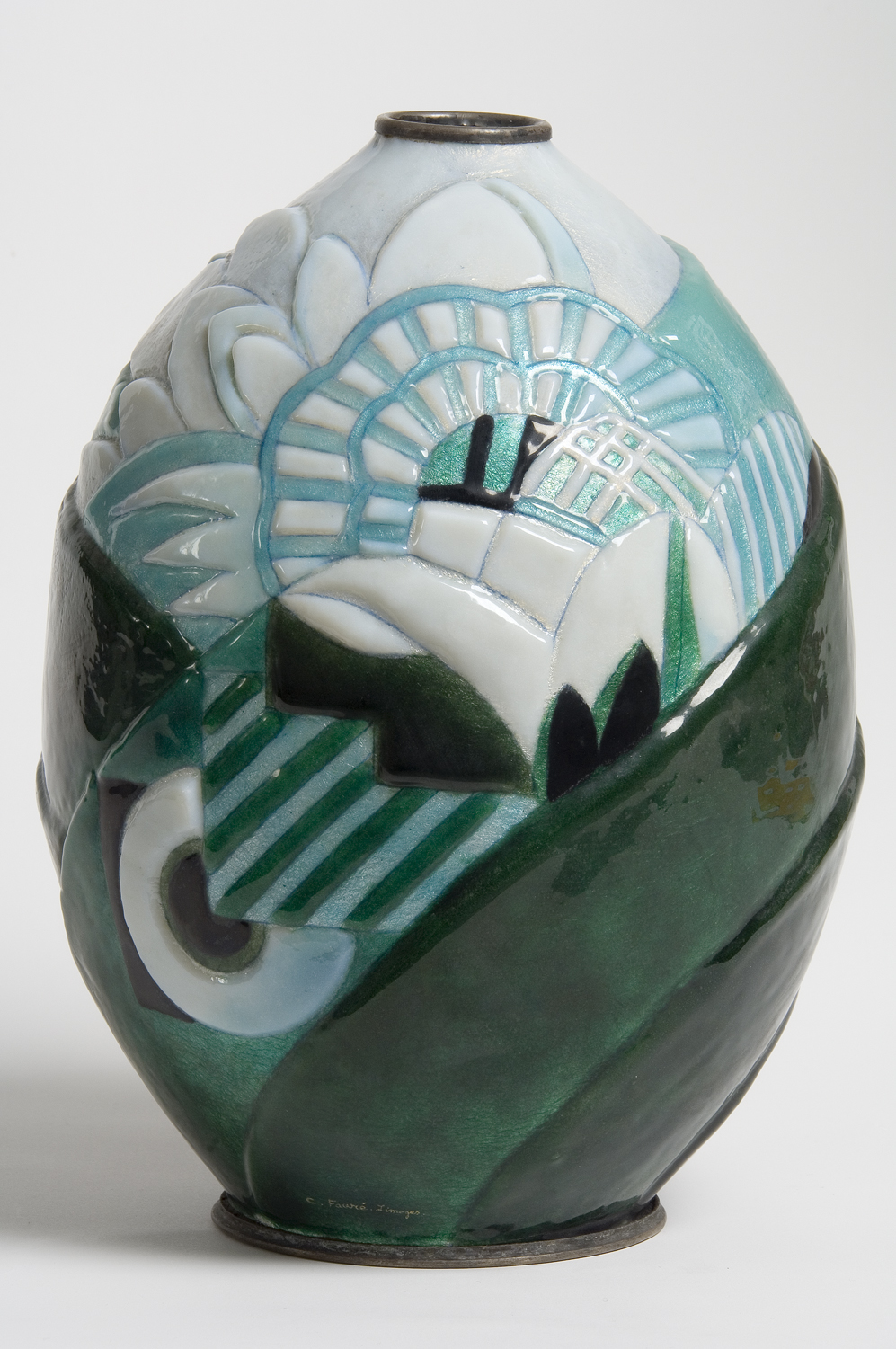
Its forms appealed to decorators, architects, and manufacturers of the time, but often remained reserved for the wealthy, due to the high cost of materials and the finesse of the techniques used at the time. Art Deco embodied a prolific period, marked by a thirst for novelty, speed, and freedom. It touches on all areas of creation: furniture, fashion, jewelry, graphic arts, architecture, transportation, etc. The exhibition thus revisits the different trends of Art Deco, between the assertive geometric abstraction of Sonia Delaunay and Robert Mallet-Stevens, the formal purity of Georges Bastard and Eugène Printz, or the taste for the decorative of Clément Mère and Albert-Armand Rateau.
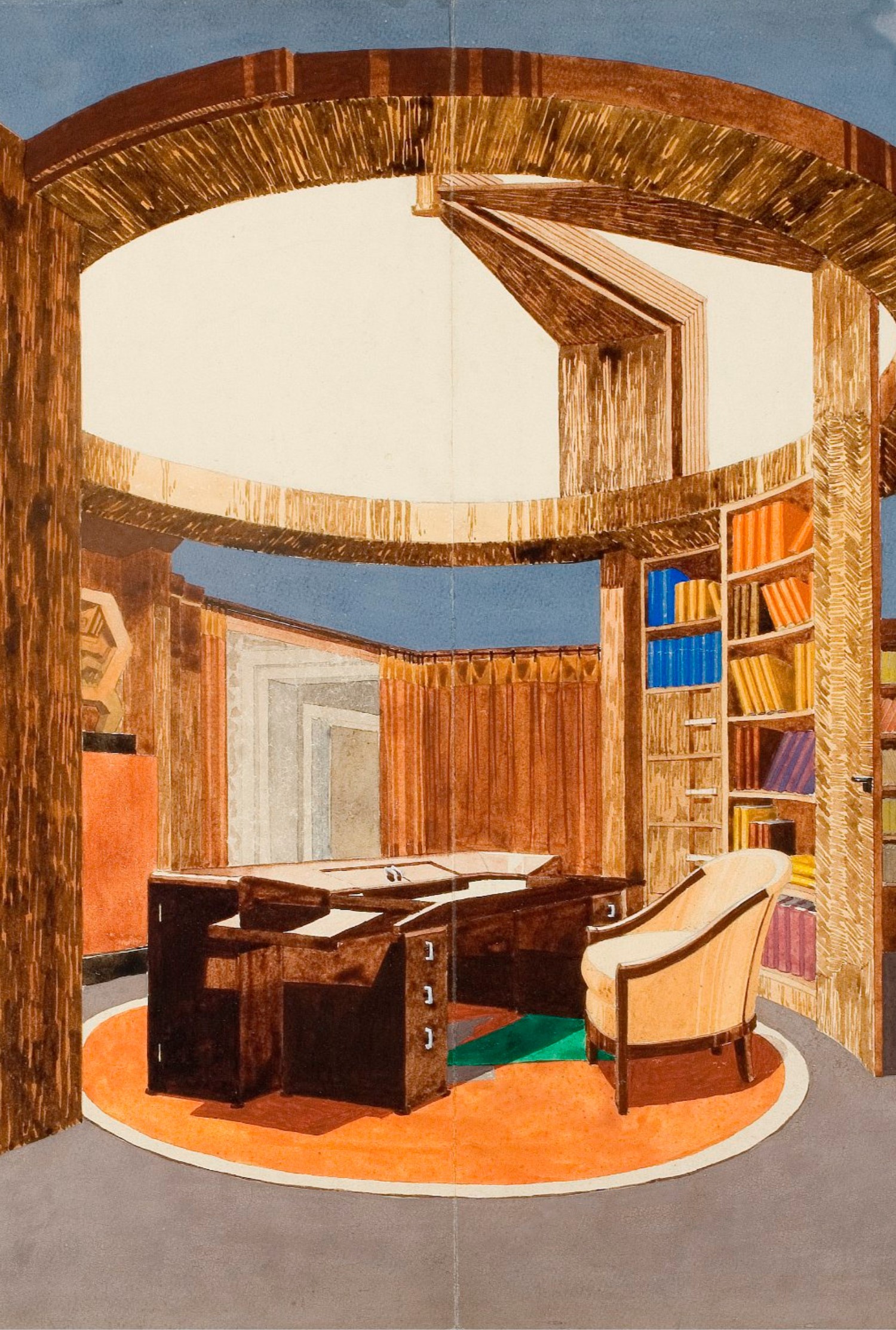
The Musée des Arts Décoratifs has played a central role in the recognition of Art Deco from its very beginnings, hosting the salons of the Société des Artistes Décorateurs and building an exceptionally rich collection. The exhibition “1925-2025. One Hundred Years of Art Deco” draws on this remarkable collection, enriched with works on loan from major institutions and private collections, to present emblematic pieces: André Groult’s shagreen chiffonier, the refined creations of Jacques-Émile Ruhlmann, and Pierre Chareau’s spectacular desk-library designed for the French Embassy, reinstalled for this occasion. Three leading designers – Jacques-Émile Ruhlmann, Eileen Gray and Jean-Michel Frank – are highlighted, each embodying a unique facet of Art Deco.
Since the late 1960s, the museum has also established itself as a pioneer in the rediscovery of the style, notably with the exhibition “The 25 Years,” which revived the interest of both the public and specialists. This revival continued in the following decades, spearheaded in the 1970s by major figures such as Yves Saint Laurent, an Art Deco enthusiast, and his associate, the decorator Jacques Grange, to whom the museum gave carte blanche within the exhibition.
Organized along a vast chronological and thematic path that unfolds in the nave and in the galleries on the second and third floors of the museum, the exhibition traces the origins, peak, development, and contemporary reinterpretations of Art Deco. It reveals the richness and relevance of a constantly evolving movement through more than a thousand works.
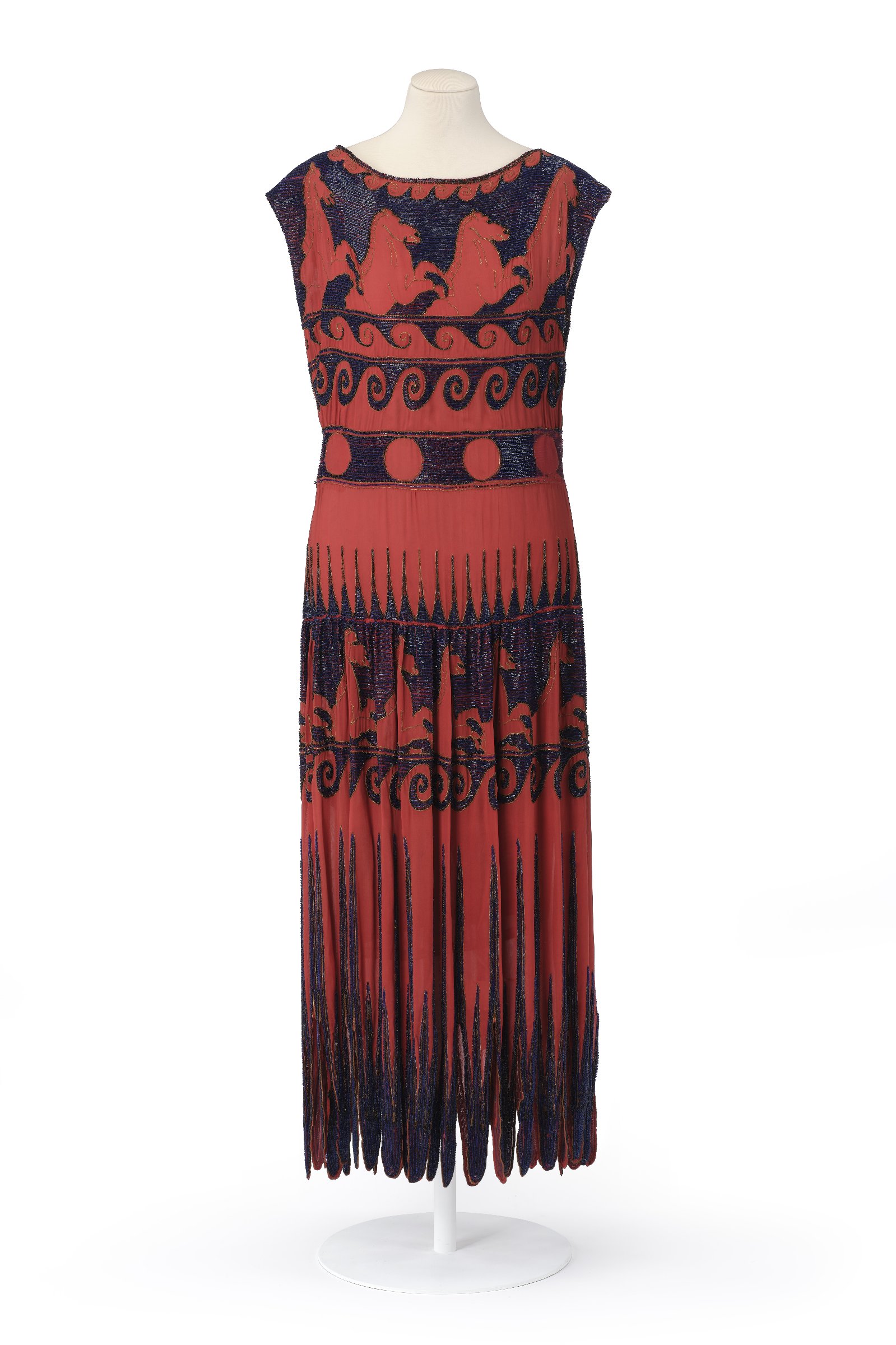
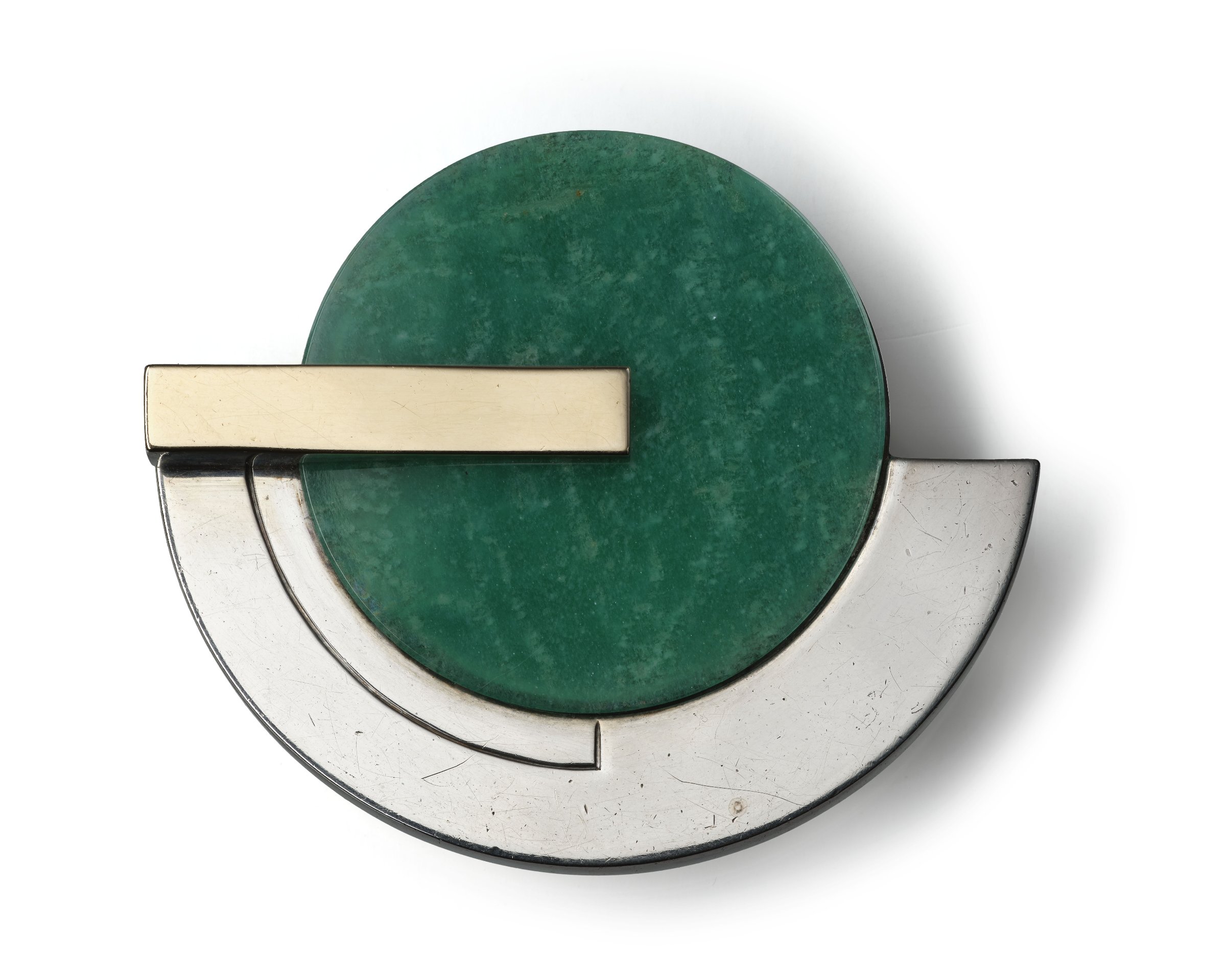
All areas of artistic creation and decoration are presented. The remarkable lacquers of Jean Dunand rub shoulders with the glassworks of François Décorchemont, the tableware industry, tableware, and jewelry, illustrated by strikingly modern pieces, notably a series of brooches by Raymond Templier and Jean Desprès. The fundamental role of drawing is highlighted through decorative, interior design, and furniture projects, notably Groult’s designs for Madame’s bedroom in the French Embassy pavilion, which interact with the chiffonier, one of its rare vestiges. The world of fashion and textile arts is represented by Marguerite Pangon’s cape, Madeleine Vionnet’s dress with little horses, a jacket made by Sonia Delaunay, a dress by Jeanne Lanvin, as well as textile designs and store window designs.
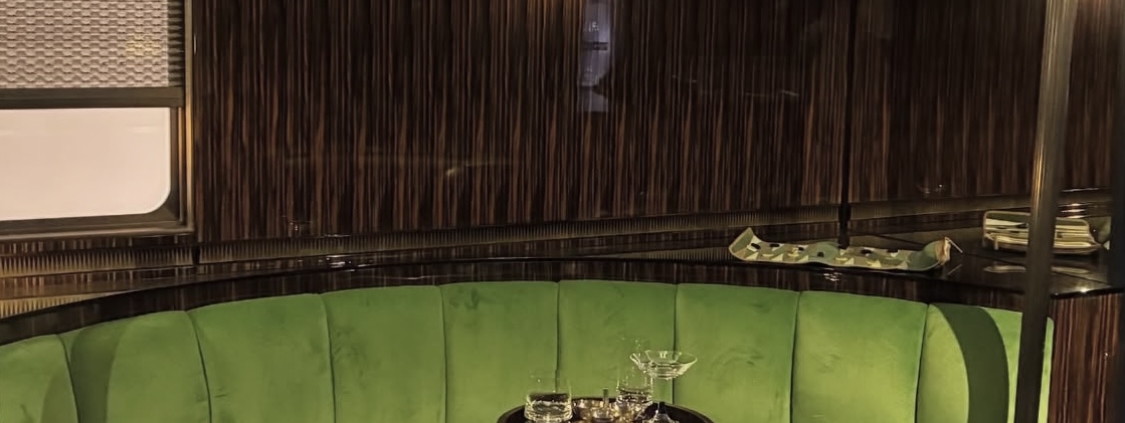
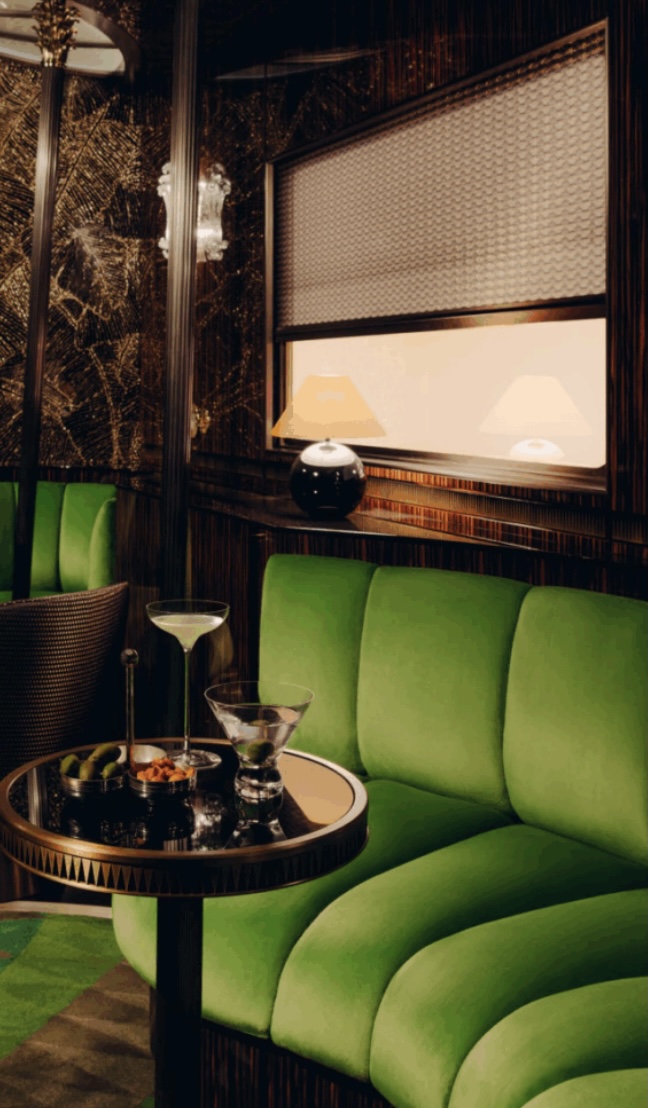
A symbol of refined travel and French savoir-faire, the Orient Express reached its golden age in the 1920s. Decorated by great artists such as René Prou and René and Suzanne Lalique, it became a rolling manifesto of Art Deco aesthetics. One hundred years later, this legend is reborn. The exhibition exclusively unveils, in the Nave of the museum, life-size interior models of the future Orient Express, reimagined by artistic director Maxime d’Angeac, interacting with a 1926 Art Deco cabin from the museum’s collections. Drawing on the heritage of the style and the world of artistic crafts, his project fuses excellent craftsmanship, technological innovation, and contemporary design to invent the train of the 21st century. In 2025, as in 1925, Art Deco inspires a luxury focused on the future.
An exceptional collection of pieces from the Maison Cartier, some presented for the first time in dialogue with the museum’s collections, allows visitors to gauge the impact of this style on the field of jewelry. More than 80 objects—necklaces, tiaras, boxes, watches, kits, drawings, and archival documents—illustrate the formal inventiveness and symbolic richness of the Maison’s creations. Between rigorous geometry and sensual materials, motifs inspired by the Orient and technical innovation, these pieces embody the aesthetic of Art Deco luxury, while reflecting the evolving tastes of a cosmopolitan international clientele seeking distinction and modernity. A century after its emergence, Art Deco continues to inspire with its modernity, elegance, and freedom of form. By combining the perspectives of yesterday and today, the exhibition demonstrates how this movement remains vibrant, resonating with contemporary aesthetic questions and expertise. More than a tribute to the past, it invites us to rethink Art Deco as an ever-fertile source of creation and innovation.
https://www.germanopratines.fr/wp-content/uploads/2025/10/100-ANS-DART-DECO-MAD-Paris-5.jpg14721125Hélènehttps://www.germanopratines.fr/wp-content/uploads/2019/12/logo-germanopratines-3-1030x221.pngHélène2025-10-20 20:31:342025-10-20 20:45:27ONE HUNDRED YEARS of Art Deco
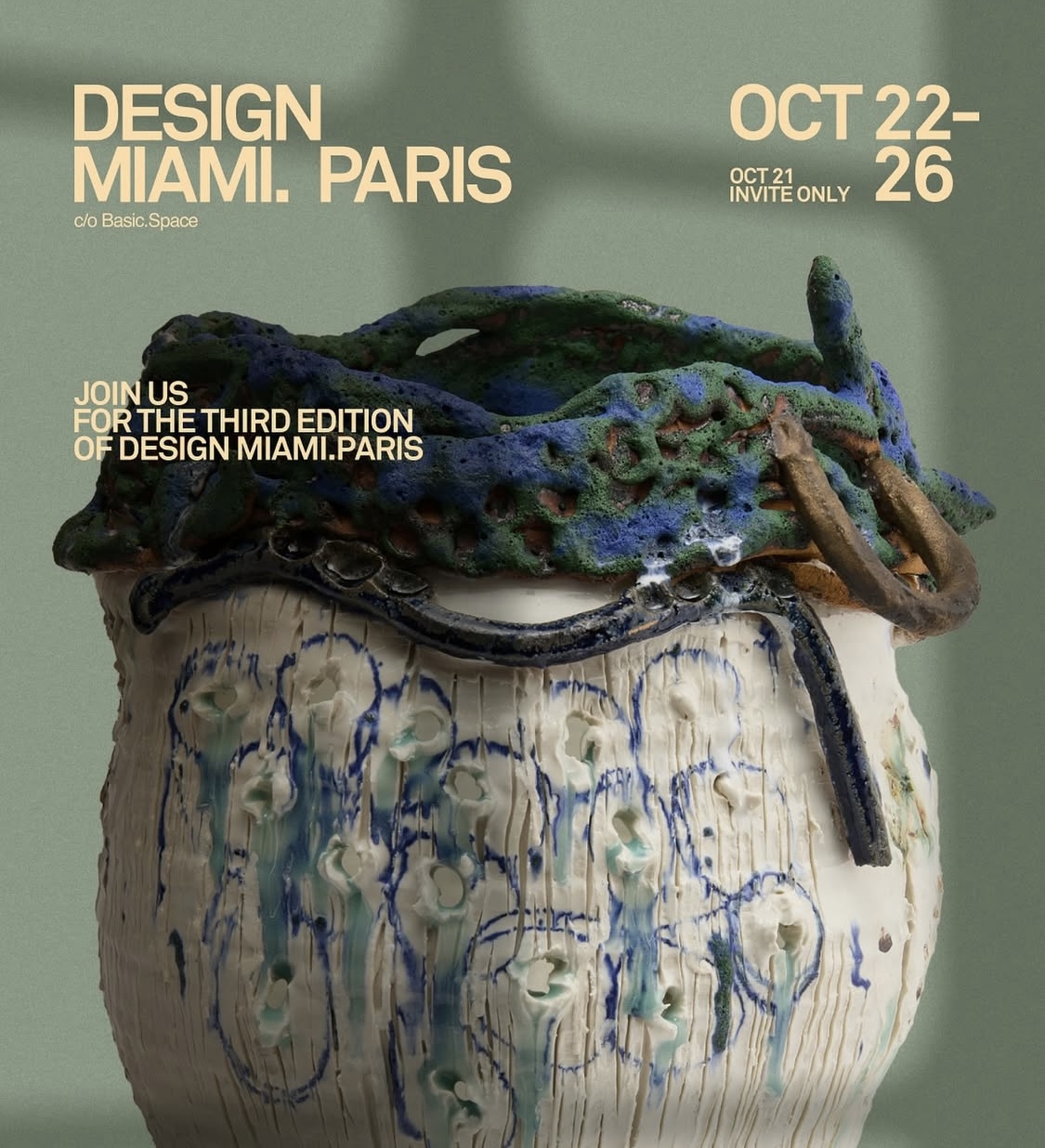
From October 21 to 26, 2025, the French capital vibrates to the rhythm of contemporary creation. Between Art Basel Paris, held under the glass roof of the Grand Palais, and Design Miami/Paris, nestled in the majestic setting of the Hôtel de Maisons on the Left Bank, Paris becomes the global epicenter of art and design.
Design Miami.Paris returns to the house and gardens of the Hôtel de Maisons for its third edition. This year’s program highlights examples of storytelling through collectible design, showcasing works that use materiality to create captivating visual narratives—a true celebration of material mythmaking.
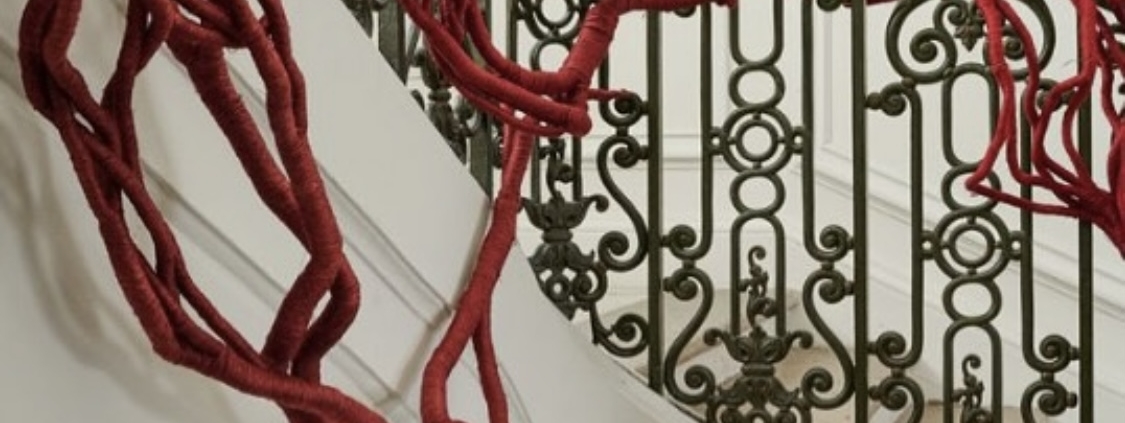
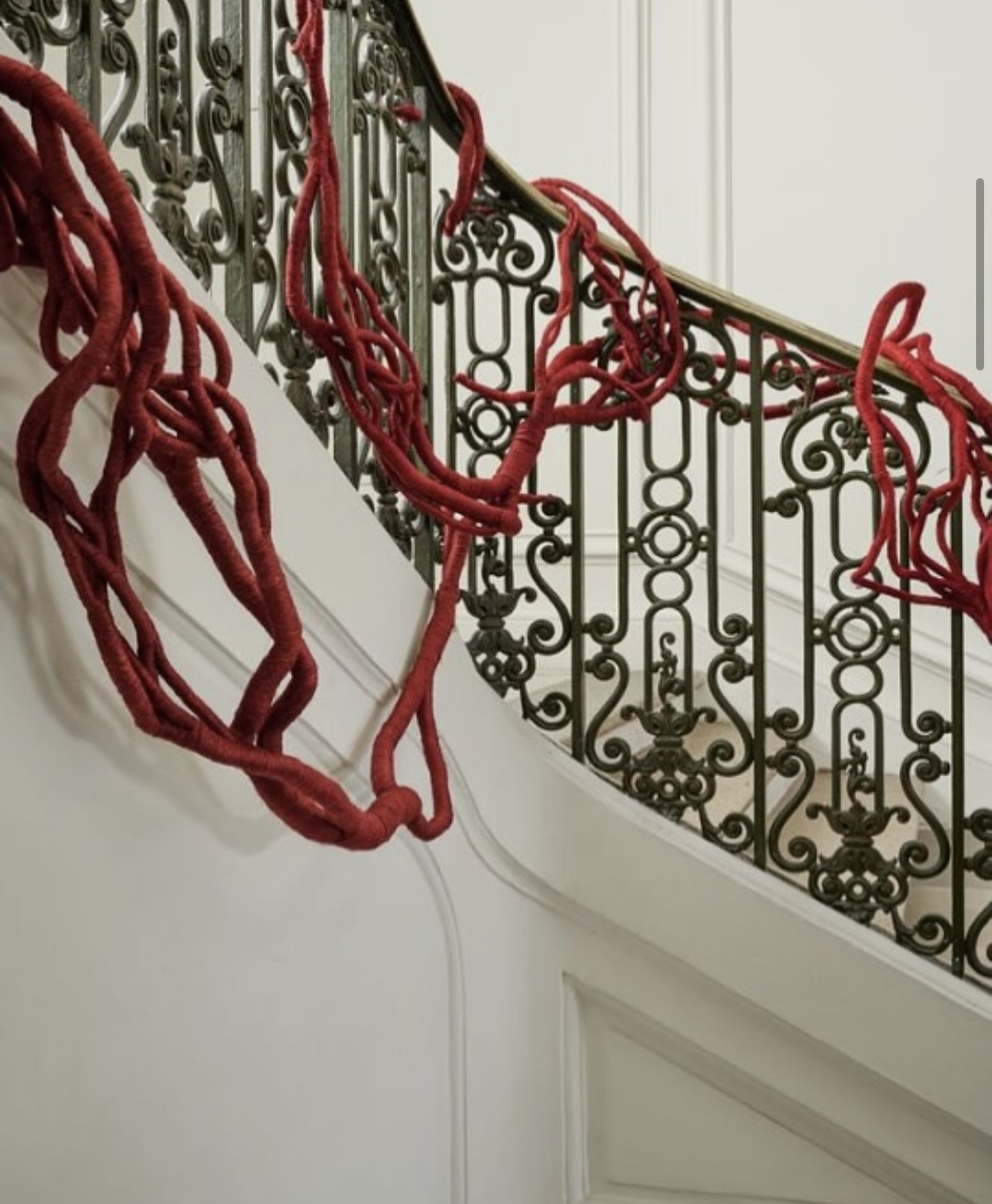
This year, for Design Miami.Paris’s “Design at Large” program, present in the courtyard, salons, and gardens of the Hôtel de Maisons, Maison Parisienne highlights “Embrassade en rouge opéra” (2024) by Aude Franjou. These radiant, tentacle-like forms snake their way across the balconies and metal arches of the hotel, their shades of red, orange, and yellow enhancing the natural beauty of the linen while contrasting with the neoclassical ironwork of the site.
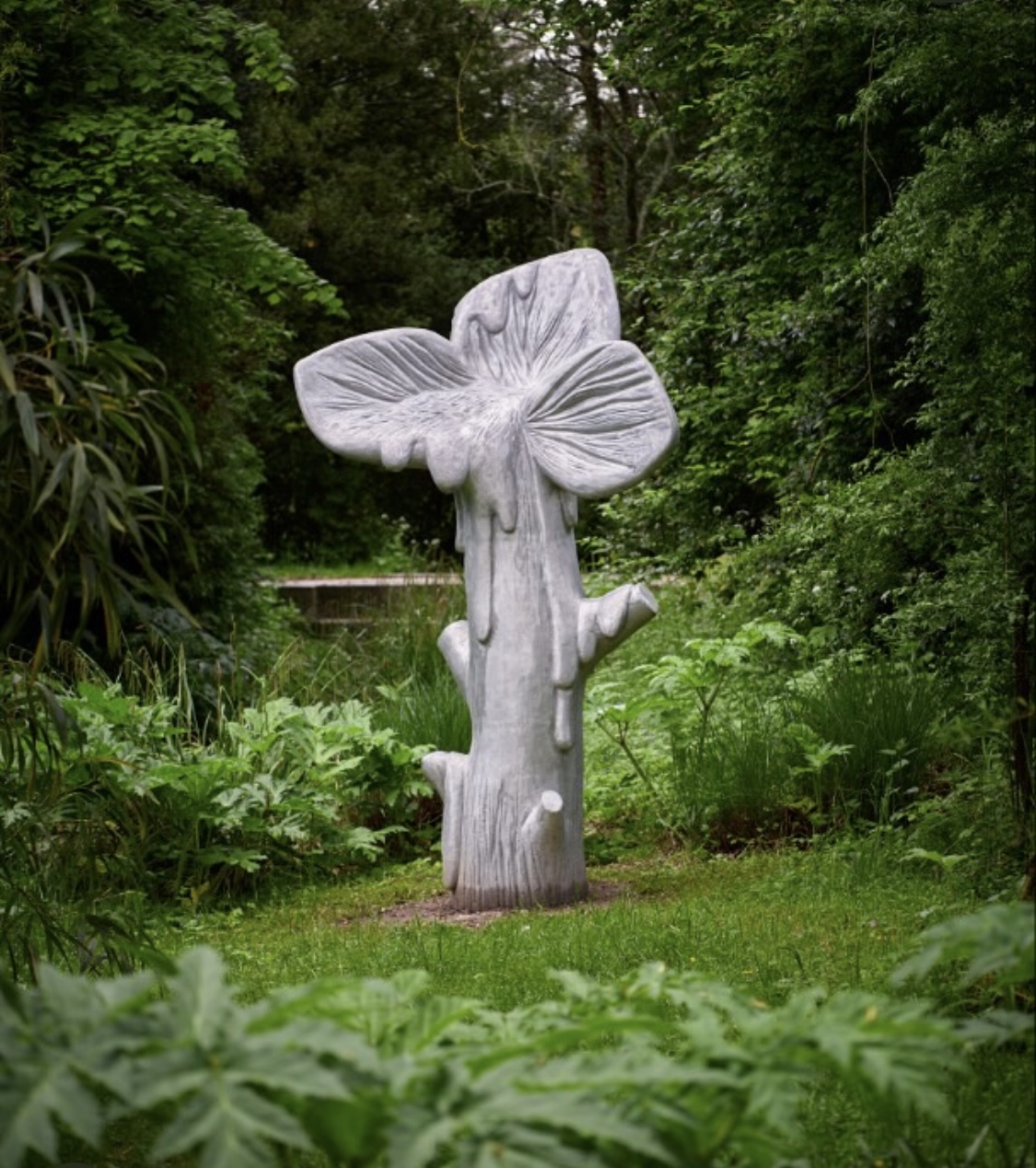
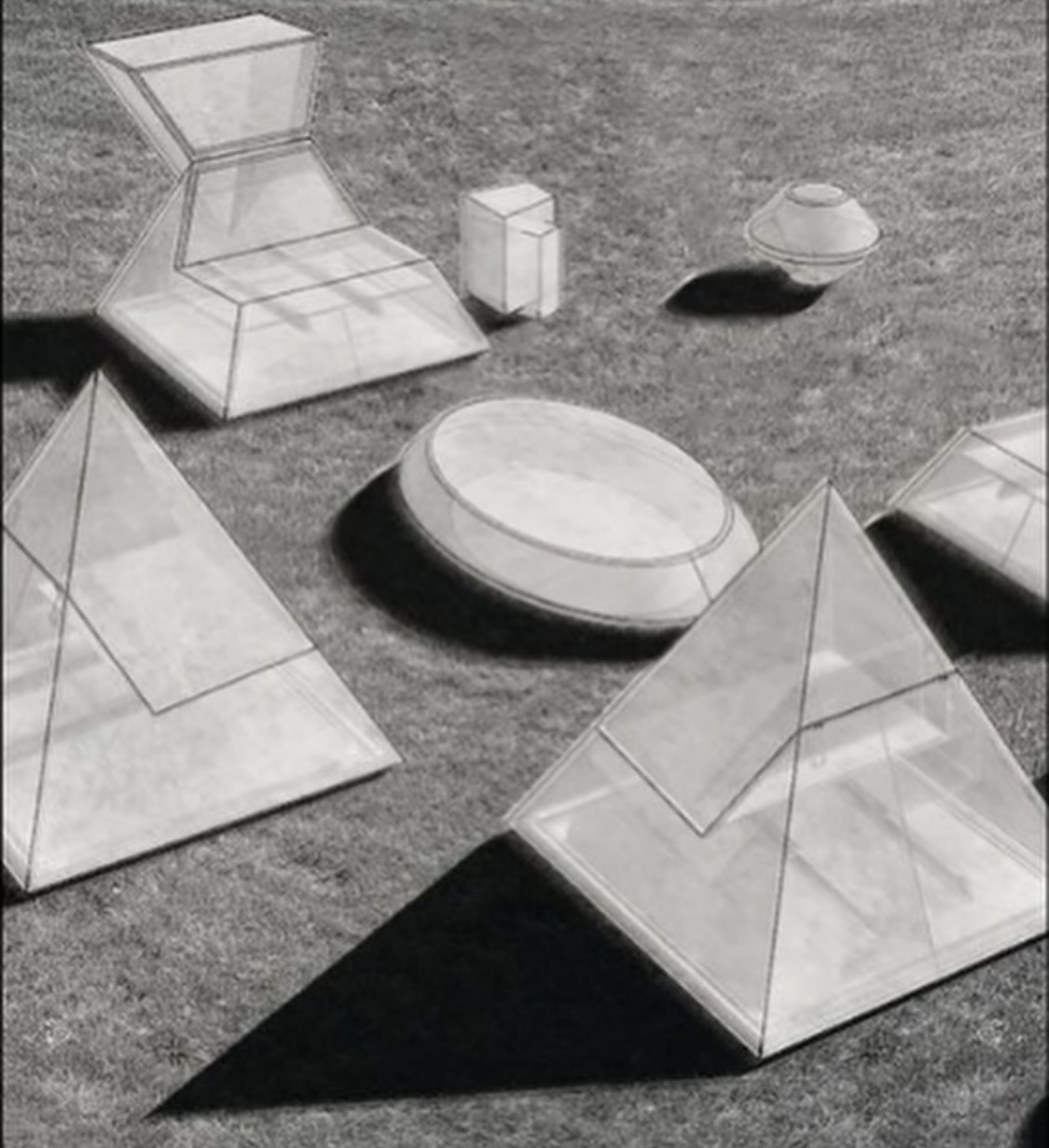
Lefebvre et Fils presents Feipel Bechameil’s “L’Immortelle,” a fantastical 2.8-meter aluminum tree, both hybrid and timeless, exhibited for the first time in a fair context after touring major European institutions. Ammann Gallery presents Satyendra Pakhalé’s “White Swan and Pouf,” a poetic interplay between sculpture and seating, combining biomorphic elegance and functional design. And for its first exhibition, Atraformstudio presents Pedro Reyes’ “Aerial Symmetry,” an installation of pyramidal structures evoking cosmic rhythms and ancient spatial compositions, with a central chair as a celestial landmark.
The galleries present:
Galerie Boccara | Galerie Carpenters Workshop | Galerie Chastel-Maréchal | Galerie Desprez Breheret | Galerie Downtown François Laffanour | Galerie Eric Philippe | Galerie kreo | Galerie Mitterrand | Galerie Meubles et Lumières | Galerie MiniMasterpiece | Galerie Patrick Seguin | Galerie SCÈNE OUVERTE | Galerie Yves Gastou | Galleria Rossella Colombari | Friedman Benda | Hostler Burrows | Karry Berreby | Lebreton | Maria Wettergren | Galerie Mondavilli Scagliola | Galerie Morentz | Nilufar | Patrick Parrish | Studio Pierre-Marie Giraud | Salon 94 Conception | Galerie latérale | Thomas Fritsch – Artrium Galerie | Galerie Maxime Flatry | Galerie Yves Macaux