
In the Dark

another vision of art from 1945 to the present day
Painting, sculpture, photography, video, cinema… The exhibition “In the Blur” provides a superb focus on the use of the indistinct in the visual arts, focusing on the period from 1945 to the present day. Its source is a masterpiece: Claude Monet’s Water Lilies, a large set installed since 1927 at the Musée de l’Orangerie, where blur reigns over the large aquatic compositions populated with water lilies. A true aesthetic choice by the master of Impressionism. This intriguing fog has since inspired many artists using various techniques. The thematic journey of the exhibition is at once sensitive, historical, poetic and political.
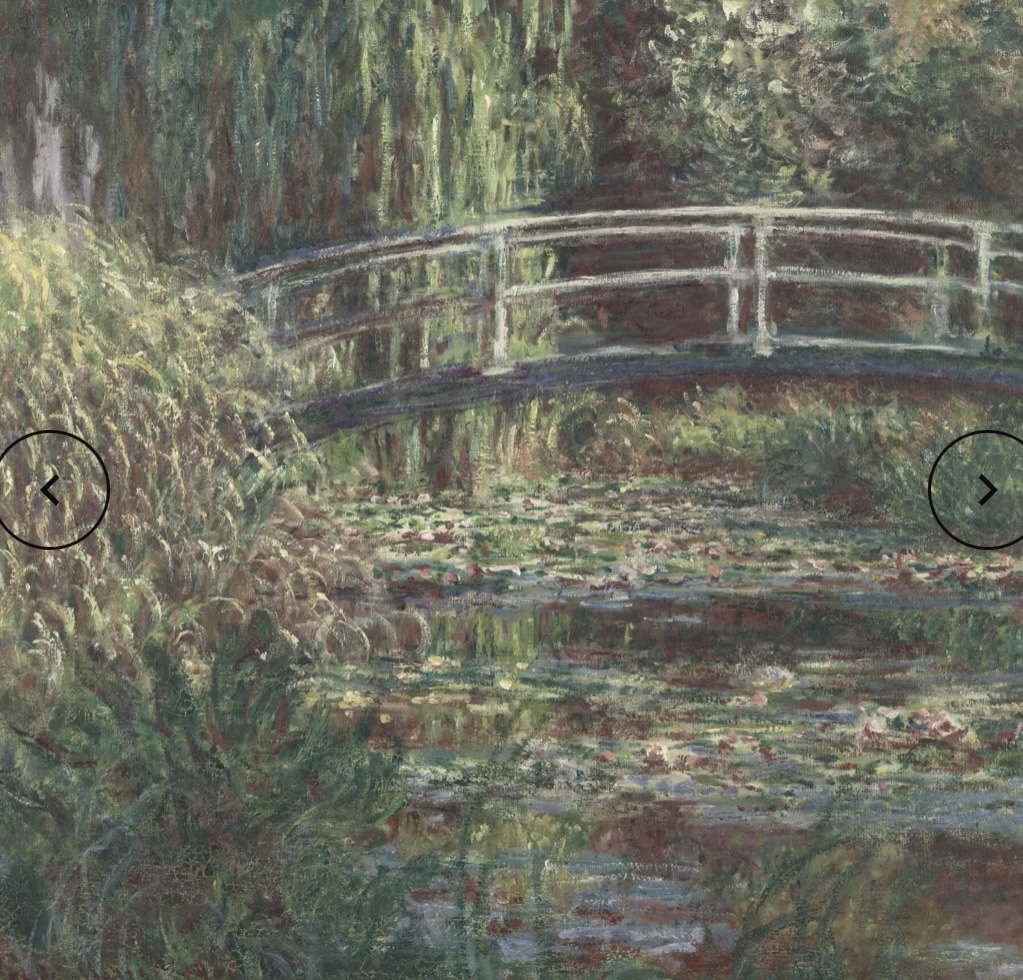
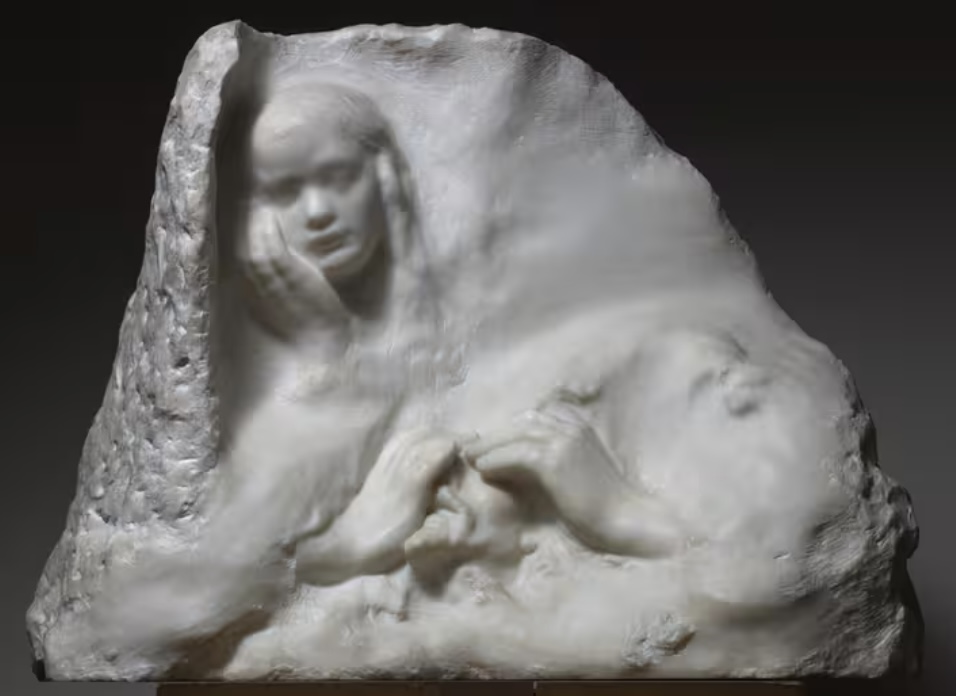
In the first room, as a prologue, very different works interact: the oldest, a misty landscape painted by William Turner around 1845, sits next to Claude Monet’s Water Lily Pond, Pink Harmony and a transparent condensation cube by conceptual artist Hans Haacke, trapping both the mist and the instability of our environment. Auguste Rodin’s block of white marble proves that blur and sculpture are not mutually exclusive, as one might think. The artist blurs the contours of his marbles, making the material vibrate.
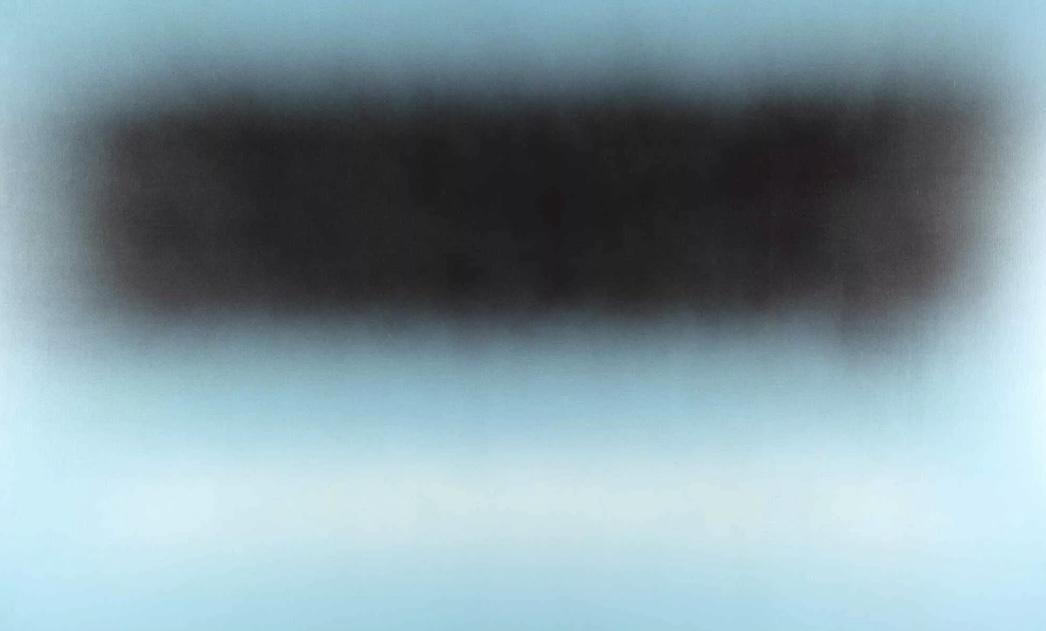
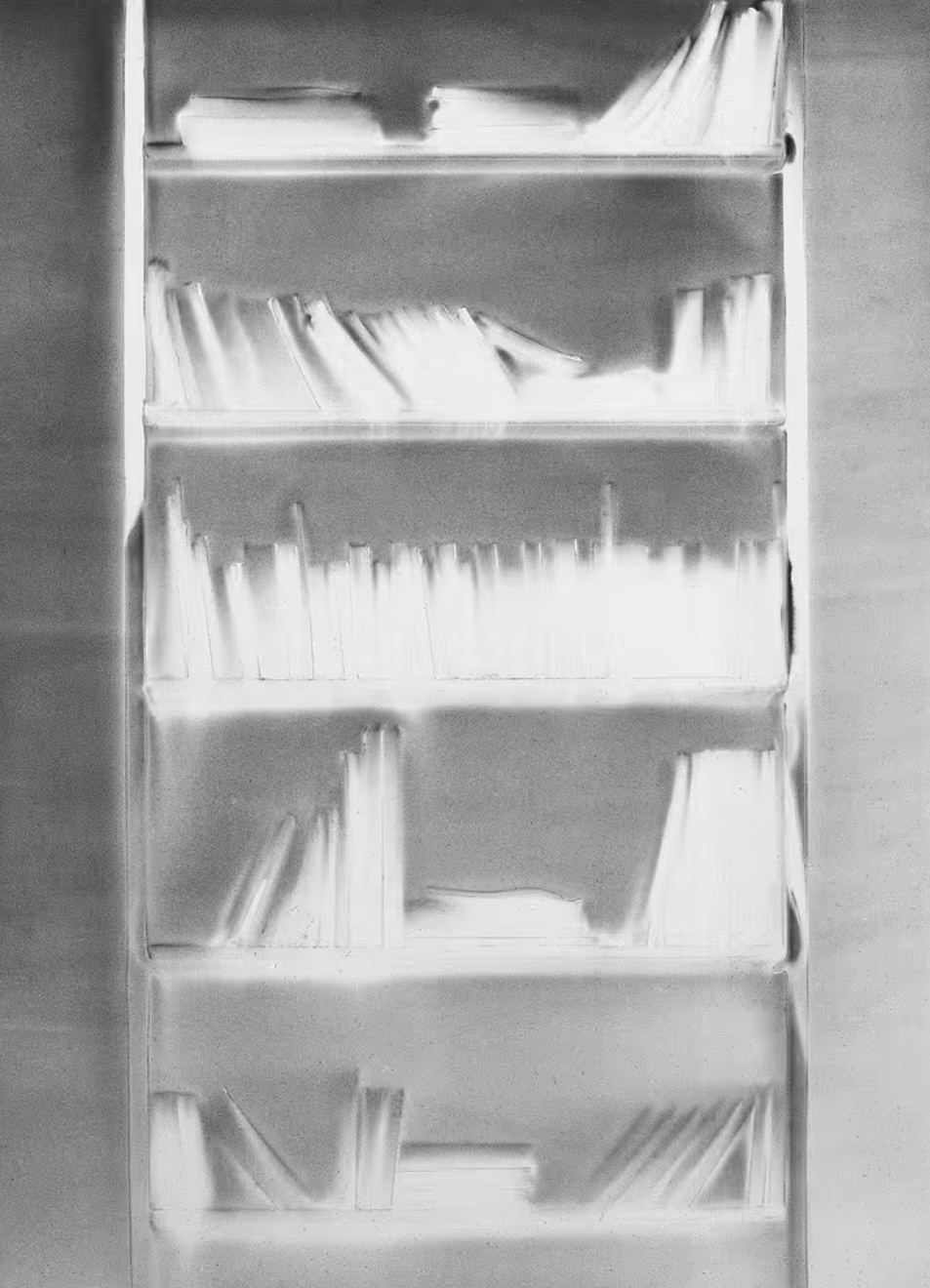
On a large panel, Claudio Parmiggiani, a key figure of Arte Povera, used a technique called “controlled fires.” He deliberately sets fire to a room, extinguishes it, lets the soot settle on the premises, then comes to remove the objects and furniture to leave an impression. Soot and smoke draw, as if in a negative, the ghost of a shelf covered with books, with vaporous contours. The choice of the library is not insignificant, the artist is referring to the book burnings that we have known throughout history … behind the blur sometimes hides a political message.
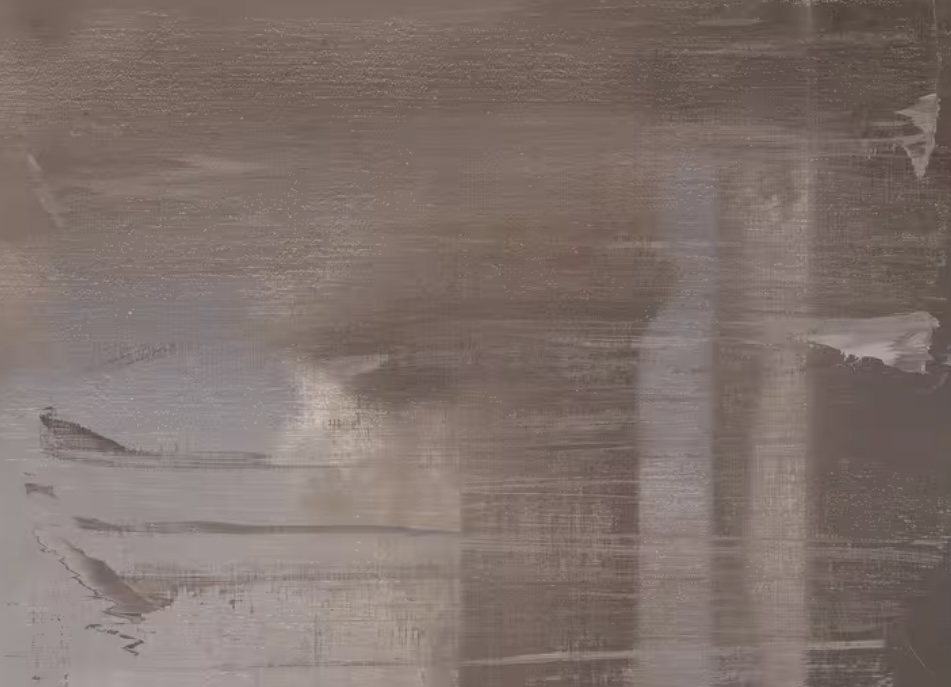
A small canvas by Gerhard Richter is nevertheless one of the highlights of the exhibition. The artist created it from a highly publicized photo of the September 11, 2001 attacks in New York: the collision of the first plane with the North Tower of the World Trade Center. At first glance, it is a very abstract, almost illegible painting. It is knowing the source image that allows it to be deciphered, but what we see is the gesture of the painter who, with broad brushstrokes, places paint on the image of the two twin towers, which is itself painted. The superimposition of layers, as is often the case with the German artist, creates “a blur of surface.” He deliberately uses grainy materials that block the view and force us to look more closely, also transcribing into paint the fog of television screens in a world saturated with images. Richter says his relationship with reality has always been about vagueness, which he links to insecurity, incompleteness, and inconsistency. He is the most represented artist in the exhibition, with paintings evoking the instability of the world.
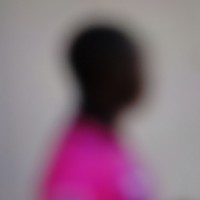
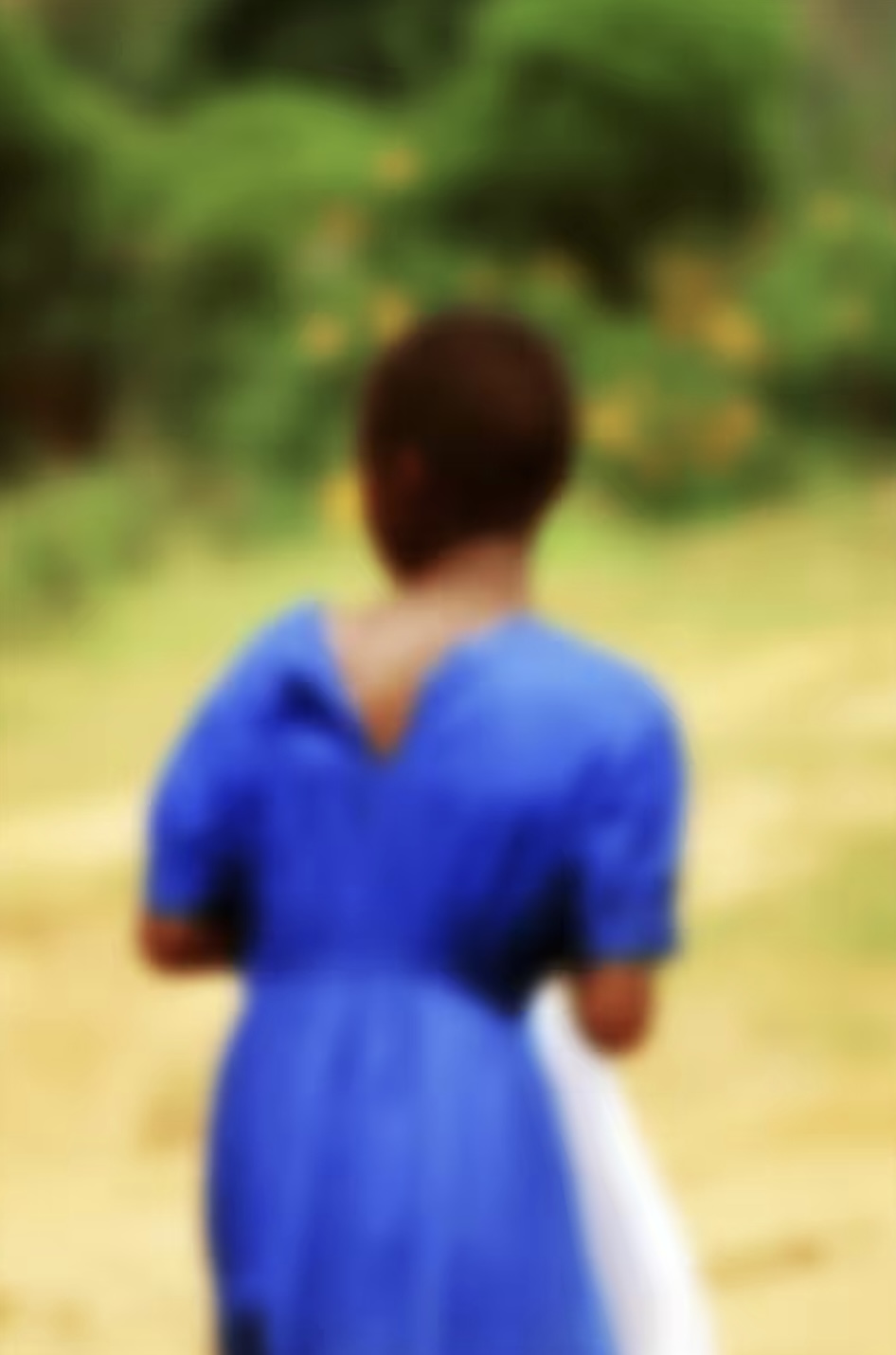
A large photograph by Chilean artist, architect, and filmmaker Alfredo Jaar, taken as part of a long-term project he devoted to the 1994 genocide of the Tutsi in Rwanda, shows a young girl who witnessed the massacre of her father and mother with machetes. Alfredo Jaar had arranged to meet her, but when it came time to answer his questions, the teenager, unable to utter a word, left with her back to him. In a reflexive movement, he then grabbed his camera and took this shot without framing it, without focusing. “This blurred image,” he says, “represents my inability to tell the story of this woman’s experience or the experience of Rwanda—the impossibility.”
April 30 – August 18, 2025

MUSEE DE L’ORANGERIE

Jardin des Tuileries 75001 Paris

,

Dans le flou

une autre vision de l’art de 1945 à nos jours

Peinture, sculpture, photographie, vidéo, cinéma… L’exposition “Dans le flou” fait une superbe mise au point sur l’emploi de l’indistinct dans les arts visuels, en se concentrant sur la période allant de 1945 à nos jours. Prenant sa source dans un chef-d’Å“uvre : Les Nymphéas de Claude Monet, un grand décor installé depuis 1927 au musée de l’Orangerie, où le flou règne sur les grandes compositions aquatiques peuplées de nénuphars. Un vrai choix esthétique du maître de l’impressionnisme. Cet intrigant brouillard a depuis inspiré de nombreux artistes au moyen de techniques diverses. Le parcours thématique de l’exposition se veut à la fois sensible, historique, poétique et politique.

Dans la première salle, en guise de prologue, dialoguent des Å“uvres très différentes : la plus ancienne, un paysage brumeux peint par William Turner vers 1845, jouxte Le Bassin aux nymphéas, harmonie rose de Claude Monet et un cube de condensation transparent de l’artiste conceptuel Hans Haacke, piégeant à la fois la buée et l’instabilité de notre environnement. Le bloc de marbre blanc d’Auguste Rodin prouve quant à lui que flou et sculpture ne sont pas antinomiques, comme on pourrait le croire. L’artiste floute les contours de ses marbres, faisant vibrer la matière.

Sur un grand panneau, Claudio Parmiggiani, figure incontournable de l’Arte Povera, a utilisé une technique baptisée “les incendies contrôlés Il met le feu volontairement à une pièce, l’éteint, laisse la suie se déposer sur les lieux, puis vient retirer les objets et le mobilier pour faire empreinte. Suie et fumée dessinent, comme en négatif, le fantôme d’une étagère couverte de livres, aux contours vaporeux. Le choix de la bibliothèque n’est pas anodin, l’artiste fait référence aux autodafés que l’on a connus dans l’histoire … derrière le flou se dissimule parfois un message politique.

Une petite toile, de Gerhard Richter est pourtant l’un des éléments forts de l’exposition. L’artiste l’a réalisée à partir d’une photo très médiatisée des attentats du 11 septembre 2001 à New York : la collision du premier avion sur la tour nord du World Trade Center. À première vue, il s’agit d’un tableau très abstrait, presque illisible. C’est le fait de connaître l’image source qui permet de la décrypter, mais ce que l’on voit, c’est le geste du peintre qui vient, à grands coups de pinceau, placer de la peinture sur l’image des deux tours jumelles, qui est elle-même peinte. La superposition de couches, comme souvent chez l’artiste allemand, crée “un flou de surface“. Il emploie à dessein des matières granuleuses qui bouchent la vue et forcent à mieux regarder, transcrivant aussi en peinture le brouillard des écrans de télévision d’un monde saturé d’images. Richter dit que sa relation à la réalité a toujours eu à voir avec le flou qu’il relie à l’insécurité, l’incomplétude et l’inconsistance. Il est l’artiste le plus représenté dans l’exposition avec des toiles évoquant l’instabilité du monde.

Une grande photo de l’artiste, architecte et réalisateur chilien Alfredo Jaar, prise dans le cadre d’un long projet qu’il a consacré au génocide des Tutsis au Rwanda en 1994 montre une jeune fille, témoin du massacre de son père et de sa mère à coups de machette. Alfredo Jaar avait pris rendez-vous avec elle, mais au moment de répondre à ses questions, l’adolescente, incapable de prononcer un mot, est repartie en lui tournant le dos. Dans un mouvement réflexe, il a alors saisi son appareil et pris ce cliché sans le cadrer, sans faire le point. “Cette image floue, dit-il, représente mon incapacité à raconter l’expérience de cette femme ou l’expérience du Rwanda â€“ l’impossibilité.”

du 30 avril au 18 août 2025

MUSEE DE L’ORANGERIE

Jardin des Tuileries 75001 Paris