Magdalena Abakanowicz
the fabric of existence
A pioneering artist in contemporary sculpture and textile art, Magdalena Abakanowicz (1930–2017) created powerful, political, and monumental works despite censorship under the Polish communist regime. Following the Tate Modern in London in 2023, the Musée Bourdelle presents the first major exhibition dedicated to the artist in France.
A leading figure on the 20th-century Polish art scene, Magdalena Abakanowicz experienced war, censorship, and the deprivations imposed by the communist regime from a very young age. Inspired by the organic world, seriality, and monumentality, her work possesses undeniable power and presence, resonating with contemporary issues—environmental, humanist, and feminist. The exhibition’s subtitle, “The Fabric of Existence,” combines two terms used by the artist to define her work. She considered fabric to be the elementary organism of the human body, marked by the vagaries of its destiny.
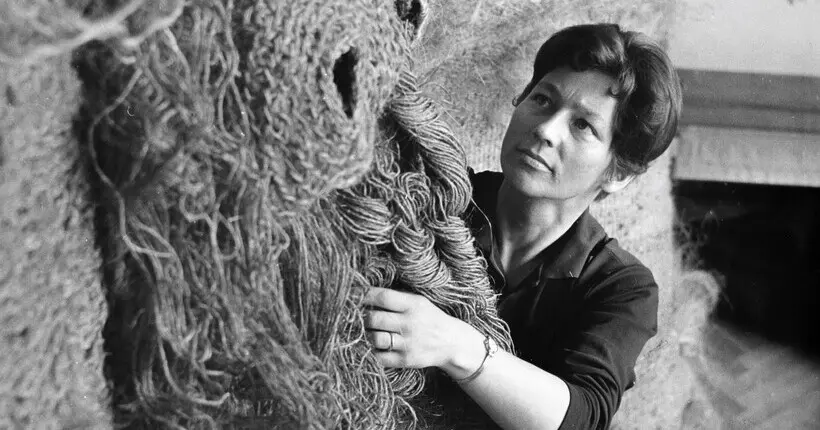
In the corridor of the Portzamparc wing, the first section offers a glimpse into the breadth of Magdalena Abakanowicz’s output: early textile pieces, small-scale (often anatomical) sculptures, drawings, and projects for public spaces. She initially practiced painting before turning to tapestry, soon subverting its traditional, decorative framework. At the crossroads of disciplines, the artist explores the combination of textile materials and sculptural techniques. All her creations stem from the same fundamental question: what is humanity’s place in its environment?
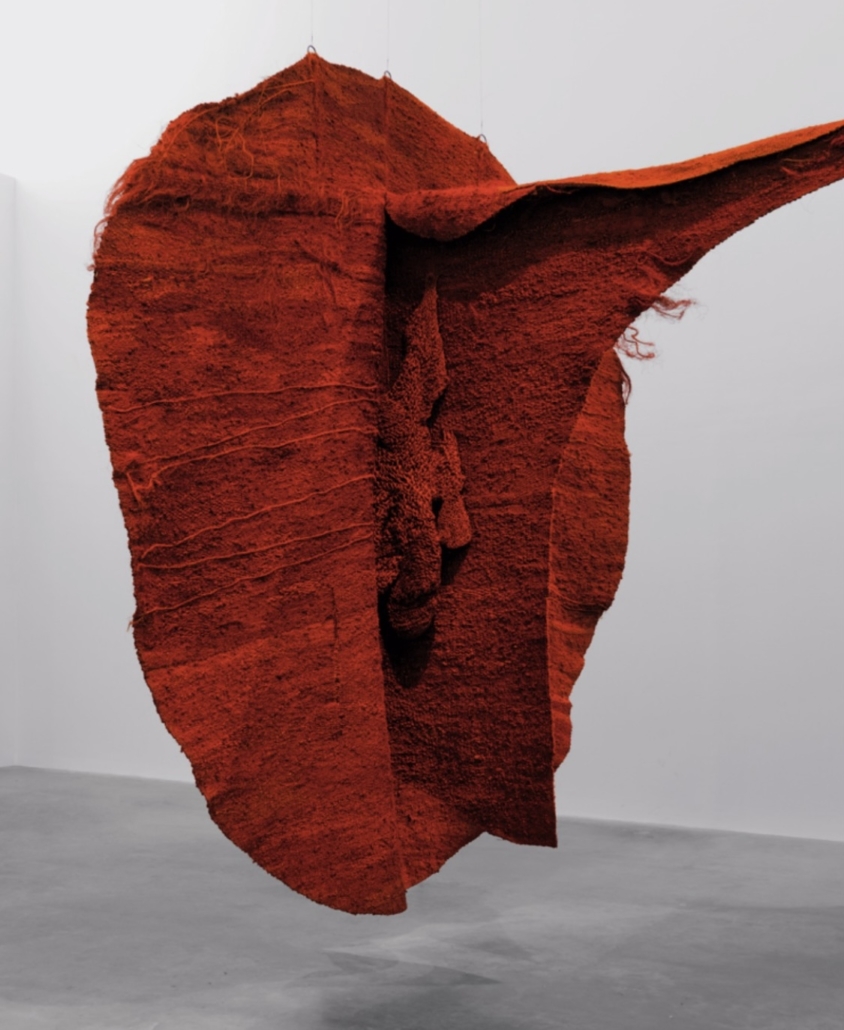
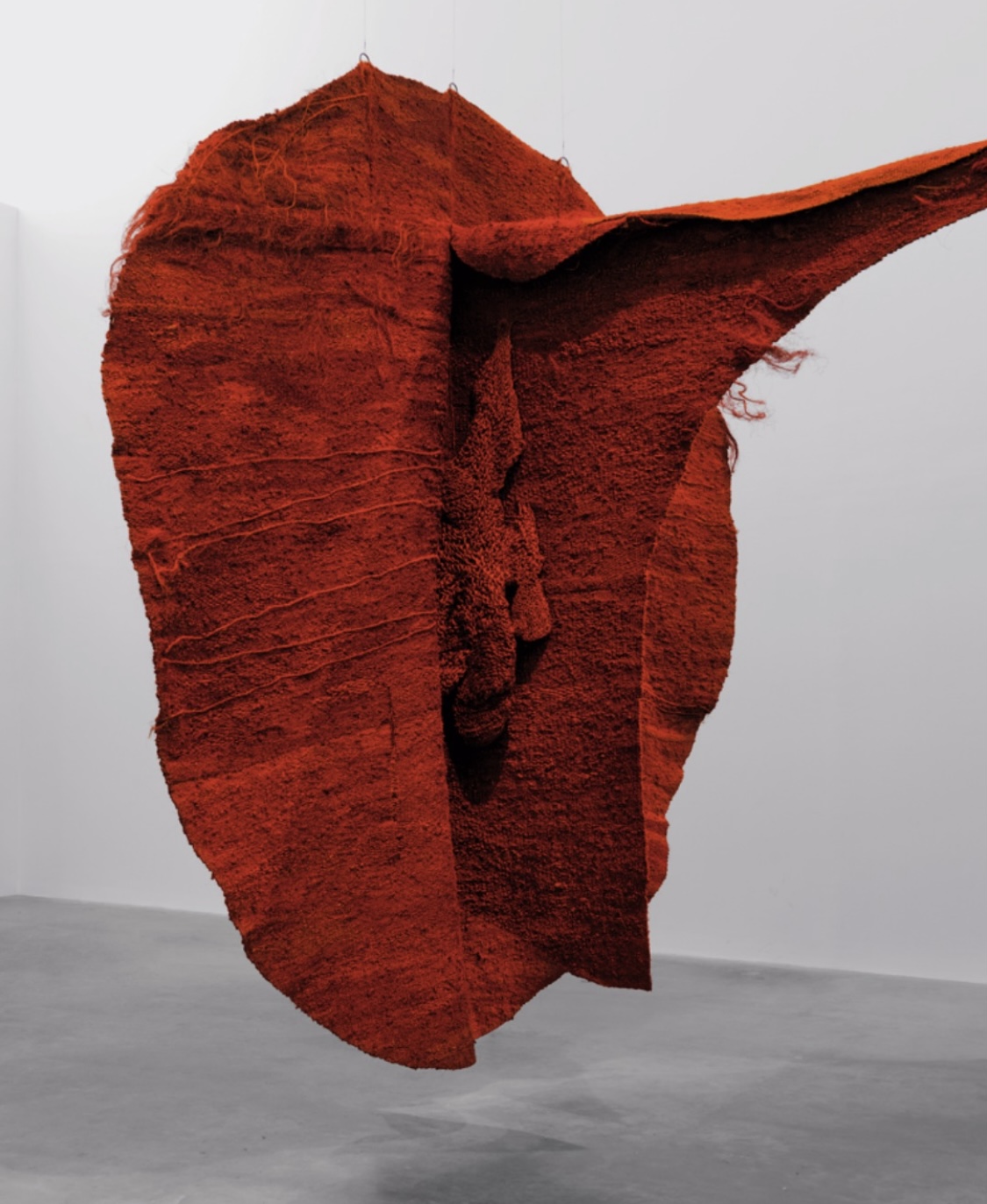
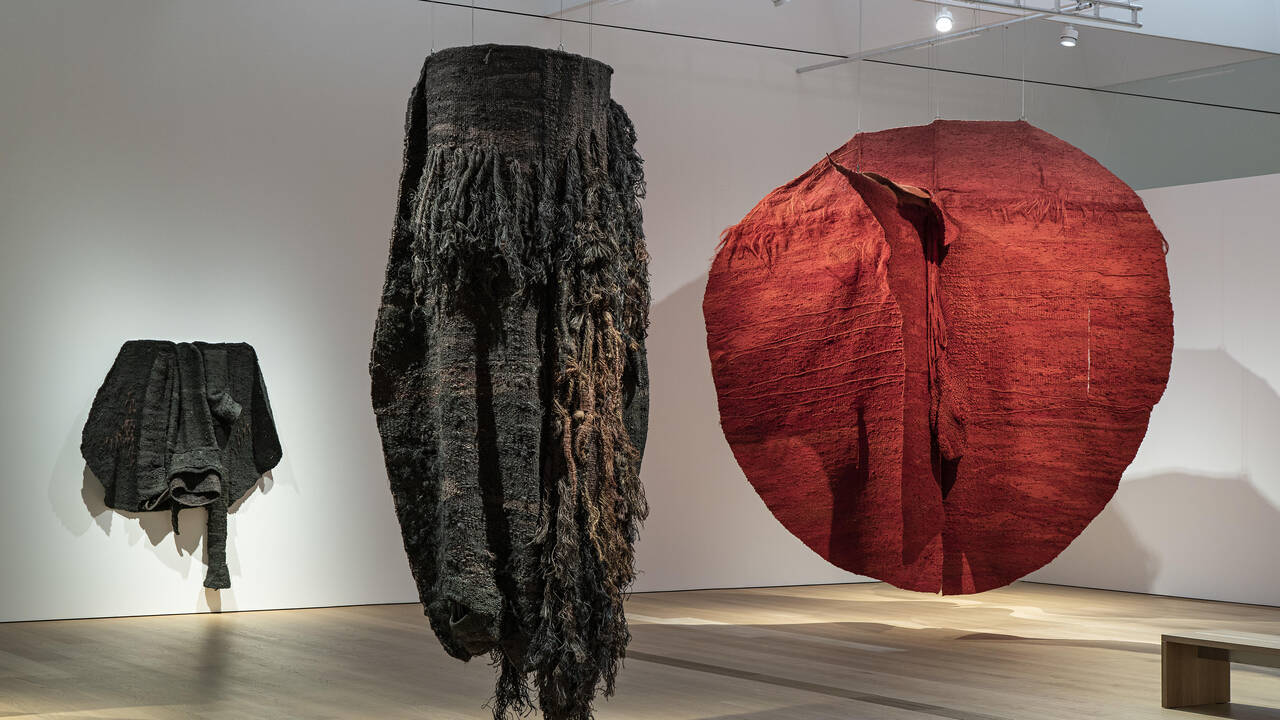
The exhibition continues with the cycle of monumental works that Abakanowicz began in the mid-1960s: the Abakans, spectacular textile pieces suspended from the ceiling. Despite a shortage of materials, the artist wove these objects from natural fibers using ropes and salvaged fabrics she found under her bed. In 1969, the fourth International Tapestry Biennial in Lausanne marked a decisive turning point: freed from the constraints of the picture rail, the four-meter-diameter red Abakan was displayed in all its glory.
Floating and suspended above the ground, the textile sculptures of the Abakans simultaneously reveal and conceal the “secrets” of their nature. Rich in slits and folds, their tactile texture evokes all sorts of organic analogies: the raw flesh of wood, the fur of an animal, the swollen lips of female genitalia… Closely linked to the society in which the artist lived, the genesis of the Abakans was an act of resistance. The space they inhabit is literally this political sanctuary where Abakanowicz, with “contained rage,” reconnects the fabric of a territory and the thread of a history.
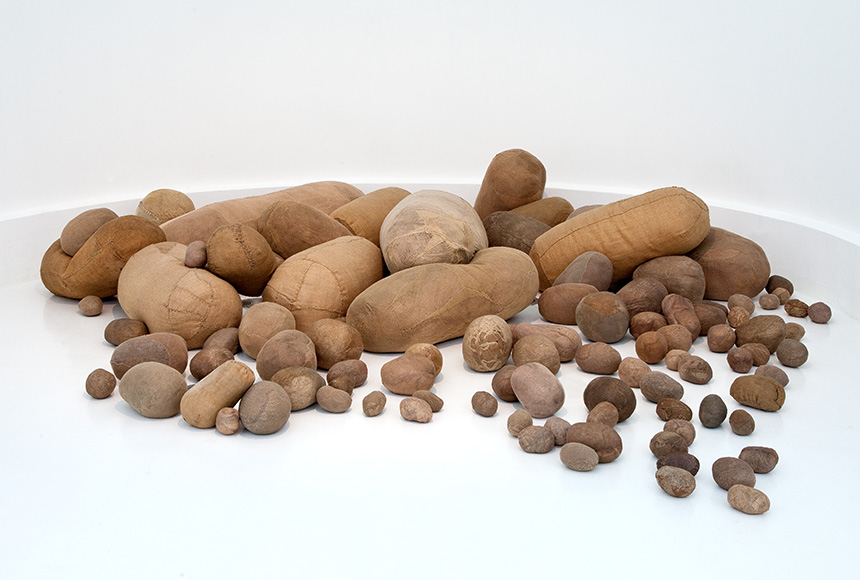
The fourth part opens with his iconic installation Embryology, unveiled at the Venice Biennale in 1980. Between body, organic matter, and rock, these accumulated cocoons immerse the viewer in an ambiguous and hybrid space. Cell clusters observed under a microscope, tissues, or skins… Embryology plunges the gaze into the mystery of life.
A masterful graphic counterpoint to the Embryology series, the Compositions collection was conceived in 1981. On the flat sheet of paper, animated by a slow rotation, the ink thickens and becomes defined before the artist disperses it across the paper’s surface with a wash. Illustrated with drawings and reliefs of Landscapes, the exhibition emphasizes the materiality of Abakanowicz’s works and his interest in metamorphosis.
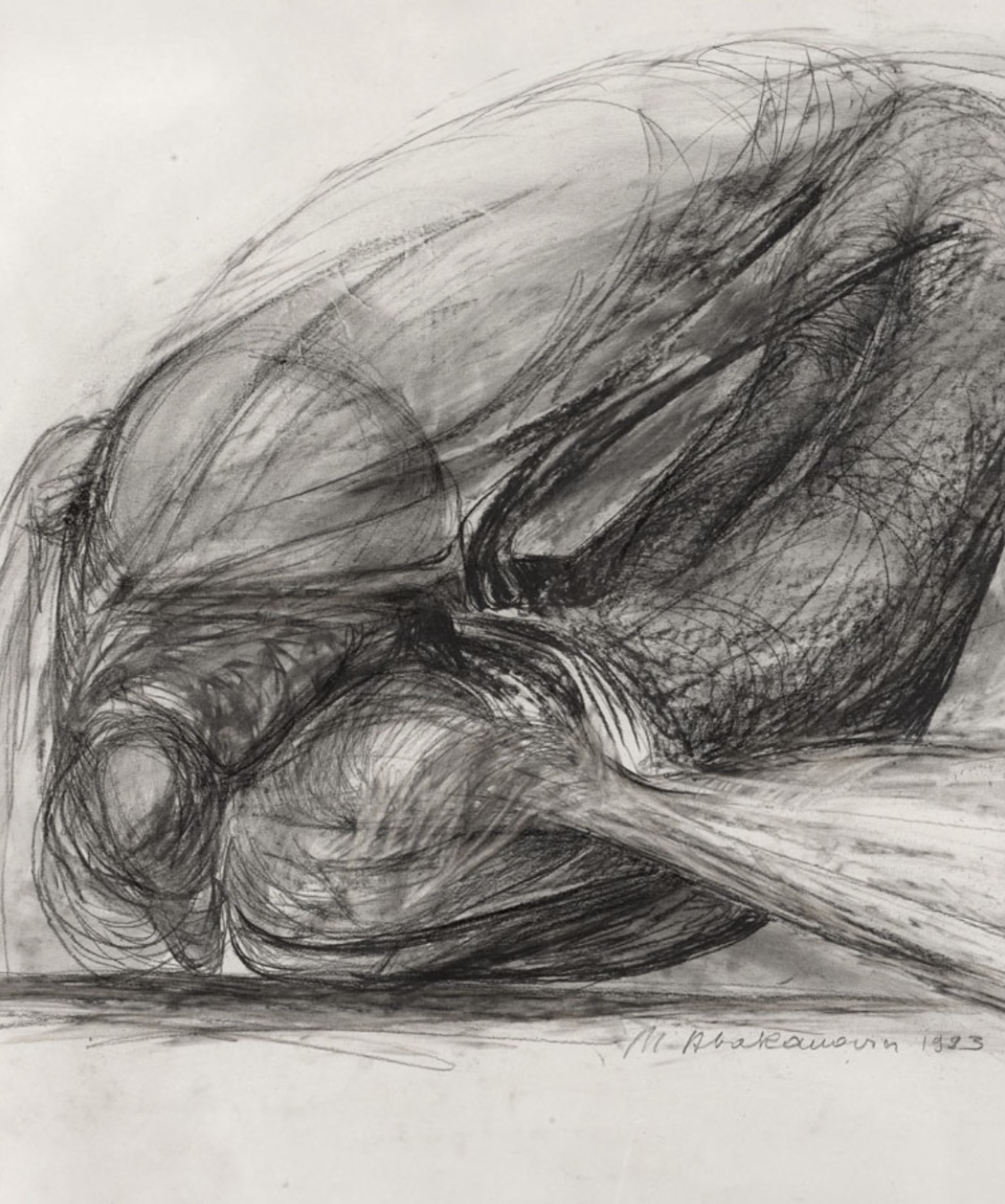
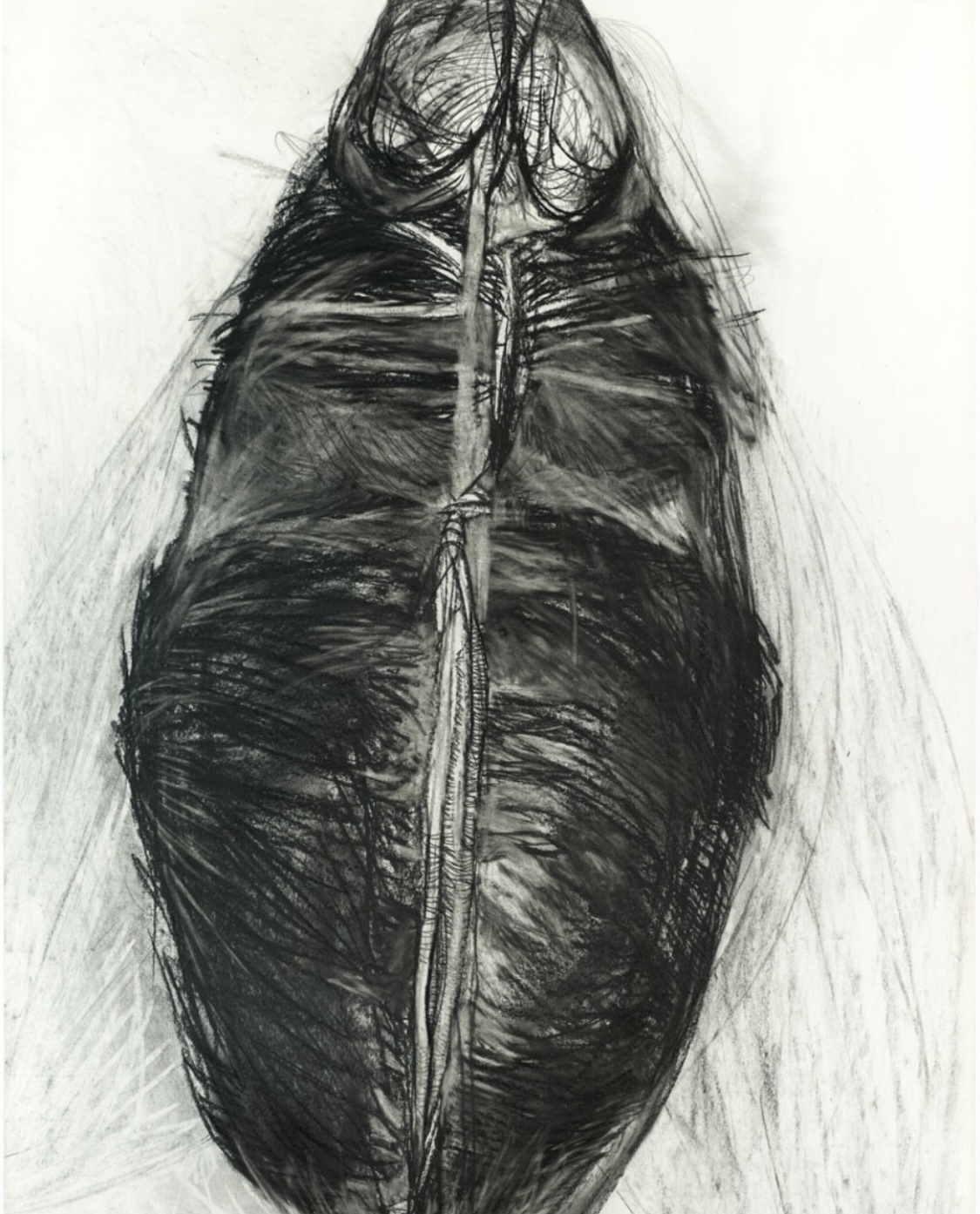
At the beginning of her career, Abakanowicz occasionally used drawing to represent the plant and animal world. From the 1980s onward, she intensified her graphic art practice. The charcoal series Flies (1993-1994) transposes the observation of dead flies or flies in their pupal stage into a monumental format. Abakanowicz enlarges their bodies, as if under the eyepiece of a microscope, to reveal their structure. Far from being anxious about decomposition, the artist expresses her visceral curiosity about organic reality.
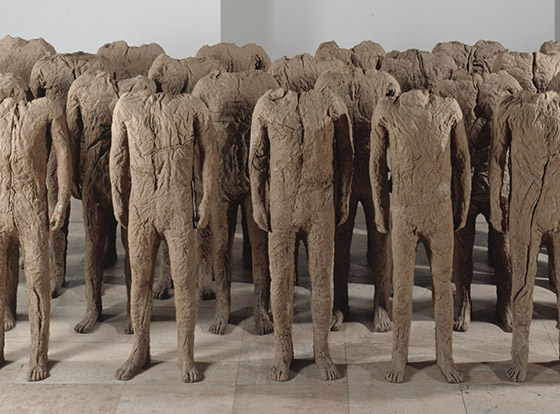
Next, within the museum’s concrete alcoves, we discover the Mutants and Crowd V series. While the Mutants occupy the space in an indeterminate way, the anonymous and unsettling crowd of Crowd V materializes Abakanowicz’s reflection on “the crowd acting like a mindless organism.” From a life cast of a standing man, arms at his sides, Abakanowicz creates a series of figures. These series, titled Crowds, were produced between 1986 and 1997. The technique itself—compressing resin-soaked burlap into a plaster mold—manifests this crushing effect: the individual is literally forced into the mold. Lacking heads, even arms, this faceless horde, which the artist erects as “a barrier” between itself and “all those who frighten it,” fulfills a conjuring function.
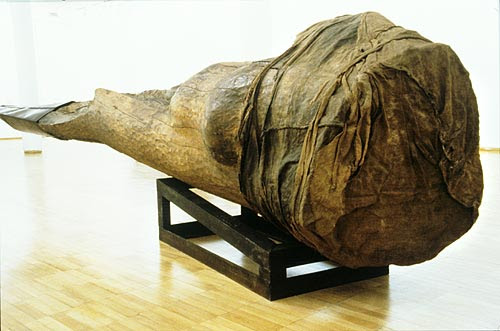
The exhibition concludes with the monumental sculpture cycle War Games, composed of enormous tree trunks encased in steel hoops. It echoes the destructive power of war. Abakanowicz created this series between 1987 and 1995, a period that saw the communist regime crumble and a new political and social order emerge. The perplexing oxymoron of the title War Games is reflected in the juxtaposition of disparate materials, where the organic, cellular nature of the wood contrasts with the coldness of the metal.