Amsterdam and The Hague Schools
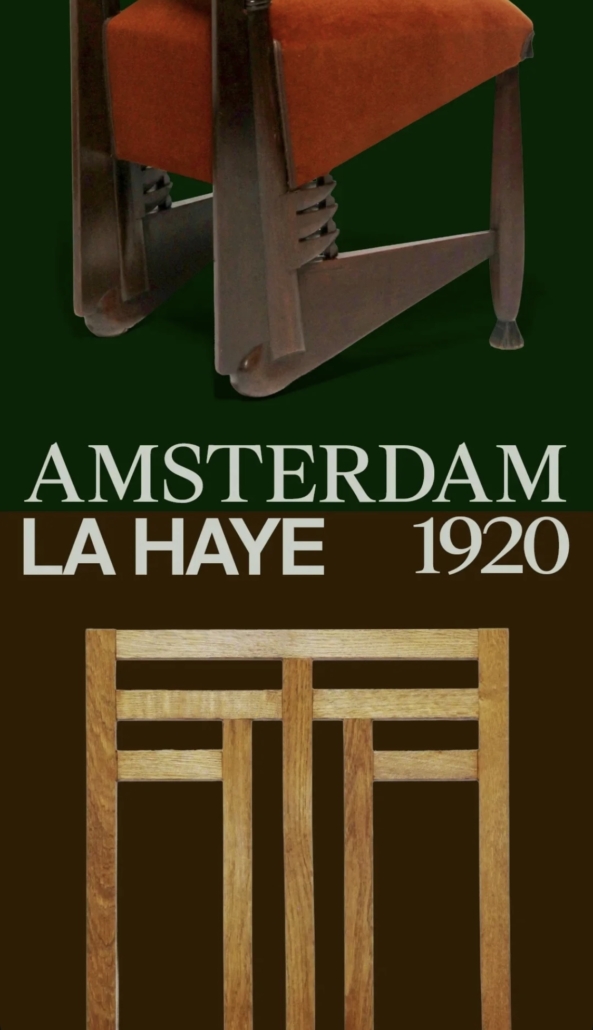
From Expressionism to Rationality (1910-1930)
1
At the beginning of the 20th century, the Netherlands witnessed a clash between two approaches to architecture and design: while the Amsterdam School favored an organic and expressive design, in line with the English Arts & Crafts movement, the Hague School adopted a rational approach, centered on clarity, order, and geometry, inspired by Frank Lloyd Wright. This opposition, which was also a generational one, was not limited to style: it reflected a fundamental debate on the purpose of architecture and design, between artistic expressiveness and the pursuit of functionality. Through more than forty exceptional pieces—furniture, lighting, sculpture, and decorative arts—that juxtapose the two schools, Romain Morandi highlights the diversity of Dutch design from the 1910s to the 1930s and its decisive contribution to the modern movement.
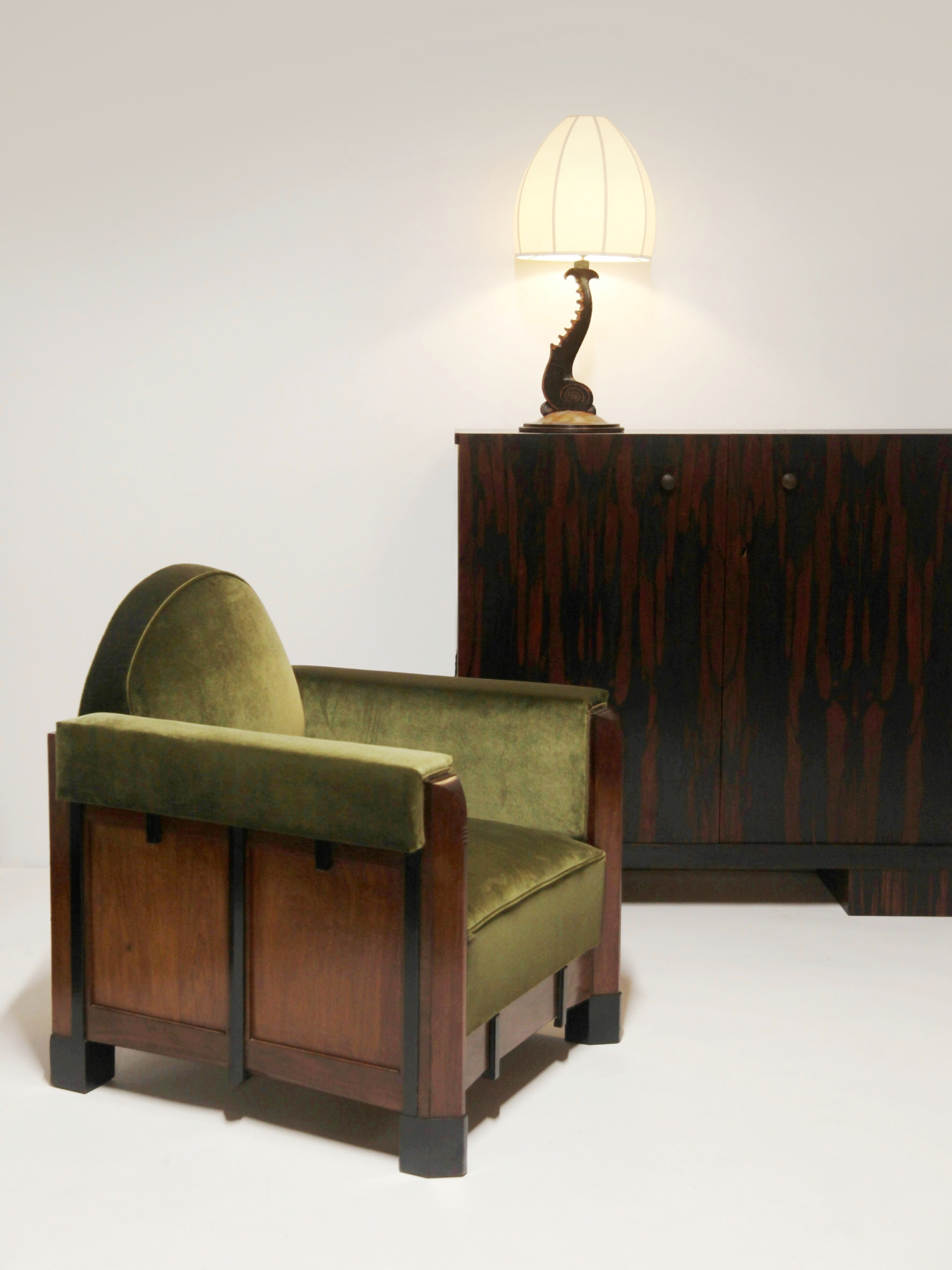
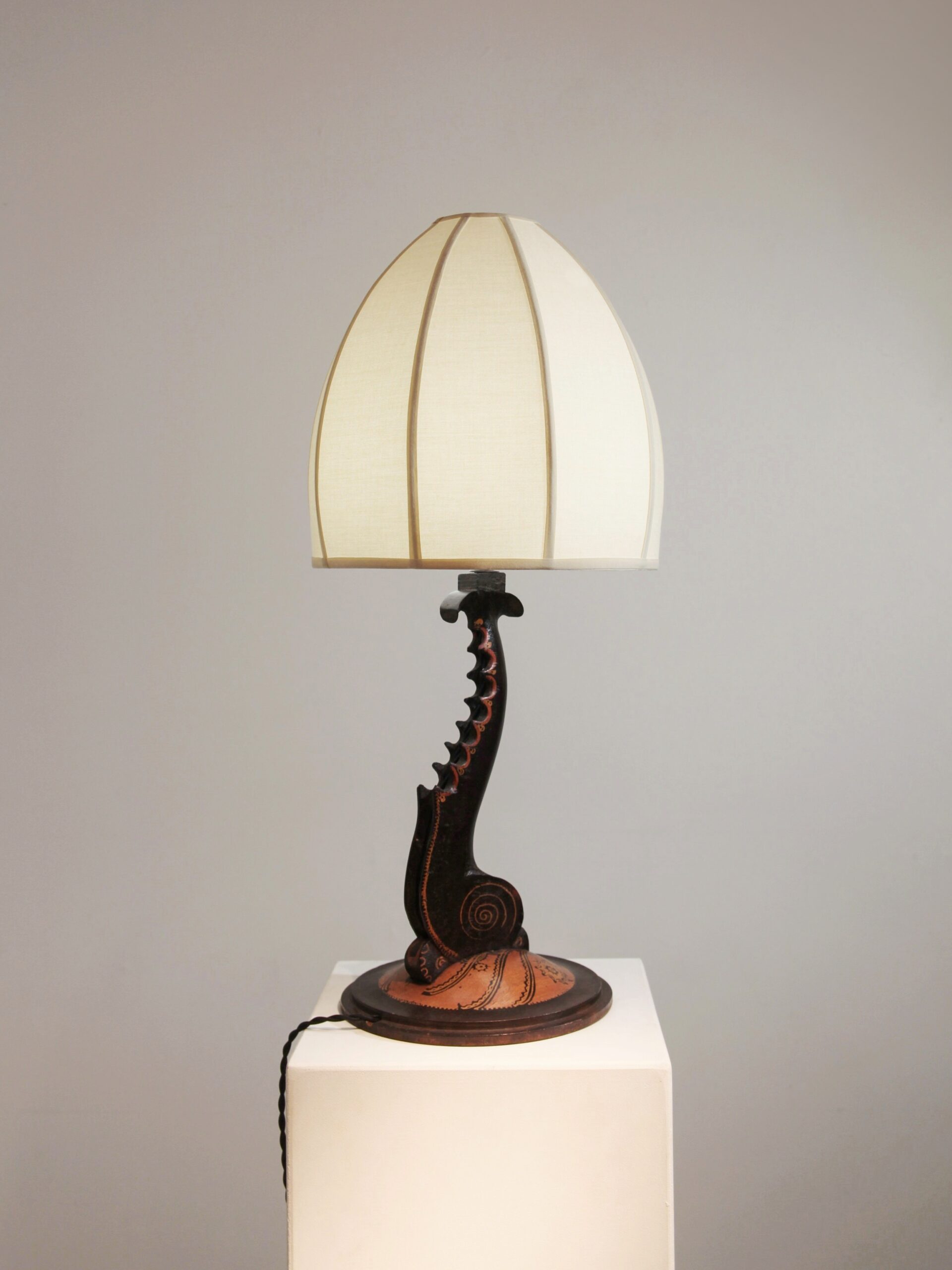
During the 1910s in Amsterdam, architects, artists, and designers such as Piet Kramer, J.M. van der Mey, and Hildo Krop, gathered around Michel de Klerk, the true leader of the movement, explored a new conception of architecture based on the expressiveness of forms and materials. Buildings, interiors, and furniture were designed to generate a strong emotional and aesthetic impact. Every meticulously crafted detail aimed to enrich the sensory experience, considered an essential parameter for quality of life. The Amsterdam School thus promoted a sculptural and organic, almost narrative approach, where each element seemed animated by its own vitality. Furniture, objects, and lighting fixtures combined curved lines, deliberate asymmetries, and symbolic motifs inspired by nature or folklore in dynamic compositions. The enveloping forms, generous volumes, and undulating rhythms gave the spaces a warm and profoundly human dimension.


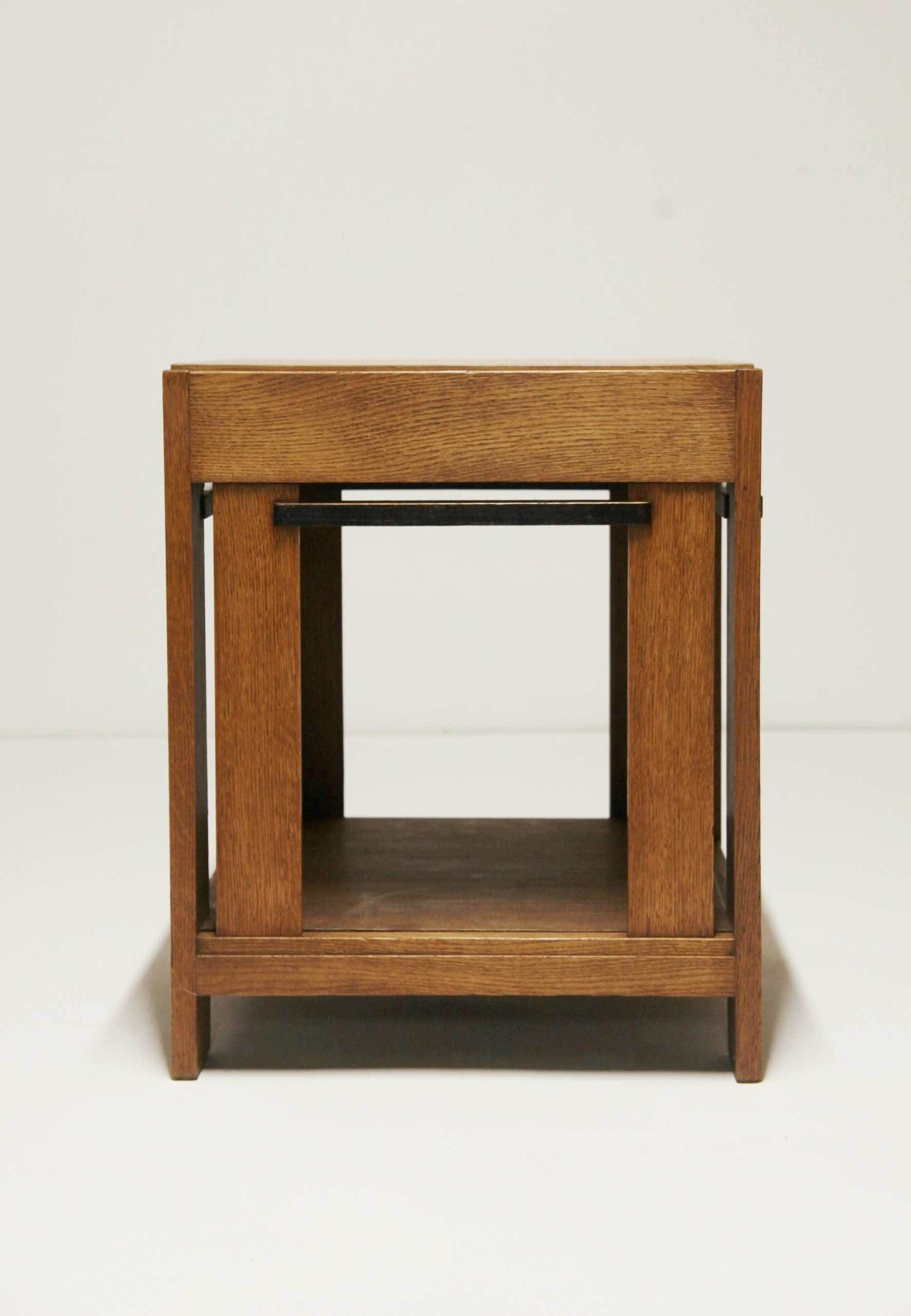
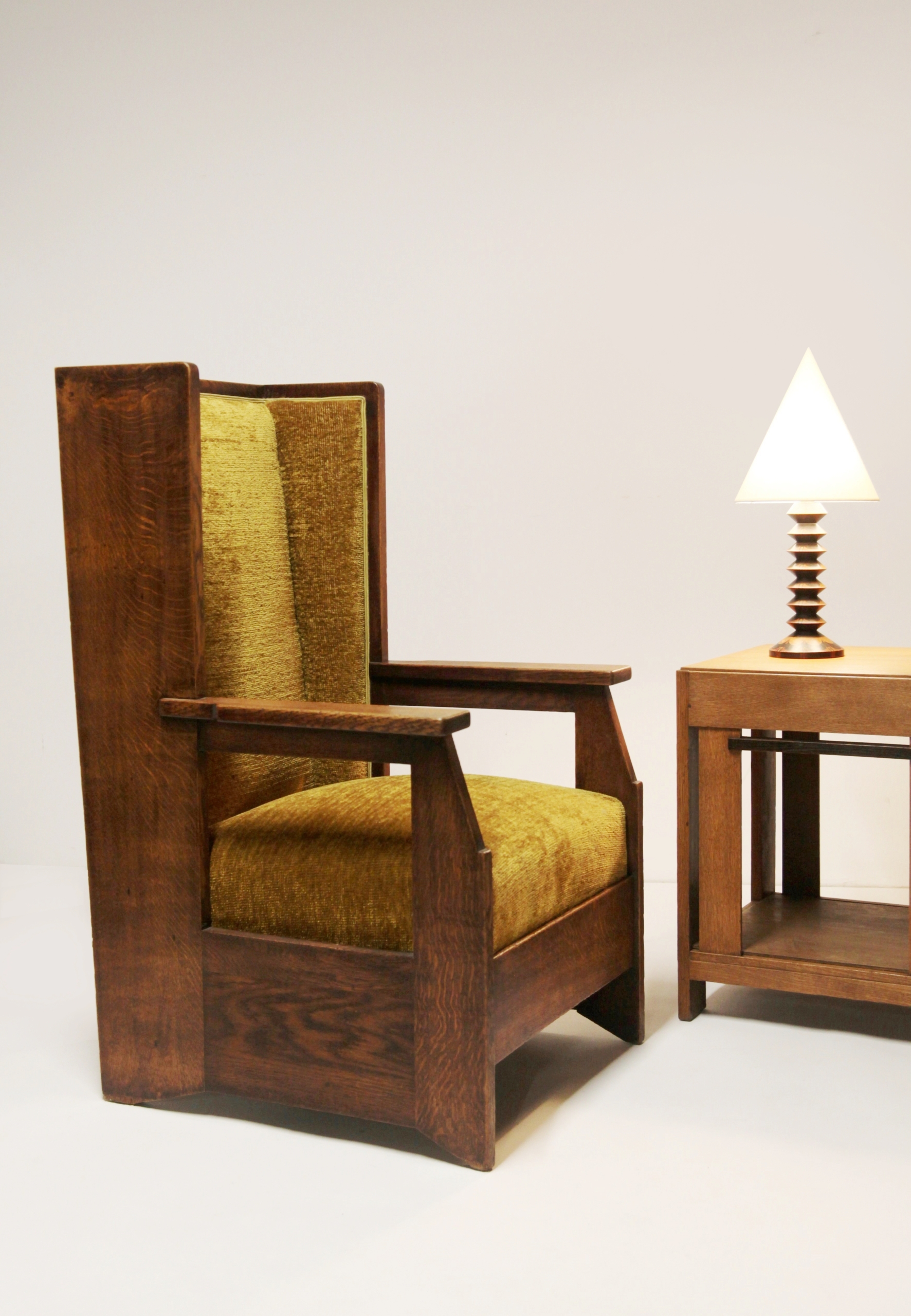
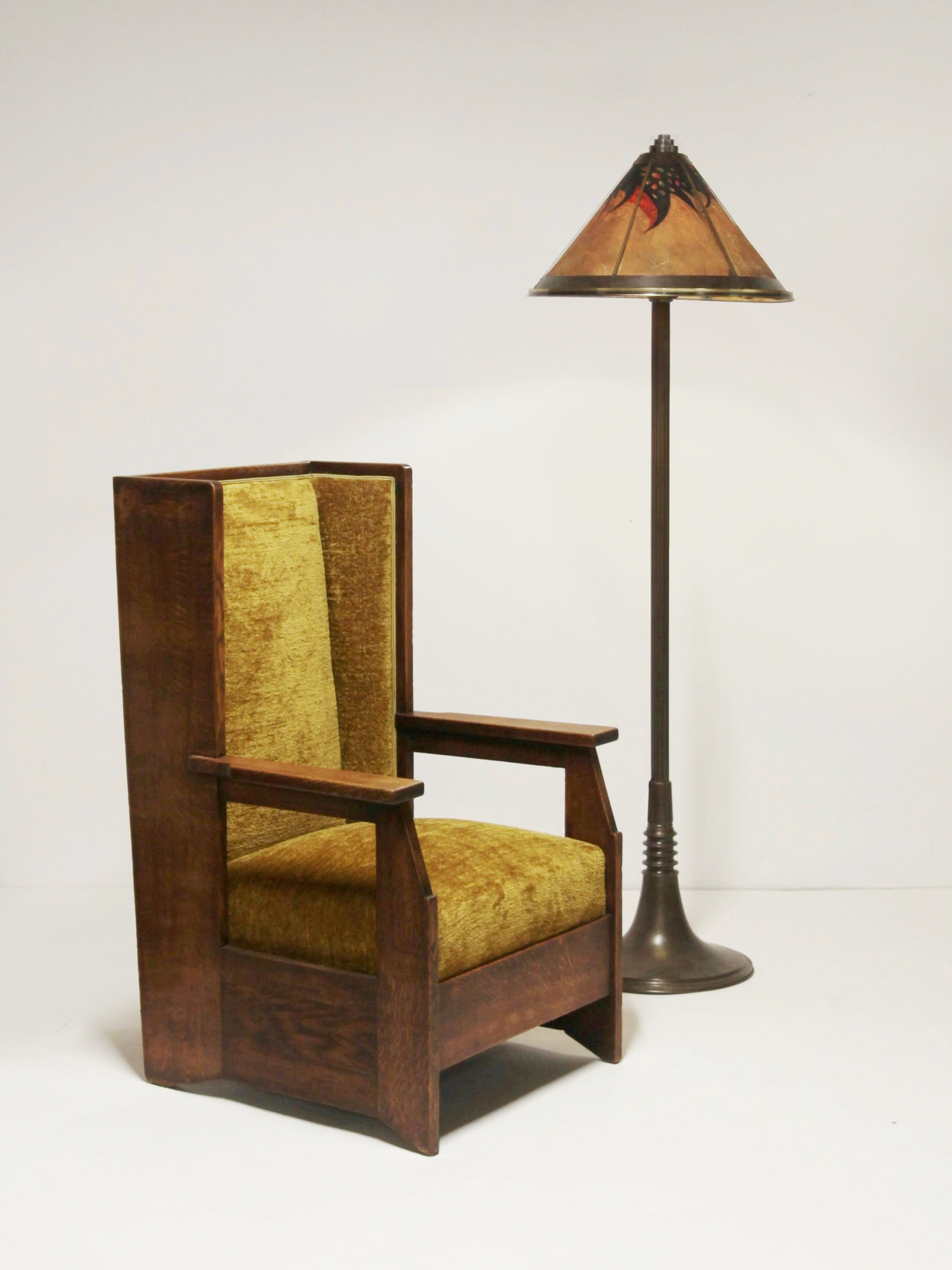
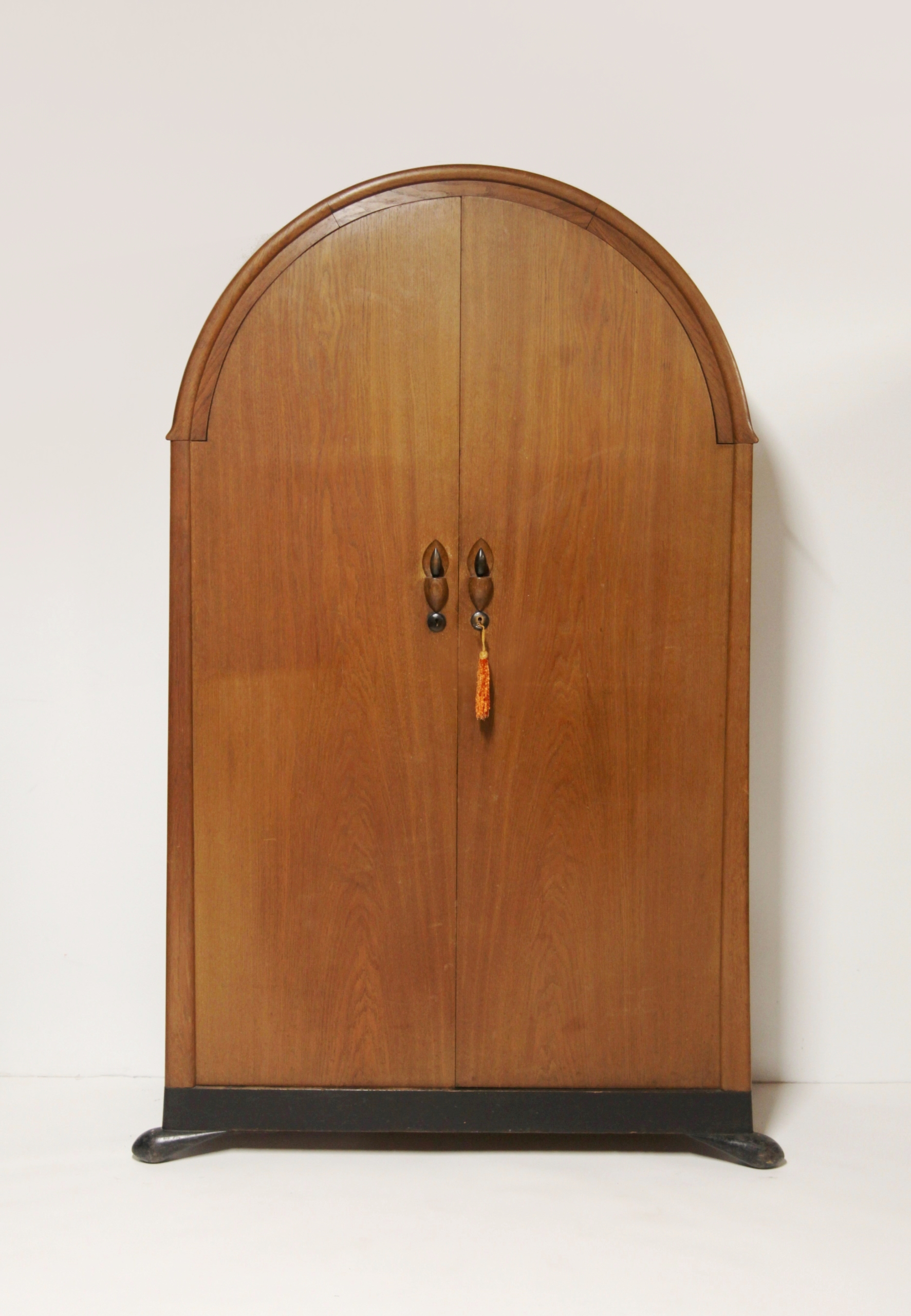
Around 1920, while the Expressionist movement was at its peak in the Dutch capital, young designers like Hendrik Wouda, Frits Spanjaard, and Cor Alons were developing a much more rational and economical vision of design and architecture in The Hague. Their approach emphasized clarity, proportion, and efficiency, both in architecture and in the design of objects and interiors. Volumes and lines were simplified, surfaces stripped back, and ornamentation was effaced in favor of function. Aesthetics here stemmed from the internal logic of forms and the rationality of their uses, rather than from decorative motifs or expressive material richness. Furniture and interior layouts were designed to be ergonomic and modular, facilitating circulation, clarity, and adaptability of spaces. The creations of The Hague School thus proceed from a “methodical sobriety”, where beauty results from structural coherence, harmony of volumes and balance of compositions.

The members of the Amsterdam School share a common ambition: to make each building—interior and exterior, in whole or in part—a “total work of art.” A building does not merely fulfill a residential function; it composes a “visual and sensory whole” where everything contributes to creating a coherent and refined atmosphere. This approach presupposes that design constitutes a comprehensive aesthetic response, capable of elevating everyday objects to the status of art. The plasticity of volumes and the use of ornamentation stem from a humanist and poetic vision, affirming the dignity of the dwelling, local cultural identity, and artisanal know-how. In this sense, the Amsterdam School follows in the footsteps of the English Arts & Crafts movement as theorized by John Ruskin and William Morris, while also incorporating the formal and decorative freedom of Art Nouveau, to propel architecture and design toward the idea of “aesthetic and social universality.”
Envoyer des commentaires
Influenced by the proto-modernist ideas of architect Hendrik Petrus Berlage and the De Stijl movement, the designers of the Hague School pursued an ideal of “rationalization, standardization, and functionality.” They favored “pure” geometric forms arranged in “dynamic equilibrium,” straight lines, and Cubist volumes—pragmatically easier and less expensive to produce and better suited to the demands of the time. Supported by publishers such as L.O.V. and H. Pander & Zonen, they directed their production according to this same logic: ergonomics, adaptability, and legibility. Architecture and design were no longer conceived as total works of art, but as “standardized systems,” reproducible and adapted to modern life. The influence of Frank Lloyd Wright is also evident in the pursuit of harmonious integration with the environment according to a “horizontal plane” and a clean, self-contained visual language free from decorative excess.
The opposition between the Amsterdam School and the Hague School should not be understood as a hierarchical confrontation, but rather as a productive dialectic in which two complementary visions of design engage in dialogue. Their articulation highlights the fundamental principle of the “complementarity of opposing poles.” The aesthetic and poetic dimension enriches the sensory and social experience of spaces, while rationalization ensures their coherence and collective accessibility. Neither supplants the other; on the contrary, their confrontation fosters a balance between creative freedom and practical constraints, between singularity and reproducibility. The tension between these two poles allows us to conceive of design not as an isolated objective, but as a process in which expressive and functional requirements mutually inform each other. This dialectic also sheds light on the evolution of design in our contemporary societies. It reflects a consideration of how to reconcile collective needs and individual singularity, emotion and efficiency, sensory complexity and functional clarity. Design then appears as an art of mediation: each formal or spatial choice becomes both a means of expression and a response to social and technical constraints, defining a rich and nuanced vision of modernism.